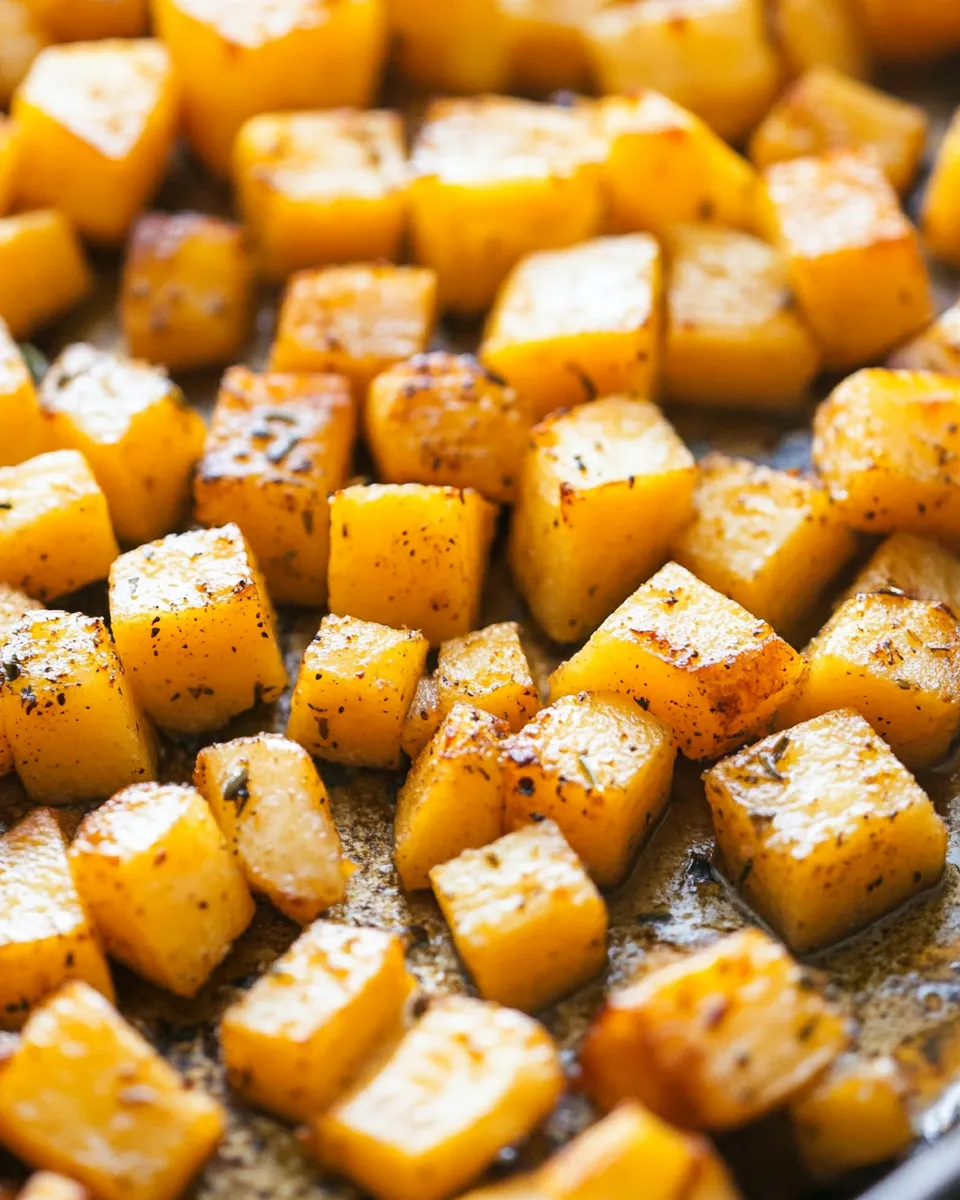
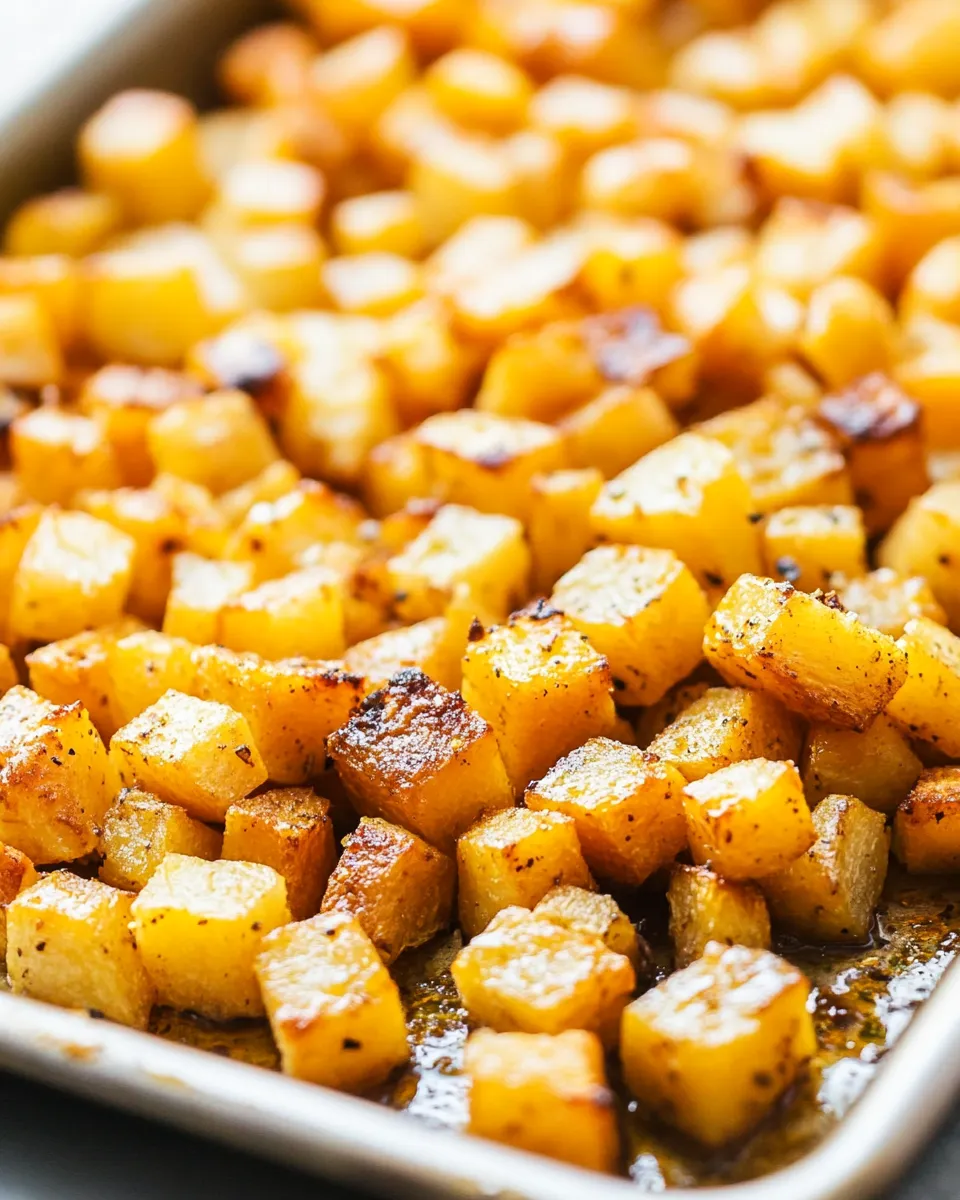
Roasted swede is the sort of side dish that earns its place on the table by being quietly reliable and surprisingly tasty. The vegetable caramelises on the edges, keeps a pleasant firmness in the middle, and carries herbs and garlic beautifully. It’s uncomplicated to make and plays nicely with roasted meats, vegan mains, or simply a heap of buttered greens.
This recipe leans into straightforward seasoning and a hot oven to coax out sweet, nutty flavours from the swede (rutabaga). There’s nothing fancy here — just good technique: peel, cube, season, toss in oil, and roast until those edges brown. Small details matter though, and I’ll walk you through them so every batch turns out the same reliable way.
Below you’ll find the ingredients as provided, the exact step-by-step method to follow, plus practical notes on equipment, swaps, troubleshooting, and storage. Read the short intro, then jump straight to the instructions if you want to get cooking.
What Goes Into Roasted Swede
Ingredients
- ?1 large swede/rutabaga — the star ingredient; a firm, slightly sweet root that roasts well.
- ?1 teaspoon garlic powder or granules — provides mellow garlic flavour without the moisture of fresh garlic.
- ?1 teaspoon dried mixed herbs — an easy herb blend for warmth and an herby backbone.
- ?? teaspoon ground black pepper — to taste; adds mild heat and depth.
- ?? teaspoon chili flakes (optional) — optional kick; use if you like a touch of heat.
- ?½ teaspoon salt — basic seasoning to bring out the swede’s natural sweetness.
- ?2 tablespoon extra-virgin olive oil — for roasting and browning; helps the edges caramelise.
Roasted Swede Cooking Guide
- Preheat the oven to 200°C (392°F).
- Wash the swede (rutabaga), peel it, and dice into roughly 1 cm (1/2-inch) cubes.
- Spread the swede cubes in a roasting tin or on a rimmed sheet pan in a single layer.
- Evenly sprinkle over the cubes: 1 teaspoon garlic powder (or granules), 1 teaspoon dried mixed herbs, ?? teaspoon ground black pepper, ?? teaspoon chili flakes (optional), and ½ teaspoon salt.
- Drizzle 2 tablespoons extra-virgin olive oil over the seasoned cubes, then toss with tongs or shake the pan so the cubes are evenly coated and spread them out again in a single layer.
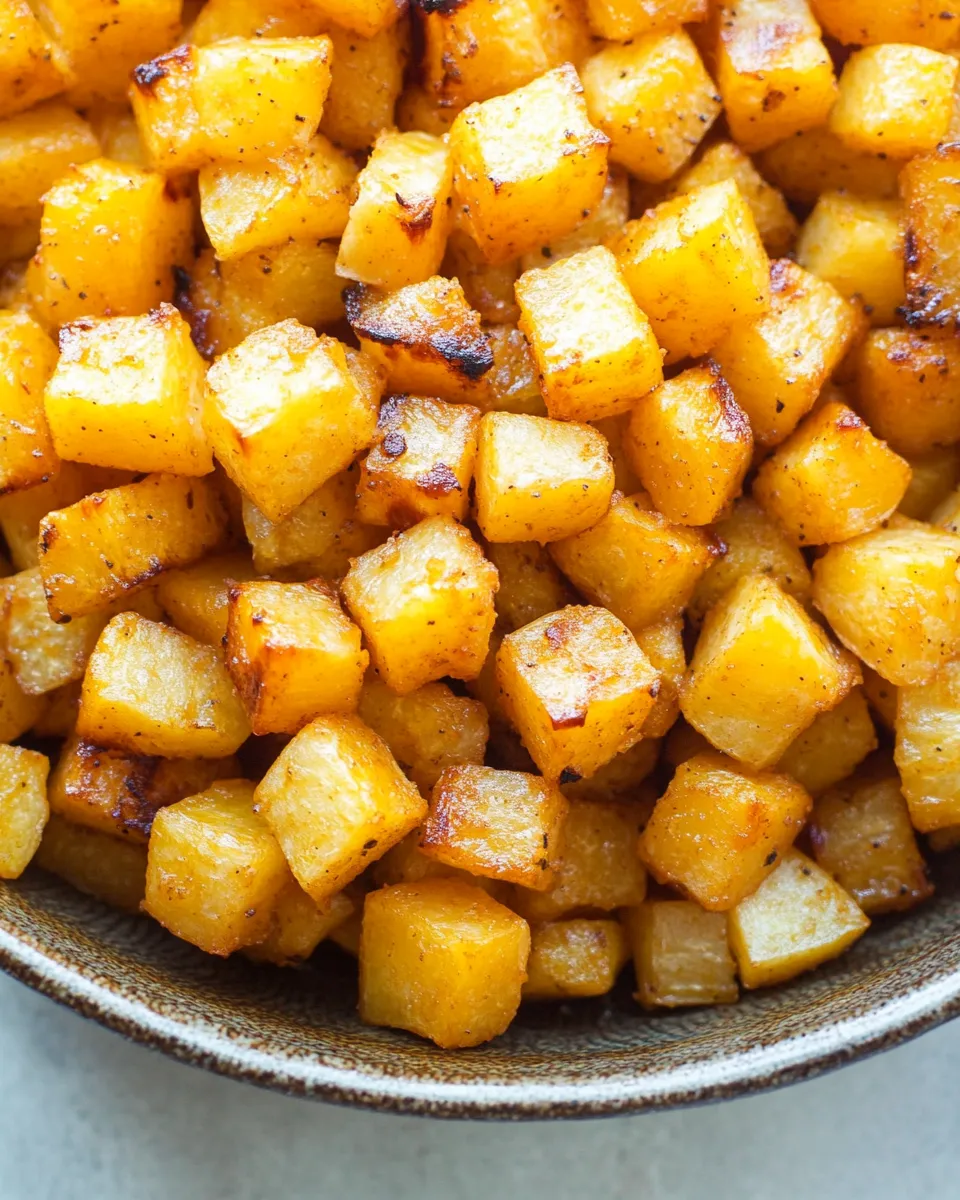
- Roast at 200°C (392°F) for 20–30 minutes, flipping or turning the cubes once halfway through (about 10–15 minutes), until tender and browned at the edges.
Reasons to Love Roasted Swede
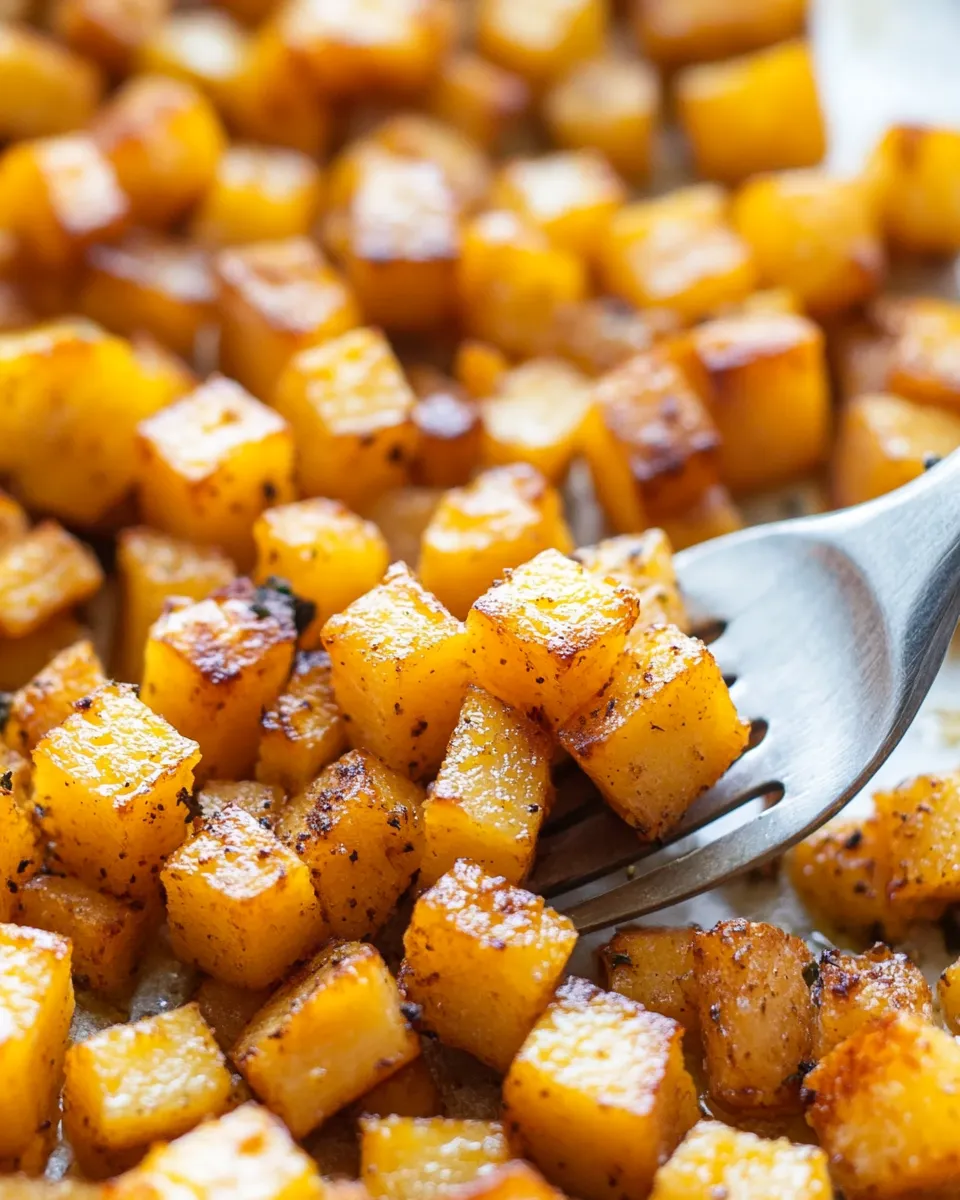
Roasted swede is underrated. It has a sweet, slightly nutty flavour that’s richer than potato but just as versatile. It crisps on the outside and stays pleasantly dense inside, which gives a satisfying mouthfeel. It also pairs with a broad range of flavours: butter and herbs, sharp cheeses, smoky condiments, or spicy dressings.
Another reason: it’s low-effort. Minimal prep, reliable results, and a short cooking window make it a weekday favourite. The seasoning is forgiving, so it’s a great side to make when you’re juggling a few dishes. And because it holds up well, leftover roasted swede keeps texture and flavour better than many other roasted roots.
Vegan & Vegetarian Swaps
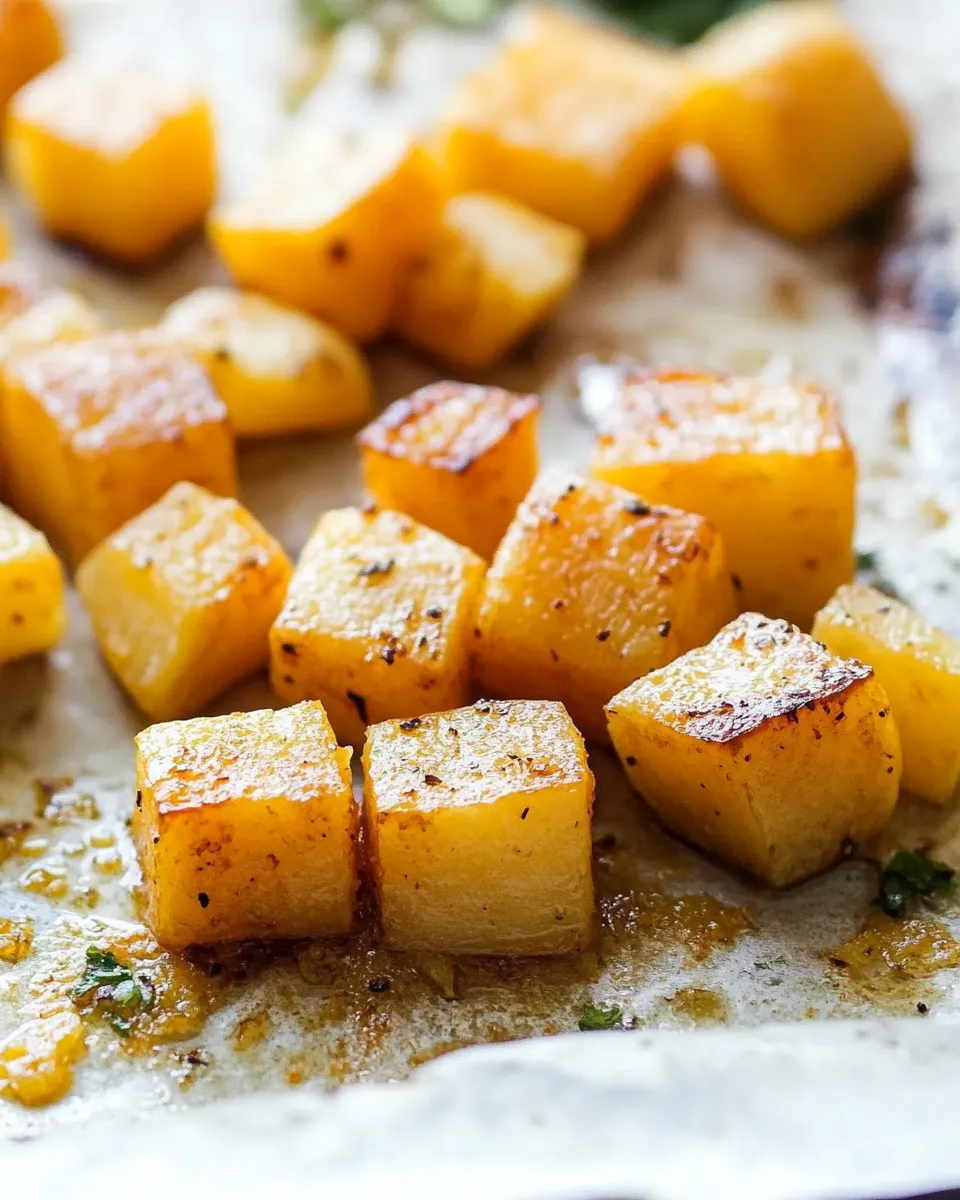
This recipe as-written is already vegan-friendly: oil and dried herbs do the heavy lifting. If you want to vary it:
- Oil swap — any neutral oil with a decent smoke point works: avocado oil, light olive oil, or grapeseed oil will all do the job.
- Herb options — swap dried mixed herbs for dried rosemary, thyme, or sage depending on the main course.
- To add richness (vegan) — finish with a drizzle of tahini mixed with lemon, or a sprinkle of toasted seeds for texture.
- To add richness (vegetarian) — toss with a knob of butter or a shower of grated hard cheese immediately after roasting.
Must-Have Equipment
There’s no need for fancy gadgets. Practical equipment makes the process easier and the result more consistent.
- Sharp chef’s knife — for peeling and cutting the swede safely and evenly.
- Rimmed baking sheet or roasting tin — a rimmed sheet pan helps air circulate and prevents spills.
- Tongs or a spatula — useful for turning the cubes halfway through roasting so they brown evenly.
- Oven thermometer (optional) — if your oven runs hot or cold, this helps hit the 200°C (392°F) target reliably.
Watch Outs & How to Fix
Roasting root vegetables is simple but a few small things can go wrong. Here are the common issues and quick fixes.
Too dry
If your swede comes out dry, it was likely under-oiled or overcooked. Next time, ensure the oil coats every cube; a light but even coating is better than a heavy puddle. Also aim to hit that 20–30 minute window and test for tenderness with a fork at 20 minutes.
Not browning
If the cubes are soft but pale, they haven’t caramelised. Give them space — overcrowding the pan steams rather than roasts. Use a larger sheet or split into two trays. A higher top heat for the final 3–5 minutes can help, but watch closely.
Burnt edges, raw centres
Uneven cube size causes this. Cut the pieces as uniformly as you can — roughly 1 cm (1/2-inch) cubes as noted — so they cook at the same rate. If some pieces brown faster, pull those out sooner and let the rest finish.
Make It Diet-Friendly
Swede is naturally lower in carbs than potato and has a good fibre content, so it fits into many eating plans. Here are a few small adjustments depending on dietary goals.
- Lower calorie — reduce the oil slightly, but don’t remove it entirely; a little oil helps with nutrient absorption and browning.
- Lower sodium — cut the salt by half; add a squeeze of lemon or a sprinkle of fresh herbs after roasting to lift flavour without extra sodium.
- Low FODMAP / gentle on digestion — garlic powder may be a trigger for some. Try a pinch of asafoetida in oil for an allium-like note, or omit entirely and boost herbs instead.
Chef’s Rationale
I like this method because it’s honest and consistent. The oven temperature — 200°C (392°F) — is high enough to encourage browning without drying the swede out if you stick to the time window. The combination of dried herbs and garlic powder seasons evenly without introducing moisture that would inhibit crisping.
Even coverage of oil and single-layer roasting are small steps that change the outcome drastically. The oil promotes Maillard reaction and prevents sticking; the single-layer ensures each cube gets direct oven heat. Turning once keeps the process efficient while still allowing good contact at the base for crisping.
Save for Later: Storage Tips
Leftover roasted swede stores well and reheats without losing much texture. Follow these simple storage tips:
- Fridge — cool completely, then transfer to an airtight container and keep for up to 4 days.
- Freeze — you can freeze roasted chunks, but the texture will soften slightly on thawing. Spread on a tray to freeze individually, then bag for up to 2 months.
- Reheat — for best texture, reheat in a hot oven or under a broiler for 5–10 minutes rather than microwaving; this restores crisp edges.
Reader Questions
Q: Can I use fresh garlic instead of garlic powder?
A: Fresh garlic can be used, but it will brown and mellow quickly in the oven and may burn if exposed. If using fresh, toss minced garlic with the oil just before the final 5–10 minutes of roasting, or roast whole smashed cloves alongside and mix them in after cooking.
Q: What size should I cut the cubes?
A: Aim for roughly 1 cm (1/2-inch) cubes as stated. Uniformity matters more than exact size: evenly sized pieces cook at the same rate and give consistent browning.
Q: How do I know when the swede is done?
A: It should be tender when pierced with a fork and have browned, caramelised edges. The 20–30 minute window covers variability in oven and cube size; start checking at 20 minutes.
That’s a Wrap
Roasted swede is a quiet winner: simple to make, flexible in flavour, and dependable on a busy weeknight or a weekend roast. Follow the easy steps above, keep your cubes uniform, and let the oven do the work. Once you’ve mastered the basic roast, try different herbs, a squeeze of citrus, or a sprinkle of toasted seeds to make it your own.
Make a batch, taste, make notes, and adjust the seasoning next time — that’s how a dependable side dish becomes a staple. I hope this guide helps you get perfectly caramelised, tender swede every time you roast it.
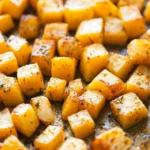
Roasted Swede (Roasted Rutabaga)
Ingredients
Ingredients
- ?1 largeswede/rutabaga
- ?1 teaspoongarlic powder or granules
- ?1 teaspoondried mixed herbs
- ??teaspoonground black pepper
- ??teaspoonchili flakesoptional
- ?1/2 teaspoonsalt
- ?2 tablespoonextra-virgin olive oil
Instructions
Instructions
- Preheat the oven to 200°C (392°F).
- Wash the swede (rutabaga), peel it, and dice into roughly 1 cm (1/2-inch) cubes.
- Spread the swede cubes in a roasting tin or on a rimmed sheet pan in a single layer.
- Evenly sprinkle over the cubes: 1 teaspoon garlic powder (or granules), 1 teaspoon dried mixed herbs, ?? teaspoon ground black pepper, ?? teaspoon chili flakes (optional), and ½ teaspoon salt.
- Drizzle 2 tablespoons extra-virgin olive oil over the seasoned cubes, then toss with tongs or shake the pan so the cubes are evenly coated and spread them out again in a single layer.
- Roast at 200°C (392°F) for 20–30 minutes, flipping or turning the cubes once halfway through (about 10–15 minutes), until tender and browned at the edges.
Equipment
- roasting tin
- rimmed sheet pan
- Tongs
- Oven
Notes
Feel free to add other seasonings such as smoked paprika, chili powder,
Italian seasoning
, etc.