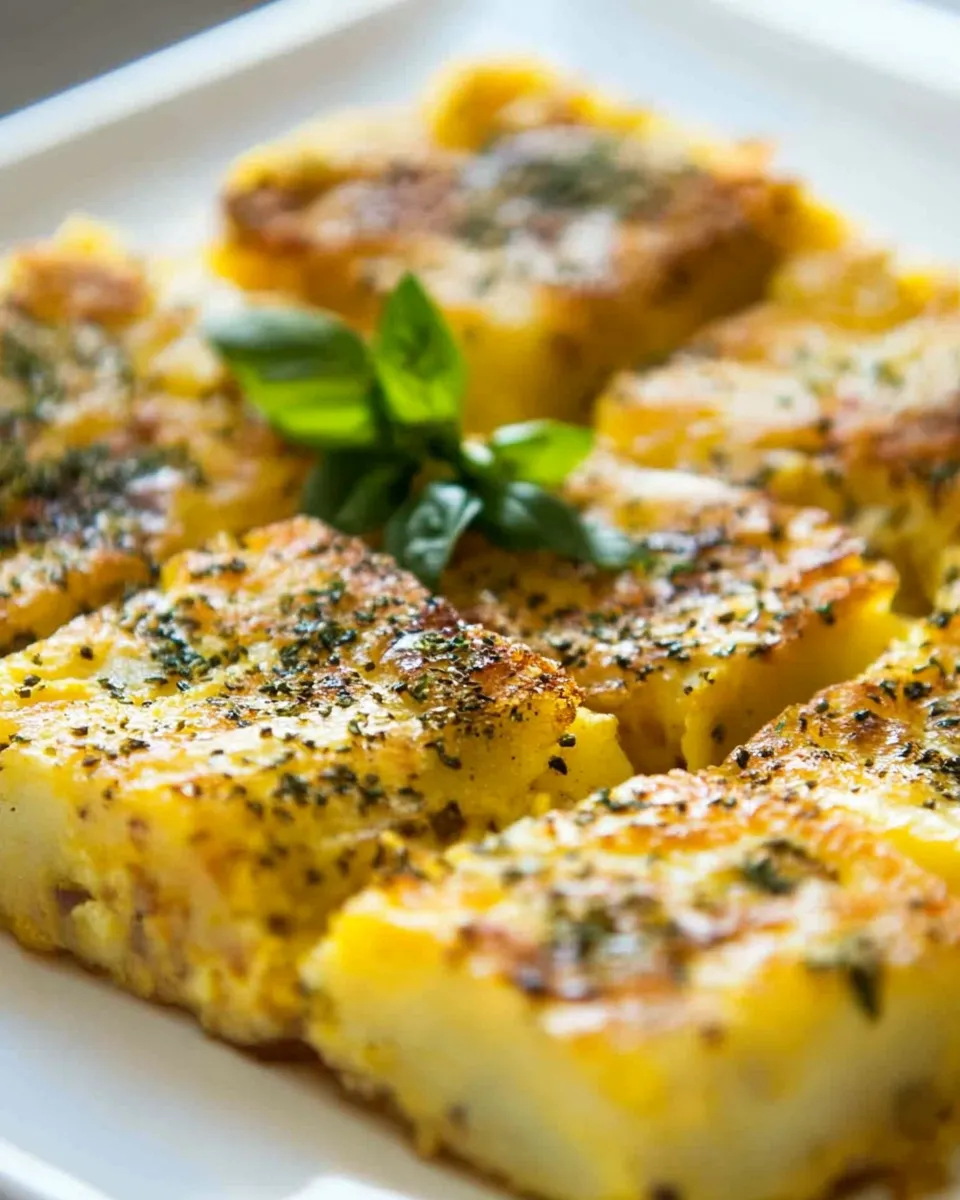
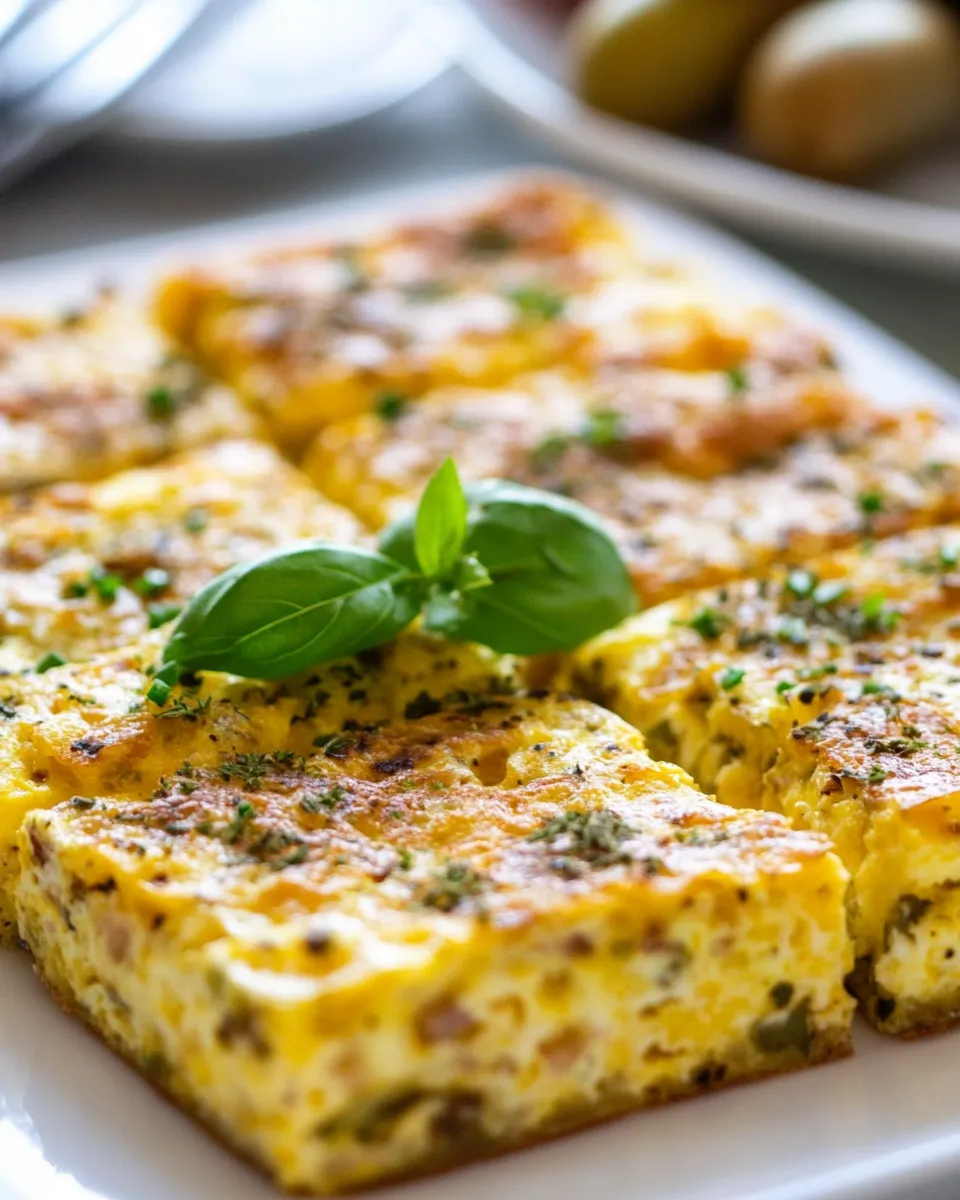
This recipe is one of my go-to make-ahead brunch dishes. It’s built for feeding a crowd, but it’s just as useful for packing lunches or stretching a weekend breakfast across the week. The texture is tender and custardy, the potatoes give body and bite, and the cheddar–ricotta mix keeps the squares creamy without being heavy.
There’s a practical rhythm to the method: gently cook the potatoes, blend the cheese-and-egg base until smooth, pour, bake, cool, and cut. Nothing fussy. If you follow the steps and respect the low heat at key moments, the result is reliably even and attractive—golden on top, soft inside.
I’ll walk you through shopping, the exact steps, equipment, troubleshooting, and sensible substitutions. You’ll get clear reasons for each choice so you can adapt the dish confidently without guessing.
What to Buy
- Butter — for cooking potatoes and enriching the custard.
- Large potatoes (Nicola or Yukon Gold recommended) — they hold shape and have a creamy interior.
- Mature cheddar cheese — gives savory depth and structure when processed into crumbs.
- Large eggs — the main setting agent for the frittata.
- Ricotta cheese — adds creaminess and lightness to the egg mixture.
- Chives — fresh, chopped, they brighten flavor throughout.
- Fresh basil leaves — chopped into the mix with a few reserved for garnish.
- Salt and black pepper — basic seasoning; measure as listed.
- Plain flour and baking powder — a small lift and binder for stability when slicing into squares.
- Baking paper (parchment) or nonstick spray — for lining or greasing the tray.
Sheet Pan Potato Frittata Squares with Basil and Chive Cooking Guide
Read the steps through once before you start. Prep the cheese and herbs while the potatoes cook; that keeps hands moving and the oven time short. You’ll find a rhythm: soften, blend, assemble, bake, rest, cut.
Ingredients
- 6tablespoonbutter — divided; 2 tbsp to cook the potatoes, 4 tbsp melted into the egg mixture for richness and a glossy finish.
- 2large potatoes (I use Nicola potatoes but Yukon Gold would be a good choice too) — diced small so they cook through quickly and distribute evenly.
- 2 ½cups mature cheddar cheese — processed into a coarse crumb to melt smoothly into the custard.
- 6large eggs — the structure; they set the frittata when baked.
- 1 ¼cups ricotta cheese — adds moisture and a lighter mouthfeel to the egg base.
- 6tablespoon chopped chives — folded into the mixture for fresh oniony notes.
- small handful fresh basil leaves — chopped into the batter, with a few reserved for garnish.
- 1teaspoon salt — essential seasoning; distribute evenly in the mixture.
- ½teaspoon black pepper — for balanced warmth.
- 3tablespoon plain flour — binds and stabilizes the set for clean squares.
- ½teaspoon baking powder — a small lift so the texture isn’t overly dense.
Step-by-step Instructions
- Preheat the oven to 350°F (170°C). Line the base of a baking tray with baking paper or grease it well.
- Peel the potatoes and cut them into small dice.
- Melt 2 tablespoons of the butter in a frying pan over low heat. Add the diced potatoes and fry, stirring occasionally, for about 15 minutes until just cooked through and tender. Keep the heat low to avoid browning.
- While the potatoes cook, melt the remaining 4 tablespoons of butter in a small pan or in the microwave; set aside.
- Chop the fresh basil leaves finely and reserve a few whole leaves for garnish.
- Cut the cheddar into small chunks and place them in a food processor. Process until you have a coarse cheesy crumb.
- Add the 6 large eggs, the melted 4 tablespoons butter, 1 1/4 cups ricotta cheese, the chopped basil (except the reserved leaves), 6 tablespoons chopped chives, 1 teaspoon salt, and 1/2 teaspoon black pepper to the food processor with the cheddar. Pulse until well combined and smooth.
- Sprinkle 3 tablespoons plain flour and 1/2 teaspoon baking powder over the mixture and pulse briefly until incorporated.
- Tip the cooked potatoes into the prepared baking tray and spread them into an even layer.
- Pour the egg-and-cheese mixture evenly over the potatoes and smooth the top with a spatula if needed.
- Bake in the preheated oven for 20–25 minutes, until the top is golden-brown and the frittata is set and cooked through.
- Remove from the oven and allow to cool for about 10 minutes, then cut into 20 small squares.
- Serve the squares garnished with the reserved fresh basil leaves.
Why This Recipe Is Reliable
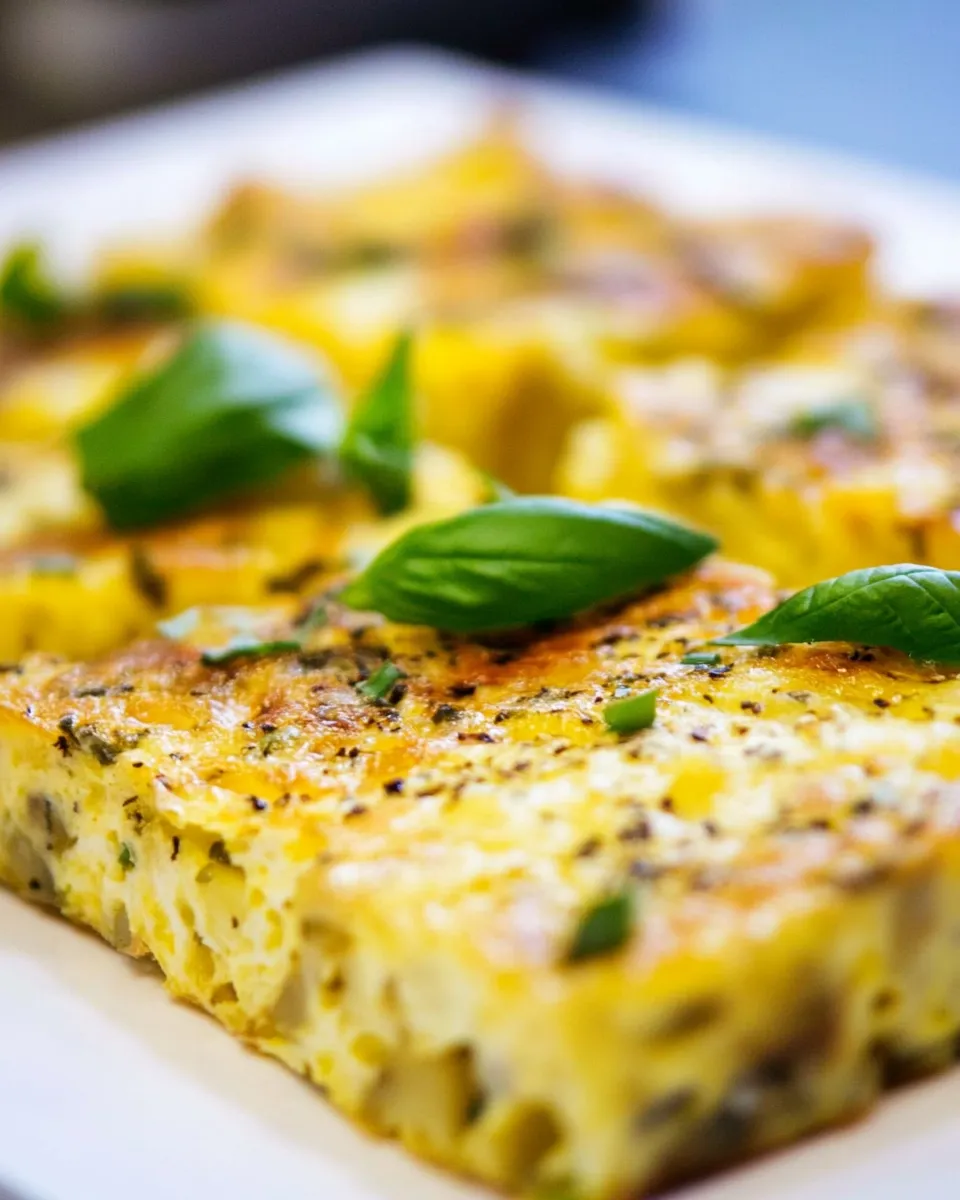
The method controls moisture and heat at every step. Dice the potatoes small and cook over low heat; that prevents browning and ensures even tenderness. Processing the cheddar into crumbs lets it integrate smoothly with the eggs and ricotta, so you don’t get chunks that separate during baking.
Using a mix of ricotta and melted butter in the egg base keeps the texture lush without making the frittata too oily. The small amount of flour and a touch of baking powder give the squares structure for clean slicing, so they hold together for serving or packing.
Healthier Substitutions
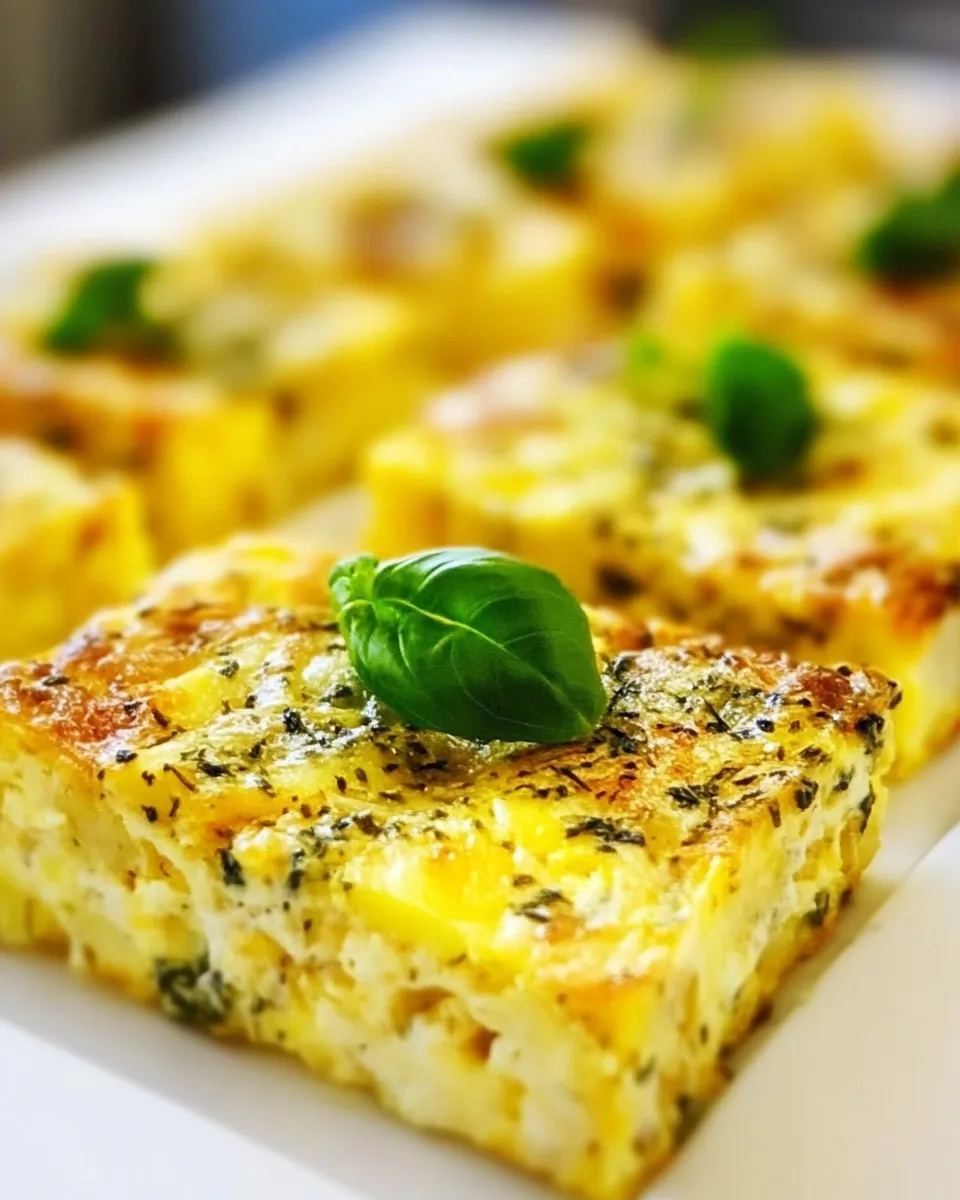
- Butter — swap part or all with light olive oil to reduce saturated fat; the flavor will be slightly different but still pleasant.
- Mature cheddar — use a reduced-fat cheddar or a sharp low-fat cheese if you need fewer calories; note the texture will be less creamy.
- Ricotta — try part-skim ricotta or cottage cheese (blended smooth) to cut fat while keeping creaminess.
- Flour — for a gluten-free option, use a 1:1 gluten-free flour blend that includes xanthan gum; results should be similar.
Equipment at a Glance
- Baking tray (sheet pan) — a rimmed tray large enough for an even layer; it controls thickness and bake time.
- Frying pan — for cooking the diced potatoes gently.
- Food processor — for turning the cheddar into crumbs and blending the egg-cheese mixture smooth; a blender can work in a pinch.
- Mixing spoon and spatula — to spread the potatoes and smooth the batter.
- Baking paper or nonstick spray — to prevent sticking and ensure easy removal.
Common Errors (and Fixes)
- Potatoes brown or crisp: Lower the heat. The recipe calls for low heat so potatoes cook through without browning; brown potatoes change texture and appearance.
- Frittata is watery: Make sure potatoes are cooked through and not releasing excess steam into the batter. Also, don’t over-process cheeses with too much liquid—pulse just until smooth.
- Slices fall apart: Let it cool for the full 10 minutes (or a bit longer). The custard firms as it cools, making cleaner cuts.
- Top browns too fast: Your oven runs hot. Reduce oven temperature by 10–15°F (5–10°C) or tent loosely with foil for the final minutes.
Allergy-Friendly Swaps
- Dairy allergy: Use dairy-free butter and a plant-based ricotta alternative; replace cheddar with a dairy-free hard cheese alternative suitable for baking.
- Egg allergy: This recipe relies on eggs as the primary set agent and is not easily replicated; for an egg-free version consider a chickpea-flour base, but know the texture and process will differ significantly.
- Gluten sensitivity: Substitute the plain flour with a certified gluten-free flour blend; keep the baking powder gluten-free.
What I Learned Testing
Small potato dice make all the difference. When I first tried larger pieces, the bake time stretched and the squares were uneven. Dicing small keeps every square consistent and reduces the chance of undercooked pockets.
Processing the cheddar instead of grating by hand helped the cheese incorporate more uniformly into the eggs and ricotta. It also reduced streaking and gave a smoother top. I also found that melting the butter separately and folding it into the egg mix yielded a silkier batter than melting it directly with the eggs.
Keep It Fresh: Storage Guide
- Refrigerate: Store cooled squares in an airtight container for up to 4 days. Layer with parchment to prevent sticking.
- Freeze: Freeze individual squares on a tray, then transfer to a sealed bag for up to 2 months. Thaw overnight in the fridge before reheating.
- Reheat: Warm gently in a 325°F (160°C) oven for 8–12 minutes or microwave briefly (start with 30 seconds) until heated through. Avoid high heat to prevent the texture from tightening too much.
Reader Q&A
Q: Can I make this in advance for a party?
A: Yes. Bake, cool, cut, and arrange on trays. You can reheat the whole tray briefly before serving or serve at room temperature. For the cleanest presentation, reheat in the oven for 8–10 minutes at 325°F (160°C).
Q: Can I add other vegetables or meats?
A: You can fold in small quantities of precooked vegetables (spinach, roasted peppers) or chopped cooked bacon, but reduce extra moisture and remember additional ingredients will change the cooking dynamics. If adding wet vegetables, squeeze out excess liquid first.
Time to Try It
This is a dependable recipe that rewards attention to small details: low heat for potatoes, smooth blending of the egg-cheese base, and a short, controlled bake. Once you’ve made it, you’ll have a simple, sliceable dish perfect for breakfasts, brunches, and picnics. Follow the steps as written the first time; then tweak herbs, cheeses, or add-ins slowly so you understand how each change affects texture and flavor.
Ready to bake? Gather your ingredients, preheat your oven, and enjoy the steady, easy rhythm of assembling a tray of warm, savory squares. They store well, travel well, and always get asked-for seconds.
Sheet Pan Potato Frittata Squares with Basil and Chive
Ingredients
Ingredients
- 6 tablespoonbutter
- 2 large potatoes I use Nicola potatoes but Yukon Gold would be a good choice too
- 2 1/2 cupsmature cheddar cheese
- 6 large eggs
- 1 1/4 cupsricotta cheese
- 6 tablespoonchopped chives
- small handful fresh basil leaves
- 1 teaspoonsalt
- 1/2 teaspoonblack pepper
- 3 tablespoonplain flour
- 1/2 teaspoonbaking powder
Instructions
Instructions
- Preheat the oven to 350°F (170°C). Line the base of a baking tray with baking paper or grease it well.
- Peel the potatoes and cut them into small dice.
- Melt 2 tablespoons of the butter in a frying pan over low heat. Add the diced potatoes and fry, stirring occasionally, for about 15 minutes until just cooked through and tender. Keep the heat low to avoid browning.
- While the potatoes cook, melt the remaining 4 tablespoons of butter in a small pan or in the microwave; set aside.
- Chop the fresh basil leaves finely and reserve a few whole leaves for garnish.
- Cut the cheddar into small chunks and place them in a food processor. Process until you have a coarse cheesy crumb.
- Add the 6 large eggs, the melted 4 tablespoons butter, 1 1/4 cups ricotta cheese, the chopped basil (except the reserved leaves), 6 tablespoons chopped chives, 1 teaspoon salt, and 1/2 teaspoon black pepper to the food processor with the cheddar. Pulse until well combined and smooth.
- Sprinkle 3 tablespoons plain flour and 1/2 teaspoon baking powder over the mixture and pulse briefly until incorporated.
- Tip the cooked potatoes into the prepared baking tray and spread them into an even layer.
- Pour the egg-and-cheese mixture evenly over the potatoes and smooth the top with a spatula if needed.
- Bake in the preheated oven for 20–25 minutes, until the top is golden-brown and the frittata is set and cooked through.
- Remove from the oven and allow to cool for about 10 minutes, then cut into 20 small squares.
- Serve the squares garnished with the reserved fresh basil leaves.
Equipment
- Baking tray
- baking paper
- Frying Pan
- small pan
- Microwave
- Food Processor
- Spatula
Notes
If you want to serve these with a a dollop of sour cream and a ribbon of smoked salmon, I would buy the smallest sour cream you can and 100g of smoked salmon.
Cook as normal and then allow to cool to room temperature.
Just before you serve spoon on the sour cream and curl a piece of smoked salmon on top. Maybe use any left over chives as a little garnish.