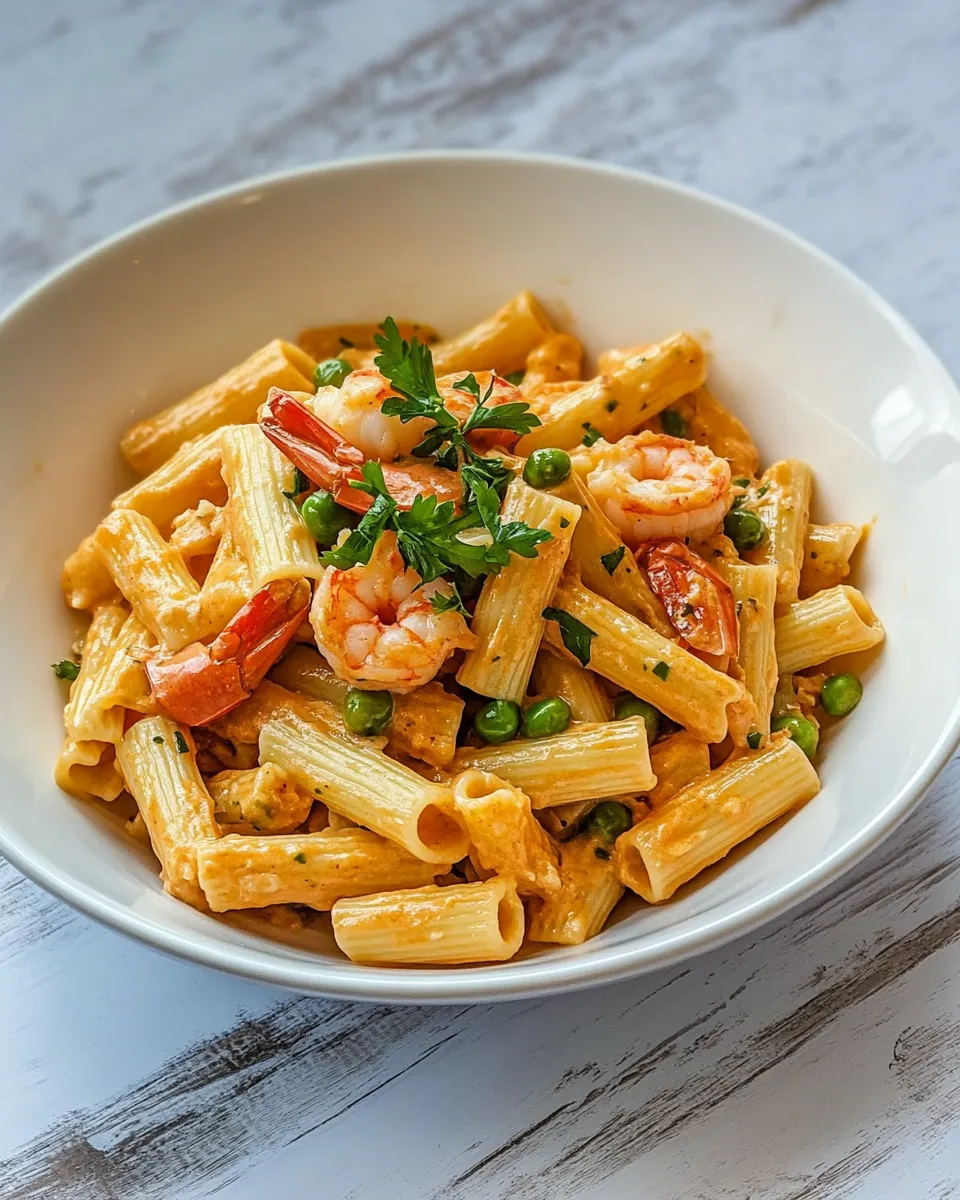
Simple, satisfying weeknight pasta doesn’t need to be complicated. This Shrimp and Pea Rigatoni comes together in about the time it takes to boil pasta, and it rewards you with a creamy tomato sauce, tender shrimp, and bright pops of pea that keep every bite interesting. I reach for it when I want something that feels a little special but still fits into a busy evening.
The recipe leans on pantry-friendly items—canned tomatoes, dried rigatoni, olive oil—and a quick finish with cream and milk for richness. The instructions are straightforward and forgiving, but there are a few small moves that make the difference: reserve some pasta water, watch the shrimp closely, and finish the pasta in the sauce so the flavors cling to every tube.
Below you’ll find a clear ingredient rundown, the exact step-by-step method, troubleshooting tips, equipment notes, and sensible storage and reheating guidance. No fluff, just practical notes so you get a reliably delicious plate every time.
Ingredient Rundown
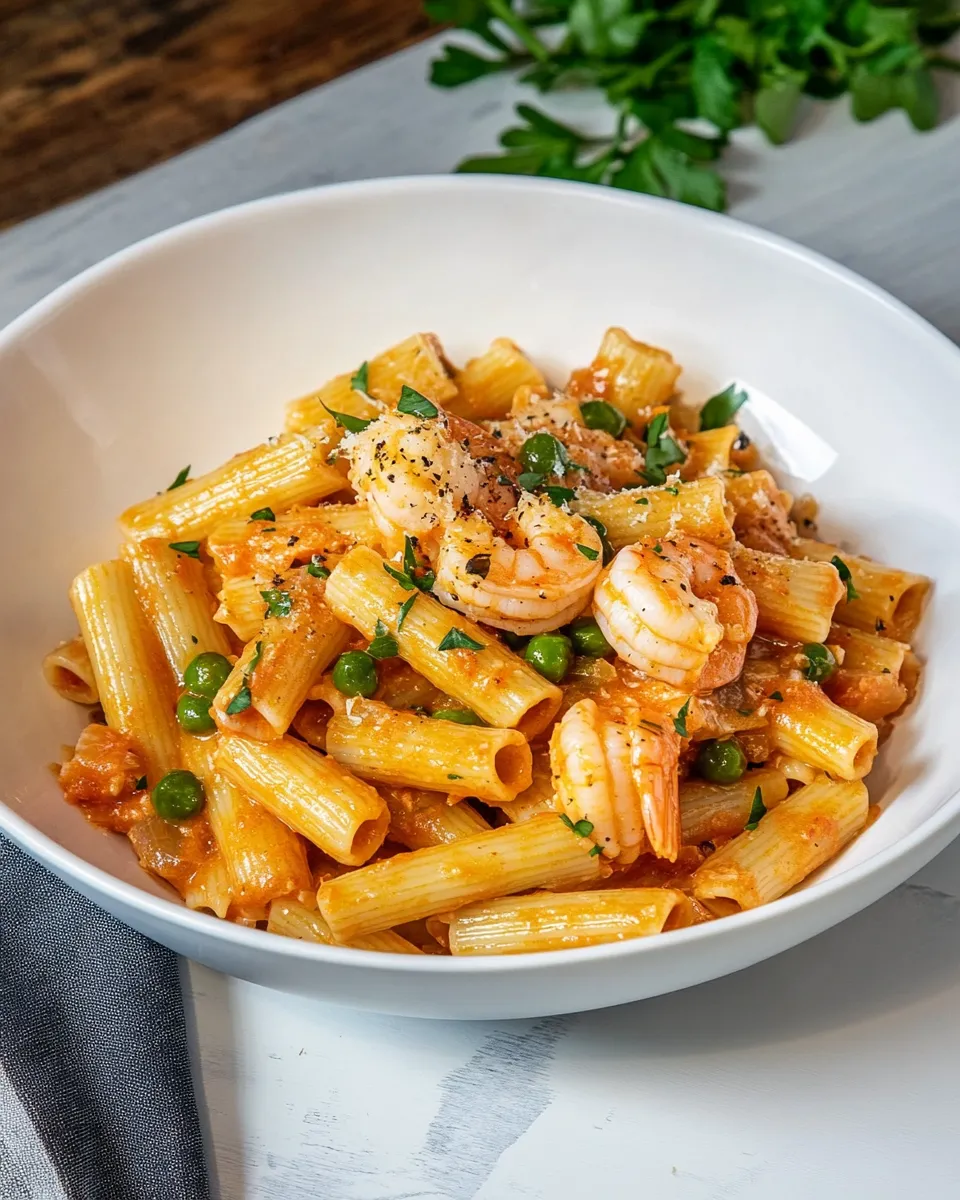
- 350 g rigatoni — sturdy tubes that hold the sauce inside and around them; cook nearly to package time so they finish in the sauce.
- 3 cloves of garlic, finely chopped — builds the fragrant base; cook briefly so it turns golden but not bitter.
- 400 g canned tomatoes, diced — provides the tomato body and acidity for the sauce; canned keeps the flavor consistent year-round.
- 100 ml heavy cream — gives the sauce silkiness and richness; don’t boil aggressively once added.
- 100 ml whole milk — stretches the cream for a lighter finish and keeps the sauce silky without overpowering it.
- 400 g shrimp, peeled — the protein star; cooks fast, so add late and watch for opacity as your cue.
- 60 g peas — sweet, bright contrast to the tomato and cream; adds texture and color.
- ¼ tsp salt — seasoning baseline for the sauce; adjust if your canned tomatoes are especially salty.
- ½ tsp pepper — a moderate peppering to lift the sauce; adjust to taste.
- 3 tbsp olive oil — heats the garlic gently and carries flavor through the sauce.
Shrimp and Pea Rigatoni: From Prep to Plate
- Bring a large pot of water to a rolling boil over high heat. Add the 350 g rigatoni and cook for 1 minute less than the time indicated on the package. Before draining, reserve a ladleful of the pasta cooking water, then drain the pasta and set aside.
- While the pasta cooks (or immediately after draining), heat a large pot or deep skillet over medium heat. Add 3 tbsp olive oil.
- Add 3 cloves finely chopped garlic to the oil and sauté, stirring constantly, until fragrant and lightly golden, about 30–60 seconds.
- Add 400 g canned diced tomatoes, 100 ml heavy cream and 100 ml whole milk. Stir to combine, bring to a gentle simmer, and cook 2–3 minutes, stirring occasionally.
- Add 400 g peeled shrimp, 60 g peas, ¼ tsp salt and ½ tsp pepper. Stir and cook until the shrimp are opaque and cooked through, about 3–5 minutes.
- Add the drained rigatoni to the sauce and toss to combine. Cook 1–2 minutes more, stirring, until the sauce thickens and coats the pasta. If the sauce becomes too thick, loosen it with a little of the reserved pasta cooking water.
- Taste and adjust as needed (using only the listed ingredients). Serve immediately.
Why This Recipe Is Reliable
This dish is built on dependable techniques and predictable ingredients. Canned diced tomatoes provide consistent acidity and texture compared with fresh tomatoes, so the sauce behaves the same each time. Rigatoni is a forgiving shape—its ridges and tubes trap sauce, so even if you slightly under- or over-salt, the flavor distribution stays even.
The method pairs staggered cooking times: the pasta is cooked nearly to package time, and the shrimp go in late. That sequencing prevents mushy pasta or rubbery shrimp. A small reserved measure of pasta water is your insurance policy: a spoon or two loosens and binds the sauce without watering it down.
Vegan & Vegetarian Swaps
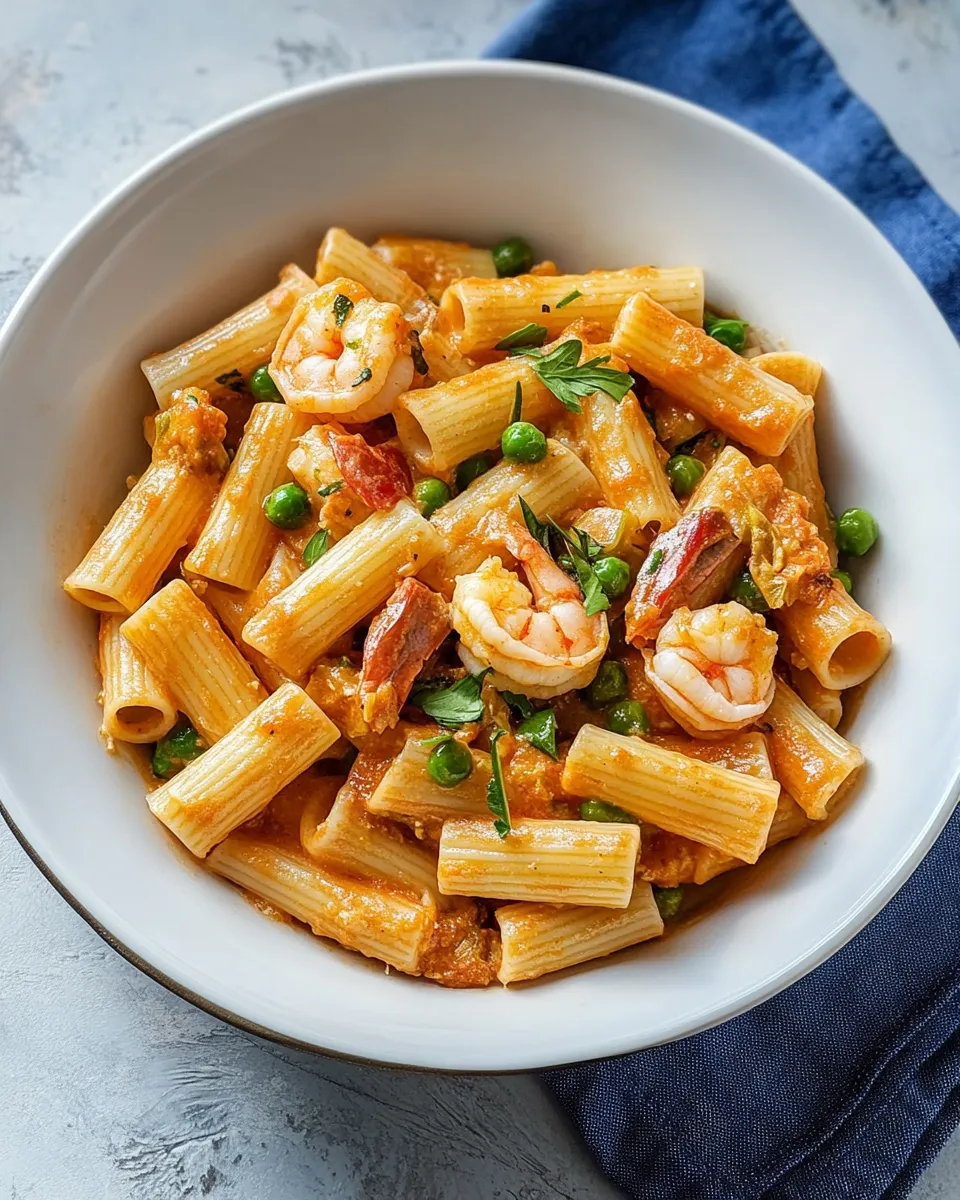
If you want to make this vegetarian, the simplest approach is to omit the 400 g shrimp and increase the 60 g peas a little to add more substance and visual presence. The sauce, built from canned tomatoes, cream and milk, remains the same.
For a vegan version, you’ll need to replace the 100 ml heavy cream and 100 ml whole milk with plant-based alternatives. Removing the 400 g shrimp will also make the dish plant-forward. Since the recipe relies on those dairy components for texture, keep an eye on sauce consistency and use some reserved pasta cooking water if it needs body after swapping fluids.
Equipment Breakdown
Must-haves
- Large pot — for boiling 350 g rigatoni comfortably without sticking.
- Large pot or deep skillet — the sauce develops best in wide, shallow contact but a deep skillet works if it has room for tossing.
- Colander or strainer — to drain the rigatoni efficiently while you reserve the cooking water.
- Ladle — to scoop and reserve that critical bit of pasta water.
Nice-to-haves
- Tongs — make tossing the rigatoni with the sauce effortless.
- Measuring spoons and cups — to ensure you use exactly 3 tbsp olive oil, 100 ml cream and 100 ml milk as written.
Errors to Dodge
There are a few simple mistakes that turn a good dish into a so-so one. The most common is overcooking the shrimp. Because the directions call for adding the 400 g peeled shrimp late, watch for that moment when they turn opaque; that’s when to stop cooking. Overcooked shrimp become tough quickly.
Another avoidable error is tossing the rigatoni into the sauce straight from the colander without reserving pasta water. That handful of starchy water is often the only thing standing between a clumpy sauce and a glossy, emulsified finish. Don’t skip it.
Also, don’t let the garlic brown too much. The step calls for sautéing 3 cloves finely chopped garlic until fragrant and lightly golden, about 30–60 seconds. If garlic goes beyond that, it can introduce bitterness.
Season-by-Season Upgrades
Spring: lean into the peas. The recipe already includes 60 g peas; consider using a touch more if you want a brighter, greener plate when spring peas are available in your pantry or freezer.
Summer: the canned diced tomatoes give great consistency year-round, but in summer you can be mindful about sweetness and acidity. Taste the sauce during step 4 (after simmering the canned diced tomatoes, heavy cream and whole milk) and adjust only with the ¼ tsp salt and ½ tsp pepper listed—sometimes a touch more pepper balances sweeter canned tomatoes.
Fall and Winter: this is a comfort-friendly recipe. It’s naturally warming thanks to the cream and the full-bodied sauce, and it’s an easy way to bring a bright, fresh-looking plate to a colder-night table. The method requires minimal active time, which is welcome during busy holiday prep weeks.
Chef’s Notes
Timing is your ally. Start the water for the rigatoni first and prep the garlic and measure liquids while the water comes to a boil. That way the sauce can be ready to receive the rigatoni when it’s drained for a quick finish in the pan.
When adding 100 ml heavy cream and 100 ml whole milk to 400 g canned diced tomatoes, bring the mixture only to a gentle simmer. Aggressive boiling can make the cream separate. Two to three minutes at a gentle simmer is enough to marry the flavors before the shrimp go in.
The instruction to “taste and adjust as needed (using only the listed ingredients)” is there because this is a tight flavor profile. If the sauce needs lift, use a touch more ¼ tsp salt or ½ tsp pepper within the amounts listed; if the sauce is too tight, thaw or add a spoon of the reserved pasta cooking water to reach the right coating consistency.
Storing, Freezing & Reheating
Storing: Let the shrimp and rigatoni cool to near room temperature, then transfer to an airtight container and refrigerate. It will keep well for 2 days. The sauce softens the pasta over time, so expect a slightly softer texture on day two.
Freezing: Seafood-based pasta dishes can be frozen, but shrimp textures sometimes change after thawing. If you choose to freeze, cool fully and freeze in a shallow, airtight container for up to one month. Thaw overnight in the refrigerator before reheating.
Reheating: Gently reheat on the stovetop over low heat. Add a splash of the listed whole milk (or some reserved pasta cooking water if you have some stashed) to loosen the sauce as it warms. Stir frequently and heat just until warmed through—avoid prolonged boiling to keep the shrimp tender.
Helpful Q&A
Q: Can I use frozen peas? A: Yes. The recipe lists 60 g peas; frozen peas work fine and only need the brief cooking time that happens when the shrimp are added.
Q: How do I know the 400 g peeled shrimp are done? A: Cook until opaque and just firm, about 3–5 minutes after they go into the sauce. The recipe times reflect that quick window—remove from heat promptly once opaque to avoid rubberiness.
Q: My sauce is too thick—what then? A: Use the reserved pasta cooking water to loosen the sauce. The instructions call for reserving a ladleful before draining the rigatoni; add it a little at a time until the sauce reaches the desired coating consistency.
Q: Any advice on seasoning? A: The recipe lists ¼ tsp salt and ½ tsp pepper. Taste after the sauce simmers with the cream and milk, then again after the shrimp finish. Add small increments of the listed salt or pepper if needed.
The Takeaway
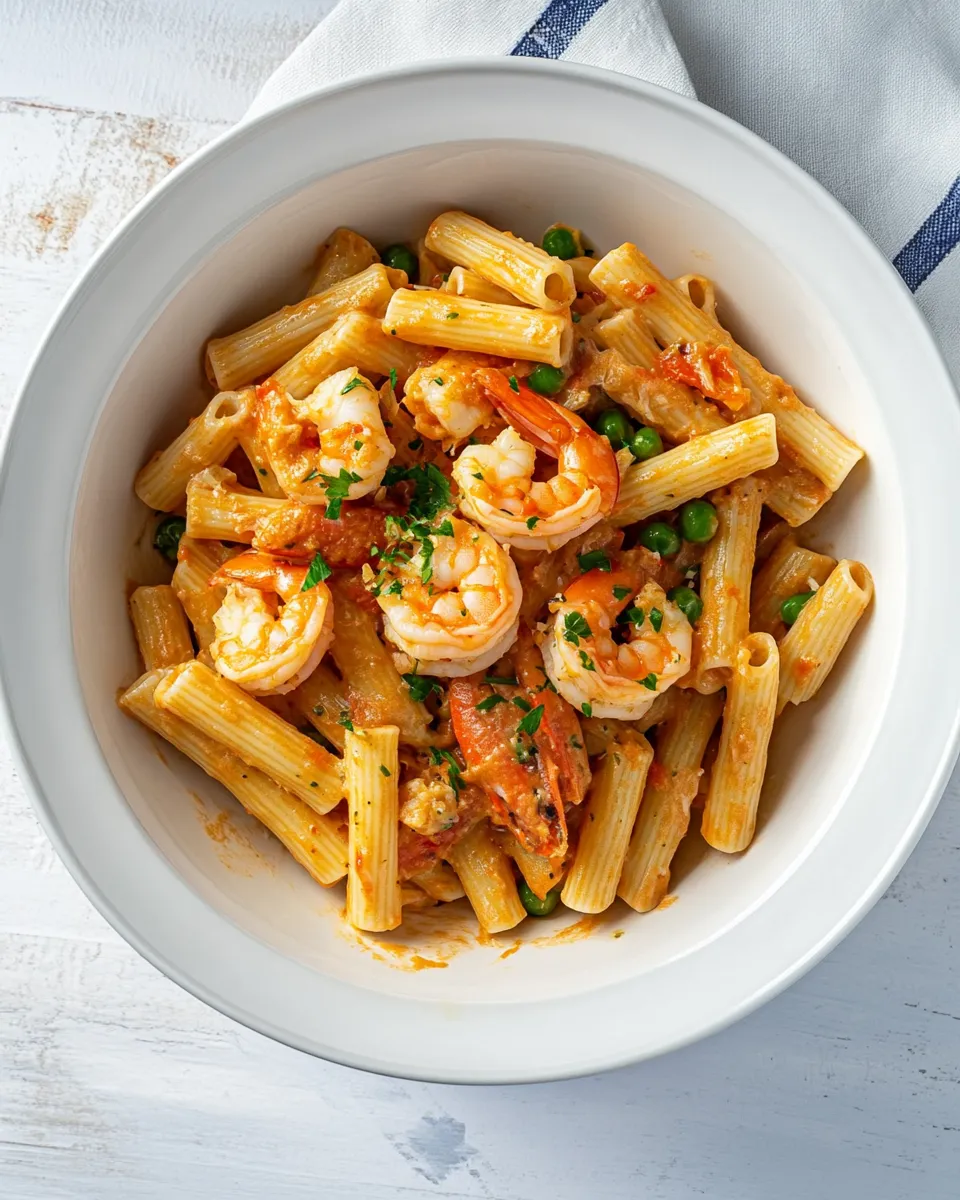
Shrimp and Pea Rigatoni is a dependable, weeknight-friendly pasta that feels composed without fuss. Follow the sequence—reserve pasta water, sauté garlic briefly, simmer tomatoes with cream and milk, add shrimp and peas, then finish the rigatoni in the sauce—and you’ll get tender shrimp, a silky tomato-cream coating, and bright pops of pea every time.
It’s a practical recipe that rewards attention to a few small details. Keep the ingredients measured as listed, watch the shrimp, and use that reserved pasta water: those moves turn a quick meal into something you’ll happily repeat.
Shrimp and Pea Rigatoni
Ingredients
Ingredients
- 350 grigatoni
- 3 cloves ofgarlicfinely chopped
- 400 gcanned tomatoesdiced
- 100 mlheavy cream
- 100 mlwhole milk
- 400 gshrimpspeeled
- 60 gpeas
- 1/4 tspsalt
- 1/2 tsppepper
- 3 tbspolive oil
Instructions
Instructions
- Bring a large pot of water to a rolling boil over high heat. Add the 350 g rigatoni and cook for 1 minute less than the time indicated on the package. Before draining, reserve a ladleful of the pasta cooking water, then drain the pasta and set aside.
- While the pasta cooks (or immediately after draining), heat a large pot or deep skillet over medium heat. Add 3 tbsp olive oil.
- Add 3 cloves finely chopped garlic to the oil and sauté, stirring constantly, until fragrant and lightly golden, about 30–60 seconds.
- Add 400 g canned diced tomatoes, 100 ml heavy cream and 100 ml whole milk. Stir to combine, bring to a gentle simmer, and cook 2–3 minutes, stirring occasionally.
- Add 400 g peeled shrimp, 60 g peas, ¼ tsp salt and ½ tsp pepper. Stir and cook until the shrimp are opaque and cooked through, about 3–5 minutes.
- Add the drained rigatoni to the sauce and toss to combine. Cook 1–2 minutes more, stirring, until the sauce thickens and coats the pasta. If the sauce becomes too thick, loosen it with a little of the reserved pasta cooking water.
- Taste and adjust as needed (using only the listed ingredients). Serve immediately.
Equipment
- Large Pot
- deep skillet
- Ladle
Notes
Chef’s tip
:
Avoid sautéing the shrimp for too long, as they will continue to cook as they simmer in the sauce.