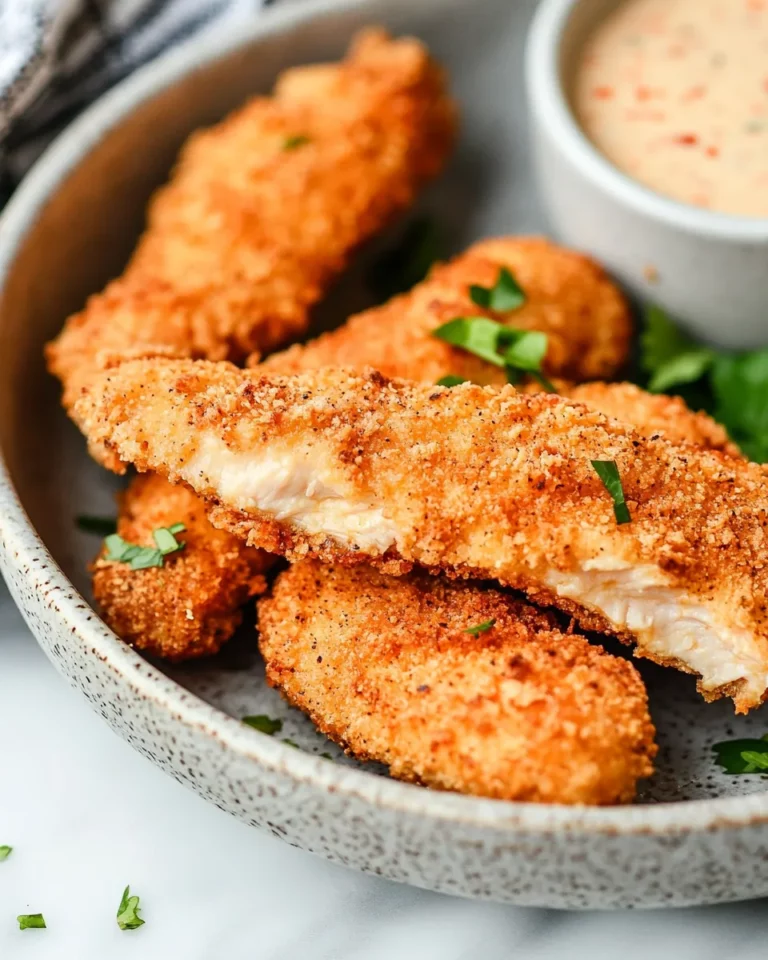
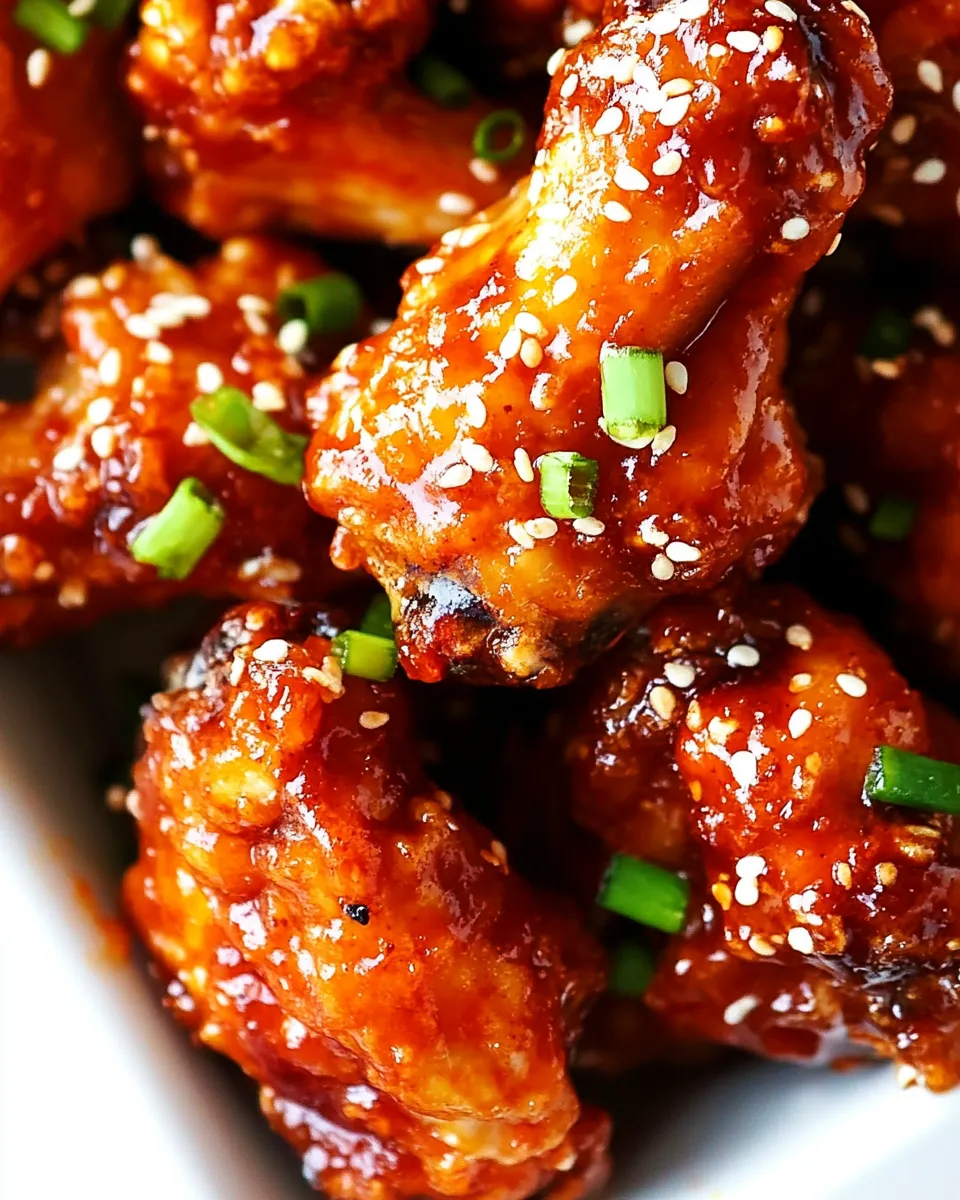
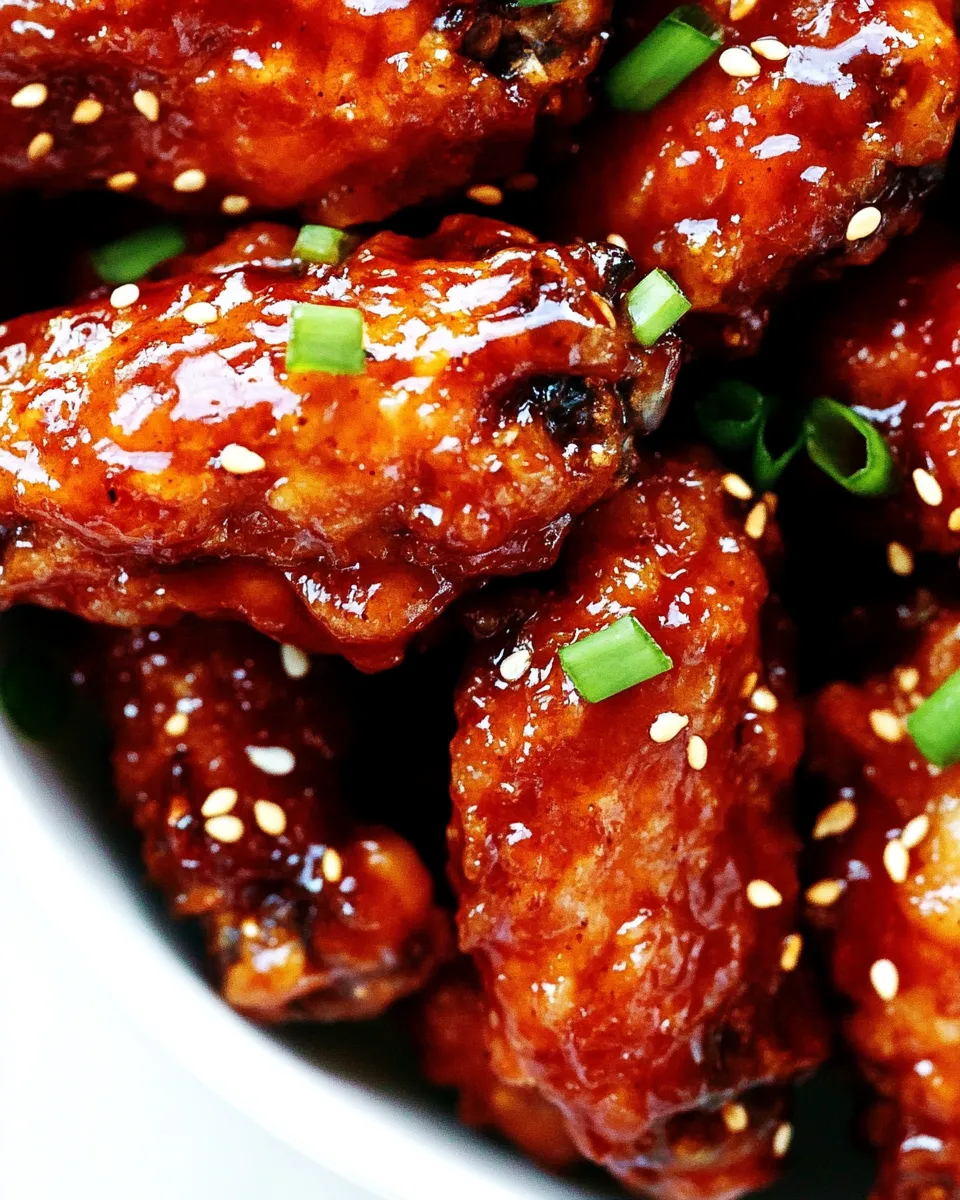
These wings are the kind of recipe I reach for when I want a crowd-pleaser that feels bold but is actually straightforward. They blister up crisp in the oven, then get tossed in a glossy, spicy-sweet gochujang sauce that clings to every nook. The contrast between crunchy skin and sticky glaze is why these wings disappear first at any party.
I like to break this recipe into two clear stages: dry-bake low and slow to render fat, then high heat to crisp. While the wings are in the oven you can make the sauce in one pan and time everything so it comes together fast. The technique is reliable and forgiving.
Below you’ll find a clear ingredient list, step-by-step directions lifted straight from the method I use, troubleshooting tips, and variations to suit different diets. Read through once, prep your mise en place, and you’ll have golden, spicy Korean wings on the table in under two hours.
Ingredients at a Glance
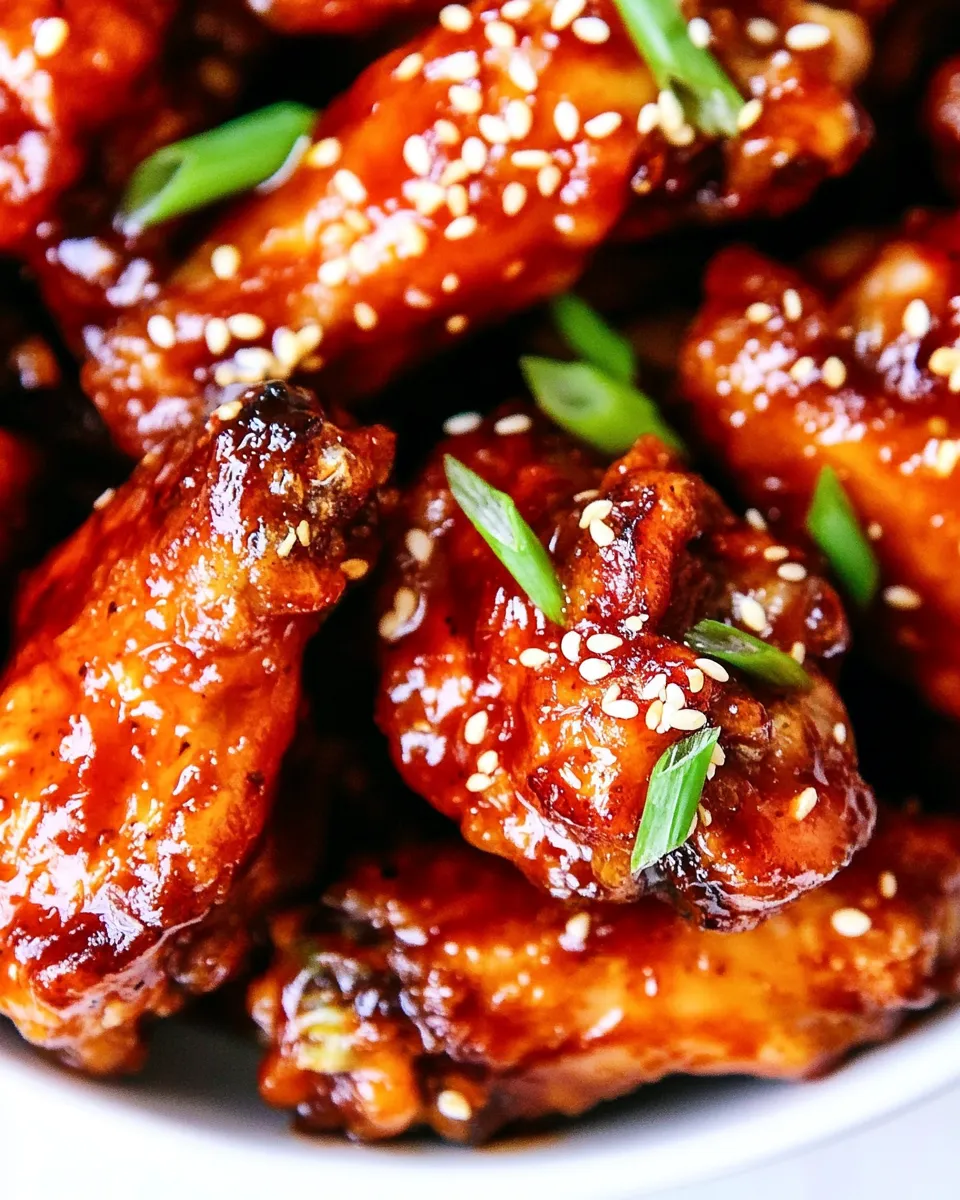
- 1 1/2–2 lbs chicken wings — the amount feeds 2–4 depending on appetite; wings are ideal for even cooking and crisp skin.
- 2 teaspoons baking powder — helps dry the skin and create extra crispness during baking.
- 1 teaspoon salt — seasons the wings; necessary for flavor and to draw moisture out of the skin.
- 1 tablespoon oil (I used sesame oil) — split between brushing the rack and sautéeing; sesame oil adds a toasty note.
- 4 cloves garlic, minced — aromatic base for the sauce; cook briefly to avoid bitterness.
- 2 tablespoons ginger, minced — gives the sauce warmth and a bright, spicy edge.
- 2 tablespoons white sugar — balances heat and acidity; recipe notes you can use brown sugar, honey, or maple syrup for depth.
- 1 tablespoon rice vinegar — cuts richness and rounds the sauce with gentle acidity.
- 2 tablespoons soy sauce — provides savory umami and saltiness to the glaze.
- 4 tablespoons gochujang — Korean fermented chili paste; delivers heat, sweetness, and complex umami.
- 2 tablespoons butter — enriches and helps the glaze become silky.
- 2 tablespoons honey — adds sticky sweetness and helps the sauce glaze the wings.
- Toasted sesame seeds — garnish for texture and to emphasize sesame flavor.
- Chopped green onions — fresh garnish that adds color and a mild onion bite.
- Crushed toasted peanuts — optional crunch and a nutty contrast to the spicy-sweet sauce.
Spicy Korean Chicken Wings, Made Easy
- Preheat oven to 250°F. Line a large baking sheet with aluminum foil and fit a wire rack into the sheet. Lightly brush the rack with a small amount of the 1 tablespoon oil listed to prevent sticking.
- Pat the 1 1/2–2 lbs chicken wings dry with paper towels. Place the wings in a large bowl, add 2 teaspoons baking powder and 1 teaspoon salt, and toss until evenly coated.
- Arrange the wings in a single layer on the prepared wire rack, making sure they are not touching.
- Place the baking sheet on the lower oven rack and bake at 250°F for 30 minutes.
- While the wings bake, make the sauce: in a saucepan over medium heat add the remaining oil (from the 1 tablespoon listed). Sauté 4 cloves minced garlic and 2 tablespoons minced ginger until fragrant, about 2–3 minutes.
- Add 2 tablespoons white (or brown) sugar, 1 tablespoon rice vinegar, 2 tablespoons soy sauce, 4 tablespoons gochujang, 2 tablespoons butter, and 2 tablespoons honey to the pan. Reduce heat to low and cook, stirring, for about 3 minutes, until the butter melts and the sauce is slightly thickened. Remove the pan from heat and keep the sauce warm.
- After the first 30 minutes, increase the oven temperature to 425°F. Move the baking sheet to the upper oven rack and continue baking the wings for an additional 45 minutes, or until the wings are golden brown and crispy.
- Remove the wings from the oven and transfer them to a large bowl. Pour the warm sauce over the wings and gently toss until they are evenly coated.
- Arrange the sauced wings on a serving plate and sprinkle with toasted sesame seeds, chopped green onions, and crushed toasted peanuts. Serve immediately.
Reasons to Love Spicy Korean Chicken Wings
They deliver big flavor with minimal fuss. Gochujang brings heat layered with sweetness and fermented complexity that plain hot sauce can’t match. The two-stage baking method renders fat and gives you reliably crisp skin without deep frying. That combination — crisp exterior, tender meat, and sticky-sweet-spicy glaze — hits multiple texture and flavor buttons fast.
They are also highly shareable. Serve them at a gathering or make a batch for movie night. The sauce is bold but familiar, and the garnishes add brightness and crunch. Finally, the recipe scales easily: double the wings and sauce for a crowd, or halve it for a weeknight dinner.
International Equivalents
- United States: Buffalo wings are a closer cousin — tossed in a butter-forward hot sauce rather than a gochujang glaze.
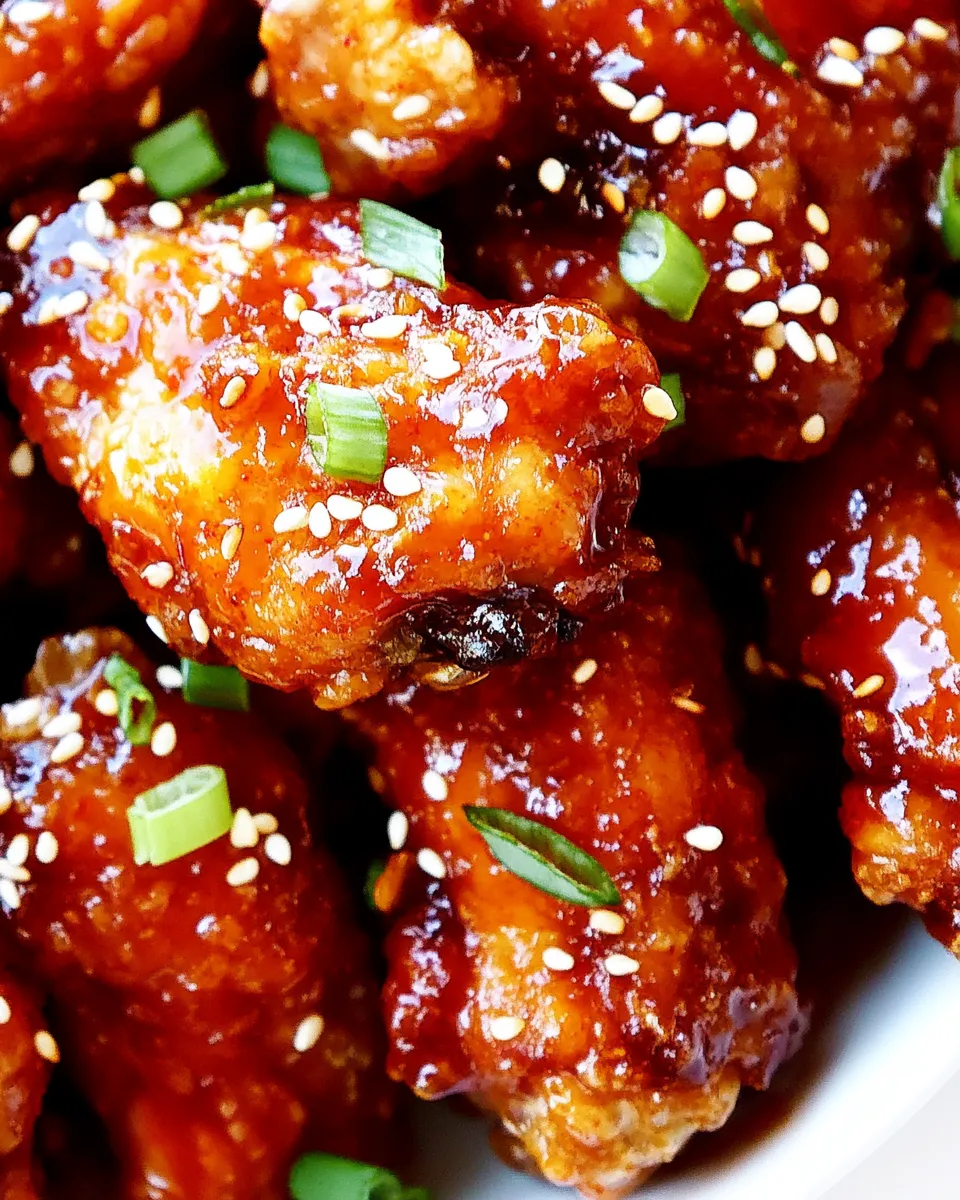
- Korea: Dakgangjeong is a traditional Korean sweet and crispy fried chicken with a sticky glaze; these wings borrow the sweet-spicy-savoury glazing idea but use oven-roasting instead of deep-frying.
- China: You might compare the flavor profile to some Sichuan-style sticky chicken dishes that balance sugar, soy, and chilis, though the fermented heat of gochujang is uniquely Korean.
Kitchen Gear Checklist
- Large baking sheet — for holding the wire rack and catching drips.
- Wire rack that fits the baking sheet — critical for airflow so wings crisp all around.
- Aluminum foil — for easy cleanup.
- Large bowl — for tossing wings with baking powder and salt.
- Saucepan — to cook the sauce and meld flavors.
- Tongs and a large mixing bowl — for tossing hot wings in sauce safely.
- Measuring spoons — accurate salt and leavening matter for texture.
Mistakes That Ruin Spicy Korean Chicken Wings
- Skipping the baking powder — you lose the extra crispness. Baking powder is the secret that helps the skin blister and turn crunchy in the oven.
- Not drying the wings well enough — wet skin steams instead of crisps, leaving the exterior limp.
- Overcrowding the rack — wings touching each other trap steam and prevent browning. Single layer only.
- Applying sauce too early in the oven process — sugar in the glaze can burn at high heat; sauce is best added after the final crisping step.
- Using a heavy-handed salt adjustment at the end — the soy sauce in the glaze contributes salt, so season wings conservatively before baking.
Make It Diet-Friendly
Want to lighten things up? A few swaps keep the spirit of the dish while reducing fat or sugar.
- Lower fat: Remove the butter and use a smaller splash of oil in the sauce. The wings will still glaze but the mouthfeel will be lighter.
- Lower sugar: Replace the white sugar with a teaspoon or two of a no-calorie sweetener that tolerates heat, or reduce the sugar and keep the honey minimal. Note that texture and gloss will change with less sugar.
- Gluten-free: Use tamari or a gluten-free soy sauce in place of regular soy sauce. Gochujang sometimes contains wheat, so check the label or seek a gluten-free gochujang alternative.
- Keto-ish: Reduce the honey and sugar and lean on additional gochujang for heat; the glaze will be less sweet but still bold. Remember that gochujang has some sugar, so check labels if strict low-carb is required.
Chef’s Rationale
The low-temperature start at 250°F renders fat from the wings slowly, which reduces flare-ups and prevents the skin from puffing too quickly. That step softens connective tissue and begins the fat loss process. Moving to 425°F on an upper rack finishes the job: it crisps the skin and encourages Maillard browning for color and flavor.
Baking powder is a tried-and-true oven crisping agent. It changes skin chemistry slightly, creating tiny bubbles and increasing dryness at the surface so the final high heat produces a crisp, crackly exterior. Salt pulls moisture out of the skin and seasons the meat from the outside in.
The sauce construction balances heat (gochujang), salt (soy), acid (rice vinegar), and sweetness (sugar + honey) while butter smooths and enriches. Gochujang provides a fermented backbone — it’s not just chili paste; it has depth. Keeping the sauce warm and pouring it over the cooked wings ensures sugar doesn’t caramelize or burn in the oven, and the warm sauce clings to hot skin for that glossy finish.
How to Store & Reheat
Cool any leftover wings to room temperature no longer than two hours after cooking and store in an airtight container in the refrigerator for up to 3–4 days. For longer storage, freeze in a single layer on a sheet, then transfer frozen wings to a zip-top bag for up to 2 months.
To reheat and preserve crispness: preheat the oven to 400°F. Place wings on a wire rack set over a baking sheet and heat for 8–12 minutes, until warmed through and the skin crisps back up. If wings were frozen, thaw overnight in the fridge first. You can reheat in an air fryer at 375°F for 5–8 minutes for small batches. Avoid microwaving unless you don’t care about texture — it makes skin soggy.
Spicy Korean Chicken Wings FAQs
Can I air-fry these wings instead of oven-baking? Yes. Air fry at 360°F for about 20–25 minutes, flipping halfway, then increase to 400°F for another 3–5 minutes to finish crisping. Times vary by model; check for an internal temperature of 165°F.
Is gochujang very spicy? Gochujang is moderately spicy but delivers more depth than pure heat. It’s balanced with fermented savory notes and some sweetness. If you want milder wings, reduce the gochujang by a tablespoon and increase honey slightly.
Can I prep the sauce ahead? Yes. Make the sauce up to 2 days ahead and reheat gently before tossing with hot wings. Keep it warm, but do not boil it vigorously once butter and honey are in — that can change texture.
How do I know the wings are done? Look for golden-brown, blistered skin and crisp texture. The meat should pull away from the bone slightly. For precision, the internal temperature at the thickest part should read 165°F.
Final Thoughts
This Spicy Korean Chicken Wings recipe is built around sensible technique and a bold glaze that layers flavors without fuss. The two-stage bake plus a quick stovetop sauce gives you the best of both worlds: crunchy skin and sticky, flavorful coating. Follow the method, respect the small details (dry skin, single layer, keep sauce warm), and these wings will be a reliable favorite whether you’re feeding family or entertaining friends.
Make a batch, set out napkins, and expect people to ask for the recipe. They’ll taste the effort — not the work.
Spicy Korean Chicken Wings
Ingredients
Ingredients
- 1 1/2-2 lbschicken wings
- 2 teaspoonsbaking powder
- 1 teaspoonsalt
- 1 tablespoonoilI used sesame oil
- 4 clovesgarlicminced
- 2 tablespoonsgingerminced
- 2 tablespoonswhite sugaror brown sugar for a deeper flavor you can also use honey or maple syrup
- 1 tablespoonrice vinegar
- 2 tablespoonssoy sauce
- 4 tablespoonsgochujang
- 2 tablespoonsbutter
- 2 tablespoonshoney
- toasted sesame seeds
- chopped green onions
- crushed toasted peanuts
Instructions
Instructions
- Preheat oven to 250°F. Line a large baking sheet with aluminum foil and fit a wire rack into the sheet. Lightly brush the rack with a small amount of the 1 tablespoon oil listed to prevent sticking.
- Pat the 1 1/2–2 lbs chicken wings dry with paper towels. Place the wings in a large bowl, add 2 teaspoons baking powder and 1 teaspoon salt, and toss until evenly coated.
- Arrange the wings in a single layer on the prepared wire rack, making sure they are not touching.
- Place the baking sheet on the lower oven rack and bake at 250°F for 30 minutes.
- While the wings bake, make the sauce: in a saucepan over medium heat add the remaining oil (from the 1 tablespoon listed). Sauté 4 cloves minced garlic and 2 tablespoons minced ginger until fragrant, about 2–3 minutes.
- Add 2 tablespoons white (or brown) sugar, 1 tablespoon rice vinegar, 2 tablespoons soy sauce, 4 tablespoons gochujang, 2 tablespoons butter, and 2 tablespoons honey to the pan. Reduce heat to low and cook, stirring, for about 3 minutes, until the butter melts and the sauce is slightly thickened. Remove the pan from heat and keep the sauce warm.
- After the first 30 minutes, increase the oven temperature to 425°F. Move the baking sheet to the upper oven rack and continue baking the wings for an additional 45 minutes, or until the wings are golden brown and crispy.
- Remove the wings from the oven and transfer them to a large bowl. Pour the warm sauce over the wings and gently toss until they are evenly coated.
- Arrange the sauced wings on a serving plate and sprinkle with toasted sesame seeds, chopped green onions, and crushed toasted peanuts. Serve immediately.
Equipment
- Oven
- Large baking sheet
- Aluminum Foil
- Wire Rack
- Large Bowl
- Saucepan
- Serving plate
Notes
Corn starch can be used on your chicken wings instead of baking powder.
For faster cooking with crispier chicken skin, you can air fry your chicken wings. Just fry at 390 for five minutes per side.
Add more salt and black pepper to your sauce (to taste) before serving.
I make sure to pat the wings dry with paper towels before adding any seasoning. This helps the skin crisp up better in the oven.
I always toss the wings in the sauce while they’re still hot from the oven. The sauce clings better and soaks into the crispy skin.