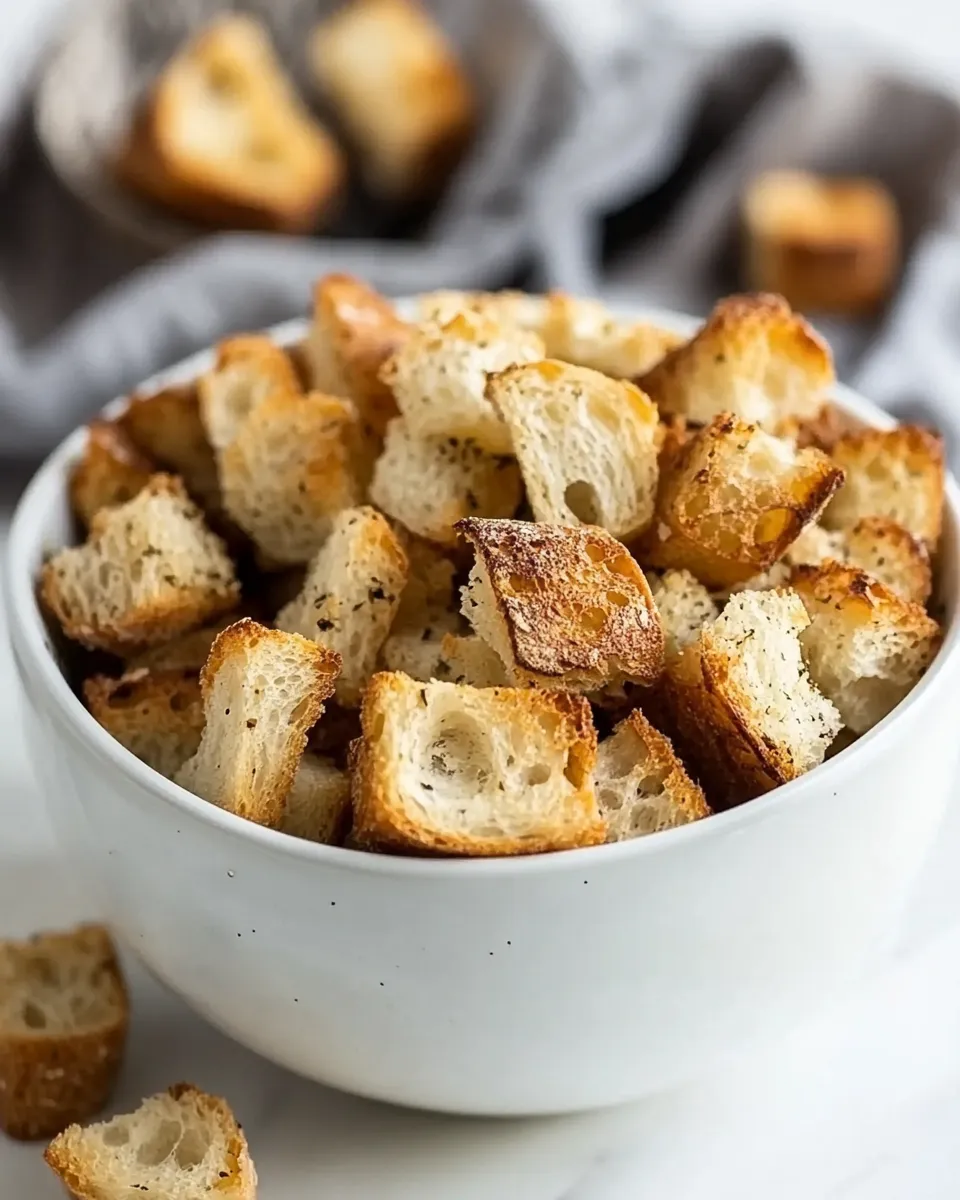
Crunchy, golden croutons are the small detail that lifts a simple salad or soup into something worth writing home about. I learned early on that store-bought croutons rarely match the crisp, toasted flavor you get from fresh bread treated simply with oil and seasoning. This recipe is short, exact, and forgiving—perfect for busy weeknights and last-minute meal upgrades.
You need only a good baguette, olive oil, and seasoning. The technique is straightforward: cube, toss, spread, bake, cool. Those few steps reward you with croutons that stay crisp and come out evenly browned every time. I’ll walk you through shopping tips, equipment, variations that don’t invent new ingredients, and common mistakes to avoid.
Keep this post handy. Once you make a batch, you’ll find yourself sprinkling these into lunches and dinners more often than you expected. They keep well if handled properly, and they transform leftovers into something bright and delicious.
Your Shopping Guide
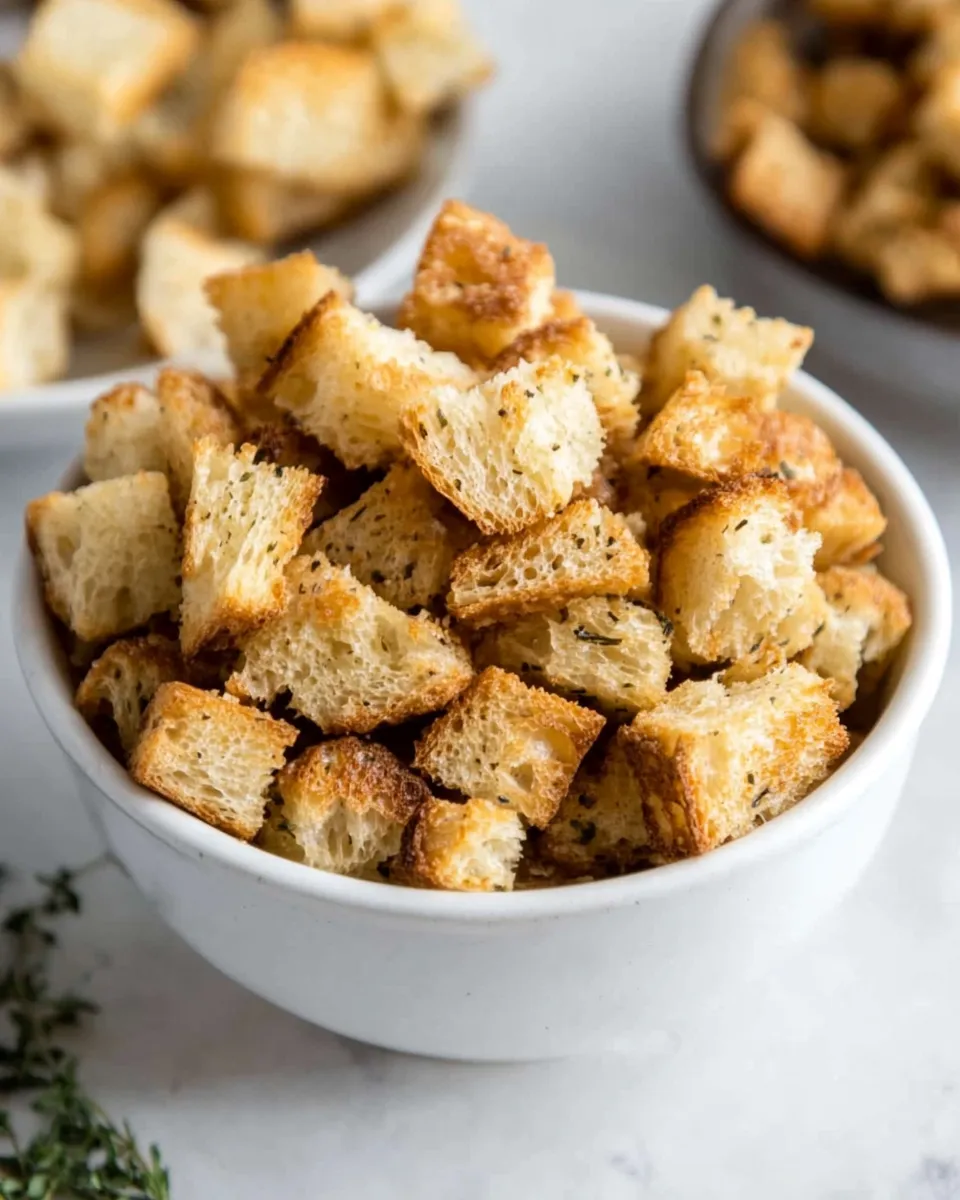
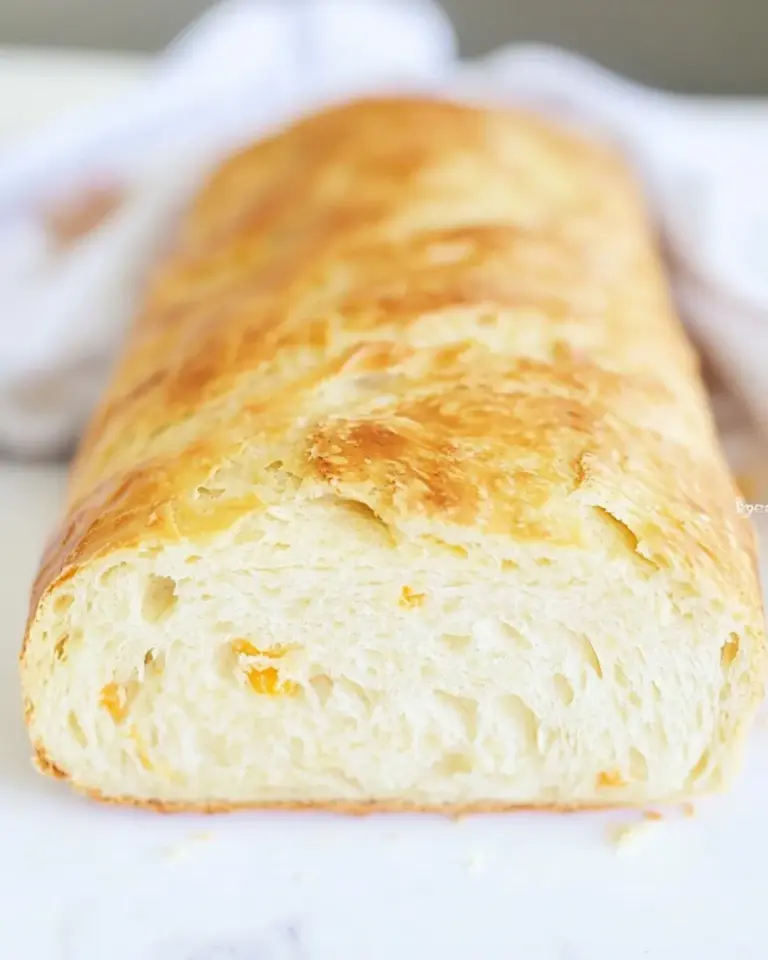
Start with a baguette that feels firm in the crust but still slightly tender inside. You want bread that gives structure when cubed so the pieces hold up in the oven and don’t collapse into crumbs. If the loaf is very fresh and soft, the croutons will still work, but they may take a little longer to crisp.
Olive oil should be something you cook with frequently. It doesn’t need to be extravagant, but choose an oil that tastes pleasant to you; it’s the fat that carries flavor and helps the bread brown. Sea salt and freshly ground pepper are all you need for seasoning—simple is best.
Buy enough bread to cubed into roughly ½” pieces without crowding them too tightly on the baking sheet. You’ll have a better bake and more consistent texture if air can circulate around each cube. Parchment paper and a sturdy baking sheet are inexpensive but make the job cleaner and more reliable.
Ingredients
- 1 baguette cut into ½” cubes — the structure for the croutons; aim for even cubes for uniform toasting.
- 3 tablespoons olive oil — coats the bread and promotes browning; use an oil you enjoy cooking with.
- sea salt and pepper — seasoning to taste; salt enhances flavor, pepper adds a mild bite.
Homemade Croutons: Step-by-Step Guide
- Preheat the oven to 375°F.
- Place the ½” cubed baguette in a large bowl. Pour the 3 tablespoons olive oil over the bread and sprinkle with sea salt and pepper (to taste). Toss gently until all cubes are evenly coated.
- Line a baking sheet with parchment paper and spread the coated bread cubes in a single layer, leaving small gaps so air can circulate.
- Bake on the middle oven rack at 375°F for 15 to 20 minutes, stirring or shaking the pan once about halfway through baking so the croutons brown evenly.
- Remove the baking sheet from the oven and let the croutons cool on the sheet until they are crisp.
- Serve the cooled croutons.
Why It Deserves a Spot
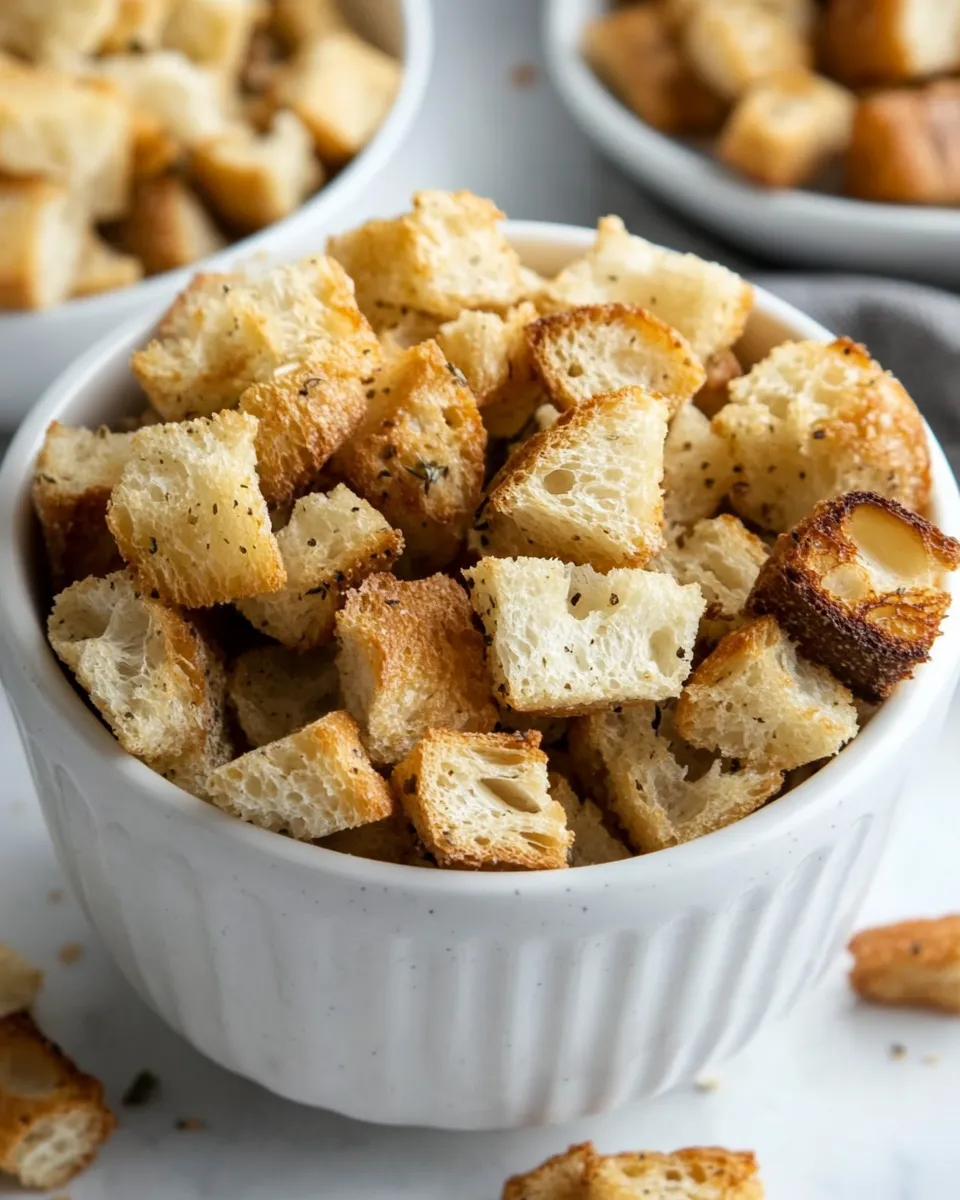
These croutons are quietly transformative. A handful adds texture and flavor to salads, soups, and bowls without overpowering the main ingredients. They bring a toasty, buttery note from the oil and that satisfying crunch that contrasts with creamy dressings or stews.
Beyond taste, they’re economical and fast. You can use an older loaf that might otherwise be wasted. They also let you control salt and oil levels, which is a rare advantage over store-bought versions that tend to be too salty or too oily.
Finally, baking them yourself means you avoid preservatives and can decide how brown and crisp you want them. They’re one of those small, high-return kitchen investments that elevate the rest of your meal.
Budget & Availability Swaps
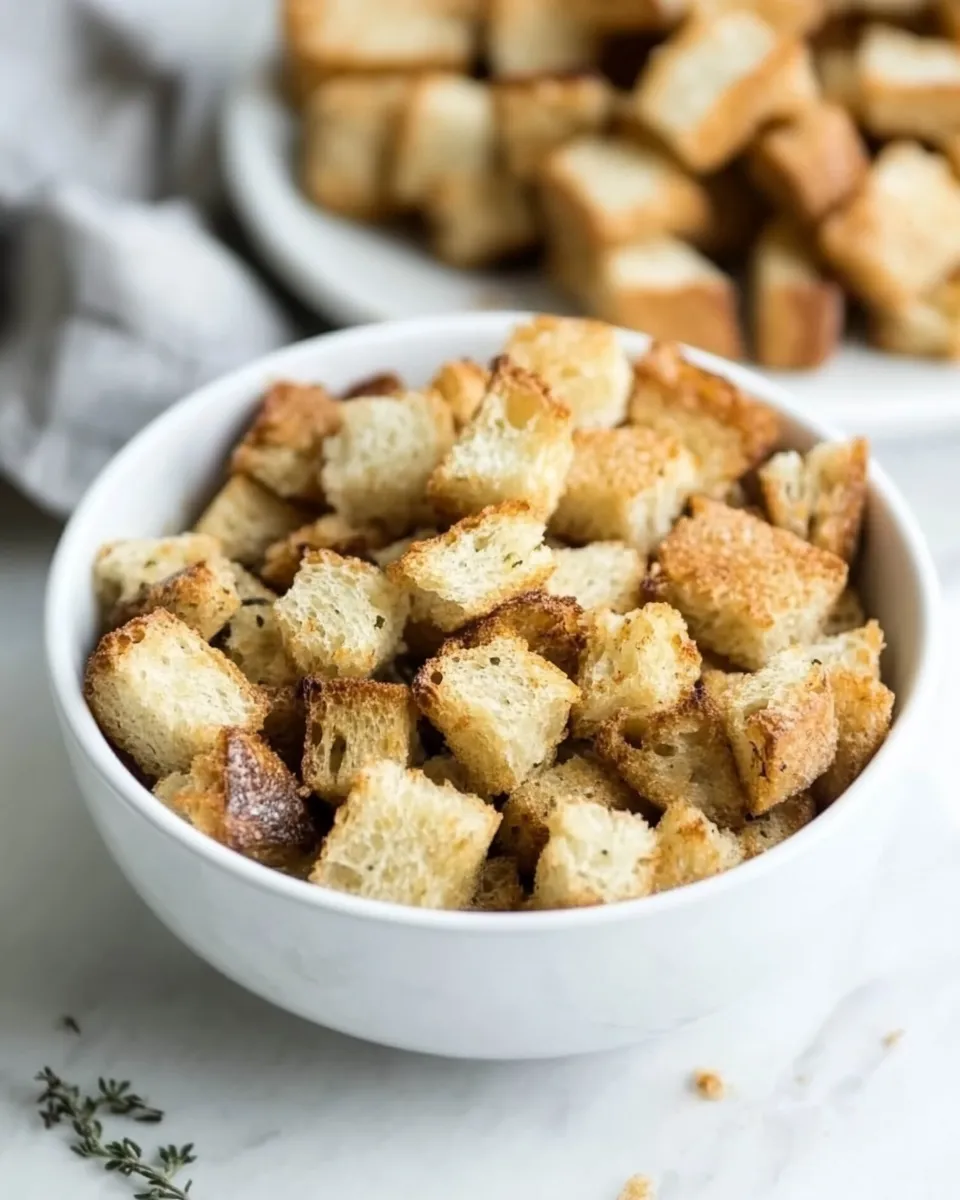
If you can’t find exactly the baguette you prefer, choose another loaf with similar characteristics: a crust that gives and a crumb that holds its shape when cubed. The key is similar texture, not a specific type name. If your usual olive oil is temporarily unavailable, any neutral, good-quality cooking oil will perform the basic job of browning and carrying salt—just use the same amount listed in the ingredients.
For seasoning, stick to sea salt and pepper as listed. If you want to stretch quantities, reduce the bread slightly rather than skimp on oil; under-oiled bread browns more slowly and may end up drier and less flavorful.
Cook’s Kit
Keep these simple tools on hand for reliable results:
- Bowl large enough to toss the cubed bread.
- Baking sheet with a rim to keep pieces from sliding off.
- Parchment paper to prevent sticking and make cleanup effortless.
- Spoon or spatula to toss and turn cubes halfway through baking.
- Oven thermometer if your oven runs hot or cool; accurate temperature matters.
These are basic items that also serve many other recipes—no specialized equipment required.
What Not to Do
Do not overcrowd the baking sheet. When croutons are touching and piled, steam gets trapped and they steam rather than toast. Single-layer spacing ensures even airflow and crisping.
Don’t skip the cooling step. Moving hot croutons immediately to a container traps steam and softens them. Let them cool on the baking sheet so any residual moisture evaporates and they finish crisping.
Avoid using far too much oil. The recipe’s oil amount is balanced for crispness and flavor. Excess oil will make croutons greasy instead of crunchy.
Seasonal Twists
Stay within the ingredient list but adjust how you finish the croutons to reflect the season. In colder months, a higher oven temperature within a safe range can give a deeper toast; in warmer months, shorter bake times with a quick stir will preserve a lighter browning. Small timing changes impact texture dramatically, so watch closely on your first run.
If you’re serving croutons with seasonal soups or salads, think about how their toast level complements the dish. Darker toast works well with hearty, roasted flavors. Lighter toast is better when you want a delicate crunch that doesn’t overwhelm a bright, fresh salad.
Recipe Notes & Chef’s Commentary
Timing matters. The 15 to 20 minutes window should be your guide. Check at the 10–12 minute mark if your oven runs hot; otherwise check halfway through as instructed and again toward the end. Stirring or shaking once about halfway through baking ensures an even color and texture.
Cube size is also critical. The recipe calls for roughly ½” cubes—try to keep them uniform. Smaller pieces will crisp faster and can burn; larger pieces will take longer and might remain soft inside.
This method is intentionally minimal. Olive oil, salt, and pepper allow the bread’s flavor to shine. If you prefer an herb or spice, apply it sparingly and consider adding it after the initial bake so those flavors don’t scorch in the oven. But remember: that would introduce ingredients beyond the provided list.
Refrigerate, Freeze, Reheat
Store cooled croutons at room temperature in an airtight container for up to a week. Moisture is the enemy; keep them away from steam and humidity. Don’t refrigerate—cold air can introduce moisture and soften them.
For longer storage, you can freeze croutons in a sealed bag for up to two months. Thaw at room temperature. If they have softened slightly, refresh them on a baking sheet in a 350°F oven for 5 to 7 minutes to restore crispness. Monitor carefully so they don’t darken too much during the revive step.
Your Questions, Answered
Q: Can I make these ahead for a party?
A: Yes. Bake, cool completely, and store in an airtight container. Make them the day before if possible; they’ll keep crisp when sealed. If you need to make them much earlier, consider freezing and refreshing shortly before serving.
Q: How do I know when they’re done?
A: They should be golden to golden-brown and dry to the touch. A little deeper color equals more crunch. If you still see pale pieces after the listed time, give them another 2–3 minutes and check again.
Q: Can I toss them with anything after baking?
A: Yes—again, stay within tools you have: a light toss with a pinch of salt or a brief sprinkle of pepper works well. If you add anything moist, do it just before serving so they stay crisp.
Final Thoughts
These croutons are one of those kitchen wins that feel almost indulgent for so little effort. The formula—bread, oil, salt, pepper, and time in the oven—keeps things honest and delicious. Make a batch. Use it sparingly to add texture and warmth to simple meals. Once you master the timing and cube size, you’ll have a reliable method that serves you well across lunches, dinners, and impromptu gatherings.
Keep the recipe bookmarked. It’s short, dependable, and exactly the kind of thing you’ll reach for when you want a small, meaningful upgrade to an everyday dish.
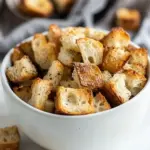
The Best Homemade Croutons Recipe
Ingredients
Ingredients
- 1 baguette cut into 1/2” cubes
- 3 tablespoonsolive oil
- sea salt and pepper
Instructions
Instructions
- Preheat the oven to 375°F.
- Place the ½” cubed baguette in a large bowl. Pour the 3 tablespoons olive oil over the bread and sprinkle with sea salt and pepper (to taste). Toss gently until all cubes are evenly coated.
- Line a baking sheet with parchment paper and spread the coated bread cubes in a single layer, leaving small gaps so air can circulate.
- Bake on the middle oven rack at 375°F for 15 to 20 minutes, stirring or shaking the pan once about halfway through baking so the croutons brown evenly.
- Remove the baking sheet from the oven and let the croutons cool on the sheet until they are crisp.
- Serve the cooled croutons.
Equipment
- Oven
- Large Bowl
- Baking Sheet
- Parchment Paper
Notes
How to Store:Keep in an airtight plastic container or bag and keep at room temperature for up to 7 days.
You can also cookthe croutons in a pan. Instead of tossing them in olive oil, you add it to a pan and cook the bread in the oil until browned and crunchy.
You can also replacethe olive oil with melted unsalted butter.