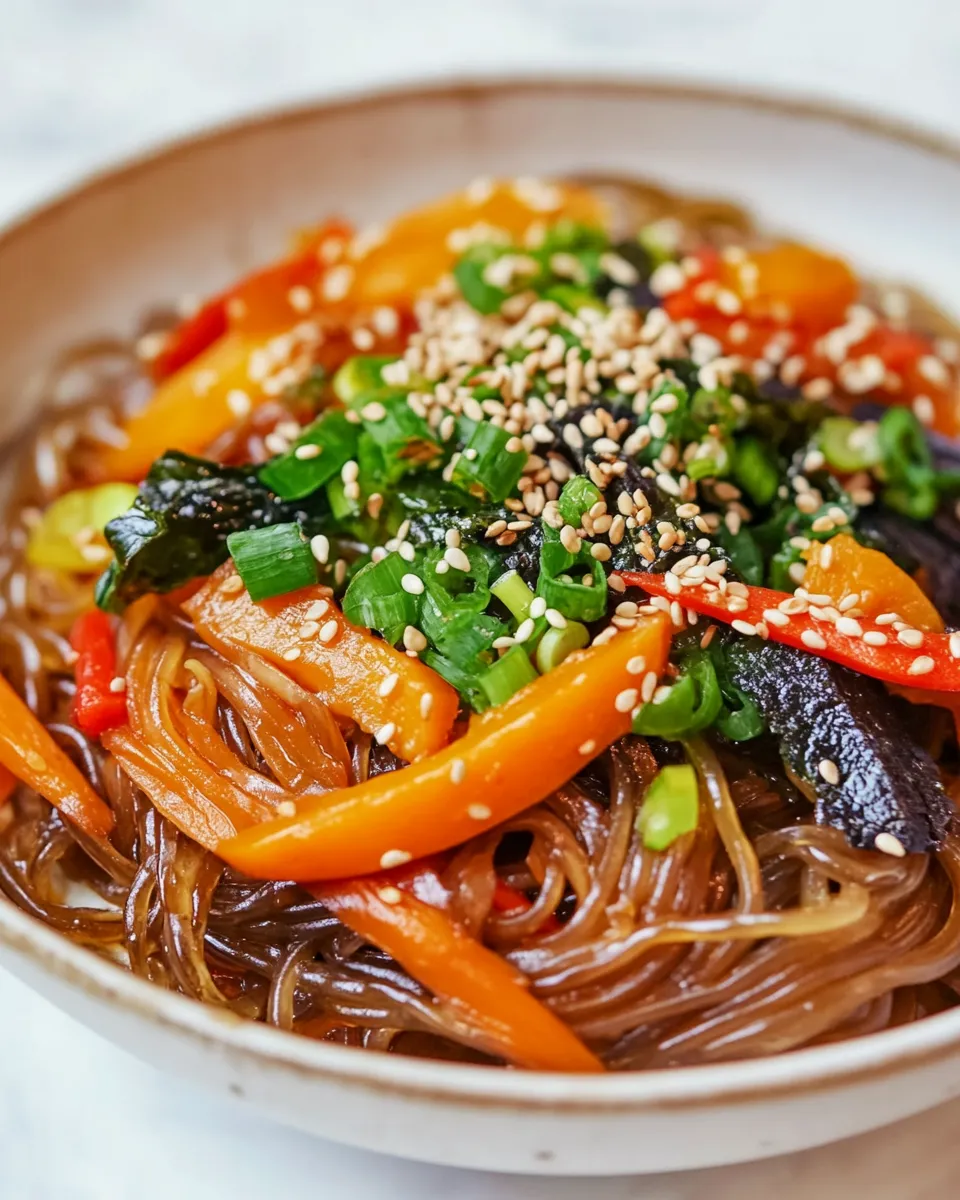
I love this version of japchae because it feels indulgent without the fuss. The sweet potato noodles hold sauce beautifully and the quick stir-fry preserves color, texture, and flavor. It’s one of those weeknight recipes that looks like you spent more time on it than you actually did.
This post gives you a clear ingredient checklist, the exact step-by-step method I follow every time, and practical variations and troubleshooting notes so your batch turns out consistently well. No fluff — just the reliable tips I reach for when teaching friends or prepping dinner for a hungry house.
Read straight through for the method, or skip to the sections you need: substitutions, storage, or traps to avoid. The recipe is adaptable, holds up for meal prep, and scales easily if you’re feeding a crowd.
Ingredient Checklist
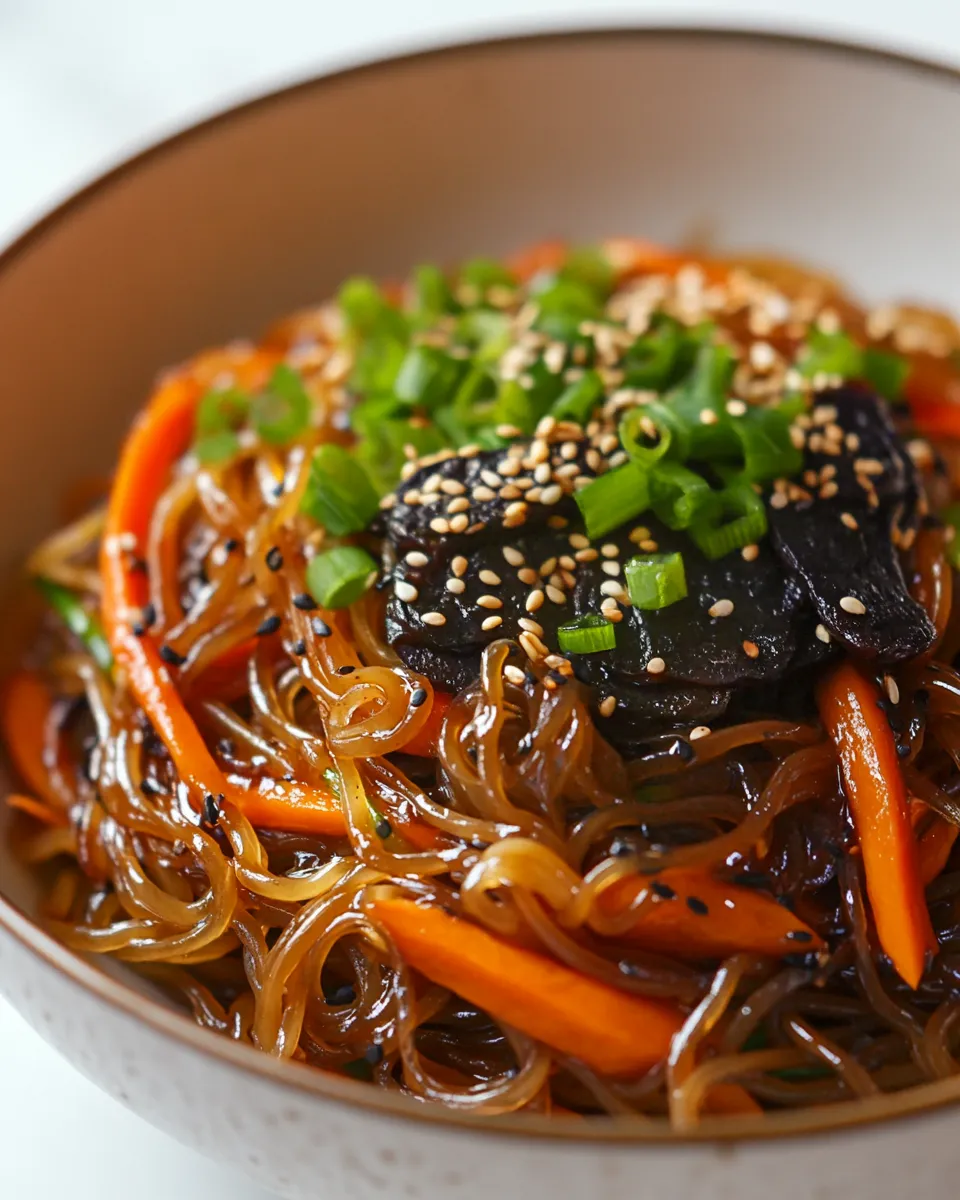
- 1 lb Korean glass noodles, sweet potato starch noodles — the backbone of the dish; chewy, glossy texture when cooked right.
- 1/4 cup soy sauce — provides the savory backbone of the marinade and final sauce.
- 2 tbsp maple syrup — balances the soy with gentle sweetness; use measured amount for harmony.
- 1 tbsp sesame oil — adds toasty aroma and helps the marinade cling to noodles and veggies.
- 1/2 yellow onion, thinly sliced — softens and sweetens when sautéed; slice thin for even cooking.
- 2 cloves of garlic, minced — aromatic base; mince fine so it releases flavor without burning.
- 1 large red bell pepper, thinly sliced — color, crunch, and sweetness; slice to match the carrot thickness.
- 2 large carrots, julienned (very thinly sliced) — texture contrast and natural sweetness; julienne thin for quick cook time.
- 8-10 shiitake mushrooms, stem discarded, thinly sliced — meaty umami note; slice thin so they sauté evenly.
- 2 handfuls spinach or 1 crown of broccoli, chopped — leafy brightness (spinach) or crunch and bite (broccoli); pick one and follow the step notes.
- Sesame seeds for garnish — finishing touch for texture and visual appeal.
- Green onion for garnish — adds fresh oniony brightness; slice on the bias for a pretty finish.
Stepwise Method: Vegan Japchae Style Noodles (stir-fried sweet potato noodles)
- Bring 2 quarts of water to a rolling boil. While the water heats, break the 1 lb sweet potato starch noodles in half so they’re easier to handle.
- Add the broken noodles to the boiling water and cook 5 minutes or according to the package instructions until tender. Stir once or twice so they don’t clump.
- Drain the noodles in a colander and rinse thoroughly with cold water to stop the cooking. Drain well and set the noodles aside in the colander.
- In a medium bowl, whisk together the 1/4 cup soy sauce, 2 tbsp maple syrup, and 1 tbsp sesame oil to make the marinade. Reserve about 2 tablespoons of this marinade in a small bowl for cooking the vegetables; keep the rest for tossing the noodles later.
- Heat a large wok or wide skillet over medium-high heat. Add the reserved marinade to the hot pan and, once hot, add the 1/2 yellow onion (thinly sliced) and the 2 cloves garlic (minced). Sauté 3–4 minutes, stirring, until the onion is softened and slightly golden.
- Add the sliced red bell pepper and the 2 julienned carrots to the pan. Stir-fry 3–4 minutes more, until the vegetables are crisp-tender.
- Push the vegetables to the side of the pan, add the 8–10 thinly sliced shiitake mushrooms, and drizzle a little of the remaining marinade over them (you may use some of the marinade you saved or a splash from the bowl). Sauté the mushrooms 4–5 minutes, stirring, until they’re golden, fragrant, and tender.
- Add your leafy vegetable choice: if using 2 handfuls of spinach, add it now and cook 1–2 minutes until just wilted; if using 1 crown of chopped broccoli, add it with the bell pepper and carrots in step 6 and cook until broccoli is tender-crisp (about 4–6 minutes total).
- Add the cooled noodles to the pan with the vegetables and mushrooms. Pour the remaining marinade over everything. Turn the heat to medium-high and toss or stir-fry 2–3 minutes until the noodles are heated through and evenly coated with the sauce.
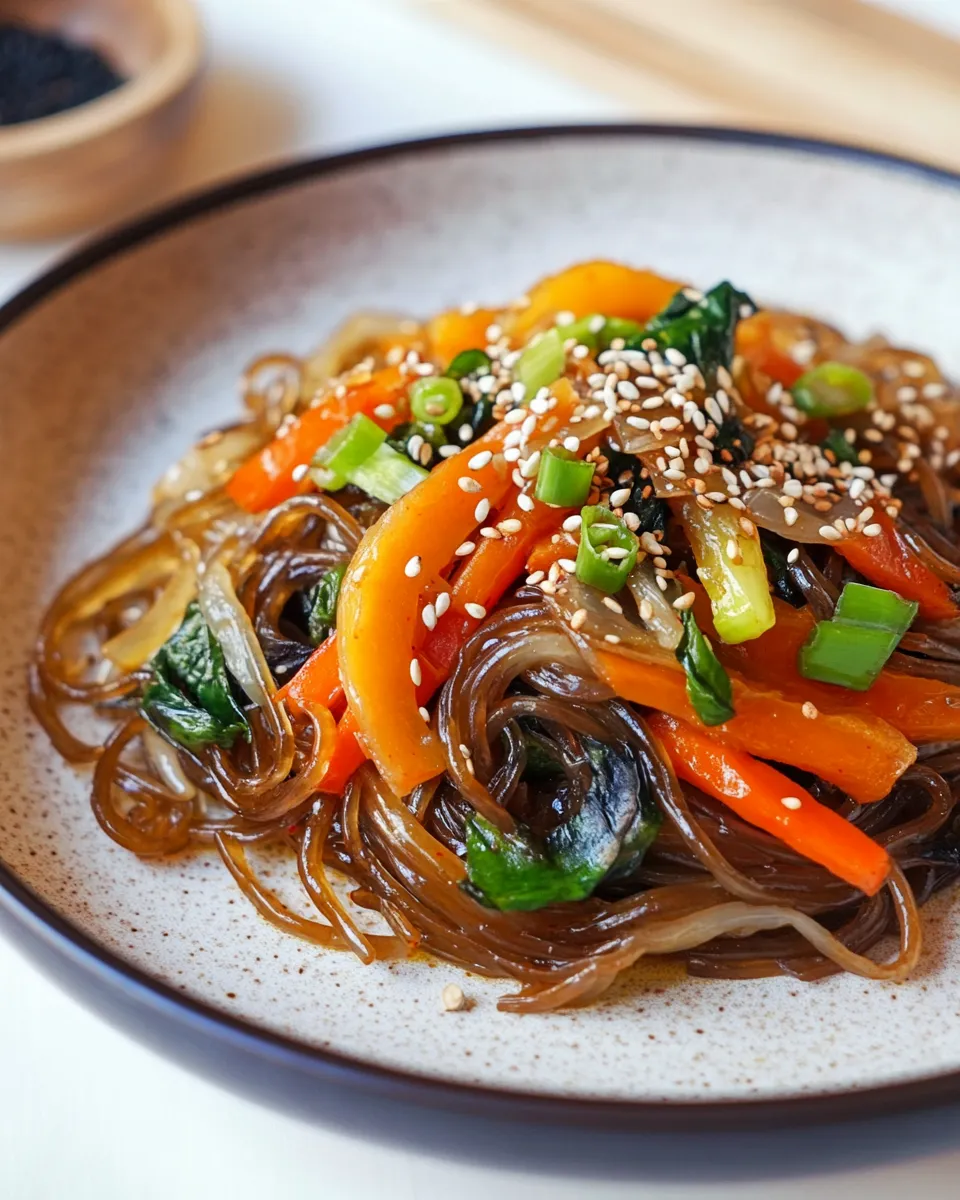
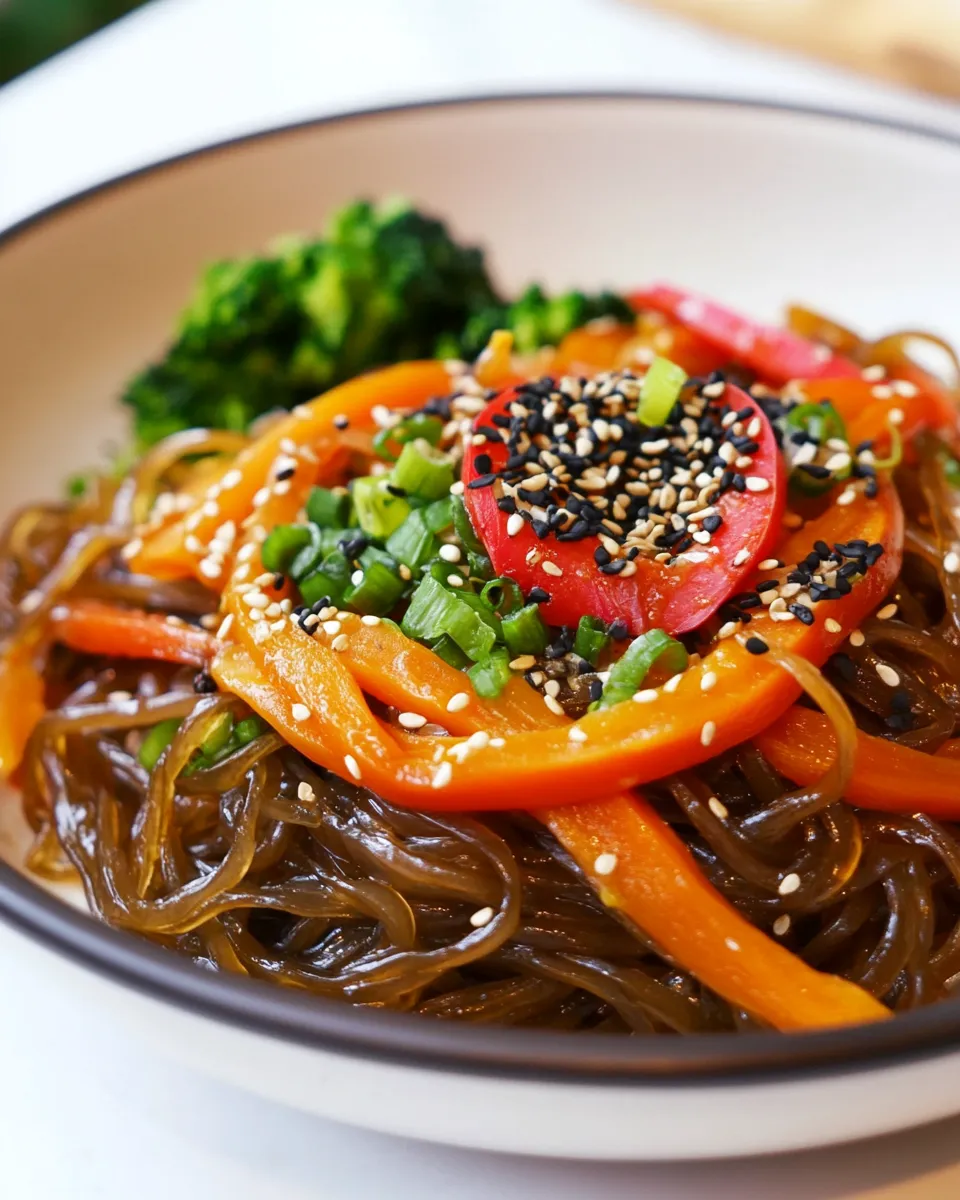
- Transfer to a serving dish and garnish with sesame seeds and sliced green onion. Serve hot.
Why This Recipe Is Reliable
The procedure isolates three critical actions: correct noodle cook, concentrated marinade, and staged vegetable cooking. Boiling the noodles and rinsing with cold water stops carryover cooking — that’s why they don’t go soggy when you toss them in the hot pan. Reserving a small amount of marinade to pre-sauté the aromatics ensures every vegetable picks up flavor early, rather than waiting until the end when saturation can be uneven.
The timings are conservative: short enough to keep vegetables bright and tender, long enough to develop caramelization on onions and mushrooms. The flavor profile is balanced — soy for salt, maple for sweetness, sesame oil for aroma — so you get a familiar japchae impression without complex prep.
Substitutions by Category
Sauces & seasoning
- Tamari — use in place of soy sauce for a gluten-free alternative with a similar depth.
- Coconut aminos — lower sodium and a milder sweetness; expect a lighter color and slightly different balance.
- Brown sugar or agave — can replace maple syrup in a pinch; maple adds a distinct roundness, so adjust to taste.
Noodles
- Cellophane (mung bean) noodles — similar texture but cook times vary; follow package directions.
- Rice noodles — not the same chew but will work for a gluten-free swap if sweet potato noodles aren’t available.
Vegetables & add-ins
- Bok choy, napa cabbage, or green beans — work well if you want different greens; time them like spinach (quick) or broccoli (longer).
- Firm tofu, tempeh, or seitan — if you want more protein, pan-fry separately and fold in at the end.
Fats & finishes
- Neutral oil (canola, vegetable) — use for higher-heat sautéing, then finish with sesame oil if you want that toasted note.
- Toasted sesame oil — a finishing drizzle enhances aroma; don’t use exclusively for high heat because it can burn.
Hardware & Gadgets
You don’t need fancy equipment. That said, the right tools make the process faster and cleaner.
- Large wok or wide skillet — provides surface area to toss noodles and vegetables without overcrowding.
- Colander — essential for draining and rinsing noodles to stop cooking.
- Sharp chef’s knife and a good cutting board — thin, uniform slices make the dish cook evenly and look polished.
- Tongs or a large spatula — for tossing noodles without breaking them up too much.
- Medium bowl for the marinade and a small bowl to reserve sauce — keeps things organized and the timing smooth.
Avoid These Traps
Common mistakes happen at three stages: under- or overcooking the noodles, overcrowding the pan, and skimping on the sauce. Here’s how to avoid them.
- Don’t overcook noodles. Follow the package timing and use the 5-minute guideline only if it matches. Rinse well in cold water to prevent carryover cooking.
- Avoid overcrowding. If your pan is small, cook vegetables in batches. Overcrowded pans steam instead of sautéing, so you lose color and browning.
- Measure the marinade. Too little sauce makes the dish dry; too much dilutes flavor. Reserve the exact 2 tablespoons for the initial sauté to build flavor.
- Don’t add spinach too early. If using spinach, add it at the end — it wilts in seconds. If you add it with peppers and carrots, it will overcook and turn limp.
- Watch the garlic. Add it with the onion so it flavors the oil without burning; minced garlic burns quickly at high heat and tastes bitter.
Variations for Dietary Needs
Vegan base is already set, but you may have other needs. These swaps keep the recipe accessible.
- Gluten-free: Use tamari or coconut aminos and confirm your sweet potato noodles are certified gluten-free (many are, but check labels).
- Soy-free: Substitute coconut aminos for soy sauce; increase to taste since it’s milder.
- Low-sugar: Reduce maple syrup to 1 tbsp and add a splash of rice vinegar or lemon to maintain balance.
- Higher-protein: Fold in pan-fried tofu cubes or crisped tempeh at the end; toss with the sauce so they soak up flavor.
Testing Timeline
Here’s a practical timeline to keep you on track and avoid idle gaps between steps. I time things so the hot pan is always doing something useful.
- 0:00–0:05 — Fill a large pot with 2 quarts water and bring to a rolling boil.
- 0:05–0:10 — Prep: break noodles, thinly slice onion, bell pepper, mushrooms, julienne carrots, mince garlic, chop broccoli or wash spinach, mix marinade.
- 0:10–0:15 — Cook noodles in boiling water (about 5 minutes or per package) and immediately rinse under cold water. Drain.
- 0:15–0:25 — Sauté aromatics and vegetables as per steps 5–8. Use the time while vegetables cook to finish garnishes.
- 0:25–0:28 — Combine noodles, pour remaining marinade, toss 2–3 minutes until everything is heated through.
- 0:28–0:30 — Transfer, garnish, and serve.
Save for Later: Storage Tips
Japchae-style noodles store and reheat well if you follow a couple of rules.
- Refrigerate: Cool to room temperature, then store in an airtight container for up to 4 days. Noodles will absorb sauce over time; a quick re-toss in a hot pan with a splash of water or reserved soy makes them lively again.
- Freeze: Not ideal for texture — noodles can change when frozen. If you must, freeze in a shallow, airtight container for up to 1 month. Thaw overnight in the fridge and reheat gently in a skillet with a splash of water.
- Reheating: Use a hot skillet or wok and toss for a few minutes. Avoid the microwave if you want to preserve texture; it can turn noodles gummy.
Ask & Learn
If something didn’t turn out the way you expected, tell me what happened — the more detail the better (noodle brand, pan size, which vegetable overcooked). Common troubleshooting starters:
- Noodles too sticky or clumped — were they rinsed thoroughly with cold water and drained? Next time rinse longer and toss with a small drizzle of sesame oil after draining.
- Vegetables soggy — pan likely overcrowded or heat too low; cook in batches and use higher heat to get quick color.
- Too salty — reduce soy sauce by 1–2 tbsp next time or add a touch more maple syrup and a squeeze of lemon to rebalance.
Ask a specific question and I’ll walk you through adjustments.
Hungry for More?
If you liked this, try experimenting with more Korean-inspired bowls and simple noodle stir-fries. They’re great for using whatever’s in the fridge and adapting to seasonal vegetables. I post step-by-step photos and timing notes that make tweaks easier — try a tofu version or swap in seasonal greens for quick variations.
Make this your go-to weeknight japchae — the combination of a straightforward method, flexible ingredients, and clear timing produces consistent, flavorful results every time.
Vegan Japchae Style Noodles (stir-fried sweet potato noodles)
Ingredients
Ingredients
- 1 lbKorean glass noodles sweet potato starch noodles
- 1/4 cupsoy sauce
- 2 tbspmaple syrup
- 1 tbspsesame oil
- 1/2 yellow onion thinly sliced
- 2 clovesof garlic minced
- 1 large red bell pepper thinly sliced
- 2 large carrots julienned (very thinly sliced)
- 8-10 shiitake mushrooms stem discarded, thinly sliced
- 2 handfuls spinach or 1 crown of broccoli chopped
- Sesame seeds for garnish
- Green onion for garnish
Instructions
Instructions
- Bring 2 quarts of water to a rolling boil. While the water heats, break the 1 lb sweet potato starch noodles in half so they’re easier to handle.
- Add the broken noodles to the boiling water and cook 5 minutes or according to the package instructions until tender. Stir once or twice so they don’t clump.
- Drain the noodles in a colander and rinse thoroughly with cold water to stop the cooking. Drain well and set the noodles aside in the colander.
- In a medium bowl, whisk together the 1/4 cup soy sauce, 2 tbsp maple syrup, and 1 tbsp sesame oil to make the marinade. Reserve about 2 tablespoons of this marinade in a small bowl for cooking the vegetables; keep the rest for tossing the noodles later.
- Heat a large wok or wide skillet over medium-high heat. Add the reserved marinade to the hot pan and, once hot, add the 1/2 yellow onion (thinly sliced) and the 2 cloves garlic (minced). Sauté 3–4 minutes, stirring, until the onion is softened and slightly golden.
- Add the sliced red bell pepper and the 2 julienned carrots to the pan. Stir-fry 3–4 minutes more, until the vegetables are crisp-tender.
- Push the vegetables to the side of the pan, add the 8–10 thinly sliced shiitake mushrooms, and drizzle a little of the remaining marinade over them (you may use some of the marinade you saved or a splash from the bowl). Sauté the mushrooms 4–5 minutes, stirring, until they’re golden, fragrant, and tender.
- Add your leafy vegetable choice: if using 2 handfuls of spinach, add it now and cook 1–2 minutes until just wilted; if using 1 crown of chopped broccoli, add it with the bell pepper and carrots in step 6 and cook until broccoli is tender-crisp (about 4–6 minutes total).
- Add the cooled noodles to the pan with the vegetables and mushrooms. Pour the remaining marinade over everything. Turn the heat to medium-high and toss or stir-fry 2–3 minutes until the noodles are heated through and evenly coated with the sauce.
- Transfer to a serving dish and garnish with sesame seeds and sliced green onion. Serve hot.
Equipment
- Large Pot
- Colander
- Medium Bowl
- Small Bowl
- large wok or wide skillet