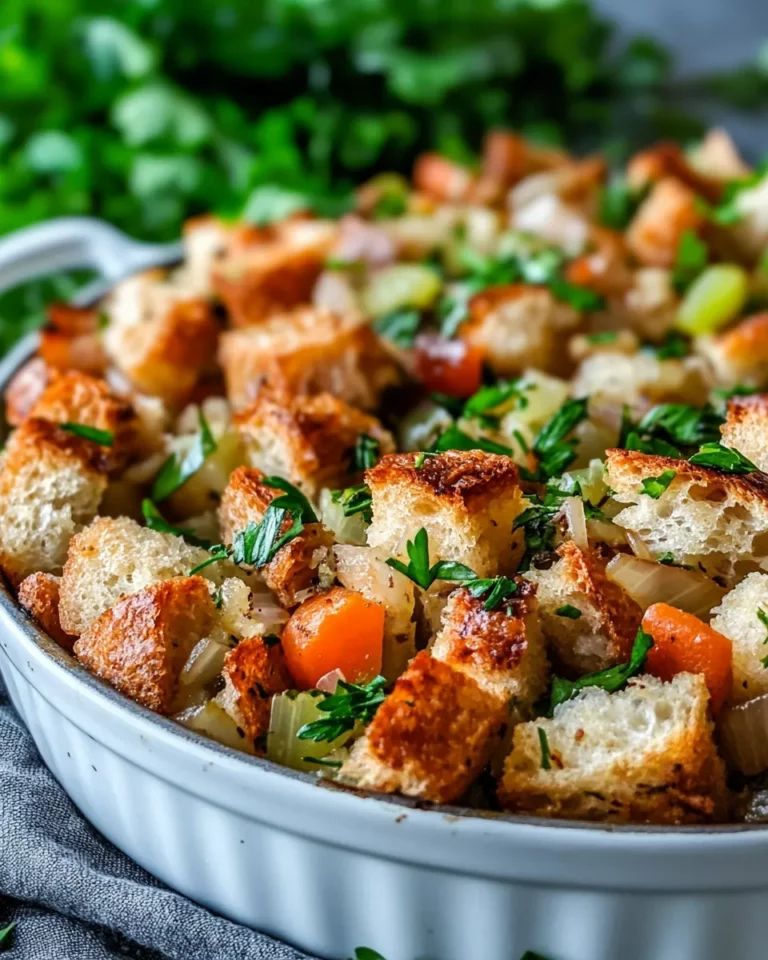
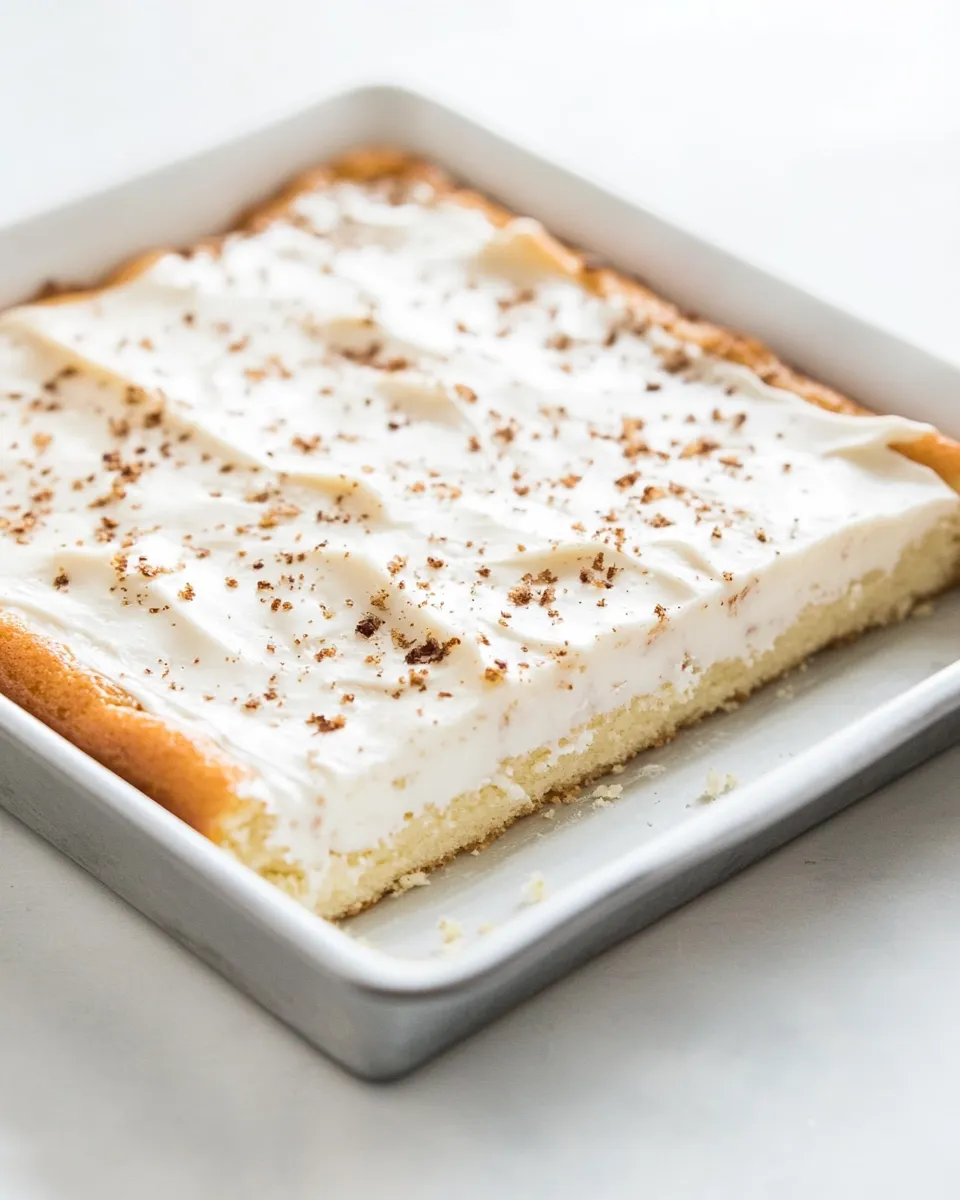
This White Texas Sheet Cake is my go-to when I need a large, unfussy cake that still feels special. It’s tender, lightly almond-scented, and frosted while warm so the glaze soaks in just enough to get glossy without becoming soggy. No fancy equipment required — just a big baking sheet and a few pantry staples.
I like this recipe because it scales to a crowd and stays reliably moist. The sour cream and a hot butter-water pour help create that fine crumb and tender bite. The frosting is simple and poured warm, which makes it set with a silky surface that’s perfect for a scattering of fresh berries.
Below you’ll find the exact ingredients and step-by-step instructions I used during testing, plus practical tips for troubleshooting, storing, and adapting the cake for dietary needs or different kitchens. Read straight through before baking, or skim to the sections you need: Ingredients, the Cooking Guide, and storage notes are the essentials.
What We’re Using
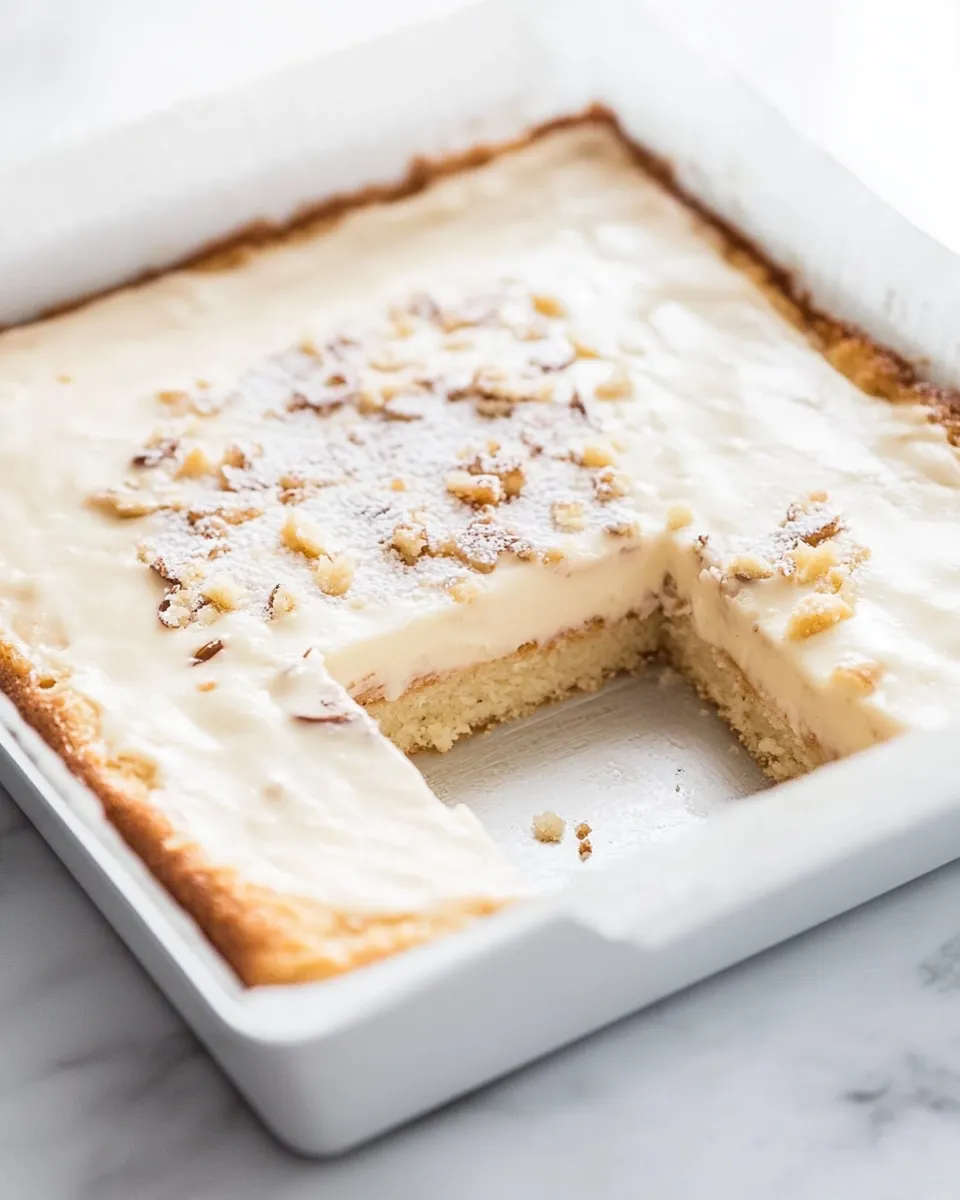
We keep the method straightforward: a sheet-pan cake batter mixed in bowls, a hot butter-water addition to finish the batter, and a warm poured frosting. The approach is fast and forgiving — no creaming of butter and sugar, no delicate folding. Read the Ingredients list exactly as given, then follow the Cooking Guide steps in order for best results.
Ingredients
- 1 cup water (240 ml) — heats with the butter to help create a thin, tender crumb.
- 1 cup salted butter (227 g) — melted with the water; salted butter gives a subtle seasoning to the cake.
- 2 cups all-purpose flour (250 g) — the structure of the cake; measure by weight when possible for consistency.
- 2 cups granulated sugar (400 g) — sweetens the cake and contributes to the fine crumb.
- 1 teaspoon baking soda — the leavening that gives the sheet cake its lift.
- 1/4 teaspoon salt — balances sweetness and enhances flavor.
- 1/2 cup sour cream, plain Greek yogurt (120 g) — provides moisture and a gentle tang; the listing allows either sour cream or plain Greek yogurt.
- 2 large eggs — bind the batter and contribute to structure and richness.
- 1 1/2 teaspoons almond extract — the primary aromatic; use exact amount for the intended flavor profile.
- 6 Tablespoons milk (90 ml) — used in the frosting to create the right consistency.
- 1/2 cup salted butter (113 g) — for the frosting; melts with the milk to form the base.
- 3 3/4 cups powdered sugar (470 g) — sweetens and thickens the frosting; sift if lumpy.
- 1 teaspoon almond extract (5 ml) — in the frosting for continuity of flavor.
- Berries, for topping, if desired — optional fresh fruit brightens the finished cake.
White Texas Sheet Cake Cooking Guide
- Preheat oven to 350°F (175°C). Grease a 13×18-inch half-sheet (jelly roll) pan and set aside.
- In a large bowl, whisk together 2 cups all-purpose flour (250 g), 2 cups granulated sugar (400 g), 1 teaspoon baking soda, and 1/4 teaspoon salt.
- In a medium bowl, whisk 1/2 cup sour cream (120 g), 2 large eggs, and 1 1/2 teaspoons almond extract until smooth.
- Add the sour cream/egg mixture to the dry ingredients and stir just until combined. Do not overmix.
- In a medium saucepan, combine 1 cup water (240 ml) and 1 cup salted butter (227 g). Heat over medium, stirring, until the butter melts and the mixture comes to a boil. Remove from heat.
- Immediately pour the hot water-butter mixture into the batter and mix until smooth and evenly combined.
- Pour the batter into the prepared pan and spread into an even layer with a spatula.
- Bake for 17–20 minutes, or until a toothpick inserted in the center comes out clean.
- When the cake has about 5 minutes remaining in the oven, make the frosting: in a saucepan, combine 6 tablespoons milk (90 ml) and 1/2 cup salted butter (113 g). Heat over medium until the butter melts and the mixture comes to a boil; remove from heat.
- Stir in 3 3/4 cups powdered sugar (470 g) and 1 teaspoon almond extract (5 ml) until smooth. Beat with a handheld mixer briefly if needed to remove lumps.
- Pour the warm frosting evenly over the warm cake and use a spatula to spread gently.
- Allow the cake to cool completely so the frosting sets. Top with berries, if desired, before serving.
Why It’s Crowd-Pleasing
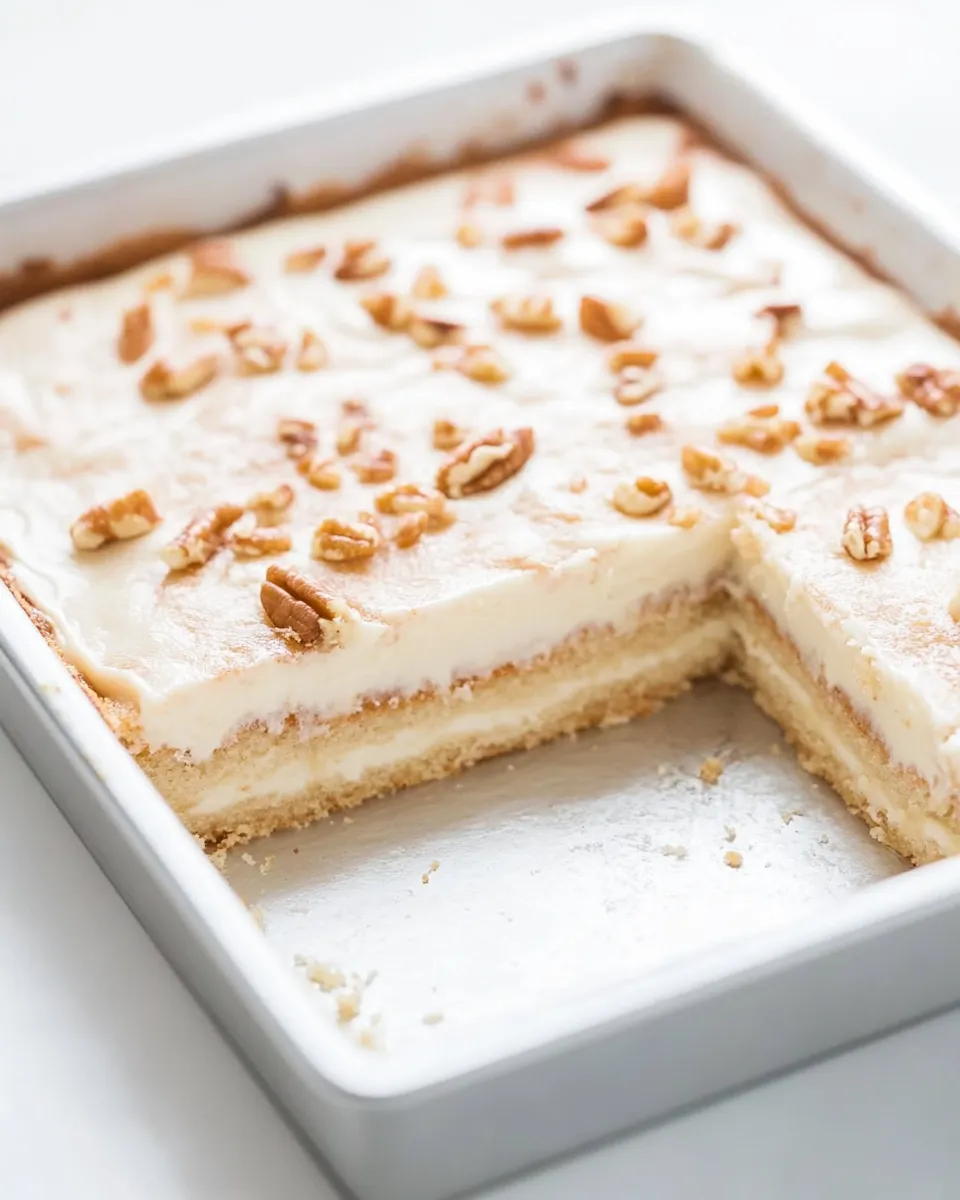
This cake feeds a crowd without requiring multiple rounds in the oven. Texture is the star: tender but not fragile, with a fine crumb that feels professional. The warm poured frosting gives the top a glossy finish and a slightly soaked edge that people love. The almond extract is an elegant, unobtrusive flavor that reads floral and familiar.
The cake works for simple family dinners and larger gatherings alike. It’s neutral enough to suit different palates, yet distinct enough to feel like you made something special. Add berries or leave it plain — both options look and taste right.
International Equivalents
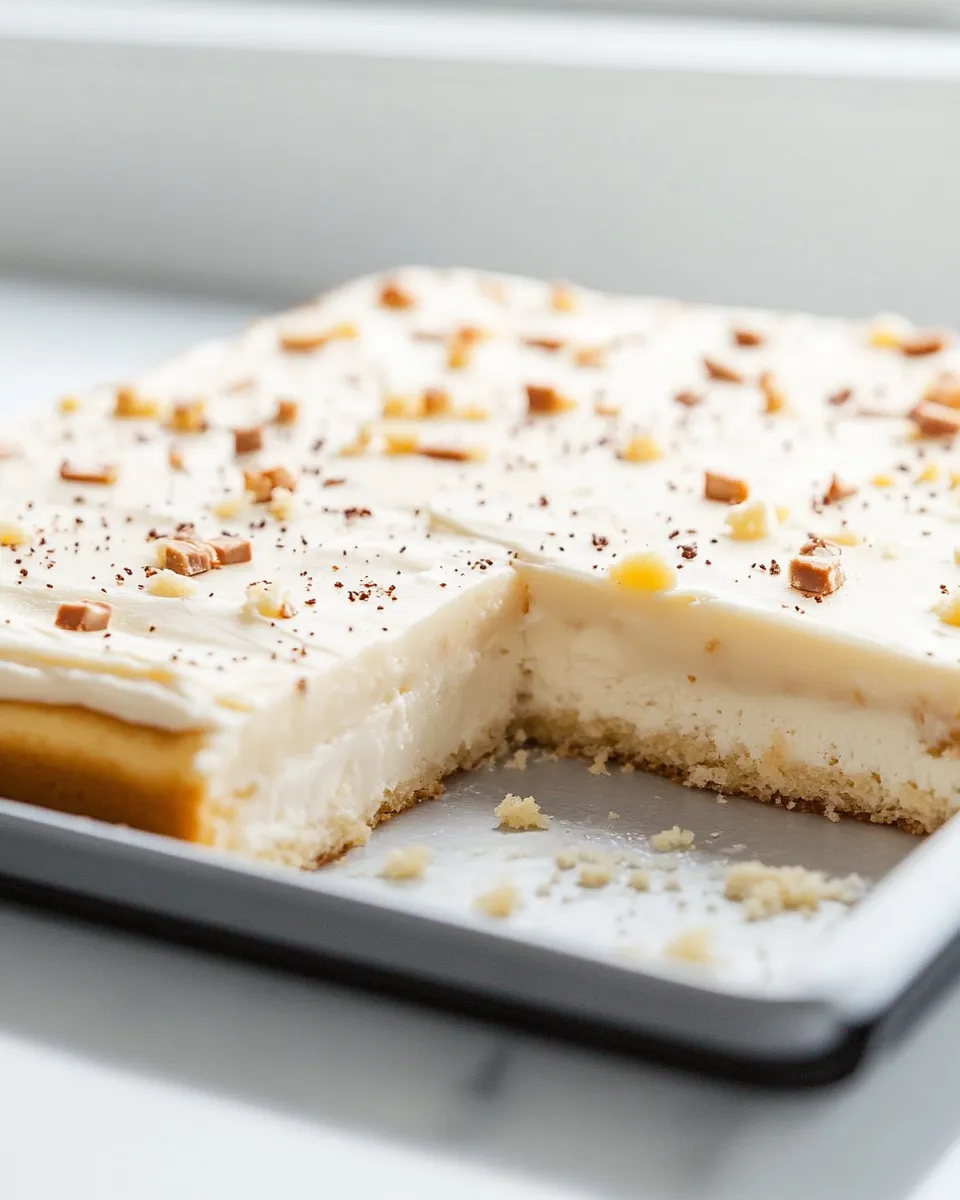
Sheet cakes are universal, even if names and typical flavors vary. Here are a few equivalents and how this recipe maps to them:
- American sheet cake — identical format and scale; this recipe is a white version of the classic Texas sheet cake, which traditionally can be chocolate.
- European sponge-style large cakes — often lighter and un-frosted; this recipe is denser and more forgiving due to the butter-water step.
- Latin American “torta de hoja” or simple tray cakes — similar in purpose (feeds many) though toppings and extracts may differ; swap almond extract for vanilla for a more neutral, globally familiar flavor.
Kitchen Gear Checklist
- 13×18-inch half-sheet (jelly roll) pan — the correct surface area is important for baking time and texture.
- Mixing bowls — one large for dry ingredients, one medium for wet.
- Medium saucepan — for melting the butter with water, and later for the frosting.
- Spatula — to spread both batter and frosting evenly.
- Handheld mixer (optional) — useful to remove lumps from the frosting quickly.
- Measuring spoons and cups, or a kitchen scale — weight measurements reduce guesswork.
- Toothpick or cake tester — to check doneness.
Troubleshooting Tips
Before baking
If your batter looks lumpy after adding the hot butter-water, that’s normal — keep stirring until smooth. Do not overmix after combining the wet and dry ingredients; overworking the batter tightens the crumb and can make the cake dense.
During baking
If the cake browns too quickly at the edges, your oven temperature may run hot. Rotate the pan halfway through the bake if your oven has hot spots. The center is done when a toothpick comes out clean; the top will feel springy.
Frosting problems
If the frosting is too thick, stir in a teaspoon of milk at a time while it’s warm until spreadable. If it’s too thin, add a tablespoon of powdered sugar and whisk thoroughly. Lumps in powdered sugar are common — a quick pass with a handheld mixer or sifting before adding will prevent them.
Common issues and fixes
- Dense cake: Don’t overmix after combining wet and dry ingredients; measure flour by weight or spoon-and-level into the cup.
- Soggy center: Make sure you remove the cake at the lower end of the bake time once a toothpick is clean. Cooling on a rack allows steam to escape so the frosting sets properly.
- Frosting not setting: Pour it warm and let the cake cool completely on a flat surface; cool air helps the glaze firm up.
Health-Conscious Tweaks
If you want to make the cake lighter or reduce sugar or fat, do so carefully — this recipe’s texture depends on the butter-water pour and the sugar levels. Small swaps that keep the integrity:
- Replace half the sour cream with plain nonfat Greek yogurt to save a little fat while retaining moisture.
- Use a powdered sugar labeled “confectioners’” with no added cornstarch if you need a cleaner ingredient list, but keep the amount the same for frosting structure.
- To reduce sweetness, serve slightly smaller slices and top with tart berries — they provide brightness without altering the recipe.
Major swaps (gluten-free flour, reduced sugar syrup, non-dairy butter) will change bake times and texture. If you attempt them, test a smaller batch first.
What I Learned Testing
Testing this recipe multiple times taught me to trust the hot liquid method. Pouring hot butter and water into the batter heats the batter and helps dissolve the sugar, creating a uniform crumb. It also shortens bake time for a sheet pan so you don’t dry the cake out.
I also learned that timing the frosting to coincide with the cake’s last five minutes in the oven keeps everything moving — the frosting is warm and pourable, and the cake is still hot enough to absorb just a bit of glaze without collapsing. Slightly underbaking (toward the 17-minute end) can help keep the cake tender; it will continue to set as it cools.
Make-Ahead & Storage
This cake stores well and is forgiving when made ahead:
- Cool completely before covering. Keep at room temperature for up to 2 days in an airtight container or tented foil to protect the frosting surface.
- For longer storage, cut into squares and freeze single layers on a baking sheet; once firm, stack with parchment between layers in a sealed container in the freezer for up to 1 month. Thaw at room temperature.
- If you add berries, refrigerate leftovers to keep the fruit fresh. Bring back to room temperature before serving for the best flavor.
Ask & Learn
Q: Can I swap the almond extract for vanilla? A: Yes. Use the same quantity, but expect a slightly different, more familiar flavor profile.
Q: Can I use unsalted butter? A: Yes. If you switch to unsalted, add a pinch more salt (about 1/8 teaspoon) to the batter to maintain balance.
Q: Will this work in a smaller pan? A: The bake time and texture will change. If you halve the pan size, watch the center and adjust baking time as needed — likely longer. The recipe is optimized for a 13×18-inch pan.
That’s a Wrap
White Texas Sheet Cake is a practical, crowd-friendly dessert that turns modest ingredients into something impressive. The method is quick, the baking reliable, and the finish is elegant whether you leave it plain or top it with berries. Follow the ingredient list and the Cooking Guide steps above for consistent results.
When you try it, note how the warm frosting transforms the cake’s texture and appearance. It’s the little technique that makes a simple sheet cake feel special. Happy baking — and if you tweak it, keep notes so you can reproduce your favorite version next time.
White Texas Sheet Cake
Ingredients
Ingredients
- 1 cupwater 240 ml
- 1 cupsalted butter 227 g
- 2 cupsall-purpose flour 250 g
- 2 cupsgranulated sugar 400 g
- 1 teaspoonbaking soda
- 1/4 teaspoonsalt
- 1/2 cupsour cream plain Greek yogurt (120 g)
- 2 largeeggs
- 1 1/2 teaspoonsalmond extract
- 6 Tablespoonsmilk 90 ml
- 1/2 cupsalted butter 113 g
- 3 3/4 cupspowdered sugar 470 g
- 1 teaspoonalmond extract 5 ml
- Berries for topping, if desired
Instructions
Instructions
- Preheat oven to 350°F (175°C). Grease a 13×18-inch half-sheet (jelly roll) pan and set aside.
- In a large bowl, whisk together 2 cups all-purpose flour (250 g), 2 cups granulated sugar (400 g), 1 teaspoon baking soda, and 1/4 teaspoon salt.
- In a medium bowl, whisk 1/2 cup sour cream (120 g), 2 large eggs, and 1 1/2 teaspoons almond extract until smooth.
- Add the sour cream/egg mixture to the dry ingredients and stir just until combined. Do not overmix.
- In a medium saucepan, combine 1 cup water (240 ml) and 1 cup salted butter (227 g). Heat over medium, stirring, until the butter melts and the mixture comes to a boil. Remove from heat.
- Immediately pour the hot water-butter mixture into the batter and mix until smooth and evenly combined.
- Pour the batter into the prepared pan and spread into an even layer with a spatula.
- Bake for 17–20 minutes, or until a toothpick inserted in the center comes out clean.
- When the cake has about 5 minutes remaining in the oven, make the frosting: in a saucepan, combine 6 tablespoons milk (90 ml) and 1/2 cup salted butter (113 g). Heat over medium until the butter melts and the mixture comes to a boil; remove from heat.
- Stir in 3 3/4 cups powdered sugar (470 g) and 1 teaspoon almond extract (5 ml) until smooth. Beat with a handheld mixer briefly if needed to remove lumps.
- Pour the warm frosting evenly over the warm cake and use a spatula to spread gently.
- Allow the cake to cool completely so the frosting sets. Top with berries, if desired, before serving.
Equipment
- 13x18-inch half-sheet pan
- Oven
- Large Bowl
- Medium Bowl
- Medium Saucepan
- Spatula
- handheld mixer
Notes
Make Ahead Instructions:
This cake tastes great made a day in advance. Cover well and store at room temperature or in the fridge. Add the fresh fruit just before serving.
Freezing Instructions:
Cover the cake well with aluminum foil and freeze for up to 3 months (without fruit on top). Thaw completely before serving.