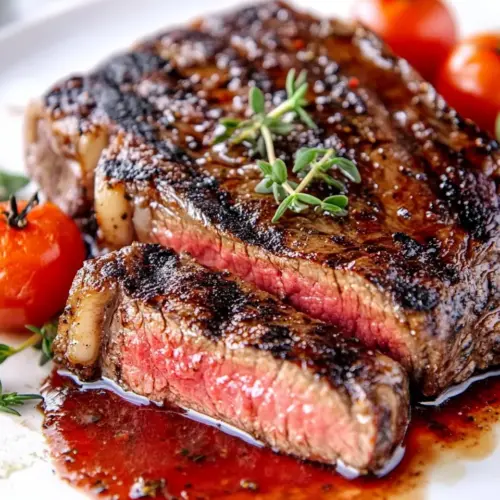
Best Ribeye Steak Recipe
Pan-seared ribeye steaks with a tart cherry pan sauce made from canned cherries, shallot, and a honey-Dijon-balsamic glaze. Steaks are seasoned, seared, basted with butter and herbs, then served sliced with the warm cherry sauce.
Equipment
- Cast-Iron Skillet
- Tongs
- Meat Thermometer
- Paper Towels
- Cutting Board
- Small Bowl
- Foil
Ingredients
Ingredients
- 2 boneless ribeye steaks 1 to 2” thick
- 2 teaspoonskosher salt NOT table salt
- 1 teaspoonfreshly cracked pepper
- 1/4 tsp EACHgarlic powder paprika (or more to taste)
- 2 tablespoonvegetable canola, or grapeseed oil (a high smoking point oil), divided
- 3 tablespoonsunsalted butter
- 5 sprigs of rosemary
- 2 sprigs of thyme
- 1 bulb garlic halved horizontally
- 115 oz. cantart cherries juices separated
- 2/3 cuplow sodium chicken broth
- 1 teaspooncornstarch
- 1 shallot minced
- 1 tablespoonhoney
- 1 tablespoonDijon mustard
- 2 teaspoonslight brown sugar
- 1 teaspoonbalsamic vinegar
- salt and pepperto taste
Instructions
Instructions
- Pat the 2 boneless ribeye steaks dry with paper towels. Season both sides evenly with 2 teaspoons kosher salt (NOT table salt), 1 teaspoon freshly cracked pepper, and 1/4 teaspoon each garlic powder and paprika. Press the seasonings into the meat (press, don’t rub).
- Optional dry brine: If you have time, place the seasoned steaks on a plate, leave uncovered in the refrigerator for 4 to 48 hours. If not dry brining, let the seasoned steaks sit at room temperature for 1 hour before cooking.
- If you dry-brined, remove the steaks from the refrigerator 60 minutes before cooking so they come to room temperature.
- Preheat a cast iron skillet over high heat until it is very hot and just beginning to smoke. Add 1 tablespoon of the 2 tablespoons high–smoke–point oil and swirl to coat.
- Reduce heat to medium-high. Place the steaks in the skillet and sear the first side without moving for 3 minutes.
- Flip the steaks. Add the halved garlic bulb to the pan, cut side down, and add all the fresh herbs (5 sprigs rosemary and 2 sprigs thyme) plus the remaining 1 tablespoon oil. Sear the second side for 3 minutes.
- Sear the edges of the steaks: hold each steak with tongs and sear the sides for about 30 seconds per edge to render fat and color the perimeter.
- Reduce heat to medium-low, add 3 tablespoons unsalted butter to the pan, tilt the pan slightly, and baste the steaks continuously with the melted butter for about 1 minute.
- Insert a meat thermometer into the thickest part of a steak. Continue to cook over medium-low heat, periodically basting with the butter, until the thermometer reads approximately 5°F lower than your target final temperature (the steaks will rise about 5°F while resting). Use these final desired doneness ranges as a guide: Medium Rare 130°–140°F, Medium 140°–145°F, Medium Well 150°–160°F.
- When the steaks reach the target minus 5°F, remove them to a cutting board or plate. Spoon any remaining butter from the pan over the steaks once more, loosely tent with foil, and let rest for 10 minutes before slicing against the grain.
- While the steaks rest, prepare the tart cherry sauce. Reserve the juices from the 15‑oz can of tart cherries (juices separated). In a small bowl, whisk 1 tablespoon of the reserved cherry juice with 2/3 cup low‑sodium chicken broth and 1 teaspoon cornstarch to make a slurry; set aside.
- Return the skillet to medium heat. Carefully drain off all but about 2 tablespoons of the butter/oil from the pan, leaving the garlic halves and herbs in the skillet.
- Add the minced shallot to the skillet and sauté until softened, about 3–5 minutes, stirring and scraping up browned bits from the bottom of the pan.
- Stir in the cherry-chicken-broth slurry and simmer, scraping the pan, until the sauce thickens and reduces slightly, about 2–3 minutes.
- Add the tart cherries (from the can), 1 tablespoon honey, 1 tablespoon Dijon mustard, 2 teaspoons light brown sugar, and 1 teaspoon balsamic vinegar to the skillet. Gently simmer just until the cherries are warmed through and the flavors meld, about 2–3 minutes.
- Taste the sauce and adjust if desired: add more honey or brown sugar for sweetness, or more balsamic for tang. Season with salt and pepper to taste.
- Slice the rested steaks against the grain and spoon the tart cherry sauce over the slices. Serve immediately.