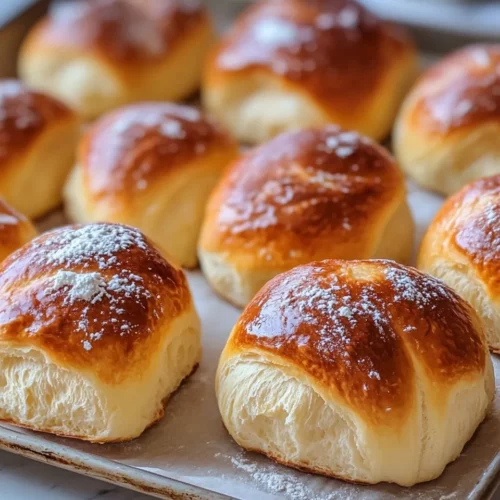
Brioche Buns
Soft, enriched brioche buns made with a tender, buttery, egg-rich dough. The dough is layered with butter, shaped into knotted buns, brushed with an egg yolk-vanilla wash, and finished with sesame or poppy seeds.
Equipment
- KitchenAid Artisan 5 Quart Stand Mixer
- Aluminum Baking Sheet (2 pack)
- Basting and Pastry Brush
Ingredients
Ingredients
- 1 cupwater lukewarm
- 2 tablespoonsugar granulated
- 1 tablespoonactive dry yeast
- 1 cupmilk lukewarm
- 1/2 cupvegetable oil
- 2 largeeggs separated, at room temperature
- 1 teaspoonsalt
- 4-6 cupsall-purpose flour
- 6 tablespoonbutter unsalted, softened
- 1 teaspoonvanilla paste
- 1 tablespoonsesame seeds
- 1 tablespoonpoppy seeds
Instructions
Instructions
- Activate the yeast: In the bowl of a stand mixer (or a large bowl if mixing by hand) combine 1 cup lukewarm water, 1 tablespoon of the granulated sugar, and 1 tablespoon active dry yeast. Stir once, then let sit 5–10 minutes until the mixture is frothy.
- Add the remaining wet ingredients: To the frothy yeast mixture add the remaining 1 tablespoon sugar, 1 cup lukewarm milk, 1/2 cup vegetable oil, the 2 egg whites (reserve the yolks), and 1 teaspoon salt. Whisk briefly to combine.
- Begin the dough: Add 2 cups of the all-purpose flour to the bowl and mix on low with a dough hook (or stir by hand) for a couple minutes. Continue adding the remaining flour 1 cup at a time, mixing after each addition, until the dough comes together into a soft, slightly sticky ball. You will likely use about 4 cups but may need up to 6 cups total.
- Knead until elastic: Knead the dough in the mixer on low-medium for 5–8 minutes (or knead by hand on a lightly floured surface) until the dough is smooth, elastic, slightly sticky, and springs back when poked.
- First rise: Lightly oil a large bowl, transfer the dough into the oiled bowl, turn once to coat, cover with plastic wrap or a clean towel, and let rise in a warm, draft-free place until doubled in size, about 1–2 hours.
- Prepare for shaping and the oven: Preheat the oven to 375°F (190°C). Line two baking sheets with parchment paper. Lightly oil your work surface with some of the vegetable oil.
- Deflate and flatten: Punch the risen dough down to release the air. Transfer it to the oiled work surface and, using your fingers (or a rolling pin), spread the dough into a rectangle roughly 20 x 16 inches. If the dough sticks, oil your hands lightly.
- Layer with butter: Spread 3 tablespoons of the softened unsalted butter evenly over the dough surface. Fold the dough into thirds (like a letter). Gently press or spread the folded dough back into a rectangle, then spread 2 tablespoons butter over the new surface and fold into thirds again. Press or spread once more, then spread the remaining 1 tablespoon butter over the surface and fold into thirds one last time. After the final fold, press or spread the dough to a rectangle about 12 x 8 inches.
- Cut and shape buns: Using a pizza cutter or sharp knife, cut the dough into 8 long strips (each about 1½ inches wide). For each strip, fold it in half, twist the doubled strip, bring the two ends together, and pinch to seal to form a knotted/twisted bun. Place the buns on the prepared baking sheets with space between them (up to 6 buns will fit on one sheet—use the second sheet for any extras).
- Second rise: Cover the shaped buns loosely with plastic wrap or a clean towel and let them rise in a warm place until puffy, about 30–45 minutes.
- Egg wash and seeds: Whisk the reserved 2 egg yolks together with 1 teaspoon vanilla paste. Generously brush the tops of the risen buns with the yolk-vanilla mixture. Sprinkle the buns with sesame seeds and/or poppy seeds from the listed amounts as desired.
- Bake and cool: Bake the buns in the preheated oven 20–25 minutes, rotating the sheets halfway through if baking two at once, until the buns are deep golden brown. Let the buns cool on the baking sheet for 5 minutes, then transfer to a wire rack to cool completely.
Notes
Once your yeast package or jar has been opened, you must refrigerate the yeast or freeze it in an airtight container.
Always check the expiration date on your yeast and make sure it hasn’t expired. All your yeast products whether it’s in a jar or a package should be stamped with a “Best if Used by” date.
Dough thrives in a warm, draft-free environment. If your oven has a “proof” function, then use it. The “proof” function preheats the oven to 100 F degrees, causing a warm, but not hot environment for your dough to rise nicely. If your oven doesn’t have this “proof” function, I would still use the oven. What I usually do is preheat the oven to 200F degrees, or whatever the lowest setting is for it. Once it reaches that temperature, turn off the oven, then place the dough in there to rise. This will speed up the proofing process tremendously.
The amount of flour you use in these buns totally depends on your environment. It could vary greatly, 4 to 6 cups. I live in a very dry environment, so for me I always have to use less flour than a recipe specifies. If you live in a humid environment, more flour is required.
Note that the dough is so soft, you don’t even have to roll it with a rolling pin, you can just use your fingers to spread out the dough.
Brioche buns truly are best enjoyed the day you make them, but if you do have some leftover buns, they will last up to3 daysat room temperature. I usually just place them in a ziploc bag.
These brioche buns can actually be frozen and will last in the freezer for up to3 months. Just make sure they are completely cooled to room temperature. Once cooled wrap them in plastic wrap individually then place them in a ziploc bag and freeze.
Always check the expiration date on your yeast and make sure it hasn’t expired. All your yeast products whether it’s in a jar or a package should be stamped with a “Best if Used by” date.
Dough thrives in a warm, draft-free environment. If your oven has a “proof” function, then use it. The “proof” function preheats the oven to 100 F degrees, causing a warm, but not hot environment for your dough to rise nicely. If your oven doesn’t have this “proof” function, I would still use the oven. What I usually do is preheat the oven to 200F degrees, or whatever the lowest setting is for it. Once it reaches that temperature, turn off the oven, then place the dough in there to rise. This will speed up the proofing process tremendously.
The amount of flour you use in these buns totally depends on your environment. It could vary greatly, 4 to 6 cups. I live in a very dry environment, so for me I always have to use less flour than a recipe specifies. If you live in a humid environment, more flour is required.
Note that the dough is so soft, you don’t even have to roll it with a rolling pin, you can just use your fingers to spread out the dough.
Brioche buns truly are best enjoyed the day you make them, but if you do have some leftover buns, they will last up to3 daysat room temperature. I usually just place them in a ziploc bag.
These brioche buns can actually be frozen and will last in the freezer for up to3 months. Just make sure they are completely cooled to room temperature. Once cooled wrap them in plastic wrap individually then place them in a ziploc bag and freeze.