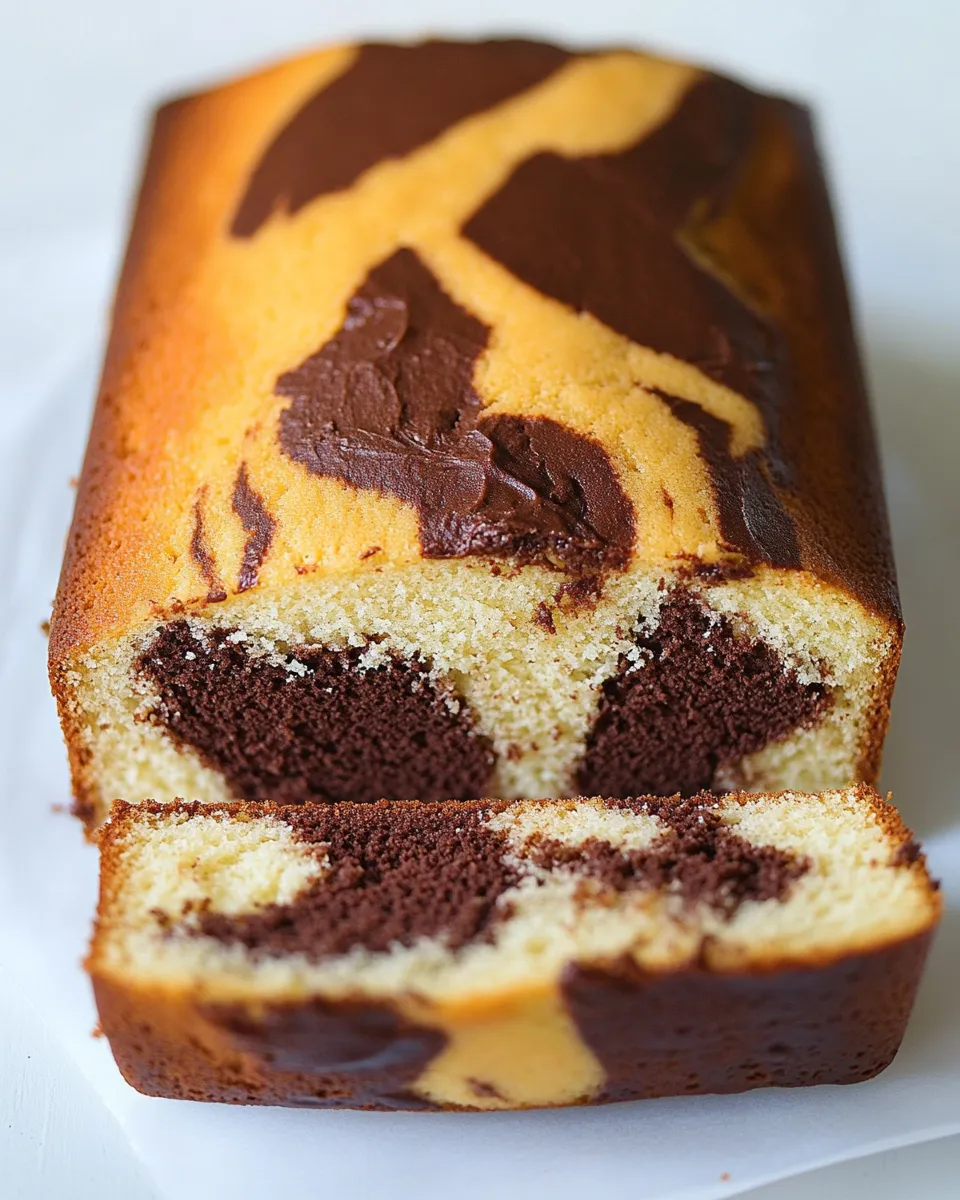
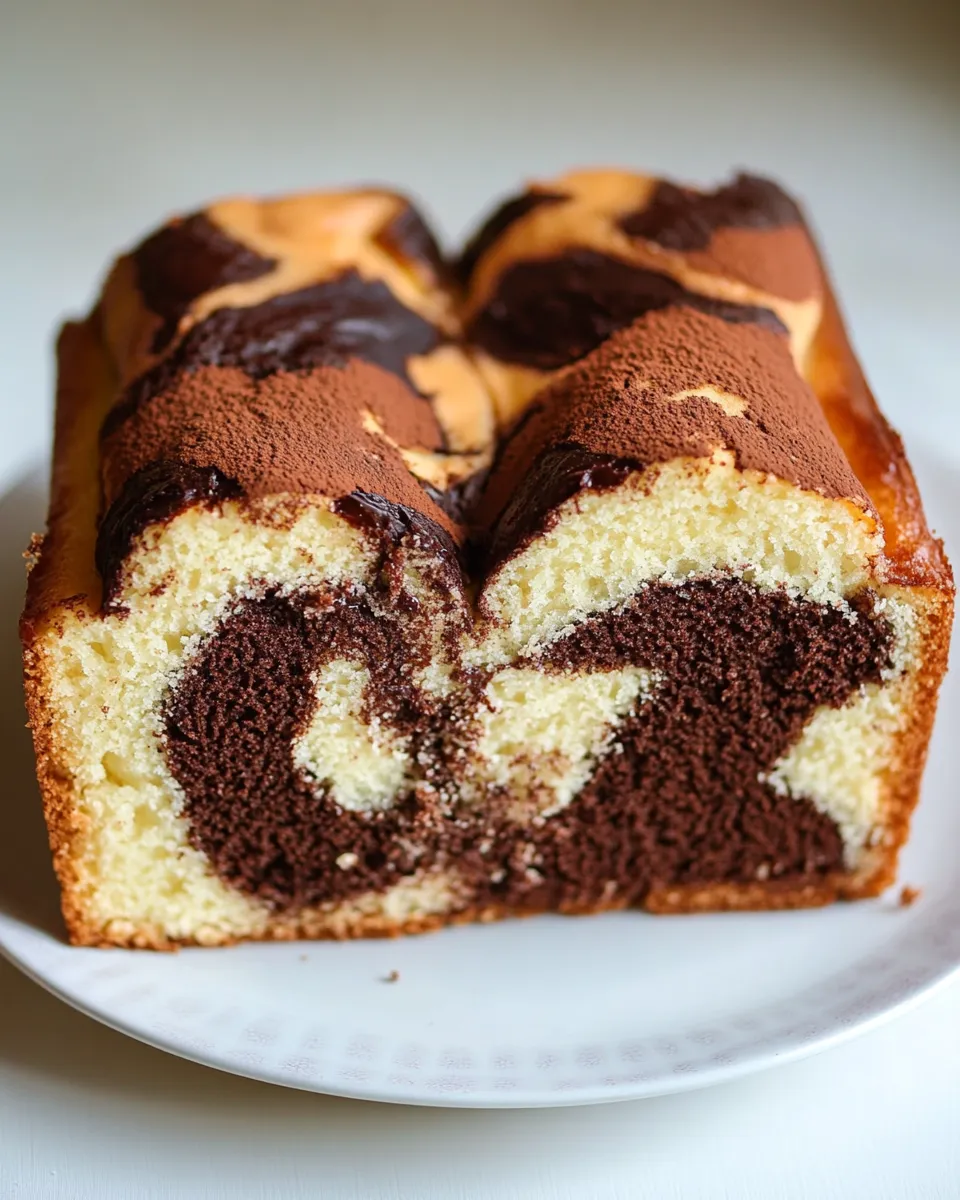
This is a loaf-sized marble cake with three distinct batters—chocolate, dulce de leche, and vanilla—layered and lightly swirled so each slice shows ribbons of flavor. It bakes low and slow to keep the crumb tender and to let the dulce de leche shine in soft pockets rather than disappearing into the batter. I love this for mornings when I want something a little special but not fussy.
The method is straightforward and forgiving: make one base batter, split it into three, flavor each portion, layer, swirl, and bake. The key moments are creaming the butter and sugar fully, keeping the melted chocolate warm but not hot, and not overmixing once you combine wet and dry ingredients. Follow those, and you’ll get a moist, evenly baked loaf with a clear marble pattern.
Below you’ll find the ingredient list exactly as used, step-by-step directions, pantry-friendly swap ideas limited to what’s in the recipe, and practical tips for avoiding common problems. No frills—just the real, useful instructions I reach for when I want reliable results.
What Goes In
Ingredients
- 170 grams (6 ounces) unsalted butter, at room temperature — provides structure and tenderness; room temperature allows proper creaming with sugar.
- 300 grams (1 1/2 cups) sugar — sweetens and helps create a light crumb when creamed with butter.
- 60 grams (2 1/4 ounces) semisweet or bittersweet chocolate, chopped — melted into one portion for the chocolate batter; choose higher or lower cocoa to taste.
- 80 grams (1/4 cup) dulce de leche — warms and thins slightly for folding into one portion to give pockets of caramel flavor.
- 3 large eggs, at room temperature — add lift and structure; room temperature eggs incorporate more smoothly.
- 220 grams (1 3/4 cups) flour — main dry structure; measure by weight when you can for consistency.
- 1/2 teaspoon salt — balances sweetness and enhances flavor.
- 1/4 teaspoon baking powder — light lift so the loaf rises evenly without doming too aggressively.
- 125 grams (1/2 cup) sour cream or buttermilk, at room temperature — adds moisture and a tender crumb; the recipe explicitly accepts either.
- 1 tablespoon Dutch-process cocoa powder — deepens the chocolate portion without drying it out; stir into the chocolate portion with the melted chocolate.
- 2 teaspoons vanilla extract — flavoring for the vanilla portion; fold into the reserved third of batter.
The Method for Chocolate, Dulce de Leche, and Vanilla Marble Cake
- Prepare the pan: Spray a loaf pan with baking spray or butter it, then sprinkle a little flour and tap out the excess. Cut a strip of parchment paper to fit the pan with overhanging edges on the long sides and place it in the pan (overhang will help remove the cake later).
- Preheat the oven to 300°F (150°C).
- Melt the chocolate: put the chopped chocolate in a dry, medium bowl set over a pan of barely simmering water (bain-marie). Stir gently until smooth. Remove from heat but keep the bowl over the warm water or off the heat to stay warm while you continue.
- Soften the dulce de leche: put the dulce de leche in a microwave-safe bowl and heat about 30 seconds, until soft and fluid. If you don’t have a microwave, warm it gently in a small saucepan until pourable, then transfer to a medium bowl.
- In the bowl of a stand mixer fitted with the paddle attachment, beat the room-temperature butter and sugar on medium-high speed until light and fluffy, about 5 minutes. Stop once or twice to scrape down the sides of the bowl.
- With the mixer on medium speed, add the eggs one at a time, beating briefly after each addition and scraping down the bowl each time so the mixture is even.
- In a small bowl, whisk together the flour, salt, and baking powder.
- Fold the dry ingredients and sour cream/buttermilk into the butter mixture in three stages to avoid overmixing: (a) add one-third of the dry ingredients and stir just until almost incorporated; (b) stir in half of the sour cream or buttermilk; (c) add half of the remaining dry ingredients and mix just until nearly incorporated; (d) stir in the remaining sour cream or buttermilk; (e) add the final dry ingredients and stir just until everything is combined. Do not overbeat.
- Divide the batter into three equal portions (by weight if possible, otherwise by eye).
- Make the chocolate batter: combine one portion of batter with the melted chocolate and the 1 tablespoon Dutch-process cocoa powder in a bowl; stir until evenly combined.
- Make the dulce de leche batter: combine a second portion of batter with the warmed dulce de leche in a bowl; stir until evenly combined.
- Make the vanilla batter: stir the 2 teaspoons vanilla extract into the remaining portion of batter left in the mixing bowl.
- Layer the batters in the prepared loaf pan: using a scoop or large spoon, place alternating scoops of chocolate and vanilla batter in five parallel rows running lengthwise along both sides of the pan (chocolate and vanilla alternating). Place scoops of the dulce de leche batter down the center of the pan between those two sets of rows. Tap the pan lightly on the counter to settle the batters.
- Add a second layer to create a checkerboard/marble effect: place scoops of chocolate batter over the vanilla scoops, place dulce de leche scoops over the chocolate scoops, and finish with vanilla scoops down the center as space allows. Place any remaining batter on top to fill the pan. Tap the pan on the counter to eliminate air pockets.
- Swirl the batters: run a toothpick or butter knife through the batter 6–7 times lengthwise to lightly marble the three batters—do not overmix.
- Bake: place the loaf pan in the preheated oven and bake until the center is just set and a toothpick inserted in the center comes out clean, about 1 hour 30 minutes. (Oven times vary; begin checking near the end of the time.)
- Cool and remove: let the cake cool in the pan on a wire rack for 15 minutes. Use the parchment overhang to lift the cake from the pan, then cool completely on the wire rack.
Why This Recipe Works
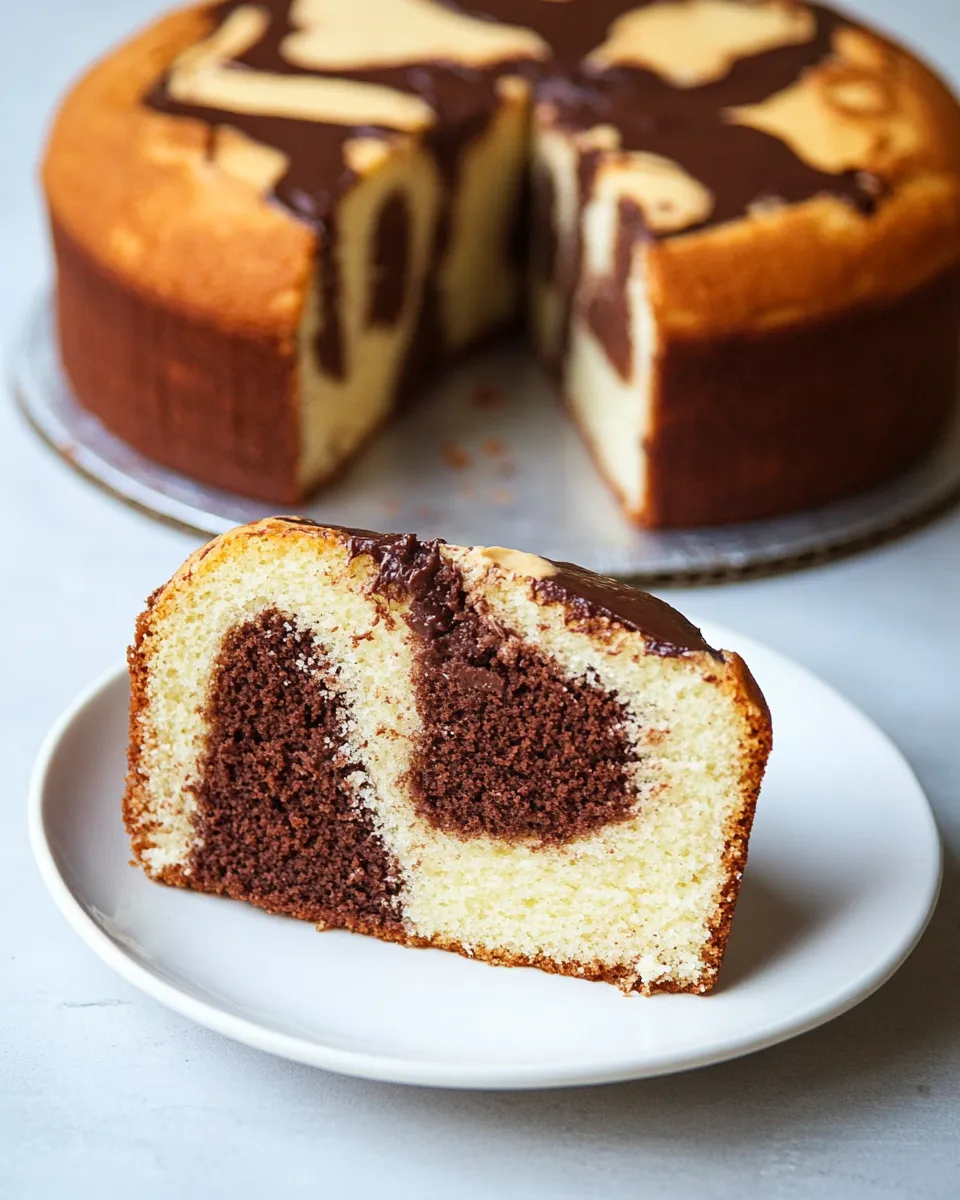
Creaming the butter and sugar until light and fluffy introduces the tiny air pockets that make the loaf tender and give it lift. Incorporating eggs one at a time keeps the emulsion stable so the batter doesn’t break. Folding dry ingredients and sour cream/buttermilk in stages limits gluten development, which prevents a tough crumb. Low-and-slow baking at 300°F (150°C) gives the loaf time to set evenly without overbrowning the edges or cracking dramatically.
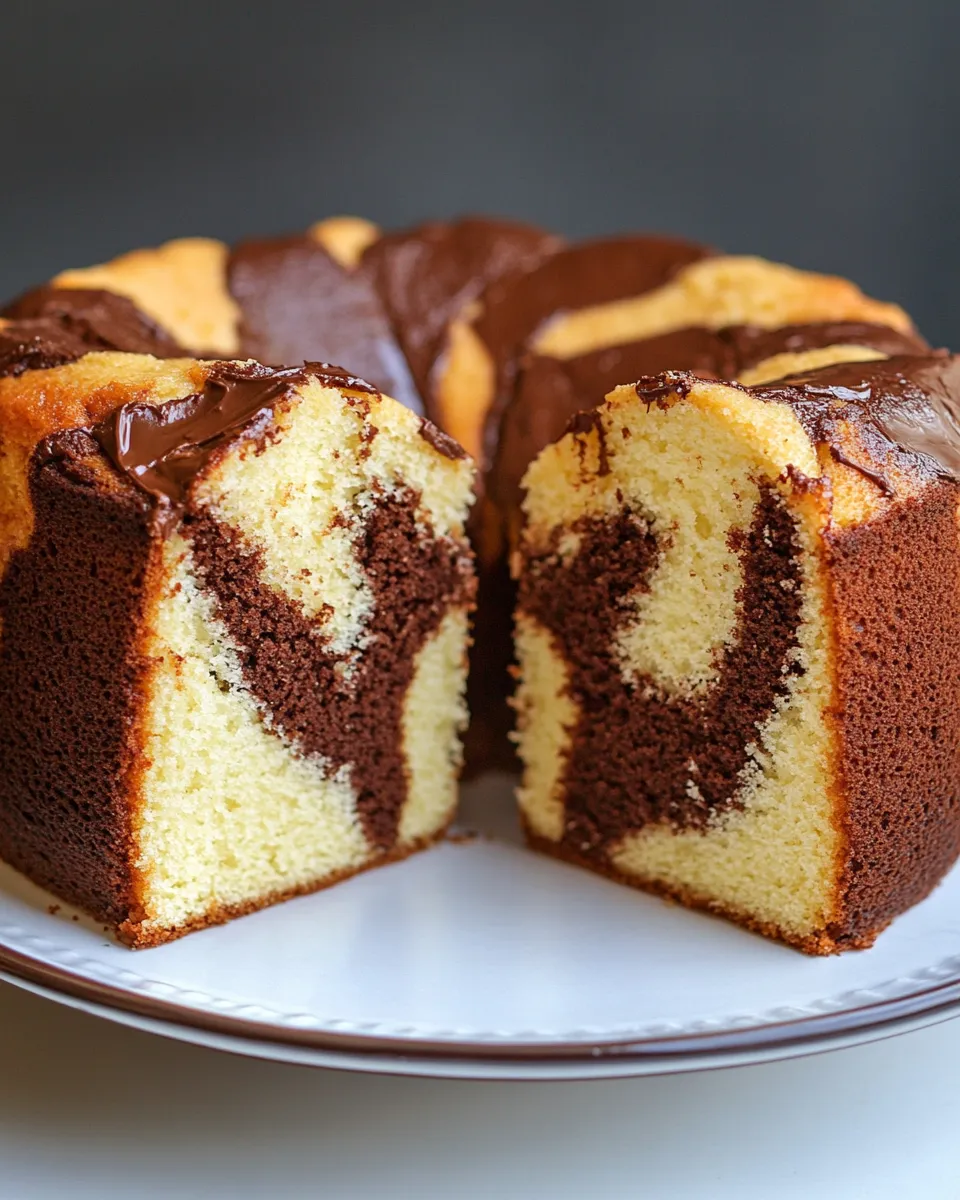
Dividing the batter into three portions and flavoring each separately lets every slice show distinct layers of chocolate, caramel, and vanilla. Keeping the melted chocolate warm but not hot helps it incorporate evenly into the batter without seizing or cooling it so quickly that the batter thickens. The light swirl at the end preserves definition between batters so you get that checkerboard-marble effect without turning everything into a single muddy color.
Quick Replacement Ideas
- Semisweet or bittersweet chocolate — either works; choose the cocoa percentage you prefer from what’s listed in the ingredients.
- Sour cream or buttermilk — the recipe accepts either; use sour cream for a slightly richer crumb, buttermilk for a tangier note.
- Dutch-process cocoa — the recipe specifies 1 tablespoon; stick with Dutch-process if you want the deeper, less acidic chocolate character noted here.
- Vanilla — keep the 2 teaspoons listed; using a good-quality vanilla will be noticeable in the vanilla portion.
Toolbox for This Recipe
- Stand mixer with paddle attachment — fastest and most consistent for creaming butter and sugar.
- Loaf pan (standard size) — lined with parchment as directed for easy removal.
- Medium bowl and small bowl — for melting chocolate and softening dulce de leche.
- Bain-marie setup (pan and heatproof bowl) — for gently melting chocolate without scorching.
- Measuring scale (optional) — makes dividing batter into equal portions easier and more accurate.
- Toothpick or butter knife — for the gentle swirling that creates the marble effect.
- Wire rack — for cooling so the loaf doesn’t steam on the bottom.
Troubles You Can Avoid
Before baking
- Cold butter or eggs — won’t cream properly; bring to room temperature for a smooth, airy base.
- Overmixing after adding flour — mixes develop gluten; stop as soon as the dry ingredients are incorporated for a tender crumb.
- Uneven batter division — weight is helpful; uneven portions can give you lopsided layering or overflow on one side.
During and after baking
- Too high oven temperature — the top will brown before the center sets; 300°F (150°C) is intentionally low to avoid this.
- Over-swirl — heavy swirling blends the batters together and muddies the pattern; keep it to 6–7 gentle pulls lengthwise.
- Removing too soon — let the loaf rest 15 minutes in the pan so it stabilizes and releases more cleanly with the parchment overhang.
Spring to Winter: Ideas
This loaf adapts well to the seasons without changing the ingredients. In spring and summer serve thin slices alongside fresh fruit for brightness; the dulce de leche acts like a sweet counterpoint to tart berries. In cooler months, a warm slice pairs beautifully with hot drinks—coffee, tea, or cocoa—since the caramel notes in the dulce de leche feel comforting. The cake’s texture also makes it a good candidate for lightly toasting slices and spreading with a thin swipe of butter to bring out the flavors.
Behind-the-Scenes Notes
I often make this loaf the night before a small gathering. It stores well at room temperature, wrapped tightly, and the flavors meld a bit overnight—the dulce de leche pockets stay distinct but mellow. If you’re concerned about the chocolate cooling too quickly while assembling, keep the bowl over the warm water briefly but off any direct heat. When I’m testing for a consistent marble pattern I weigh the batter portions; that extra step reduces one-variable baking stress and makes the assembly predictable.
Save It for Later
To store: once fully cool, wrap the loaf tightly in plastic or place it in an airtight container. It will keep at room temperature for 2–3 days. For longer storage, freeze wrapped in plastic and then foil; thaw overnight in the refrigerator or on the counter for a few hours before serving. For best texture when freezing, slice first and separate slices with parchment or wax paper so you can thaw just what you need.
Helpful Q&A
- Can I use a different pan? A standard loaf pan is the intended size. If you use a different pan, expect altered bake time and possibly a change in marble pattern.
- Can I skip the parchment? You can grease and flour only, but parchment with overhang makes removing the loaf much easier and reduces the risk of tearing.
- What if the center is still wet after 1 hour 30 minutes? Ovens vary. Continue to bake in 10–15 minute increments until a toothpick comes out clean. If the top is browning too much, tent loosely with foil.
- Can I double the recipe? Yes, but bake in separate pans rather than one oversized pan to maintain even baking and the intended marble structure.
- Why warm the dulce de leche? Heating it softens the texture so it folds into batter evenly and yields soft caramel pockets rather than clumps.
Bring It to the Table
Slice the loaf with a serrated knife for clean edges and a good reveal of marbling. Arrange slices on a simple platter—this cake doesn’t need garnish to impress. If you’re taking it to a potluck, leave it whole and show the cut-side to reveal the pattern when you slice it in front of guests. It travels well and holds up to being wrapped, so it’s an easy, crowd-pleasing addition to a brunch spread or afternoon coffee break.
Chocolate, Dulce de Leche, and Vanilla Marble Cake
Ingredients
Ingredients
- 170 grams 6 ouncesunsalted butter, at room temperature
- 300 grams 1 1/2 cupssugar
- 60 grams 2 1/4 ouncessemisweet or bittersweet chocolate, chopped
- 80 grams 1/4 cupdulce de leche
- 3 largeeggs at room temperature
- 220 grams 1 3/4 cupsflour
- 1/2 teaspoonsalt
- 1/4 teaspoonbaking powder
- 125 grams 1/2 cupsour cream or buttermilk, at room temperature
- 1 tablespoonDutch processcocoa powder
- 2 teaspoonsvanilla extract
Instructions
Instructions
- Prepare the pan: Spray a loaf pan with baking spray or butter it, then sprinkle a little flour and tap out the excess. Cut a strip of parchment paper to fit the pan with overhanging edges on the long sides and place it in the pan (overhang will help remove the cake later).
- Preheat the oven to 300°F (150°C).
- Melt the chocolate: put the chopped chocolate in a dry, medium bowl set over a pan of barely simmering water (bain-marie). Stir gently until smooth. Remove from heat but keep the bowl over the warm water or off the heat to stay warm while you continue.
- Soften the dulce de leche: put the dulce de leche in a microwave-safe bowl and heat about 30 seconds, until soft and fluid. If you don’t have a microwave, warm it gently in a small saucepan until pourable, then transfer to a medium bowl.
- In the bowl of a stand mixer fitted with the paddle attachment, beat the room-temperature butter and sugar on medium-high speed until light and fluffy, about 5 minutes. Stop once or twice to scrape down the sides of the bowl.
- With the mixer on medium speed, add the eggs one at a time, beating briefly after each addition and scraping down the bowl each time so the mixture is even.
- In a small bowl, whisk together the flour, salt, and baking powder.
- Fold the dry ingredients and sour cream/buttermilk into the butter mixture in three stages to avoid overmixing: (a) add one-third of the dry ingredients and stir just until almost incorporated; (b) stir in half of the sour cream or buttermilk; (c) add half of the remaining dry ingredients and mix just until nearly incorporated; (d) stir in the remaining sour cream or buttermilk; (e) add the final dry ingredients and stir just until everything is combined. Do not overbeat.
- Divide the batter into three equal portions (by weight if possible, otherwise by eye).
- Make the chocolate batter: combine one portion of batter with the melted chocolate and the 1 tablespoon Dutch-process cocoa powder in a bowl; stir until evenly combined.
- Make the dulce de leche batter: combine a second portion of batter with the warmed dulce de leche in a bowl; stir until evenly combined.
- Make the vanilla batter: stir the 2 teaspoons vanilla extract into the remaining portion of batter left in the mixing bowl.
- Layer the batters in the prepared loaf pan: using a scoop or large spoon, place alternating scoops of chocolate and vanilla batter in five parallel rows running lengthwise along both sides of the pan (chocolate and vanilla alternating). Place scoops of the dulce de leche batter down the center of the pan between those two sets of rows. Tap the pan lightly on the counter to settle the batters.
- Add a second layer to create a checkerboard/marble effect: place scoops of chocolate batter over the vanilla scoops, place dulce de leche scoops over the chocolate scoops, and finish with vanilla scoops down the center as space allows. Place any remaining batter on top to fill the pan. Tap the pan on the counter to eliminate air pockets.
- Swirl the batters: run a toothpick or butter knife through the batter 6–7 times lengthwise to lightly marble the three batters—do not overmix.
- Bake: place the loaf pan in the preheated oven and bake until the center is just set and a toothpick inserted in the center comes out clean, about 1 hour 30 minutes. (Oven times vary; begin checking near the end of the time.)
- Cool and remove: let the cake cool in the pan on a wire rack for 15 minutes. Use the parchment overhang to lift the cake from the pan, then cool completely on the wire rack.
Equipment
- Loaf Pan
- Parchment Paper
- Stand mixer
- paddle attachment
- Mixing bowls
- Saucepan
- Heatproof bowl
- Wire Rack
- toothpick