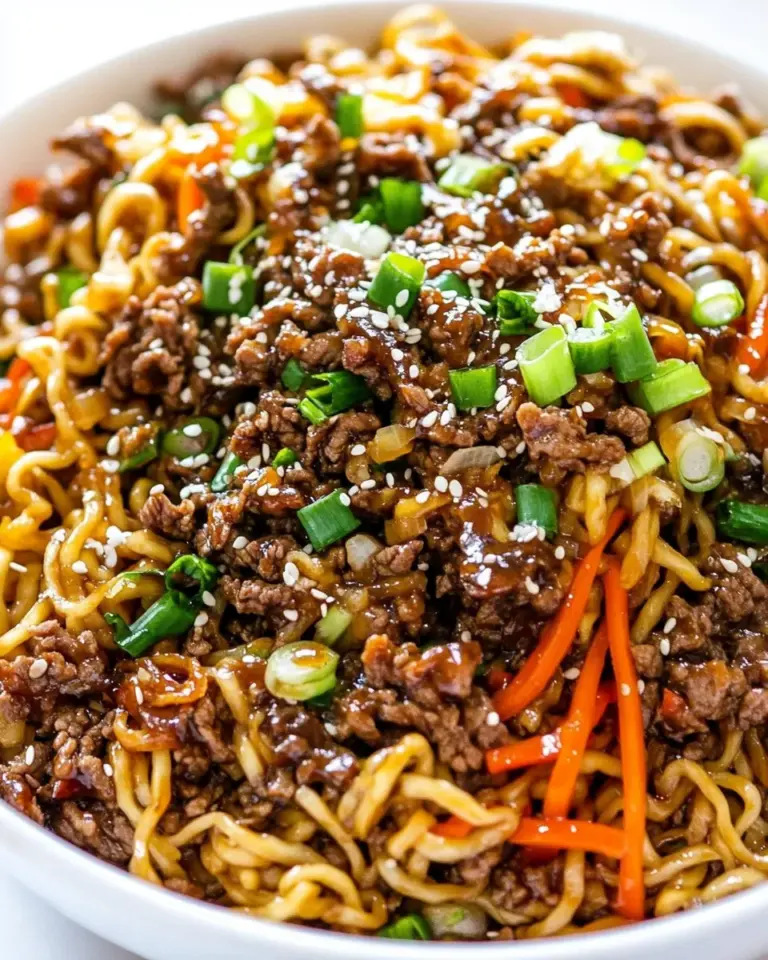

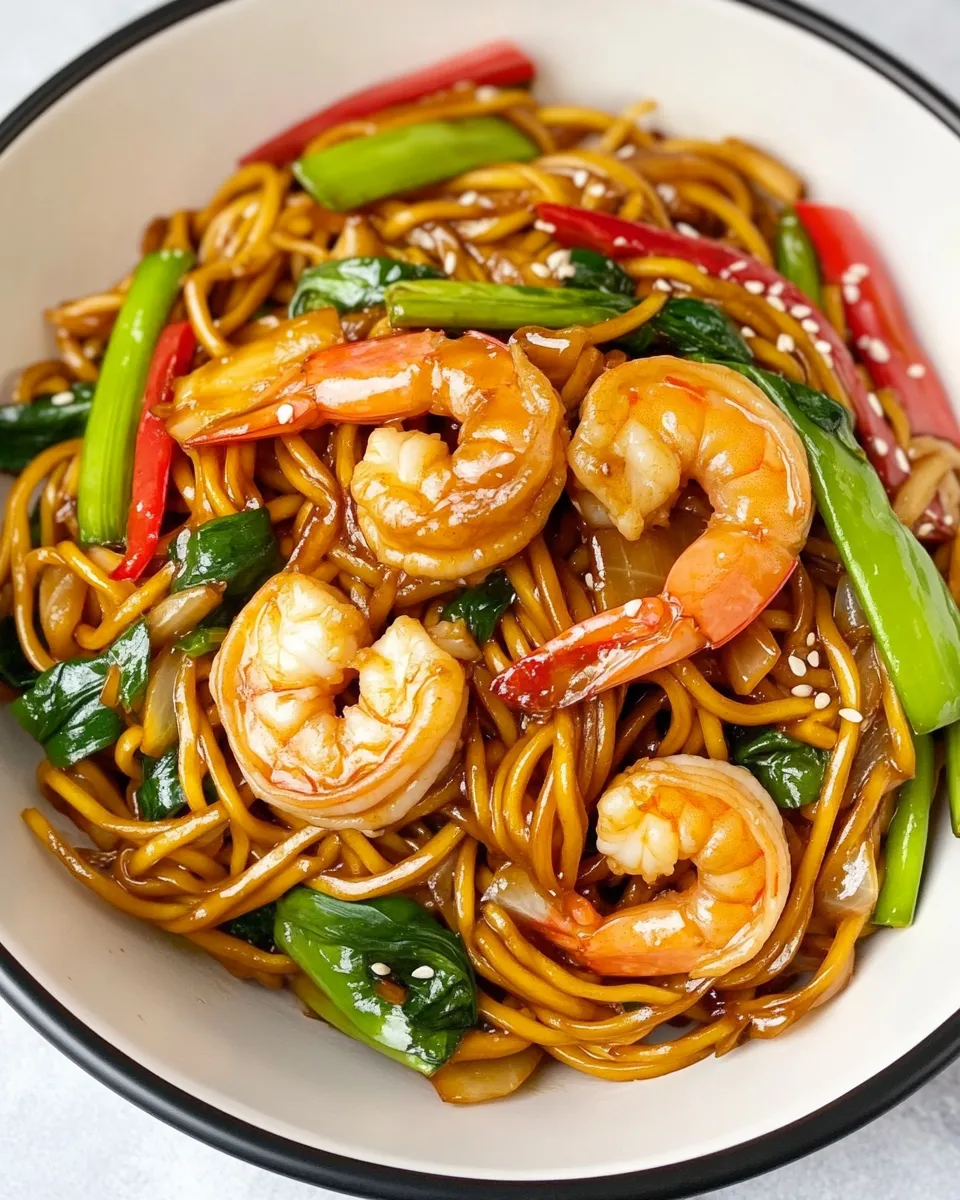
This shrimp lo mein is my go-to weeknight dinner: fast, bright, and just a little bit indulgent. It hits the textures I crave — slippery noodles, snappy vegetables, and shrimp that stay tender. The sauce is simple but layered, with oyster and soy working together for a glossy, savory finish.
I like that this recipe is forgiving. You can have everything on the table in about 20 minutes if you prep ahead: noodles cooked and drained, garlic minced, and vegetables sliced. It rewards a quick, hot pan and a steady rhythm: garlic, shrimp, veg, sauce, noodles — done.
Below you’ll find the ingredient breakdown, step-by-step directions (kept exactly as written so you can follow without guessing), troubleshooting tips, storage advice, and answers to common reader questions. Make it your own with swaps if you need, but follow the order when you cook — it really matters for texture.
Ingredient Breakdown
- 7 oz (200 g) dry Lo Mein noodles — the main carbohydrate; cook according to package so they hold texture and absorb sauce evenly.
- 2 tablespoons cooking oil — high heat carrier for quick stir-frying; use a neutral oil with a high smoke point.
- 3 cloves garlic — aroma base; mince or finely chop so it flavors the oil quickly without burning.
- 8 oz. (230 g) shrimp — the protein; cooks very quickly, so add it early but pull back from the heat once opaque.
- 6 oz. (175 g) bok choy, sliced — a leafy-crunch element; sliced thin so it softens but keeps some bite in a short stir-fry.
- 8 oz. (175 g) red bell pepper, sliced — sweetness and color; slices add crunch and contrast to the bok choy.
- white sesame seeds — finishing touch; add a nutty look and tiny crunch when sprinkled at the end.
- 1 1/2 tablespoons oyster sauce — umami backbone; gives depth and a glossy finish to the sauce.
- 2 tablespoons soy sauce — salt and savory; balances sweetness from oyster sauce and the broth.
- 1 teaspoon dark soy sauce — color and concentrated soy flavor; a little goes a long way to deepen the sauce color.
- 1/2 cup chicken broth — dilutes and stretches the sauce while adding savory notes; helps coat the noodles without being heavy.
- 1 teaspoon sesame oil — aroma and finishing flavor; small amount goes a long way, used in the sauce for a toasty note.
Directions: Shrimp Lo Mein
- Cook 7 oz (200 g) dry lo mein noodles according to package instructions. Rinse noodles under cold water, drain well, and set aside.
- In a small bowl, combine 1 1/2 tablespoons oyster sauce, 2 tablespoons soy sauce, 1 teaspoon dark soy sauce, 1/2 cup chicken broth, and 1 teaspoon sesame oil. Stir until blended and set the sauce aside.
- Heat a large skillet or wok over high heat until hot. Add 2 tablespoons cooking oil and swirl to coat the pan.
- Mince or finely chop 3 cloves garlic. Add the garlic to the hot oil and sauté 15–30 seconds, until fragrant (do not let it brown).
- Add 8 oz (230 g) shrimp to the skillet and stir-fry 1–2 minutes, until the shrimp turn opaque and the edges curl.
- Add 6 oz (175 g) sliced bok choy and 8 oz (175 g) sliced red bell pepper to the skillet. Stir-fry 1–2 minutes, until the vegetables are crisp-tender.
- Pour the prepared sauce into the skillet and stir to combine. Let the sauce come to a gentle simmer and heat for about 30–60 seconds.
- Add the cooked, drained lo mein noodles to the skillet. Toss or stir gently for 1–2 minutes so the noodles are fully coated in the sauce and heated through.
- Remove from heat, sprinkle white sesame seeds over the lo mein, and serve hot.
Why This Recipe is a Keeper
This Shrimp Lo Mein works because each element cooks in the right order. Garlic flavors the oil while remaining bright; shrimp cooks briefly to stay tender; vegetables hit that sweet spot between crisp and cooked; and the sauce finishes everything, coating noodles without making them soggy. It’s an assembly-line kind of meal, which is exactly what weeknights need.
It’s balanced — not too salty, thanks to the chicken broth, and with sesame oil adding a finishing fragrance that fools you into thinking it took longer than it did. The finish with white sesame seeds adds a small, satisfying crunch and visual pop. If you appreciate food that tastes homemade but doesn’t demand a lot of babysitting, this is it.
International Equivalents

- Noodles — substitute wheat lo mein with egg noodles or fresh Chinese-style egg noodles where available; in many European markets, look for “egg noodles” or “wheat noodles” in the Asian aisle.
- Soy sauce — use regular soy or light soy depending on local labeling; in some countries “kecap asin” or “sauce soja” will be the familiar equivalents.
- Oyster sauce — commonly sold in jars labeled the same, but in areas where it’s less common look for sauces labeled “oyster flavored” or concentrated savory sauces used for stir-fries.
- Chicken broth — stock or bouillon diluted to broth strength works the same; in regions where liquid broth is rare, dissolve a stock cube in 1/2 cup warm water.
- Sesame oil — if pure toasted sesame oil is uncommon, look for “sesame flavored oil”; a little goes a long way wherever you are.
Gear Checklist

- Large skillet or wok — a wide surface lets you stir quickly and evenly.
- Small bowl — for whisking and resting the sauce.
- Colander — to drain and rinse the noodles quickly.
- Sharp knife and cutting board — for slicing bok choy and red pepper cleanly.
- Spatula or long tongs — to toss noodles and reach the bottom of the pan.
- Measuring spoons/cups — the sauce ratios matter for balance, so measure out soy, oyster, and broth.
Pitfalls & How to Prevent Them
- Burned garlic: Garlic can turn bitter when browned. Keep the heat high but move quickly — add the shrimp right after the 15–30 seconds of garlic fragrance.
- Soggy noodles: Overcooking noodles or letting them sit in hot water will make them mushy. Cook per package, rinse under cold water to stop cooking, and drain thoroughly before returning to the pan.
- Tough shrimp: Shrimp overcook in seconds. Watch for the color change to opaque and slight curl; that’s your cue to stop cooking.
- Watery sauce: If the sauce seems thin, let it simmer an extra 30–60 seconds before adding noodles so it reduces slightly and concentrates.
Allergy-Friendly Swaps
- Shellfish allergy: Replace shrimp with thinly sliced chicken breast or firm tofu (pressed and cubed). Cook times will differ: chicken takes longer, tofu can be browned then combined with vegetables.
- Gluten sensitivity: Use gluten-free lo mein-style noodles and replace soy sauce with tamari labeled gluten-free. Check oyster sauce for gluten; look for gluten-free alternatives or use a mushroom-based sauce.
- Vegetarian/vegan: Use vegetable broth instead of chicken broth and replace oyster sauce with a mushroom-based stir-fry sauce or a vegan oyster sauce. Use tofu or tempeh in place of shrimp.
- Sesame sensitivity: Omit sesame oil and finish with a light drizzle of neutral oil; skip the sesame seeds as a garnish.
What Could Go Wrong
- Noodles clumping: If the noodles sit too long after rinsing, they can stick. Toss them with a teaspoon of oil or briefly reheat in the hot pan before adding the sauce to separate strands.
- Uneven cooking: Crowding the pan cools it down and causes steaming instead of stir-frying. If your pan is small, cook shrimp in two batches or use a larger skillet.
- Too salty: Taste the sauce before adding noodles. If it’s strong, dilute with a splash more chicken broth or a tiny drop of water to keep balance.
- Sauce doesn’t cling: If the sauce runs off the noodles, it’s too thin. Let it reduce briefly in the pan, or toss noodles in the skillet off the heat so they soak up the sauce as it cools slightly.
Best Ways to Store
Store leftovers in an airtight container in the refrigerator for up to 3 days. Noodles will continue to absorb sauce and soften, so expect a slight change in texture. To reheat, sprinkle a little water or broth over the lo mein and reheat in a hot skillet for a minute or two, tossing until heated through. The added moisture helps loosen the noodles and revives some texture.
Freezing isn’t ideal because the vegetables and noodles change texture when thawed. If you must freeze, flash-freeze portions on a tray, then transfer to a freezer bag for up to one month. Thaw overnight in the fridge and reheat gently in a skillet with a splash of broth.
Reader Questions
Can I prep ingredients ahead?
Yes. Cook and rinse the noodles; store drained in the fridge. Slice vegetables and mince garlic up to a day ahead, and keep shrimp covered on ice or refrigerated until ready to cook. Mix the sauce ahead and keep it in a small jar in the fridge.
What if I don’t have dark soy sauce?
Dark soy sauce mainly adds color and a touch of sweetness. You can omit it and use a touch more regular soy sauce, but the finished dish will be a bit lighter in color.
Can I use frozen shrimp?
Yes. Thaw fully before cooking and pat dry to avoid excess water in the pan, which will steam instead of sear the shrimp.
How spicy is this?
Not spicy at all. If you want heat, add crushed red pepper flakes, a drizzle of chili oil, or sliced fresh chilies when you add the sauce.
Let’s Eat
Serve Shrimp Lo Mein hot from the pan. I like it with a simple cucumber salad or quick pickled vegetables to add brightness, but it’s perfectly satisfying on its own. Sprinkle extra white sesame seeds at the table for a pretty finish and give each bowl a fresh grind of black pepper if you like.
Make a plan for the first 10 minutes: cook noodles, mix sauce, slice veg, then heat the pan and move quickly. Keep your mise en place close at hand. The flip from raw ingredients to finished plate is fast, and the reward is a glossy, flavorful bowl of noodles that looks (and tastes) like you spent way more time than you did.
Shrimp Lo Mein
Ingredients
Ingredients
- 7 oz 200 gdry Lo Mein noodles
- 2 tablespoonscooking oil
- 3 clovesgarlic
- 8 oz. 230 gshrimp
- 6 oz. 175 gbok choy, sliced
- 8 oz. 175 gred bell pepper, sliced
- white sesame seeds
- 1 1/2 tablespoonsoyster sauce
- 2 tablespoonssoy sauce
- 1 teaspoondark soy sauce
- 1/2 cupchicken broth
- 1 teaspoonsesame oil
Instructions
Instructions
- Cook 7 oz (200 g) dry lo mein noodles according to package instructions. Rinse noodles under cold water, drain well, and set aside.
- In a small bowl, combine 1 1/2 tablespoons oyster sauce, 2 tablespoons soy sauce, 1 teaspoon dark soy sauce, 1/2 cup chicken broth, and 1 teaspoon sesame oil. Stir until blended and set the sauce aside.
- Heat a large skillet or wok over high heat until hot. Add 2 tablespoons cooking oil and swirl to coat the pan.
- Mince or finely chop 3 cloves garlic. Add the garlic to the hot oil and sauté 15–30 seconds, until fragrant (do not let it brown).
- Add 8 oz (230 g) shrimp to the skillet and stir-fry 1–2 minutes, until the shrimp turn opaque and the edges curl.
- Add 6 oz (175 g) sliced bok choy and 8 oz (175 g) sliced red bell pepper to the skillet. Stir-fry 1–2 minutes, until the vegetables are crisp-tender.
- Pour the prepared sauce into the skillet and stir to combine. Let the sauce come to a gentle simmer and heat for about 30–60 seconds.
- Add the cooked, drained lo mein noodles to the skillet. Toss or stir gently for 1–2 minutes so the noodles are fully coated in the sauce and heated through.
- Remove from heat, sprinkle white sesame seeds over the lo mein, and serve hot.
Equipment
- Large Skillet or Wok
- Small Bowl