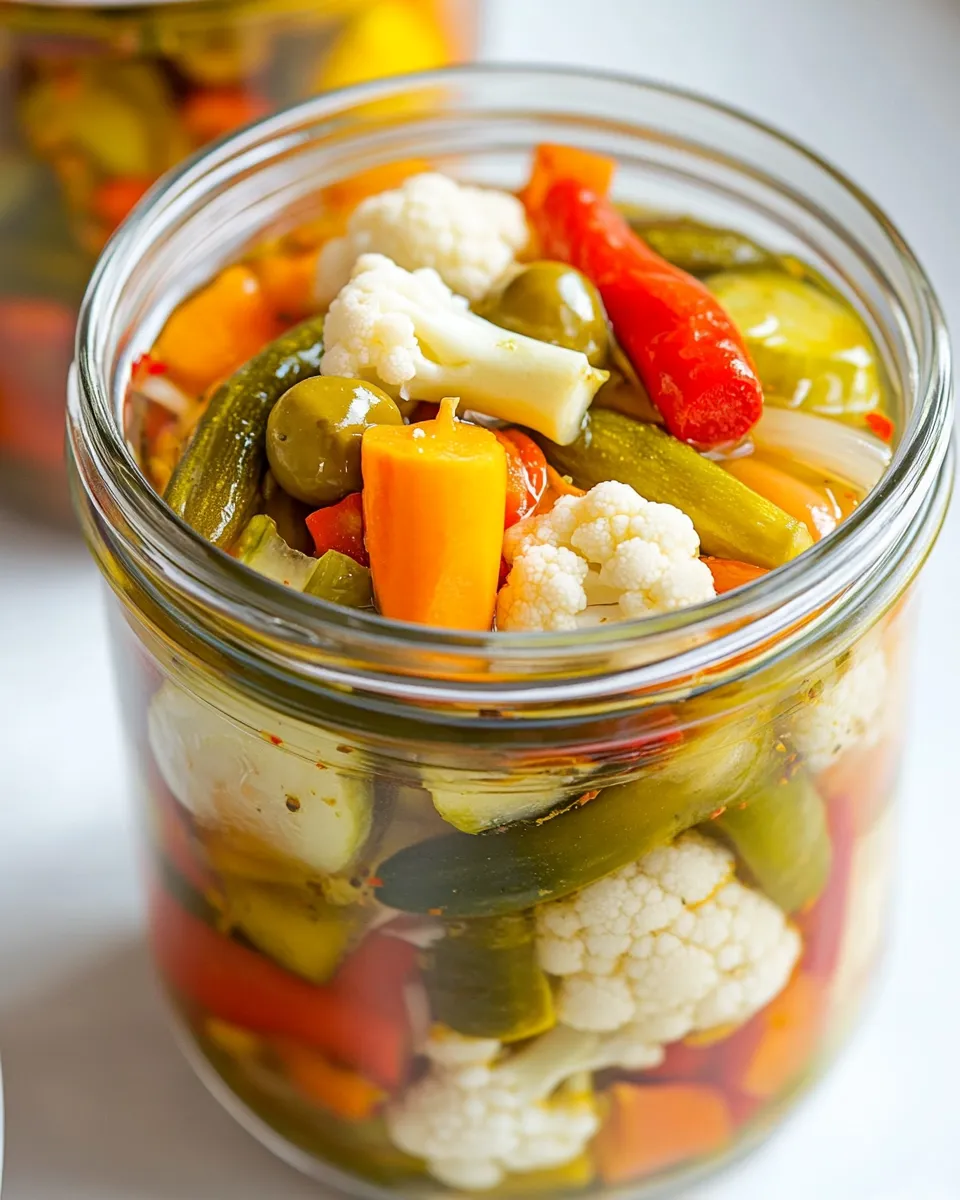
This giardiniera is the kind of thing I make when I want bright, crunchy pickles that wake up a sandwich, a salad, or a snack plate. It’s straightforward, forgiving, and stores well in the fridge, which means you can make a batch and keep reaching for it all week. Expect tang, a little heat depending on how many serranos you use, and a satisfying crunch from the cauliflower and bell pepper.
I’ll walk you through what to buy, how to prep with minimal fuss, and how to avoid the little traps that can leave your vegetables limp or your brine dull. The method uses quick pickling in the refrigerator — no hot water bath — so it’s fast to assemble and reliably delicious after 36–48 hours. If you like a little olive oil slick and herb notes in your jar, this is the one.
Keep a set of pint jars on hand; they’re perfect for sharing, gifting, or keeping one in the fridge for weekday sandwiches. Read through the shopping guide if you’re unsure about quantities or varieties — little choices like the olive type or how you slice the veg change the finished texture and flavor. Let’s get started.
Your Shopping Guide
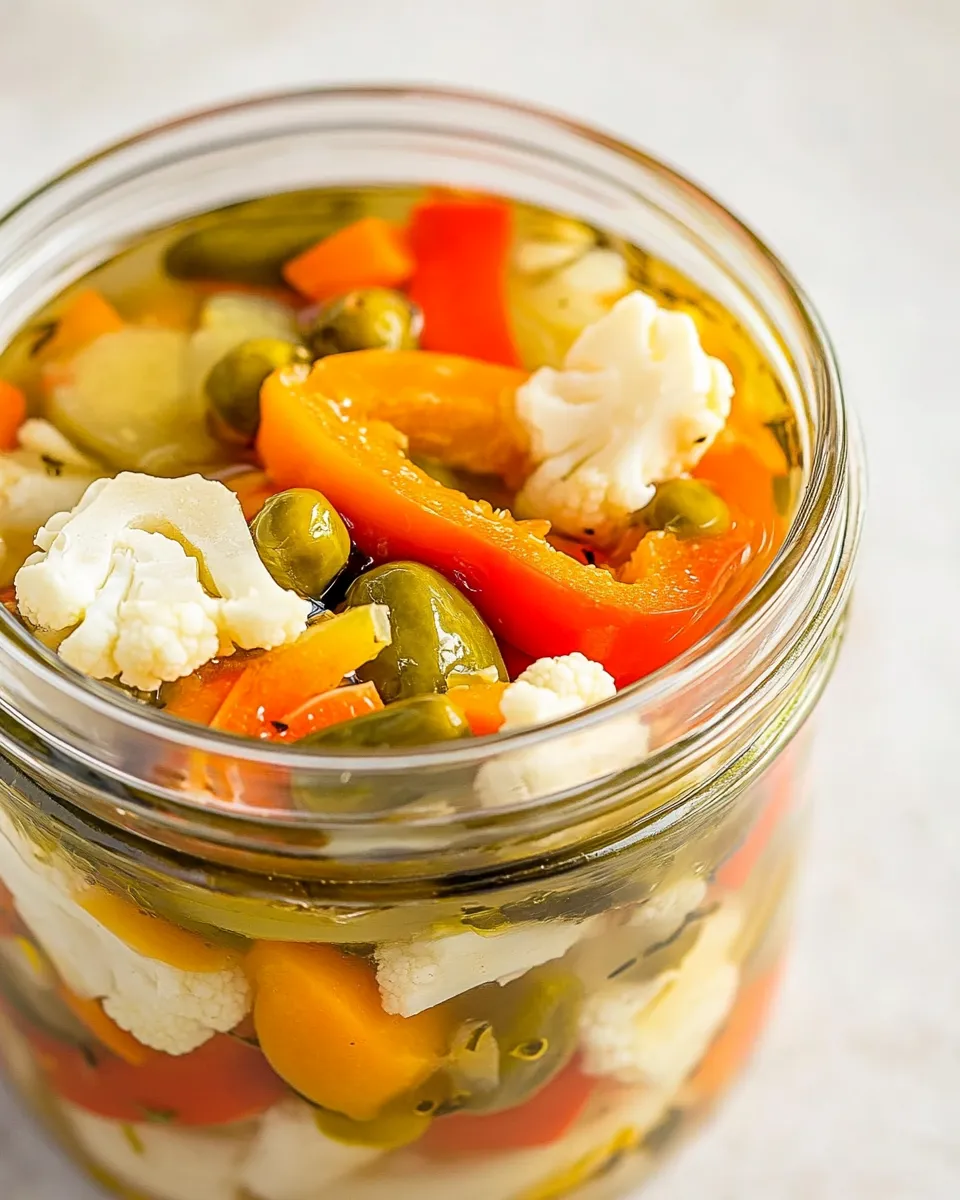
Buy fresh, firm vegetables. For a lively giardiniera, choose cauliflower with tight heads and no brown spots, carrots that snap, and a bell pepper with glossy skin. The pickling will preserve their crunch, but it can’t fix softness. If you have the option, choose pitted green olives that are briny but not overpowering; they add savory depth.
For heat, the recipe calls for serrano chiles. They vary in spice. If you prefer a mild finish, buy smaller serranos and plan to halve them and remove seeds; if you want a hotter jar, use whole chiles as the recipe suggests. You’ll also need white vinegar for a clean, bright brine — avoid flavored vinegars here because they’ll compete with the herbs and spices.
Other pantry items you’ll want: celery seeds, fennel seeds, yellow mustard seeds, dried oregano, garlic, bay leaves, sugar, and salt. Olive oil is used per jar to carry flavor and give a silky mouthfeel; use a good but everyday extra-virgin olive oil — no need for something ultra-premium.
Step-by-Step: Pickled Vegetables (Giardiniera)
Ingredients
- 3cupssmall cauliflower florets — the primary crunchy element; cut small so they fit and pickle evenly.
- 1 ½cupssliced carrots — sweetness and color; slice to bite-sized rounds or sticks.
- 1 ½cupssliced celery — adds crispness and a mild savory note.
- 1 ½cupssliced red bell pepper — for sweetness, color contrast, and a softer crunch.
- 1cuppitted green olives — brings briny, savory contrast; drain well to avoid extra liquid.
- 4tablespoonsolive oil — adds richness and helps distribute aromatics in the jar.
- 4clovesgarlicsmashed — bright, pungent flavor; smashing releases more aroma.
- 4bay leaves — earthy, aromatic note that rounds the brine.
- 2-4serrano chiles — control the heat: use 2 for milder, 4 for hotter jars.
- 2teaspoonsdried oregano — Mediterranean herbiness that plays well with oil and vinegar.
- 1teaspooncelery seeds — adds anise-like, celery-flavored lift that suits pickles.
- 1teaspoonfennel seeds — slight licorice sweetness; toasty when steeped in hot brine.
- 1teaspoonyellow mustard seeds — sharp, nutty pop that wakes the palate.
- 3cupswater — dilutes the vinegar so the pickles aren’t overwhelmingly sharp.
- 3cupswhite vinegar — the acid backbone; gives bright, clear acidity.
- 2tablespoonssalt — essential for flavor and preservation in the brine.
- 2tablespoonsugar — balances the vinegar and highlights vegetable sweetness.
Step-by-Step Instructions
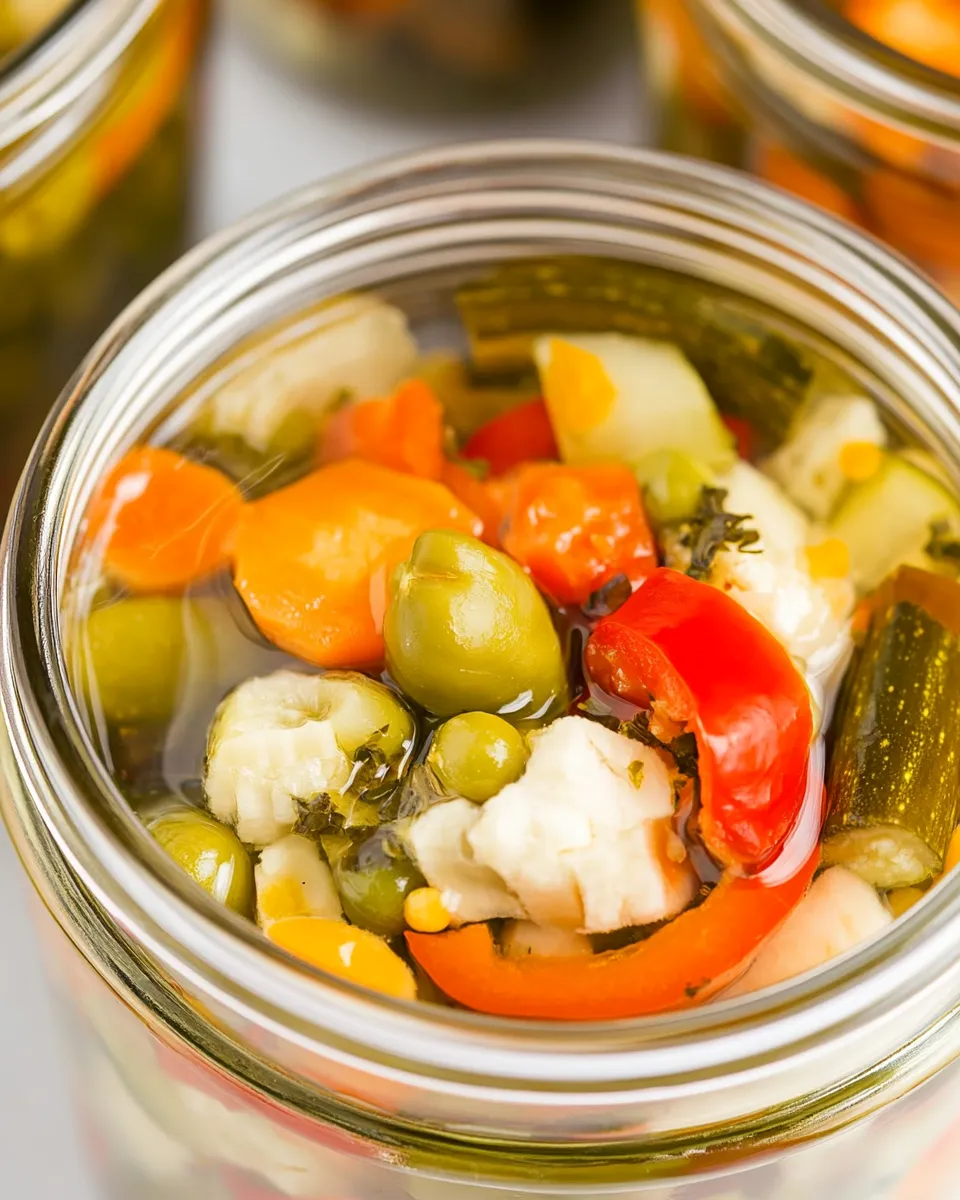
- Wash all produce. Chop the cauliflower into small florets and slice the carrots, celery, and red bell pepper into bite-sized pieces. Cut the serrano chiles in half. Drain the pitted green olives. Set out four clean pint jars with lids.
- To each jar add: 1 tablespoon olive oil, 1 smashed garlic clove, 1 bay leaf, ½–1 serrano pepper (use a half for milder heat or a whole for hotter), ½ teaspoon dried oregano, ¼ teaspoon celery seeds, ¼ teaspoon fennel seeds, and ¼ teaspoon yellow mustard seeds.
- Divide the cauliflower, sliced carrots, sliced celery, sliced red bell pepper, and drained olives evenly among the four jars. Pack the vegetables down so the jars are full but leave about ½ inch headspace at the top of each jar.
- In a medium saucepan combine 3 cups water, 3 cups white vinegar, 2 tablespoons salt, and 2 tablespoons sugar. Bring the mixture to a boil over high heat, stirring until the salt and sugar dissolve.
- Carefully pour the boiling brine into each jar, filling to within about ½ inch of the rim.
- Wipe the jar rims clean, place the lids on, and screw on the bands until fingertip-tight.
- Let the jars cool to room temperature. Once cool, gently shake each jar to distribute the olive oil and seasonings.
- Refrigerate the jars and let the vegetables pickle for 36–48 hours before serving.
Why You’ll Keep Making It
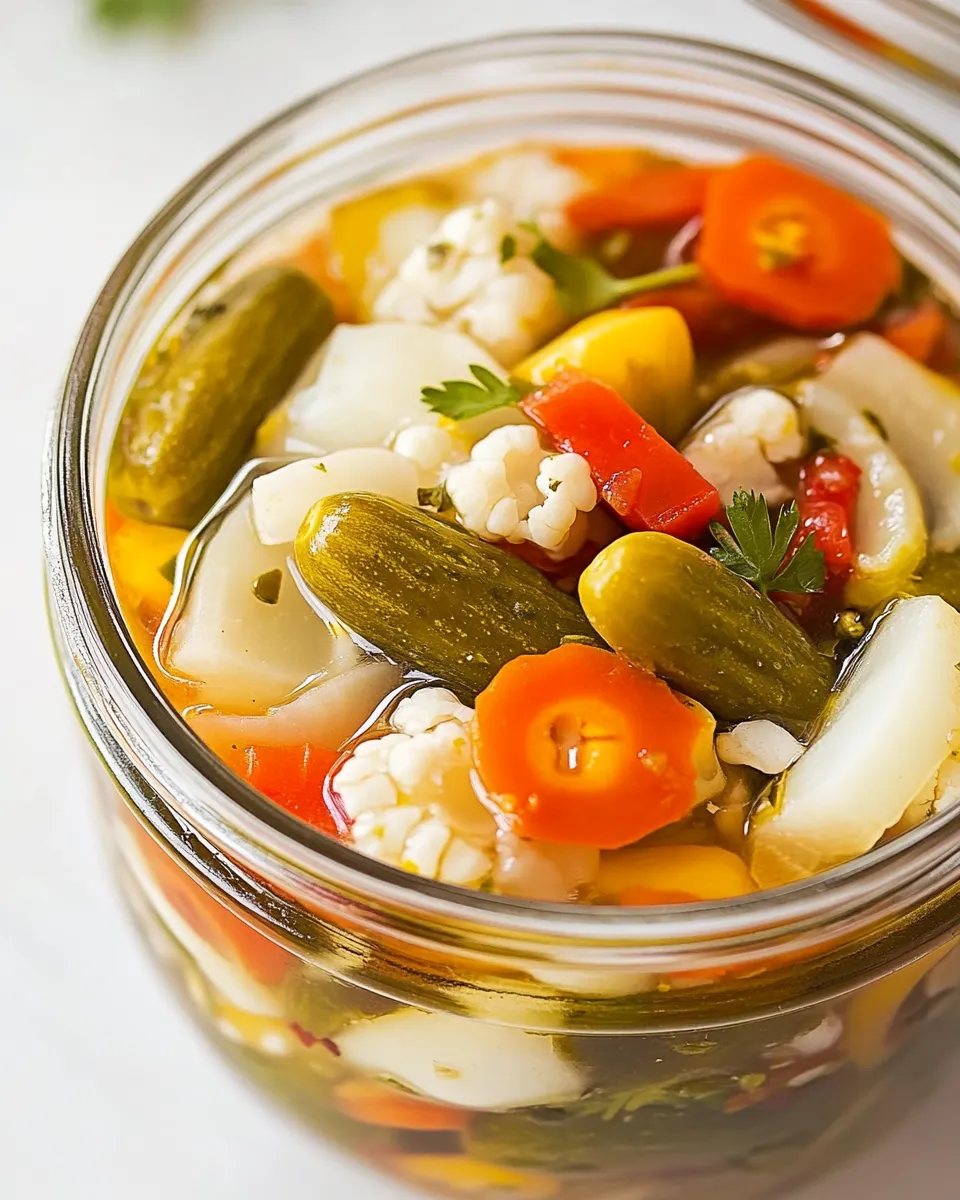
This giardiniera is a multitasker. It’s a topping that instantly upgrades a sandwich, a chopped garnish for a grain bowl, and a bright addition to antipasti plates. The texture stays pleasantly crisp for a long time because the vegetables are cut small and the brine is strong enough to preserve them in the fridge. After the initial 36–48 hours, flavors deepen, and the result is more complex each day.
It’s also flexible in serving. Toss a spoonful with toasted bread and melted cheese, stir into potato salad for a tangy lift, or serve alongside roasted meats to cut through richness. Once you make a jar, you’ll find excuses to use it — which means you’ll make it again.
Texture-Safe Substitutions
If you want to swap a vegetable, choose based on texture. For crunch similar to cauliflower, try small broccoli florets, but blanch them briefly if you prefer a slightly softer bite. If you don’t have celery, thinly sliced fennel bulb adds a crunchy, anise-forward alternative. Avoid very soft vegetables — like cucumbers left to sit — unless you plan to consume the pickle quickly.
For olives, any pitted green olive will work. Kalamata or black olives are richer and softer; they’ll change the flavor profile and soften faster. If you don’t want serranos, a few red pepper flakes or a sliced jalapeño will give heat but a different character. Keep in mind that changes in vegetable water content will affect brine concentration slightly; cutting veg small helps them pickle uniformly.
Prep & Cook Tools
You’ll need only a few things: a medium saucepan to make the brine, a sharp chef’s knife for quick, clean cuts, and four clean pint jars with lids. A cutting board and a pair of tongs or a jar lifter for handling hot jars are helpful but not required since this is a refrigerator pickle method.
For neat slicing, a mandoline can speed up the process for carrots and celery, but it’s not necessary. A small funnel makes pouring hot brine easier and less spill-prone. Finally, a kitchen towel and a clean spoon to press the vegetables into the jars will make the assembly smoother.
Problems & Prevention
Problem: Vegetables turn limp after pickling. Prevention: Cut them to a uniform, bite-sized thickness and pack jars without crushing. Overly soft vegetables are often a result of long storage at room temperature or using older, softer produce.
Problem: Brine tastes bland or overly sharp. Prevention: Measure salt, sugar, water, and vinegar precisely (the recipe amounts are balanced). If vinegar dominates, allow another day or two in the fridge; flavors tend to mellow and integrate over time.
Problem: Jar lids bulge or liquid leaks. Prevention: This recipe is designed for refrigerator pickling; do not process jars in a hot water bath. Make sure rims are clean before sealing and tighten bands only fingertip-tight — over-tightening can prevent air escape while cooling, and under-tightening can leak. If you notice any odd odor or mold, discard that jar.
Tailor It to Your Diet
Low-sodium adjustments: Pickling relies on some salt, but you can reduce salt slightly. Cut back by a quarter and taste after the full pickling window; if needed, add a pinch of finishing salt when serving. Note that reducing salt will shorten shelf life slightly.
Vegan and vegetarian: This recipe is naturally vegan. For oil-free jars, omit the olive oil; they’ll still be delicious but lack that silky finish. For non-alcoholic or allergy-friendly needs, double-check your spices are single-ingredient and without added preservatives.
Sugar-free: The 2 tablespoons of sugar balance acidity. If you need to avoid sugar, replace with a non-nutritive sweetener cautiously and taste — those substitutes don’t behave exactly like sugar in balancing acidity, and texture won’t be affected by the substitution.
Behind the Recipe
Giardiniera is Italian in origin, traditionally a mix of pickled vegetables served with meats and antipasti. This version leans on a classic quick-pickle formula with white vinegar, water, salt, and a bit of sugar to balance. The olive oil and oregano are nods to Italian seasoning — they coat the vegetables and carry flavor between bites.
I like dividing into four pint jars because it’s a practical format: one jar for the week, one to gift, one to bring to a picnic. The aromatics — bay leaf, mustard seed, celery seed, and fennel seed — work together to add complexity without overwhelming the vegetables. The smashing of the garlic is deliberate: it releases pungent oils that bloom in hot brine and mellow in the fridge.
Store, Freeze & Reheat
Storage: Keep jars refrigerated. The recipe is not meant for shelf-stable canning; it’s a refrigerator pickle. Stored cold, the jars will keep well for at least 3–4 weeks; flavor may continue to deepen. Always use a clean utensil to remove what you need to avoid contamination.
Freezing: Freezing pickles is not recommended because vegetables will lose their crispness and become watery on thawing. If you want to preserve a large harvest, consider canning via a tested hot-water-bath recipe specifically designed for giardiniera; this particular method is for quick refrigerator storage only.
Reheat: These are best served cold or at room temperature. If you enjoy them warmed, heat only a small portion briefly in a pan, but expect some softening of texture.
Ask & Learn
Q: How long before they’re ready? A: 36–48 hours in the fridge gives a good balance of acid and crunch. You can taste after 24 hours for a lighter pickle, but the flavors mellow and meld between day two and three.
Q: Can I halve or double the recipe? A: Yes. Keep the jar-to-ingredient ratios and the brine proportions consistent. If doubling, make brine in a larger pot and use proportionally sized jars.
Q: Do I have to use serranos? A: No. Serranos provide bright, fresh heat. Jalapeños are milder; dried red pepper flakes give diffused heat. Use what matches your tolerance and taste.
See You at the Table
Make a jar. Taste it after two days. Put it on a sandwich, let it perk up your lunch, and then make another batch when it’s gone. The rhythm of quick pickling is one of those kitchen habits that pays dividends: you’ll save time on weekday meals and always have something lively to add to the table.
If you try this, tell me how you adjusted the heat or what you paired it with — I love swapping tips. Enjoy the crunch and the bright, vinegary lift that only a good giardiniera can give.

Pickled Vegetables Recipe (Giardiniera)
Ingredients
Ingredients
- 3 cupssmall cauliflower florets
- 1 1/2 cupssliced carrots
- 1 1/2 cupssliced celery
- 1 1/2 cupssliced red bell pepper
- 1 cuppitted green olives
- 4 tablespoonsolive oil
- 4 clovesgarlicsmashed
- 4 bay leaves
- 2-4 serrano chiles
- 2 teaspoonsdried oregano
- 1 teaspooncelery seeds
- 1 teaspoonfennel seeds
- 1 teaspoonyellow mustard seeds
- 3 cupswater
- 3 cupswhite vinegar
- 2 tablespoonssalt
- 2 tablespoonsugar
Instructions
Instructions
- Wash all produce. Chop the cauliflower into small florets and slice the carrots, celery, and red bell pepper into bite-sized pieces. Cut the serrano chiles in half. Drain the pitted green olives. Set out four clean pint jars with lids.
- To each jar add: 1 tablespoon olive oil, 1 smashed garlic clove, 1 bay leaf, ½–1 serrano pepper (use a half for milder heat or a whole for hotter), ½ teaspoon dried oregano, ¼ teaspoon celery seeds, ¼ teaspoon fennel seeds, and ¼ teaspoon yellow mustard seeds.
- Divide the cauliflower, sliced carrots, sliced celery, sliced red bell pepper, and drained olives evenly among the four jars. Pack the vegetables down so the jars are full but leave about ½ inch headspace at the top of each jar.
- In a medium saucepan combine 3 cups water, 3 cups white vinegar, 2 tablespoons salt, and 2 tablespoons sugar. Bring the mixture to a boil over high heat, stirring until the salt and sugar dissolve.
- Carefully pour the boiling brine into each jar, filling to within about ½ inch of the rim.
- Wipe the jar rims clean, place the lids on, and screw on the bands until fingertip-tight.
- Let the jars cool to room temperature. Once cool, gently shake each jar to distribute the olive oil and seasonings.
- Refrigerate the jars and let the vegetables pickle for 36–48 hours before serving.
Equipment
- pint jars with lids
- Medium Saucepan
Notes
You can keep the Giardiniera in the refrigerator for up to four months.
If you plan to “can” the Giardiniera, you will need to blanch the fresh produce in salty water before adding to the jars. Then the use classic
canning method
of boiling the jars for 10 minutes to seal.
If you find the pickled vegetables too salty after 48 hours, you can pour one-third of the brine water off the top and fill with fresh water before placing back in the refrigerator.