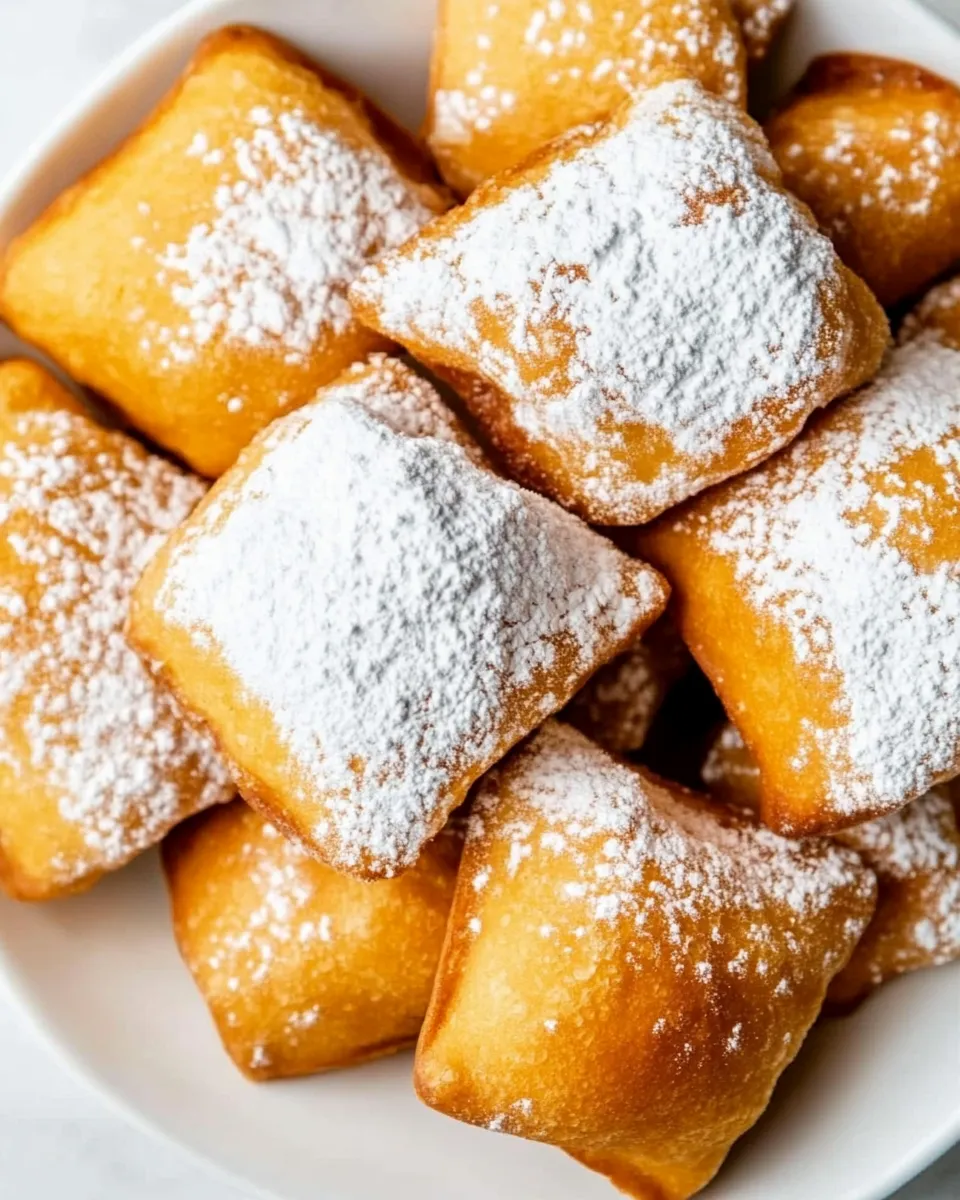
These beignets are the kind you remember from a corner café: crisp, pillowy, and covered in a generous snowdrift of confectioners’ sugar. They’re not complicated, but they do ask for a little time and attention—mainly for the dough to rise. The payoff is light, airy pockets with a thin, golden shell that practically begs to be eaten hot.
I’ll walk you through exactly what to buy, how to handle the dough, and the common mistakes to avoid so you get restaurant-style beignets at home. This recipe is forgiving: you can proof it overnight in the fridge if your schedule changes, and the frying is straightforward if you keep an eye on oil temperature.
No fussing with strange techniques or unusual equipment. Follow the sequence, respect the proof time, and you’ll have warm beignets dusted in confectioners’ sugar in a few hours—or sooner, if you’re going for a same-day bake.
Your Shopping Guide

- Bread flour: Buy a strong bread flour with higher protein for better gluten development—this gives beignets their spring and structure.
- Shortening: You’ll need solid shortening. It blends into the dough without melting and contributes to tender layers.
- Active dry yeast: Fresh yeast leads to consistent rises; check the expiration date.
- Evaporated milk: Adds richness and a subtle caramelized note that water or regular milk won’t provide.
- Granulated and confectioners’ sugar: You need both—granulated for the dough activation and confectioners’ for coating the finished beignets.
- Vegetable oil: For frying—choose a neutral oil with a high smoke point; you’ll need enough for about 3 inches of oil in your pot.
- Eggs and salt: Keep them on hand; the eggs enrich the dough and salt balances the sweetness.
- Thermometer (recommended): An inexpensive deep-fry thermometer makes hitting and maintaining 350°F easy and reliable.
Ingredients
- 1 1/2 cups lukewarm water — activates the yeast; temperature should feel like warm bath water, not hot.
- 1/2 cup granulated sugar — feeds the yeast and adds a touch of sweetness to the dough.
- 1 envelope active dry yeast — provides rise and lightness; check freshness.
- 2 eggs, slightly beaten — enrich the dough and help with structure and color.
- 1 1/4 teaspoons salt — balances flavor and strengthens gluten slightly.
- 1 cup evaporated milk — contributes richness and a tender crumb.
- 7 cups bread flour — primary structure for the dough; start with 3 cups, then add the rest as directed.
- 1/4 cup shortening — worked in solid to create a tender texture without extra liquid.
- Vegetable oil — for frying; use a neutral, high-smoke-point oil like canola or peanut.
- 3 cups confectioners’ sugar — for coating; be generous while beignets are still warm.
Build Homemade Beignets Step by Step
- In a large bowl, stir together 1 1/2 cups lukewarm water, 1/2 cup granulated sugar, and 1 envelope active dry yeast; let sit 10 minutes until foamy.
- In a medium bowl, whisk 2 slightly beaten eggs, 1 1/4 teaspoons salt, and 1 cup evaporated milk until combined.
- Add the egg mixture to the yeast mixture and stir until incorporated.
- Stir in 3 cups of the 7 cups bread flour until mostly combined.
- Add 1/4 cup shortening (solid) and work it into the dough with the spoon; there is no need to melt the shortening.
- Stir in the remaining 4 cups bread flour until a shaggy dough forms.
- Turn the dough onto a lightly floured surface and knead until smooth and elastic, about 5–8 minutes.
- Lightly coat a large bowl with vegetable oil, place the dough in the bowl, turn to coat all sides with oil, cover with plastic wrap, and let rise until doubled in size (at least 2 hours) or refrigerate overnight.
- After the dough has risen, punch it down, transfer to a lightly floured surface, and let rest 10 minutes.
- Meanwhile, pour about 3 inches of vegetable oil into a Dutch oven and heat to 350°F (use a thermometer; if you don’t have one, a small piece of dough should sizzle and brown when tested).
- Roll the dough to 1/4-inch thickness on a lightly floured surface and cut into 2-inch squares (a pizza cutter works well).
- Working in batches (about 4 at a time), carefully place squares in the hot oil and fry, turning frequently, until evenly golden brown on all sides.
- Transfer fried beignets to paper towels to drain and cut one open to confirm it is cooked through.
- Place 3 cups confectioners’ sugar in a bowl and coat the warm beignets in the confectioners’ sugar (or generously dust them) before serving.
Why I Love This Recipe
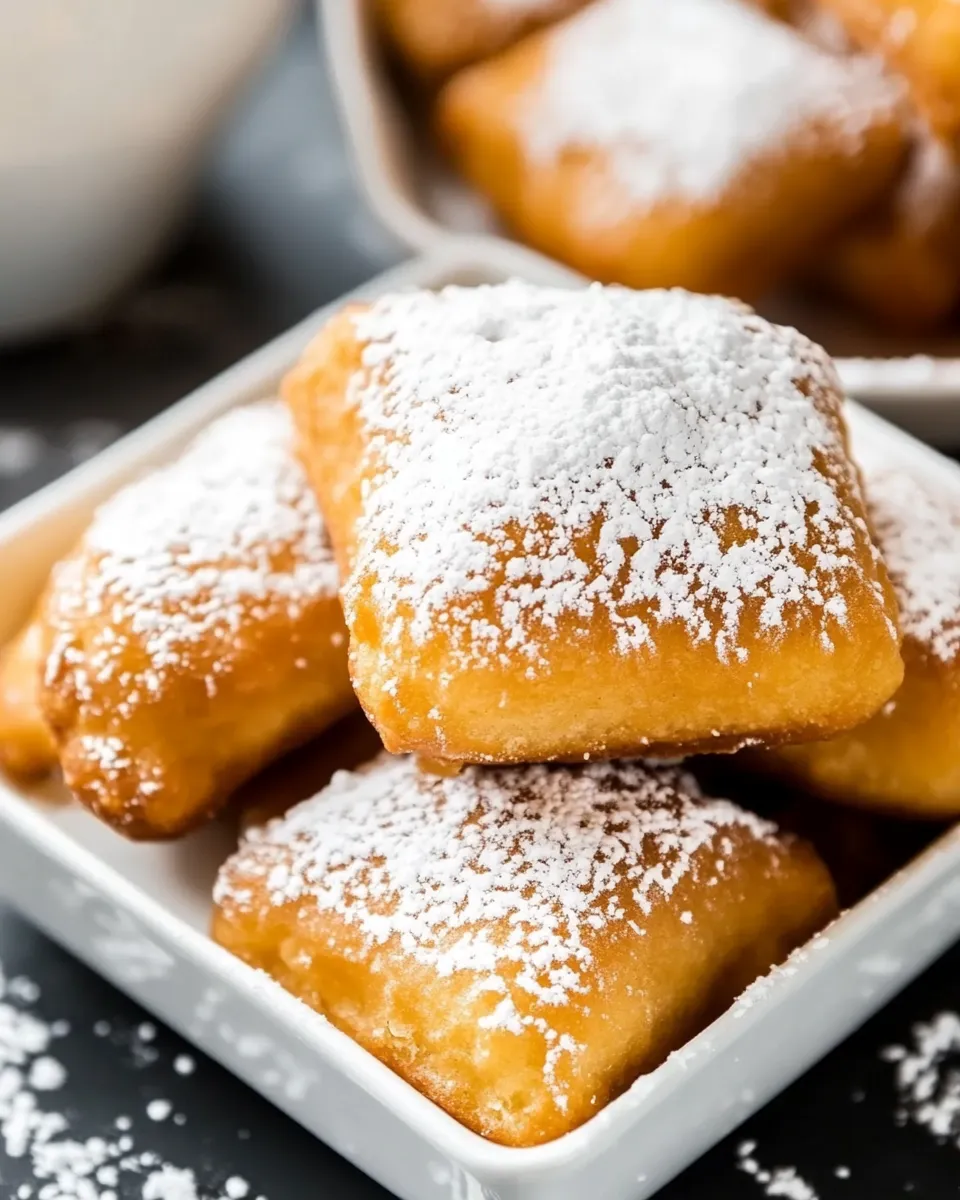
First, the texture hits the mark every time: a crisp outer layer that gives way to an airy, slightly chewy interior. That contrast is what makes beignets addictive. Second, the recipe is flexible with timing. You can let the dough rise at room temperature for a few hours or refrigerate overnight to develop flavor.
The technique is straightforward. You don’t need to temper butter or laminate dough; the shortening is worked in solid, and the kneading time is modest. That makes these beignets accessible to cooks who aren’t looking to master pastries but do want a show-stopping fried treat.
Low-Carb/Keto Alternatives

- Traditional beignets rely on bread flour and frying; they’re not inherently low-carb. If you need a keto-friendly substitute, consider small, almond-flour–based fried dough bites from a tested, low-carb recipe rather than swapping flour one-to-one here.
- Another practical option: make a small batch of the beignet dough, then serve each piece very thin with a light dusting of powdered erythritol instead of confectioners’ sugar—note that texture and rise will differ significantly.
- If you follow a strict diet, focus on portion control: make the recipe as written for family or guests, then keep your serving small and pair with fresh berries instead of extra sugar.
Prep & Cook Tools
- Large mixing bowl and medium bowl — for proofing the yeast and mixing the egg-milk mixture.
- Wooden spoon or sturdy spatula — useful for incorporating shortening into the dough.
- Kitchen scale or measuring cups — to measure flour accurately; bread flour can vary by scoop method.
- Rolling pin and pizza cutter — roll dough to 1/4-inch and cut clean 2-inch squares quickly.
- Dutch oven or heavy-bottomed pot — holds heat well for consistent frying.
- Deep-fry thermometer — highly recommended to keep oil at 350°F; visual cues are less reliable.
- Paper towels and a wire rack — paper towels drain excess oil; a rack helps maintain crispness.
Avoid These Mistakes
- Frying at the wrong temperature: oil that’s too hot browns the outside before the center cooks; oil too cool makes greasy beignets. Aim for 350°F and adjust heat as needed.
- Overcrowding the pot: adding too many squares at once drops the oil temperature and causes uneven browning. Fry in small batches (about four at a time).
- Undermixing or underkneading: a shaggy dough should be kneaded until smooth and elastic. Five to eight minutes is the guideline—don’t rush it.
- Skipping the rest after punching down: letting the dough relax for 10 minutes makes rolling and cutting easier and helps the final texture.
- Not testing doneness: always cut one open from the first batch to confirm it’s cooked all the way through before proceeding with the rest.
Better-for-You Options
- Shortening swap: if you prefer, use a nonhydrogenated vegetable shortening or a neutral-tasting butter alternative—expect a slight change in texture and flavor.
- Sugar control: dust lightly with confectioners’ sugar instead of rolling each beignet to reduce total sugar per serving. Serve extra sugar on the side for guests.
- Oil choice: use a high-quality, neutral oil with a high smoke point and filter it after cooling if you plan to reuse it; this reduces off-flavors and smoke exposure.
Cook’s Notes
Proofing: The initial yeast proof should become foamy in about 10 minutes. If it doesn’t, the yeast may be old or the water too hot or cold. Lukewarm is key.
Dough consistency: Start with the specified flour amounts. Flour hydrates differently in every kitchen. If the dough feels too sticky after kneading, dust your surface lightly—avoid adding large extra amounts of flour as it stiffens the dough.
Overnight option: After step 8, you can refrigerate the dough overnight. Return it to the counter, punch down, and let it come to room temperature and rest for 10 minutes before rolling.
Frying temperature: Keep a close eye on the thermometer. Oil temperature can drop quickly when cold dough enters the pot; be ready to raise the heat slightly between batches.
Best Ways to Store
- Short-term (same day): Keep cooked beignets loosely covered at room temperature for a few hours. They’re best the day they’re fried.
- Reheating: Rewarm in a 350°F oven for a few minutes to refresh crispness. Avoid microwaving—microwaves make fried dough soggy.
- Freezing: If you must save leftovers, freeze completely cooled beignets in a single layer on a sheet pan, then transfer to an airtight bag. Reheat from frozen in a 350°F oven until warmed through and crisped.
- Dough storage: The recipe allows refrigerating the dough overnight before rolling and frying. For longer storage, divide the dough, flash-freeze pieces, and thaw completely before proofing—note this can change texture slightly.
Reader Q&A
- Q: Can I use instant yeast instead of active dry yeast?
A: Yes. If you substitute instant yeast, you can mix it directly with the dry flour and proceed. You may skip the initial proof, but many cooks still proof to confirm activity. Watch rise times—they may be shorter. - Q: My beignets brown too fast—what’s wrong?
A: Your oil is likely too hot or the pieces are too thick. Lower the heat a bit and fry a smaller test piece to dial in the temperature. - Q: Why are mine dense after frying?
A: Possible causes include underproofing, underkneading, or oil that’s too hot causing the exterior to seal before the inside rises. Check your rise and knead time, and test oil temp with a thermometer. - Q: Can I flavor the dough?A: Vanilla or a little orange zest can be added at the mixing stage, but keep additions modest so they don’t alter dough hydration significantly.
See You at the Table
Make a pot of coffee, dust a bowl of confectioners’ sugar on the counter, and invite friends or family to help roll and cut the dough—frying in batches is easier with company. These beignets reward a little patience and they disappear fast, so keep an extra bowl of sugar nearby.
If you try the overnight rise, you’ll notice a deeper flavor and a slightly more open crumb. Either way, serve them warm and don’t skip the sugar. Share your results, tweaks, or questions below—happy frying.

Homemade Beignets
Ingredients
Ingredients
- 1 1/2 cupslukewarm water
- 1/2 cupgranulated sugar
- 1 envelope active dry yeast
- 2 eggs slightly beaten
- 1 1/4 teaspoonssalt
- 1 cupevaporated milk
- 7 cupsbread flour
- 1/4 cupshortening
- Vegetable oil
- 3 cupsconfectioners’ sugar
Instructions
Instructions
- In a large bowl, stir together 1 1/2 cups lukewarm water, 1/2 cup granulated sugar, and 1 envelope active dry yeast; let sit 10 minutes until foamy.
- In a medium bowl, whisk 2 slightly beaten eggs, 1 1/4 teaspoons salt, and 1 cup evaporated milk until combined.
- Add the egg mixture to the yeast mixture and stir until incorporated.
- Stir in 3 cups of the 7 cups bread flour until mostly combined.
- Add 1/4 cup shortening (solid) and work it into the dough with the spoon; there is no need to melt the shortening.
- Stir in the remaining 4 cups bread flour until a shaggy dough forms.
- Turn the dough onto a lightly floured surface and knead until smooth and elastic, about 5–8 minutes.
- Lightly coat a large bowl with vegetable oil, place the dough in the bowl, turn to coat all sides with oil, cover with plastic wrap, and let rise until doubled in size (at least 2 hours) or refrigerate overnight.
- After the dough has risen, punch it down, transfer to a lightly floured surface, and let rest 10 minutes.
- Meanwhile, pour about 3 inches of vegetable oil into a Dutch oven and heat to 350°F (use a thermometer; if you don’t have one, a small piece of dough should sizzle and brown when tested).
- Roll the dough to 1/4-inch thickness on a lightly floured surface and cut into 2-inch squares (a pizza cutter works well).
- Working in batches (about 4 at a time), carefully place squares in the hot oil and fry, turning frequently, until evenly golden brown on all sides.
- Transfer fried beignets to paper towels to drain and cut one open to confirm it is cooked through.
- Place 3 cups confectioners’ sugar in a bowl and coat the warm beignets in the confectioners’ sugar (or generously dust them) before serving.
Equipment
- Dutch Oven
- Pizza Cutter
Notes
Beignets don’t save well and are best eaten right away.