
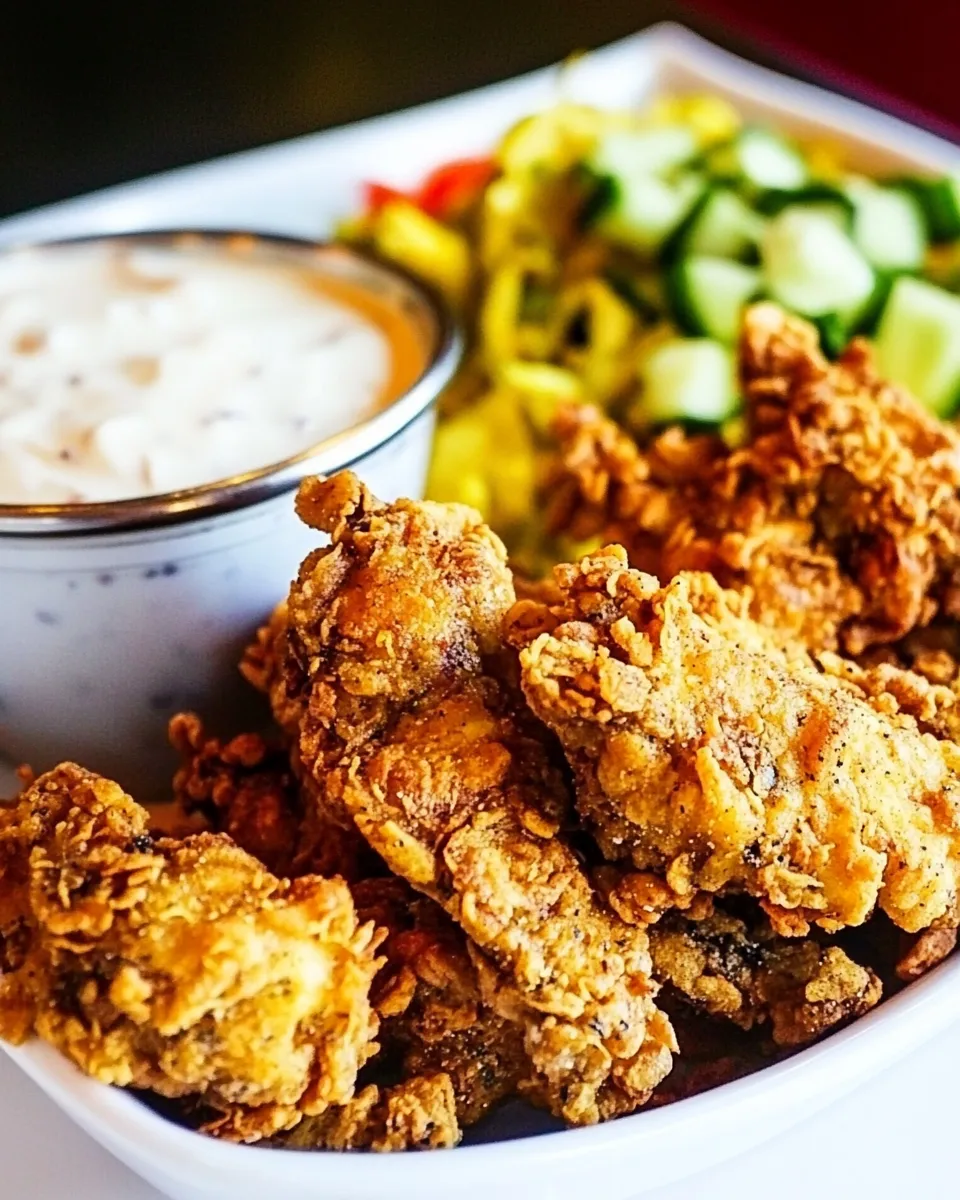
I make a lot of comfort food, and this version of chicken fried steak—cut into fingers and fried until golden—has become a repeat dinner in my house. It’s fast to dredge, quick to fry in batches, and pairs beautifully with a zippy Creole mustard sauce that cuts through the richness. No frills, just a dependable, crunchy result every time.
This post walks you through the exact ingredients and steps I follow so you can get crackly, tender steak fingers without guesswork. I include troubleshooting tips, low-carb options, holiday-friendly spins, and storage notes so you can plan this for weeknight dinners or a crowd.
Read straight through for the recipe, or skip to the section you need. I aim for clear, usable guidance—so you spend less time worrying and more time eating.
The Ingredient Lineup
Ingredients
- 1/2 cup mayonnaise — base of the Creole mustard sauce; adds creaminess and helps balance the mustard.
- 1/2 cup sour cream — adds tang and coolness to the sauce, thinning it slightly while keeping richness.
- 1/4 cup Creole mustard (or you can use any whole grain mustard) — main flavor in the dipping sauce; provides texture and tang.
- 1 tablespoon honey — adds a touch of sweetness to temper the mustard and cayenne.
- 1/8 teaspoon cayenne pepper — a little heat in the sauce; adjust to taste if you prefer milder or spicier.
- 1 1/2 pounds cube steak — the protein; cube steak is tenderized and easy to cut into fingers for even cooking.
- salt and pepper — fundamental seasoning for the steak fingers before dredging.
- 1/2 cup flour — first dredge to help the egg mixture adhere and create a base layer for the coating.
- 2 eggs, lightly beaten — binds the coating to the steak; whisked with milk and Worcestershire.
- 1/3 cup milk — thins the egg wash so the coating adheres evenly without clumping.
- 1 teaspoon Worcestershire sauce — umami lift in the egg wash; it deepens the overall flavor.
- 1/2 cup flour — second portion used in the final coating mix for extra crunch and structure.
- 1/2 sleeve Saltine crackers, finely crushed — adds crisp texture and a light salty crunch to the coating.
- 2 teaspoons Cajun seasoning — seasoned flavor in the final coating; controls the savory and spicy notes.
- 1/2 teaspoon black pepper — additional bite in the coating; complements the Cajun seasoning.
- Vegetable oil — for frying; neutral oil with a high smoke point works best.
Chicken Fried Steak Fingers Made Stepwise
- Make the Creole mustard sauce: in a small bowl combine 1/2 cup mayonnaise, 1/2 cup sour cream, 1/4 cup Creole mustard, 1 tablespoon honey, and 1/8 teaspoon cayenne pepper. Stir until smooth and refrigerate until needed.
- Cut the 1 1/2 pounds cube steak into 1-inch-wide strips (fingers). Season the steak fingers lightly with salt and pepper.
- Set up the dredging stations:
- Plate 1: place the first 1/2 cup flour.
- Bowl: whisk together the 2 eggs (lightly beaten), 1/3 cup milk, and 1 teaspoon Worcestershire sauce.
- Plate 2: combine the second 1/2 cup flour, 1/2 sleeve finely crushed Saltine crackers, 2 teaspoons Cajun seasoning, and 1/2 teaspoon black pepper; mix well.
- Pour about 2 inches of vegetable oil into a Dutch oven (or heavy pot) and heat the oil to 375°F (use a deep-fry thermometer).
- Working in 2 batches to avoid overcrowding, dredge each steak finger in the first 1/2 cup flour, shaking off excess; dip it into the egg mixture, letting excess drip back into the bowl; then coat it fully with the flour–Saltine mixture, pressing gently so the coating adheres.
- Fry the steak fingers in the hot oil until golden brown on both sides and cooked through, about 6–8 minutes per batch, turning as needed for even browning. Monitor the oil temperature and adjust heat to maintain approximately 375°F.
- Transfer cooked steak fingers to a wire rack set over a baking sheet to drain and rest briefly.
- Serve the steak fingers with the refrigerated Creole mustard sauce.
Why This Chicken Fried Steak Fingers Stands Out

The method is simple but deliberate: a light first dredge, a thin egg wash, and a crunchy seasoned coating give you a contrast of textures. Cutting the steak into fingers shortens cook time and ensures every piece gets an even, crisp crust. The Creole mustard sauce is the pairing that keeps this from feeling heavy—the mustard’s grain and tang cut through the fried exterior and keep the bite lively.
Two things make the result consistent: temperature control and separating your breading steps. Keeping the oil close to 375°F prevents the coating from absorbing too much oil while still allowing the interior to cook through. The three-stage dredge (flour → egg wash → seasoned flour–crackers) builds a stable crust that doesn’t peel off when you flip the pieces.
Low-Carb/Keto Alternatives

If you’re watching carbs you can adapt the approach without changing the technique. Use low-carb coatings in place of the flour and crackers and keep the egg wash the same. The frying steps, oil temperature, and timing remain the same—those control factors matter most for texture.
Note: If you swap in any nonlisted coatings, expect a slightly different browning behavior and a different amount of oil absorption. Test one piece first so you can fine-tune the heat and time.
What You’ll Need (Gear)
- Heavy pot or Dutch oven — deep enough for about 2 inches of oil and stable for frying.
- Deep-fry thermometer — essential for holding 375°F; visual cues alone can mislead.
- Wire rack and baking sheet — drains oil away and keeps the coating crisp while it rests.
- Three shallow dishes or plates — for the flour, egg wash, and final coating.
- Whisk and small bowl — for mixing the sauce and egg wash.
- Tongs or slotted spoon — to safely turn and lift the steak fingers.
- Paper towels — optional for an extra blot after resting, but the rack is the priority.
Pitfalls & How to Prevent Them
Coating that falls off
Cause: wet or poorly handled pieces, or dredging out of order. Prevention: dry the steak fingers slightly after seasoning, follow flour → egg → coating sequence, and gently press the final coating so it adheres. Let pieces sit a minute before frying if you have time; the coating will set better.
Soggy coating
Cause: oil too cool or overcrowding. Prevention: keep oil at roughly 375°F and fry in batches. Use a thermometer—don’t rely on bubbles alone.
Overcooked interior / undercooked crust
Cause: oil too hot or too low. Prevention: maintain temperature. If the oil spikes above 400°F, the outside will brown too quickly. If it drops too low, pieces absorb oil and become greasy while you wait for them to cook.
Uneven browning
Cause: overcrowding or inconsistent oil temperature. Prevention: give pieces room and monitor the thermometer between batches—adjust heat as needed.
Holiday-Friendly Variations
For a holiday table, think about how these steak fingers fit into your menu. Serve them on a platter with the Creole mustard sauce in a bowl for dipping; they work as a finger food for parties. You can increase the Cajun seasoning slightly in the coating if you want more festive spice, or keep it milder for a crowd with mixed spice preferences.
Another simple touch: double the sauce and put it into a pretty bowl or ramekin for each serving station. The visual of a creamy mustard dip alongside golden fingers reads festive without adding complexity.
Notes on Ingredients
- Cube steak — already tenderized; cut into 1-inch-wide strips for even cooking. If you use a different cut, adjust thickness so fingers cook through in the same 6–8 minute window.
- Saltine crackers — finely crushed, they add light, crisp texture without heaviness. Crush them in a bag with a rolling pin or pulse briefly in a food processor.
- Cajun seasoning — controls the seasoning in the outer crust. If your Cajun blend is salty, taste accordingly and reduce added salt to the steak.
- Creole mustard — gives the dipping sauce grainy texture and a vinegary zip. The recipe notes you can use any whole grain mustard if you prefer a milder Creole profile.
- Vegetable oil — use a neutral oil with a high smoke point; fill the pot to about 2 inches as directed so pieces can float and brown evenly.
Make-Ahead & Storage
Make the sauce up to 24 hours ahead and refrigerate in a covered container; the flavors meld and the texture stays stable. The steak fingers are best eaten right away, but you can refrigerate cooked, cooled fingers for up to 3 days in an airtight container.
To reheat and preserve crispness: place on a wire rack set inside a baking sheet and reheat in a 375°F oven until warmed through. Avoid microwaving unless you accept a softer crust.
Reader Questions
Can I bake these instead of frying?
Yes, you can—but the result will be slightly different. Baking yields a less oily, less uniformly crisp exterior. If you choose to bake, brush or spray the coated fingers lightly with oil and bake at 425°F on a wire rack until golden and cooked through, flipping halfway.
Can I use a different cut of steak?
Cube steak is ideal because it’s tenderized and cooks quickly. If you use a thicker or whole cut, slice it thinly to mimic the fingers so cooking time stays in check. Thicker pieces will need longer cooking and can dry out if overcooked.
How do I tell when the steak fingers are done?
They should be golden brown and cooked through—about 6–8 minutes per batch as written. Timing assumes 1-inch-wide strips and oil held at around 375°F. If you’re unsure, slice one open to check; the interior should be cooked through but still moist.
Let’s Eat
Set the rack with a baking sheet in the center of the table, drop the steak fingers on a platter, and bring the chilled Creole mustard sauce forward. Encourage dipping—each bite benefits from that bright mustard contrast. Serve with simple sides: a green salad, coleslaw, or roasted veggies to balance the richness.
This recipe is reliable and forgiving if you keep an eye on oil temperature and avoid crowding the pot. It’s my go-to when I want something nostalgic, fast, and crowd-pleasing with a little southern twang.

Chicken Fried Steak Fingers
Ingredients
Ingredients
- 1/2 cupmayonnaise
- 1/2 cupsour cream
- 1/4 cupCreole mustard ,or you can use any whole grain mustard
- 1 tablespoonhoney
- 1/8 teaspooncayenne pepper
- 1 1/2 poundscube steak
- salt and pepper
- 1/2 cupflour
- 2 eggs ,lightly beaten
- 1/3 cupmilk
- 1 teaspoonWorcestershire sauce
- 1/2 cupflour
- 1/2 sleeve Saltine crackers ,finely crushed
- 2 teaspoonsCajun seasoning
- 1/2 teaspoonblack pepper
- Vegetable oil
Instructions
Instructions
- Make the Creole mustard sauce: in a small bowl combine 1/2 cup mayonnaise, 1/2 cup sour cream, 1/4 cup Creole mustard, 1 tablespoon honey, and 1/8 teaspoon cayenne pepper. Stir until smooth and refrigerate until needed.
- Cut the 1 1/2 pounds cube steak into 1-inch-wide strips (fingers). Season the steak fingers lightly with salt and pepper.
- Set up the dredging stations: - Plate 1: place the first 1/2 cup flour. - Bowl: whisk together the 2 eggs (lightly beaten), 1/3 cup milk, and 1 teaspoon Worcestershire sauce. - Plate 2: combine the second 1/2 cup flour, 1/2 sleeve finely crushed Saltine crackers, 2 teaspoons Cajun seasoning, and 1/2 teaspoon black pepper; mix well.
- Pour about 2 inches of vegetable oil into a Dutch oven (or heavy pot) and heat the oil to 375°F (use a deep-fry thermometer).
- Working in 2 batches to avoid overcrowding, dredge each steak finger in the first 1/2 cup flour, shaking off excess; dip it into the egg mixture, letting excess drip back into the bowl; then coat it fully with the flour–Saltine mixture, pressing gently so the coating adheres.
- Fry the steak fingers in the hot oil until golden brown on both sides and cooked through, about 6–8 minutes per batch, turning as needed for even browning. Monitor the oil temperature and adjust heat to maintain approximately 375°F.
- Transfer cooked steak fingers to a wire rack set over a baking sheet to drain and rest briefly.
- Serve the steak fingers with the refrigerated Creole mustard sauce.
Equipment
- Dutch oven or heavy pot
- deep-fry thermometer
- Wire Rack
- Baking Sheet