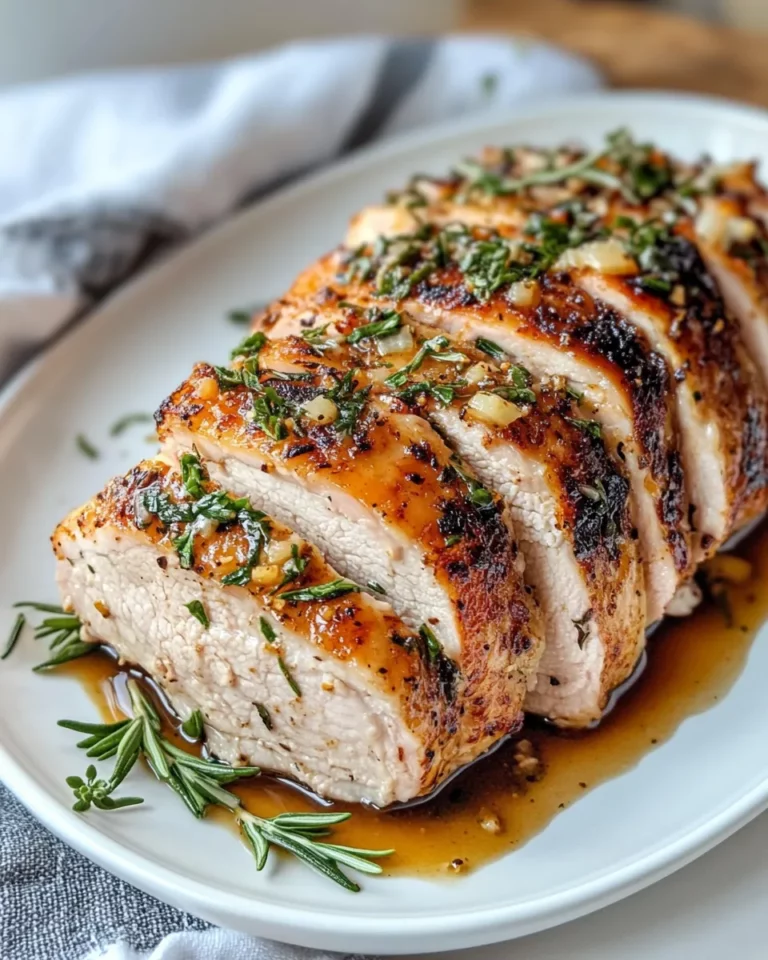
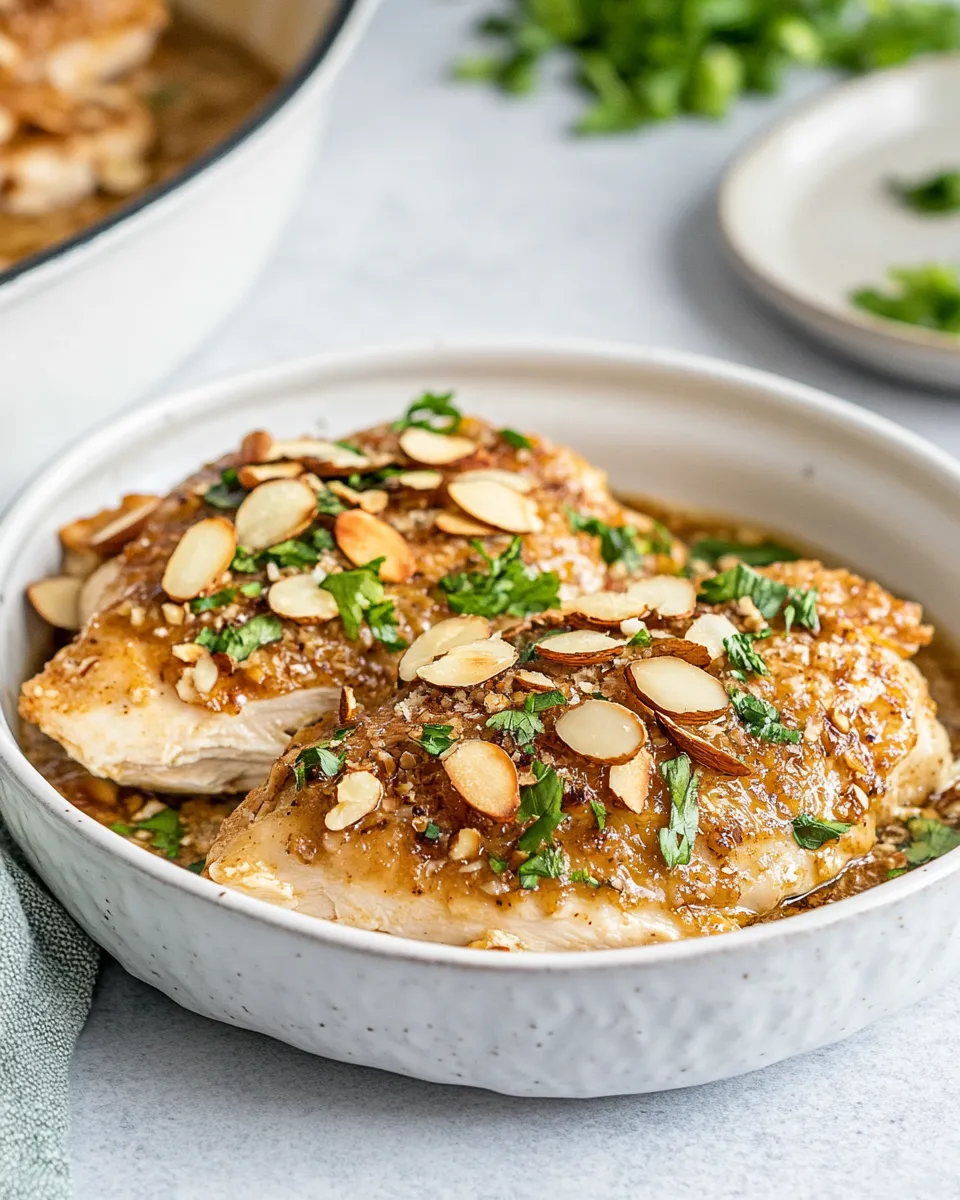
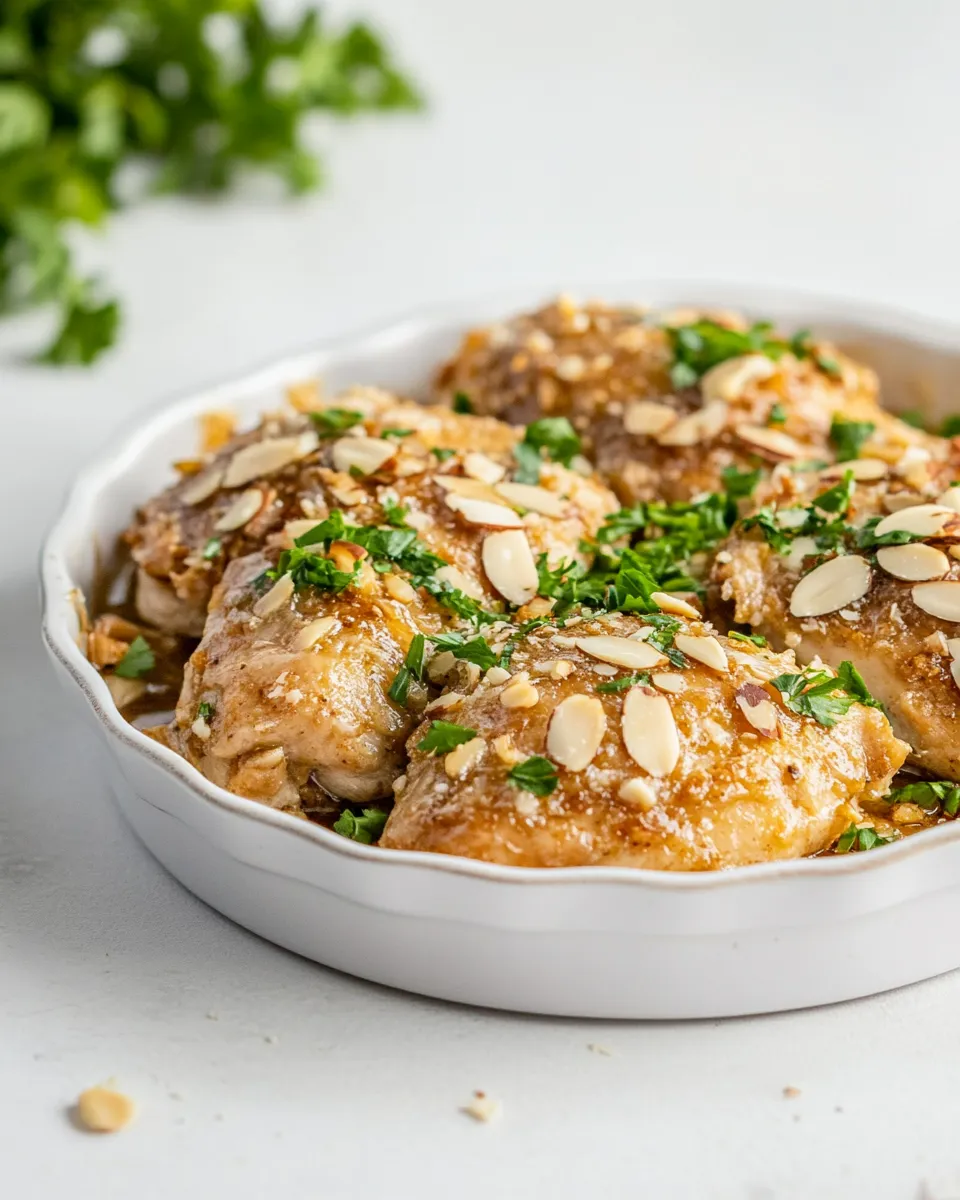
I make this Chicken with Almond Butter when I want a simple weeknight dinner that still feels a little special. The almond paste crisps into a golden, nutty crust while the chicken remains tender. It’s the kind of dish that looks like effort but mostly asks for a few easy steps and a hot oven.
There’s no heavy sauce to fuss with, just a spreadable almond paste that sticks to the breasts and a sprinkle of slivered almonds for crunch. Citrus and a touch of Worcestershire lift the flavor, and a pinch of cayenne gives it just enough warmth. It’s straightforward, forgiving, and quick—perfect when you need a solid dinner without overthinking.
I’ll walk you through the ingredients, the exact steps, and the common mistakes I’ve learned to avoid. You’ll get practical tips for equipment, storage, and small seasonal tweaks that keep the dish fresh. Let’s get right to it.
What You’ll Gather
Gather these items before you start: your ingredients (listed below), a medium mixing bowl, a spoon for mixing the almond paste, a baking dish, and a meat mallet or rolling pin if your chicken breasts are uneven. A small offset spatula or the back of a spoon helps spread the paste evenly. Finally, a thermometer is useful but not required—there’s a visual check in the method.
Ingredients
- 1/2 cup ground almonds — forms the almond butter paste that creates the crust and nutty flavor.
- 2 tablespoons all-purpose flour — helps bind the almond paste to a spreadable consistency.
- 2 tablespoons unsalted butter, at room temperature — adds richness and helps the paste brown; reserve 1/4 teaspoon for greasing the dish.
- 1/2 teaspoon salt — seasons the almond paste and the chicken.
- 1/4 teaspoon cayenne pepper — provides a subtle heat; adjust to taste.
- 1/2 teaspoon lemon zest — brightens the paste with citrus aroma.
- 1 tablespoon freshly squeezed lemon juice — adds acidity to balance the richness.
- 1/2 teaspoon Worcestershire sauce — brings umami and depth to the almond mixture.
- 4 medium (1 to 1½ pounds) boneless, skinless chicken breasts — the main protein; pound to even thickness if needed.
- 1/4 cup slivered or sliced almonds — scattered on top for crunch and a toasted finish.
Stepwise Method: Chicken with Almond Butter
- Preheat the oven to 425°F. Reserve about 1/4 teaspoon of the unsalted butter from the 2 tablespoons for greasing the baking dish and lightly grease the dish with that reserved butter.
- In a medium bowl, combine the 1/2 cup ground almonds, 2 tablespoons all-purpose flour, and the remaining unsalted butter. Stir with a spoon until the mixture is a smooth, spreadable paste.
- Add 1/2 teaspoon salt, 1/4 teaspoon cayenne pepper, 1/2 teaspoon lemon zest, 1 tablespoon lemon juice, and 1/2 teaspoon Worcestershire sauce to the almond paste. Mix thoroughly to combine.
- Place the 4 chicken breasts on a cutting board. If they are uneven, cover each with plastic wrap and pound lightly with a meat mallet or rolling pin to an even thickness (about 1/2 inch).
- Pat the chicken breasts dry with paper towels. Divide the almond mixture into four equal portions and spread one portion evenly over the top surface of each breast, pressing gently so the paste adheres.
- Sprinkle the 1/4 cup slivered or sliced almonds evenly over the almond-coated side of each breast, pressing lightly so the slivered almonds stick to the paste.
- Arrange the chicken breasts, almond-coated side up, in the greased baking dish without overlapping.
- Bake in the preheated 425°F oven for about 15 minutes, or until the almond topping is golden brown and the chicken is cooked through (internal temperature reaches 165°F). If you do not have a thermometer, cut into the thickest part to ensure juices run clear and there is no pink.
- Remove from the oven and let the chicken rest 3–5 minutes before serving. Serve immediately.
Why It’s My Go-To
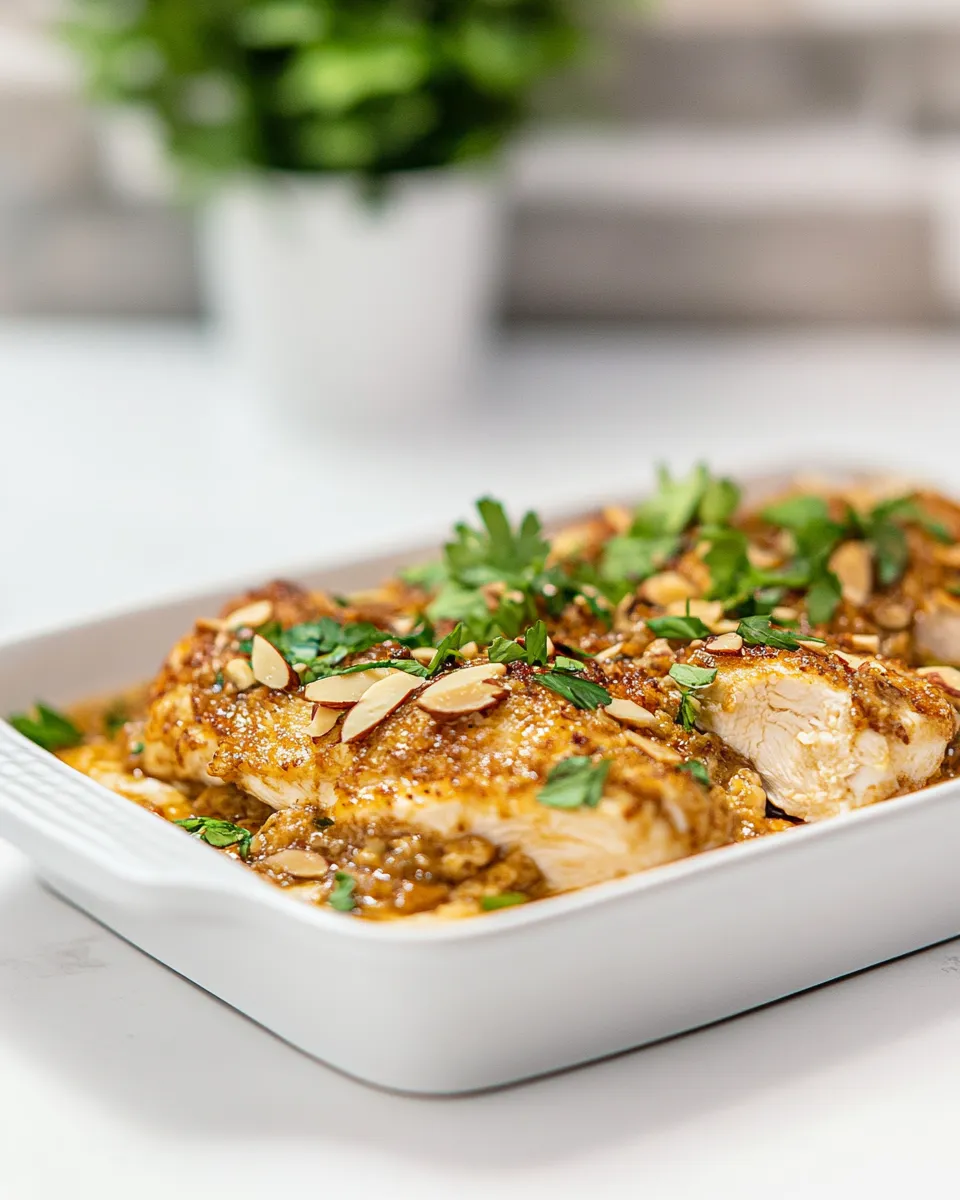
This recipe hits a sweet spot: fast prep, minimal cleanup, and a result that’s comforting yet a little special. The almond paste gives a nutty, buttery crust without frying, and that short bake time keeps the chicken juicy. I also appreciate how adaptable it is—subtle changes in citrus or spice shift the character without changing technique.
It’s also resilient. If your chicken breasts vary slightly in thickness, a quick pound evens them out and the almond layer hides small imperfections in presentation. You can get a roasted, textured finish that looks restaurant-worthy with basic pantry ingredients.
Budget & Availability Swaps
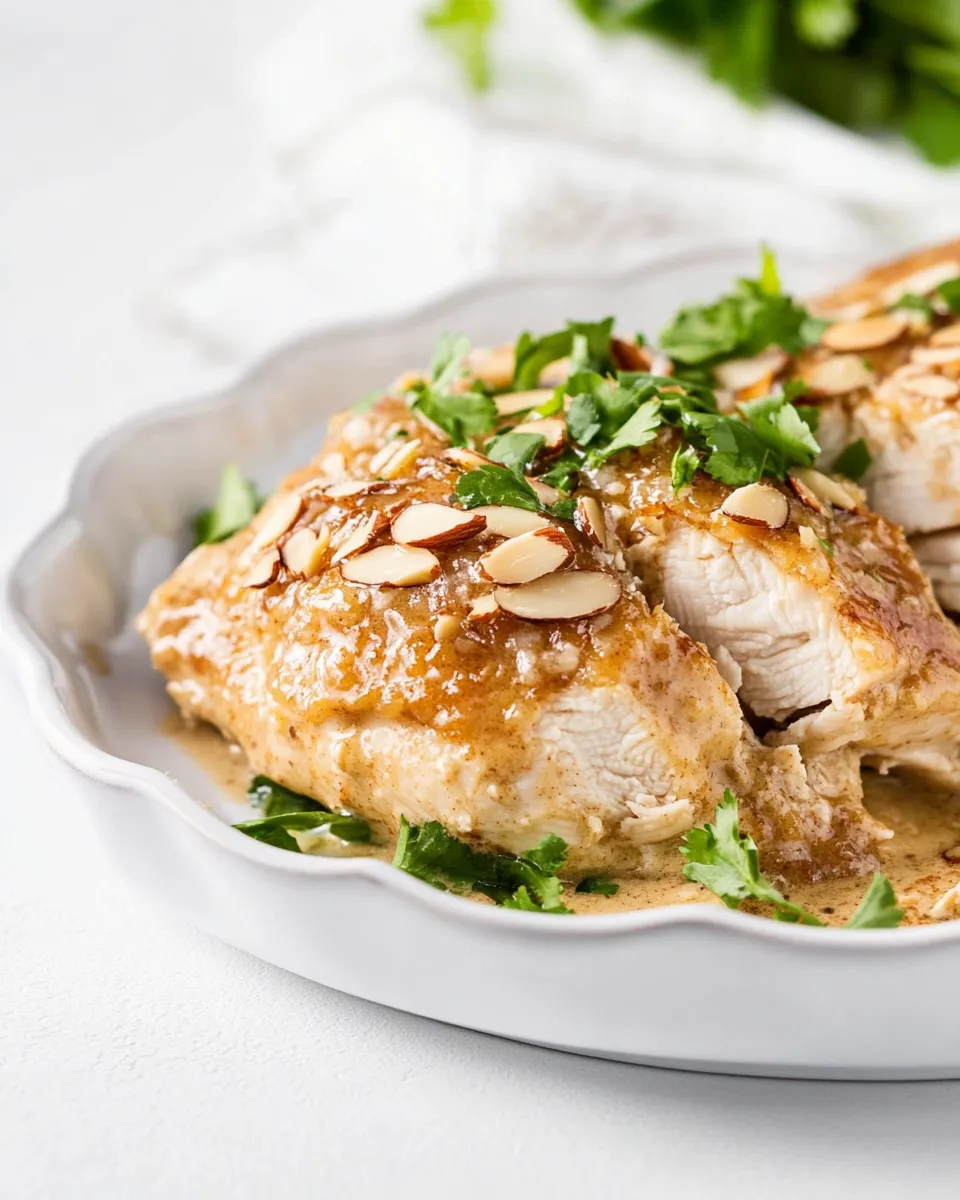
On budget or missing an item? Use what you have, carefully. Ground almonds can be swapped for almond meal—same idea, slightly coarser texture. If you’re out of slivered almonds, thinly chopped whole almonds will do; just press them into the paste so they don’t fall off.
Butter can be swapped for a neutral oil in a pinch, though butter adds flavor and helps browning. If Worcestershire is unavailable, a small splash of soy sauce provides umami, but use less to avoid over-salting. For the chicken, boneless, skinless thighs can be used; cook time will vary and thighs may need a few extra minutes.
Appliances & Accessories
Essential
- Oven — required; 425°F is the baking temperature.
- Baking dish — a shallow dish works best so the almond topping can brown.
- Mixing bowl and spoon — to make and combine the almond paste.
- Meat mallet or rolling pin — for pounding breasts to even thickness when needed.
Helpful but optional
- Instant-read thermometer — gives certainty that the chicken reaches 165°F.
- Offset spatula or back of a spoon — for even spreading of the almond paste.
Pitfalls & How to Prevent Them
The most common mistakes are uneven cooking and a topping that slides off. Prevent uneven cooking by pounding breasts to about 1/2 inch thickness so they cook through in the same time. Pat the chicken dry first; moisture prevents the paste from adhering.
Don’t skip reserving the 1/4 teaspoon butter to grease the dish—this is small but it keeps the chicken from sticking and makes cleanup easier. If the almond paste seems too loose, a quick pulse of extra ground almonds will thicken it; if it’s too stiff, a few drops of lemon juice or soft butter will loosen it. Press the slivered almonds into the paste so they stick before baking.
Seasonal Twists
In spring, add a scattering of fresh herbs (chopped parsley or chives) after resting for bright color. In fall or winter, pair the chicken with roasted root vegetables or a warm grain salad—both complement the nuttiness. A drizzle of a simple pan jus or warmed lemon vinaigrette at serving time livens the dish without much effort.
When citrus is in season, increase the lemon zest a touch for extra brightness. In summer, serve alongside a crisp green salad to balance the richness of the almond crust.
What Could Go Wrong
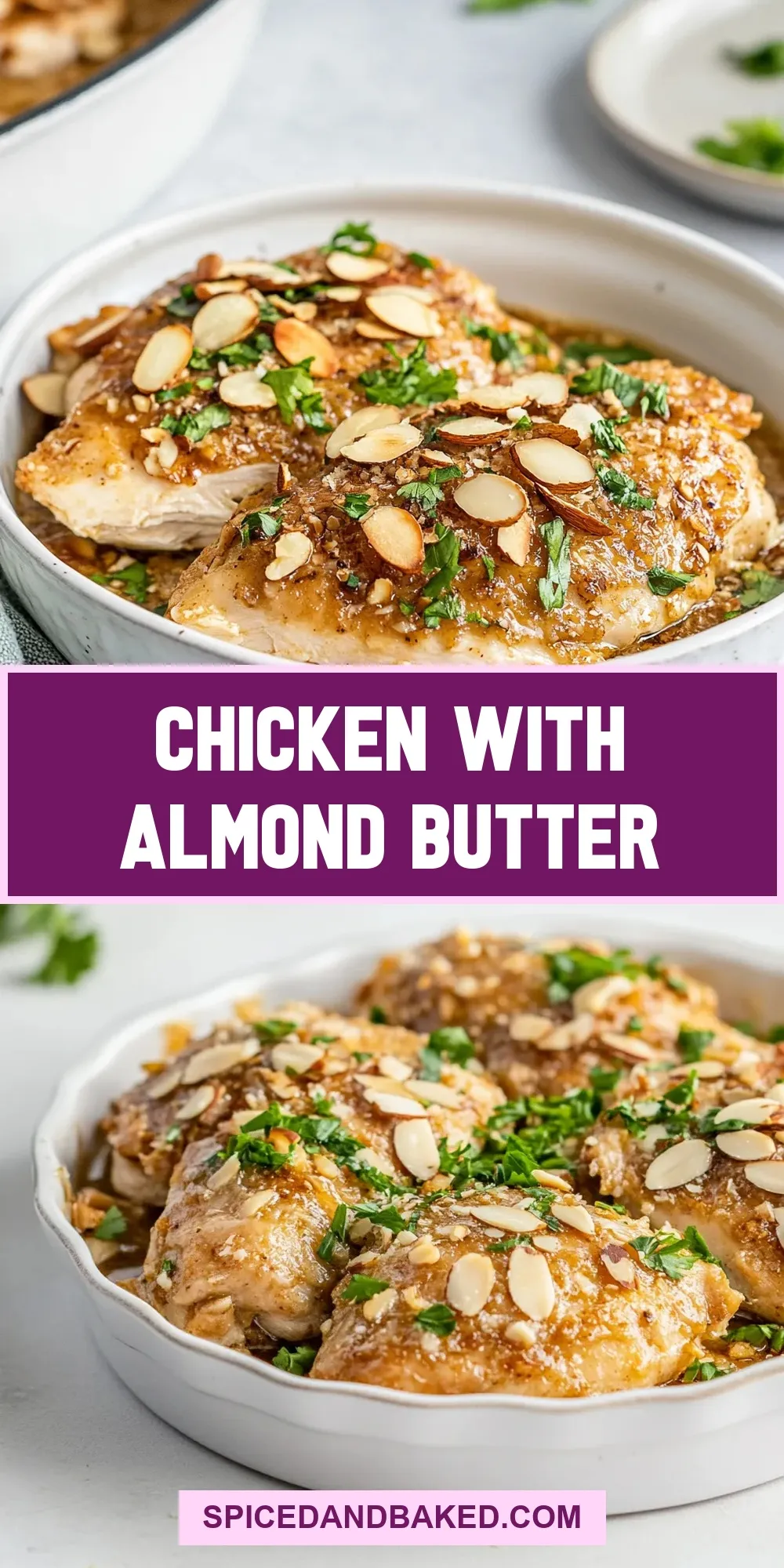
If the topping is pale after baking, your oven may not be fully preheated or the almond layer is too moist. Move the dish to the top rack for the last 2–3 minutes to encourage browning, watching closely so it doesn’t burn. If the almonds fall off after baking, it usually means the paste didn’t adhere properly—ensure the chicken surface is dry and press the paste and slivered almonds firmly before baking.
Overcooking will dry the breasts. Stop baking when the internal temperature hits 165°F or when juices run clear; the short resting time will complete carryover cooking. Undercooking is simply fixed by a few extra minutes; check doneness at the thickest point.
Leftovers & Meal Prep
Store cooled chicken in an airtight container in the fridge for up to 3–4 days. To reheat, place on a baking sheet and warm in a 350°F oven until heated through; this helps preserve the topping’s texture better than the microwave. If the almond topping softens in storage, a quick 5–7 minute re-crisp in the oven will restore some crunch.
For meal prep, cook the chicken and keep it whole or sliced. It’s great served cold over greens or reheated and served with grains. If you plan to pack it for lunches, keep any dressing or acidic components separate until serving to avoid sogginess.
Questions People Ask
Can I use almond butter instead of ground almonds? Not recommended as a one-to-one swap here. The recipe relies on a bindable paste made from ground almonds, flour, and butter; direct jarred almond butter will be too oily and change texture. If you must, reduce added fats and adjust consistency carefully.
Can I prep the almond paste ahead of time? Yes. Make the paste up to a day ahead and store it covered in the fridge. Bring it to room temperature before spreading so it’s spreadable.
What if I don’t have slivered almonds? Chop whole almonds thinly or use sliced almonds; press them into the paste so they stay put while baking.
Is 15 minutes enough time to cook chicken breasts? For pounded, evenly thick breasts at 1/2 inch, about 15 minutes at 425°F is typical. If breasts are thicker, add a few minutes and check doneness by thermometer or cutting into the thickest part.
The Last Word
This Chicken with Almond Butter is one of those dependable recipes that rewards small attention with a big payoff. It’s fast, flexible, and produces a satisfying contrast of tender chicken and toasty almond topping. Follow the steps, mind your oven, and don’t skip the rest time—the result is a weekday dinner that feels just a little elevated.
Make it your own with a seasonal side or a squeeze of lemon at the table. And if a slivered almond falls off during plating, eat it—crispy stray almonds are my favorite kitchen bonus.
Chicken with Almond Butter
Ingredients
Ingredients
- 1/2 cupground almonds
- 2 tablespoonsall purpose flour
- 2 tablespoonsunsalted butter at room temperature
- 1/2 teaspoonsalt
- 1/4 teaspooncayenne pepper
- 1/2 teaspoonlemon zest
- 1 tablespoonfreshly squeezed lemon juice
- 1/2 teaspoonWorcestershire sauce
- 4 medium 1 to 1 1/2 poundsboneless, skinless chicken breasts
- 1/4 cupslivered or sliced almonds
Instructions
Instructions
- Preheat the oven to 425°F. Reserve about 1/4 teaspoon of the unsalted butter from the 2 tablespoons for greasing the baking dish and lightly grease the dish with that reserved butter.
- In a medium bowl, combine the 1/2 cup ground almonds, 2 tablespoons all-purpose flour, and the remaining unsalted butter. Stir with a spoon until the mixture is a smooth, spreadable paste.
- Add 1/2 teaspoon salt, 1/4 teaspoon cayenne pepper, 1/2 teaspoon lemon zest, 1 tablespoon lemon juice, and 1/2 teaspoon Worcestershire sauce to the almond paste. Mix thoroughly to combine.
- Place the 4 chicken breasts on a cutting board. If they are uneven, cover each with plastic wrap and pound lightly with a meat mallet or rolling pin to an even thickness (about 1/2 inch).
- Pat the chicken breasts dry with paper towels. Divide the almond mixture into four equal portions and spread one portion evenly over the top surface of each breast, pressing gently so the paste adheres.
- Sprinkle the 1/4 cup slivered or sliced almonds evenly over the almond-coated side of each breast, pressing lightly so the slivered almonds stick to the paste.
- Arrange the chicken breasts, almond-coated side up, in the greased baking dish without overlapping.
- Bake in the preheated 425°F oven for about 15 minutes, or until the almond topping is golden brown and the chicken is cooked through (internal temperature reaches 165°F). If you do not have a thermometer, cut into the thickest part to ensure juices run clear and there is no pink.
- Remove from the oven and let the chicken rest 3–5 minutes before serving. Serve immediately.
Equipment
- Oven
- Baking Dish
- Mixing Bowl
- Spoon
- Measuring Spoons
- Measuring Cups
- Meat mallet or rolling pin
- Paper Towels