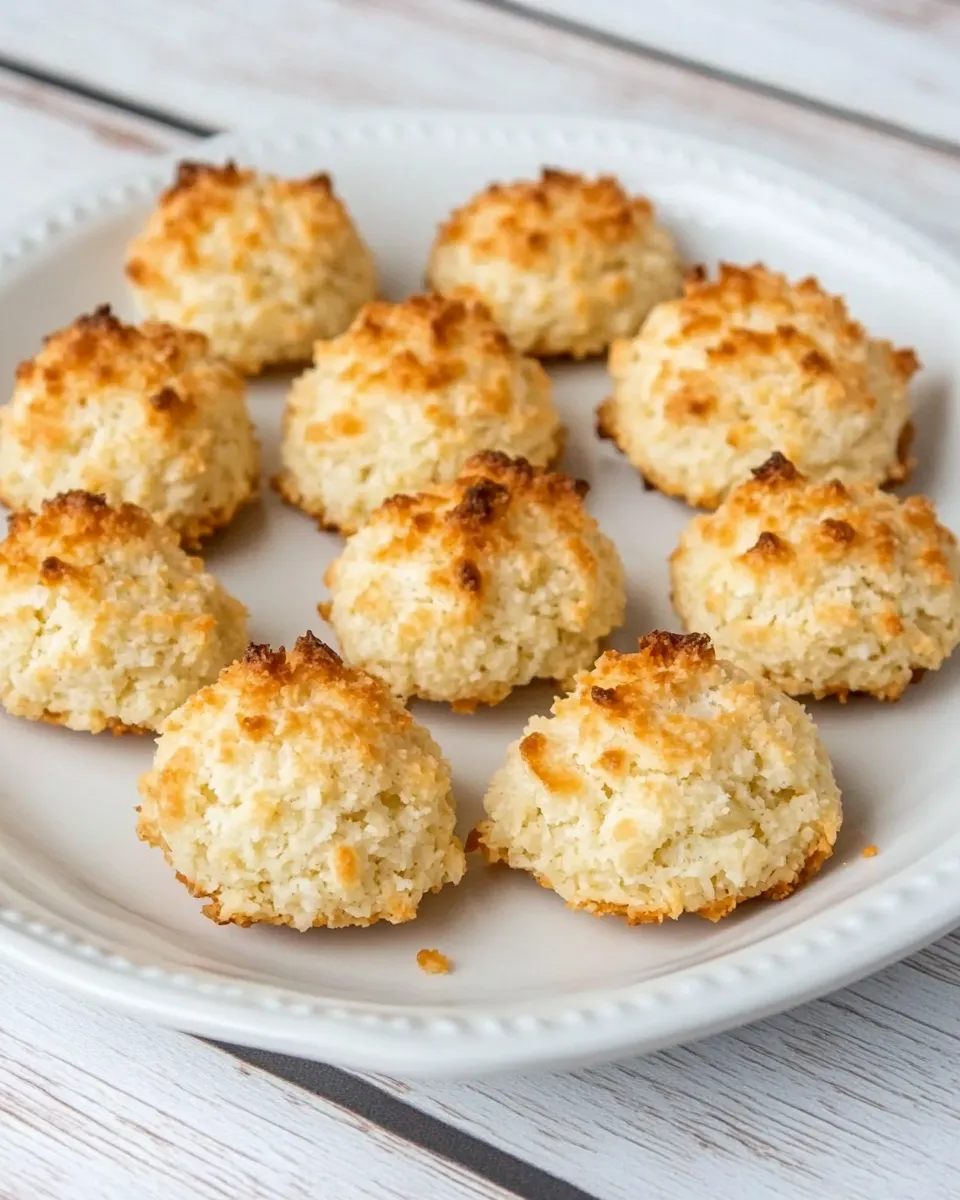
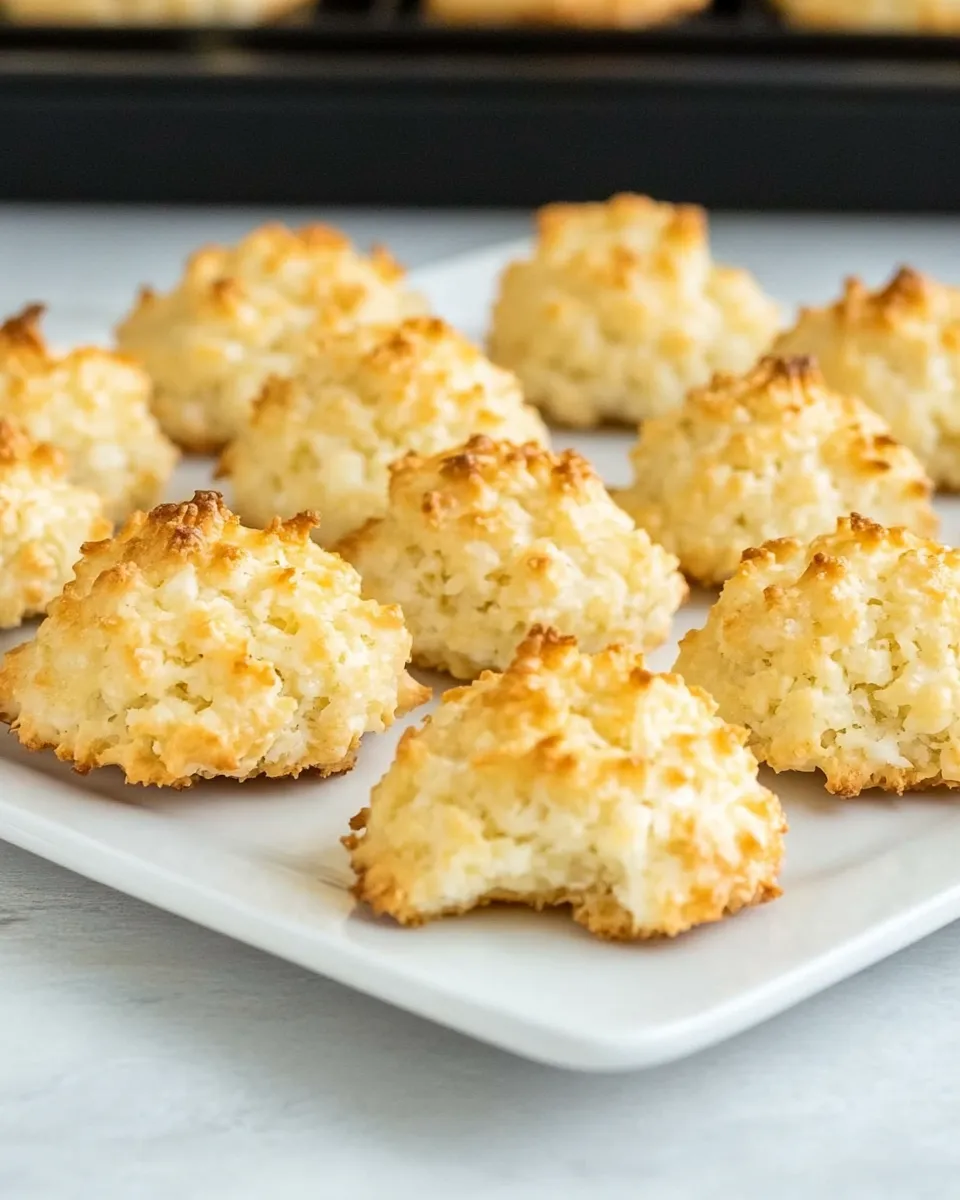
These macaroons are my go-to when I want a sweet, chewy treat without the sugar rush. They come together with a short list of pantry-friendly items, bake in under 30 minutes, and keep beautifully. The texture is slightly crisp on the outside and tender inside, with a pronounced coconut flavor balanced by ground almonds and a hint of vanilla.
I tested this version to get the right balance between hold and chew. Using egg whites, a little Greek yogurt, and ground slivered almonds helps the cookies stick without relying on sugar or syrups. The monkfruit sweetener gives sweetness without aftertaste, and the result is a satisfying cookie that pairs nicely with coffee or tea.
This post gives you the exact ingredient breakdown, step-by-step instructions, troubleshooting, and variations so you can bake confidently. I’ll also cover tools you’ll want on hand, storage tips, and substitutions if you need them.
What You’ll Gather
Ingredients
- 1 1/4 cup slivered almonds — ground for body and mild, nutty richness; gives structure so cookies aren’t just coconut.
- 1 1/4 cup shredded unsweetened coconut — the primary flavor and texture; unsweetened keeps these sugar-free and naturally chewy.
- 5 T Monkfruit Sweetener — the sweetening agent; choose a granulated monkfruit that measures like sugar for easiest swap.
- generous pinch of salt — balances the sweetness and lifts flavor; don’t skip it.
- 1/4 cup plain Greek Yogurt — adds moisture and a bit of tang; helps bind without extra sugar.
- 2 egg whites — the primary binder and leavening support; they provide the chewy lift and help the cookies set.
- 2 tsp. vanilla — flavor enhancer; use pure vanilla for the best aroma.
How to Prepare Sugar-Free Coconut Macaroons
- Preheat the oven to 325°F (170°C). Line a baking sheet with parchment paper or a silicone baking mat.
- Place the 1 1/4 cup slivered almonds in a small food processor (or the bowl attachment of an immersion blender) and pulse until the almonds are coarsely ground but still slightly chunky.
- In a medium bowl, combine the ground almonds, 1 1/4 cup shredded unsweetened coconut, 5 tablespoons monkfruit sweetener, and a generous pinch of salt. Stir until evenly mixed.
- Separate the eggs and reserve the yolks for another use or discard. Add the 2 egg whites, 1/4 cup plain Greek yogurt, and 2 teaspoons vanilla to the dry mixture.
- Stir the wet ingredients into the dry ingredients with a spoon until the mixture is well combined. The mixture will be slightly sticky and may be a bit crumbly but should hold together when pressed.
- Scoop the mixture one tablespoon at a time (a metal tablespoon works well) and roll each scoop into a ball. Place the balls on the prepared baking sheet about 2 inches apart.
- Use a fork to gently press each ball down into a cookie about slightly less than 1/2 inch thick. If the mixture is crumbly, press the edges together with the fork so the cookie holds its shape.
- Bake until the cookies are set and beginning to brown at the edges, about 18–20 minutes.
- Remove the baking sheet from the oven and let the cookies cool on the sheet for at least 20 minutes before transferring to a wire rack or serving.
Why This Recipe Belongs in Your Rotation
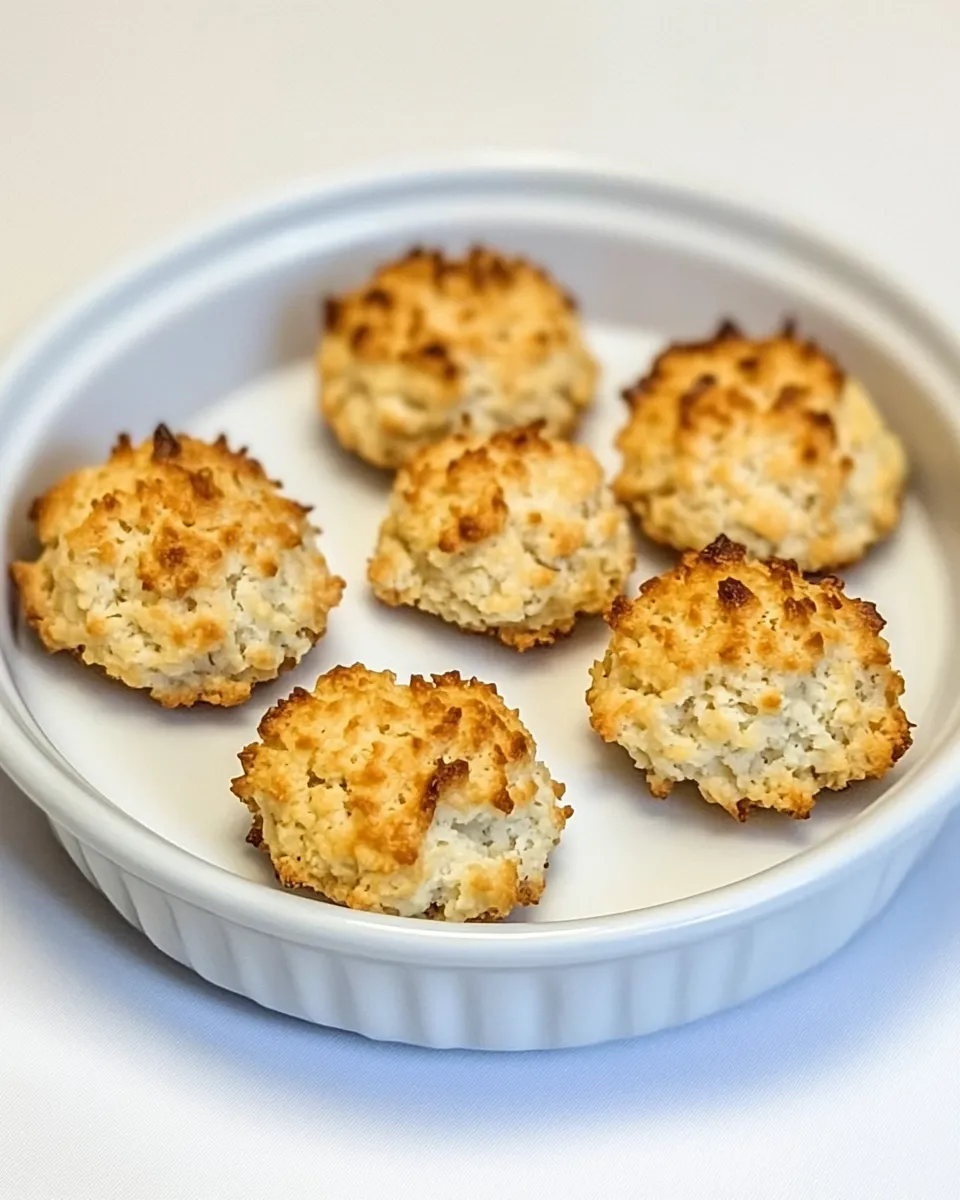
These macaroons are quick, low-effort, and forgiving. Most of us keep almonds, shredded coconut, and eggs on hand, so you can throw the batter together in under 10 minutes. They’re also naturally gluten-free and relatively low in carbs when compared to traditional sugar-laden cookies.
I reach for this recipe when I want dessert that feels indulgent but won’t derail a low-sugar eating plan. They’re also excellent for gifting or bringing to gatherings where someone might be avoiding refined sugars. The texture is reliably good: chew inside, lightly toasted edges, and clean flavors that let the coconut shine.
What to Use Instead
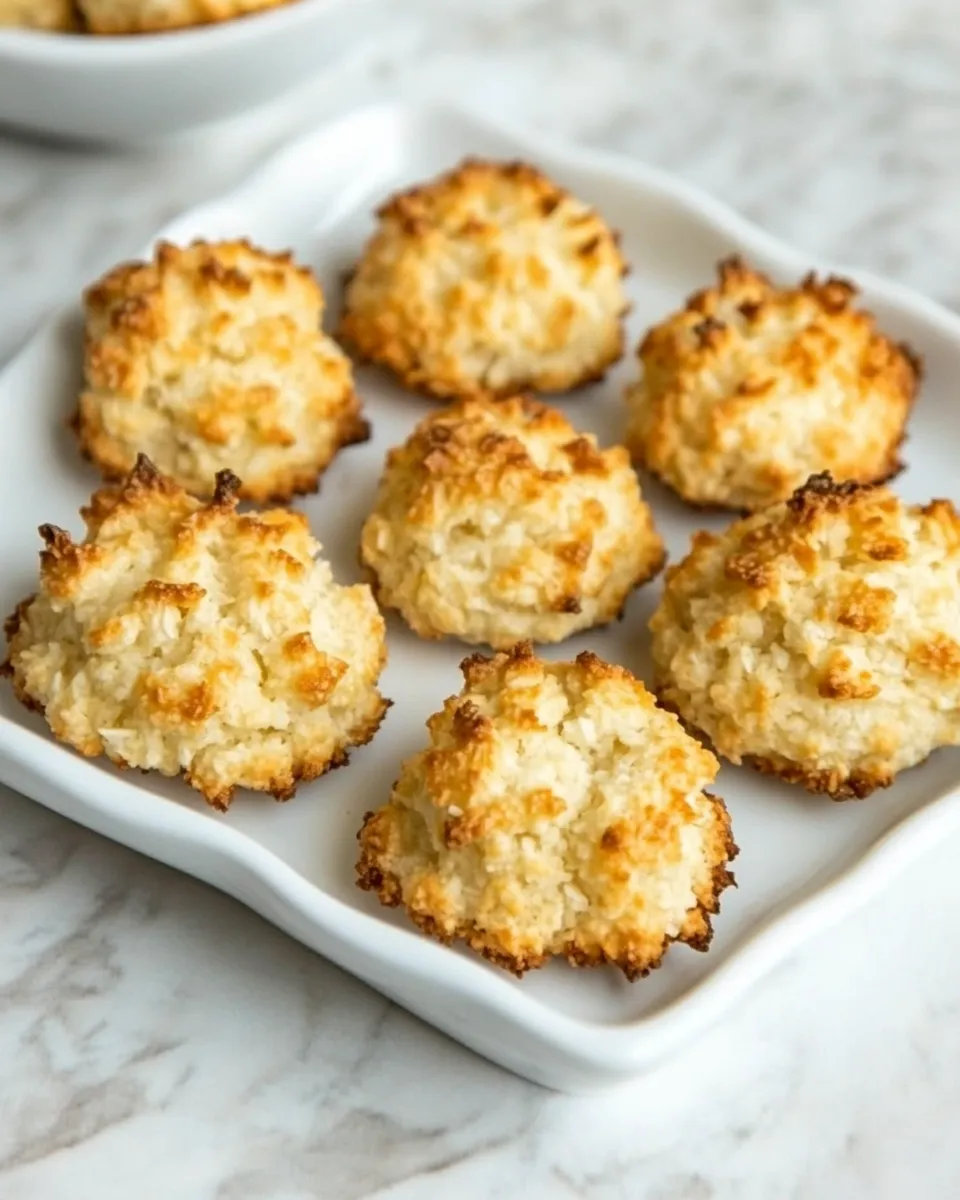
Need to swap one thing out? Here are practical swaps that preserve texture and flavor:
- Almonds — If you need a different texture, finely chopped almonds will work, though the cookies may be slightly less cohesive. If you have almond flour, use it cautiously; it’s finer and can make the mixture denser, so reduce the amount slightly and watch binding.
- Shredded unsweetened coconut — Larger coconut flakes can be used, but they’ll give a chunkier texture. Toast them lightly first for a nuttier flavor.
- Monkfruit sweetener — Other granulated sweeteners that measure like sugar (erythritol, allulose blends) can be substituted cup-for-cup. If using a liquid sweetener, reduce the yogurt slightly to keep the dough from getting too wet.
- Plain Greek yogurt — Full-fat or low-fat Greek yogurt both work. If you need dairy-free, use a thick unsweetened plant-based yogurt (see Adaptations for Special Diets).
- Egg whites — The recipe relies on egg whites for structure. If avoiding eggs, look at the Adaptations section for options and notes.
Toolbox for This Recipe
- Small food processor or immersion blender bowl attachment — for coarse grinding the slivered almonds.
- Medium mixing bowl — to combine dry and wet ingredients.
- Metal tablespoon or small cookie scoop — for measuring and scooping uniform cookies.
- Baking sheet — lined with parchment paper or silicone baking mat for easy release.
- Fork — to gently flatten each ball to the correct thickness and press edges together if needed.
- Wire rack — for cooling the macaroons after the initial rest on the baking sheet.
Common Errors (and Fixes)
Here are mistakes I see most often and how to fix them on the fly.
- Dough too dry and crumbly: The mixture may be too dry if the almond grind was very fine or the coconut is extra dry. Press the crumbs together—if they won’t hold, add a teaspoon of water or a bit more yogurt, a little at a time, until the mixture holds when pressed.
- Cookies spread too thin: If your macaroons flatten too much, try forming slightly thicker balls and pressing only gently. Also check oven temperature—an oven running hot can cause rapid spreading before the cookies set.
- Underbaked centers: If they look pale and jiggly in the center after the recommended time, give them an additional 2–4 minutes. They’ll also continue to set as they cool on the pan for 20 minutes.
- Over-browned edges: If edges brown too quickly while centers are underdone, lower oven temperature by 10–15°F and bake a few minutes longer. Rotate the pan halfway through baking for even color.
Adaptations for Special Diets
I keep this recipe flexible so it fits different needs. Here are practical adaptations with trade-offs noted:
- Dairy-free: Substitute the plain Greek yogurt with an unsweetened, thick plant-based yogurt (coconut or almond yogurt works). The texture may be slightly different—plant yogurts vary in thickness—so use a thicker variety and reduce any extra liquid.
- Nut-free: Removing almonds changes structure. If you must avoid nuts, you can try sunflower seed flour or finely ground toasted oats as a binder, but expect a different taste and texture. (Note: test a small batch first.)
- Egg-free / Vegan: Egg whites are the primary binder, so replace them with 2 tablespoons aquafaba (per egg white) whipped to soft peaks for a closer match. Combine carefully and check texture—vegan versions may require a touch more binder or chill time.
- Lower sweet profile: Reduce monkfruit by 1 tablespoon if you prefer less sweetness; the coconut notes will still come through.
Method to the Madness
Why does this combination work so well? A few technical notes to demystify the steps:
Ground almonds for structure
Whole slivered almonds keep these cookies from becoming floppy. Grinding them coarsely adds tiny pieces that lock together with shredded coconut and the egg whites, producing a cookie that holds shape but stays tender.
Egg whites + yogurt = moisture and set
Egg whites coagulate when heated, which helps the cookie set while keeping it light. The Greek yogurt adds moisture and a bit of tang that balances the sweetener; it also helps the dough bind without needing sugar syrup or condensed milk.
Temperature and resting
Baking at 325°F gives a gentle oven environment that sets the cookies without over-browning. Letting the macaroons cool on the sheet is important—during this time the interior finishes setting and the cookies firm up so they won’t break when moved.
Store, Freeze & Reheat
Store the macaroons in an airtight container at room temperature for up to 3 days. If your kitchen is warm, keep them in the fridge for up to a week; bring to room temperature before serving for the best texture.
To freeze: arrange baked and fully cooled macaroons on a tray and freeze until solid. Transfer to a freezer-safe bag or container. They keep for up to 3 months. Thaw at room temperature for 30–60 minutes; if desired, refresh in a 300°F oven for 5–7 minutes to recrisp the edges.
Quick Questions
- Can I make the mixture ahead of time? Yes. You can assemble the dough, cover, and refrigerate for up to 24 hours. If refrigerated, you may need to let it warm slightly to room temperature before scooping so it’s easier to shape.
- Can I brown the coconut first? Toasting the shredded coconut lightly in a dry skillet adds depth of flavor. If you do, reduce the oven time slightly and watch closely to avoid over-browning.
- How big should each cookie be? The recipe uses one tablespoon per cookie; that yields small, palm-sized macaroons. Use a small cookie scoop for uniform results.
- Do I need to separate eggs by hand? Yes—separate the whites from yolks before adding. Save yolks for another use like custard or discard if you prefer.
Final Thoughts
These Sugar-Free Coconut Macaroons are a dependable, no-fuss dessert that proves you don’t need sugar to get satisfying cookies. They’re easy to adapt, travel well, and are forgiving for beginner bakers. Keep the ingredients simple, follow the method, and you’ll have a batch of chewier, coconut-forward cookies that make weekday moments feel a little sweeter—without the sugar spike.
Try a small test batch first if you’re adapting ingredients. Once you dial in your preferred texture and sweetness, this will become a recipe you reach for again and again.

Sugar-Free Coconut Macaroons
Ingredients
Ingredients
- 1 1/4 cup slivered almonds
- 1 1/4 cup shredded unsweetened coconut
- 5 T Monkfruit Sweetener see notes
- generous pinch of salt
- 1/4 cup plain Greek Yogurt see notes
- 2 egg whites
- 2 tsp. vanilla
Instructions
Instructions
- Preheat the oven to 325°F (170°C). Line a baking sheet with parchment paper or a silicone baking mat.
- Place the 1 1/4 cup slivered almonds in a small food processor (or the bowl attachment of an immersion blender) and pulse until the almonds are coarsely ground but still slightly chunky.
- In a medium bowl, combine the ground almonds, 1 1/4 cup shredded unsweetened coconut, 5 tablespoons monkfruit sweetener, and a generous pinch of salt. Stir until evenly mixed.
- Separate the eggs and reserve the yolks for another use or discard. Add the 2 egg whites, 1/4 cup plain Greek yogurt, and 2 teaspoons vanilla to the dry mixture.
- Stir the wet ingredients into the dry ingredients with a spoon until the mixture is well combined. The mixture will be slightly sticky and may be a bit crumbly but should hold together when pressed.
- Scoop the mixture one tablespoon at a time (a metal tablespoon works well) and roll each scoop into a ball. Place the balls on the prepared baking sheet about 2 inches apart.
- Use a fork to gently press each ball down into a cookie about slightly less than 1/2 inch thick. If the mixture is crumbly, press the edges together with the fork so the cookie holds its shape.
- Bake until the cookies are set and beginning to brown at the edges, about 18–20 minutes.
- Remove the baking sheet from the oven and let the cookies cool on the sheet for at least 20 minutes before transferring to a wire rack or serving.
Equipment
- Oven
- Baking Sheet
- Parchment Paper
- silicone baking mat
- Food Processor
- Mixing Bowl
- Spoon
- Fork
- Wire Rack