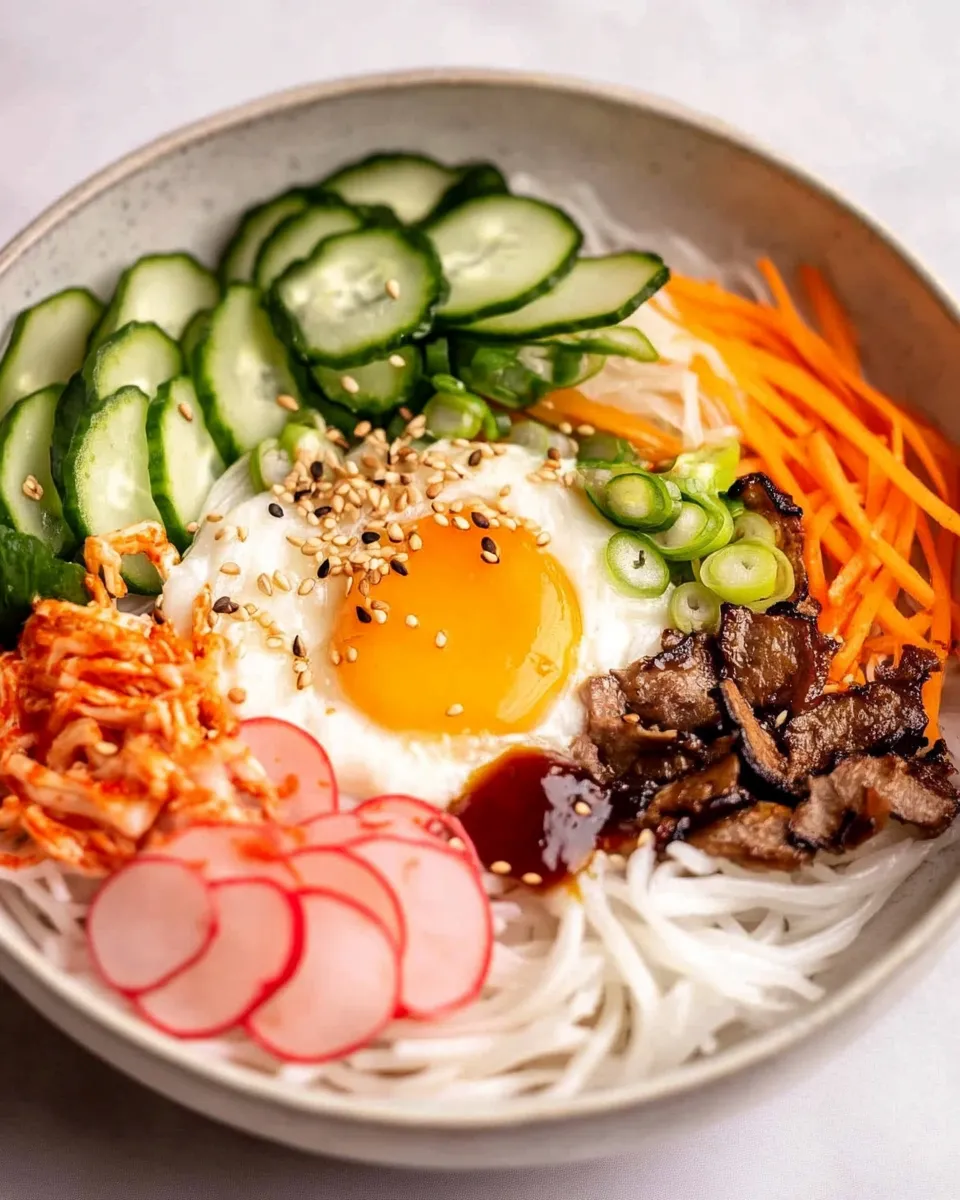
Bibimbap is a colorful and delicious Korean dish that brings together a medley of fresh vegetables, savory proteins, and perfectly cooked rice, all topped with a fried egg and a spicy gochujang sauce. This vibrant one-bowl meal is not only satisfying but also incredibly nutritious. Whether you’re looking to impress your family or simply treat yourself to a delightful homemade meal, this Bibimbap recipe is sure to become a favorite.
Why You’ll Love This Recipe
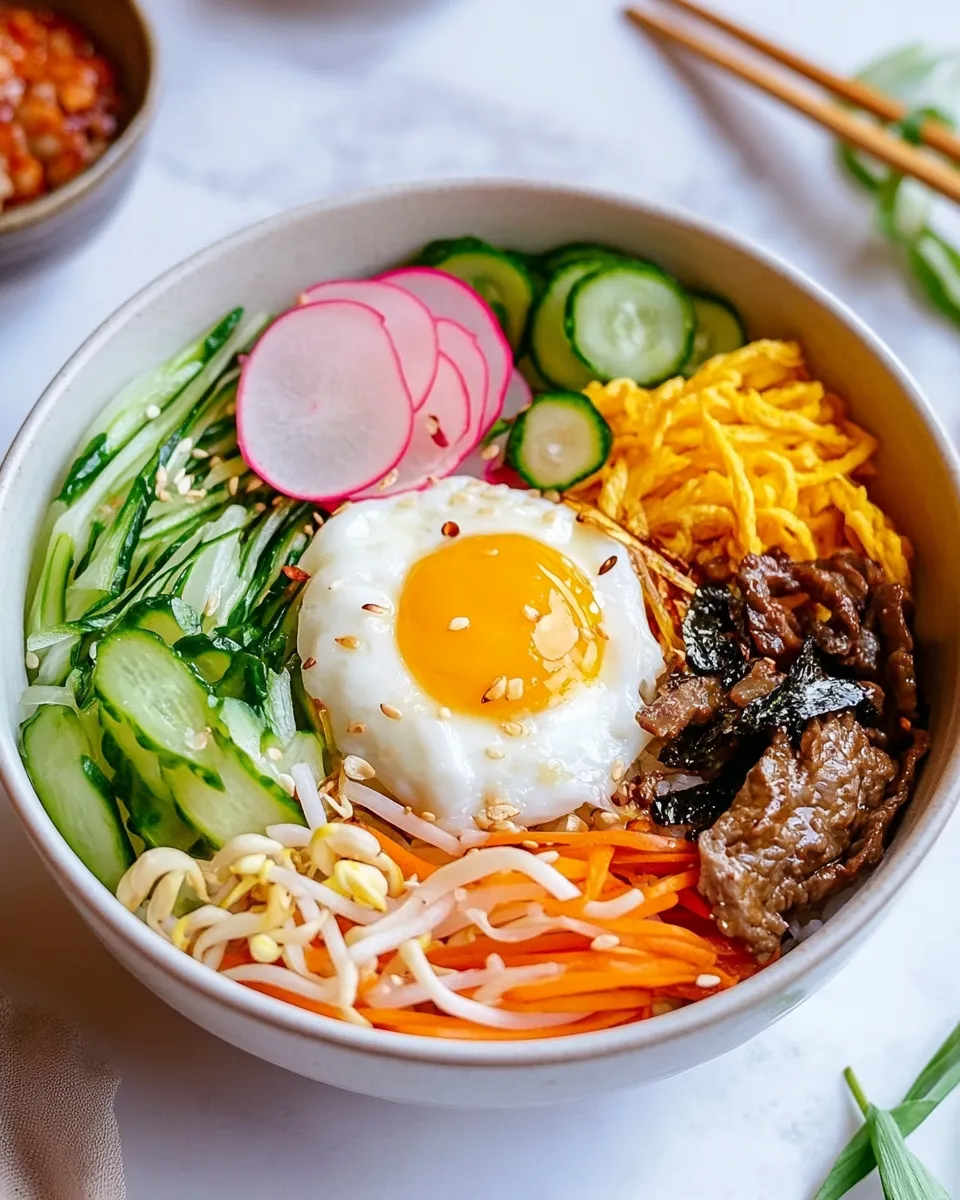
This Bibimbap recipe is a culinary adventure that offers something for everyone. Here’s why you’ll love it:
- Nutritious: Packed with a variety of vegetables, this dish is a wholesome choice that’s high in vitamins and minerals.
- Customizable: You can easily swap out ingredients to suit your taste or dietary preferences, making it versatile.
- Quick & Easy: With a few simple steps, you can create a restaurant-quality meal in the comfort of your own kitchen.
- Flavorful: The combination of sesame oil, soy sauce, and gochujang creates an irresistible flavor profile that will have your taste buds dancing.
The Ingredient Lineup
To make this delightful Bibimbap, you’ll need the following ingredients:
- 1 cucumber, thinly sliced
- 2 teaspoons rice vinegar, divided
- 1 1/2 tablespoons sesame oil, divided
- A pinch of sea salt
- 3 ounces shiitake mushrooms, sliced
- 1 teaspoon soy sauce
- 2 eggs
- 2 cups white rice, cooked
- 1 cup mung bean sprouts
- 1 carrot, shredded
- 1 tablespoon scallions, chopped, for garnish
- Black and white sesame seeds for garnish
- Gochujang sauce to taste, for garnish
Tools of the Trade
To whip up this amazing Bibimbap, here are the kitchen tools you’ll need:
- Frying Pan: For cooking the eggs and sautéing the vegetables.
- Rice Cooker or Pot: To cook the rice perfectly.
- Cutting Board and Knife: For slicing and preparing the vegetables.
- Mixing Bowl: To combine the cucumber and vinegar for a quick pickle.
Mastering Bibimbap Recipe: How-To
Creating a delicious Bibimbap is a breeze with these simple steps:
1. Prepare the Cucumber
In a mixing bowl, combine the thinly sliced cucumber with 1 teaspoon of rice vinegar and a pinch of sea salt. Toss to coat and set aside to let it pickle slightly while you prepare the other ingredients.
2. Sauté the Mushrooms
In a frying pan over medium heat, add 1/2 tablespoon of sesame oil. Once hot, add the sliced shiitake mushrooms and cook for about 3-4 minutes until they are tender. Stir in the soy sauce and cook for an additional minute. Remove from heat and set aside.
3. Cook the Mung Bean Sprouts
In the same frying pan, add the mung bean sprouts and a splash of water. Cover and steam for about 2-3 minutes until they are tender but still crisp. Remove from heat and set aside.
4. Fry the Eggs
Using the same frying pan, add the remaining 1 tablespoon of sesame oil. Crack the eggs into the pan and fry to your desired doneness. Sunny-side up is traditional for Bibimbap, but feel free to cook them over-easy or hard if preferred.
5. Assemble the Bibimbap
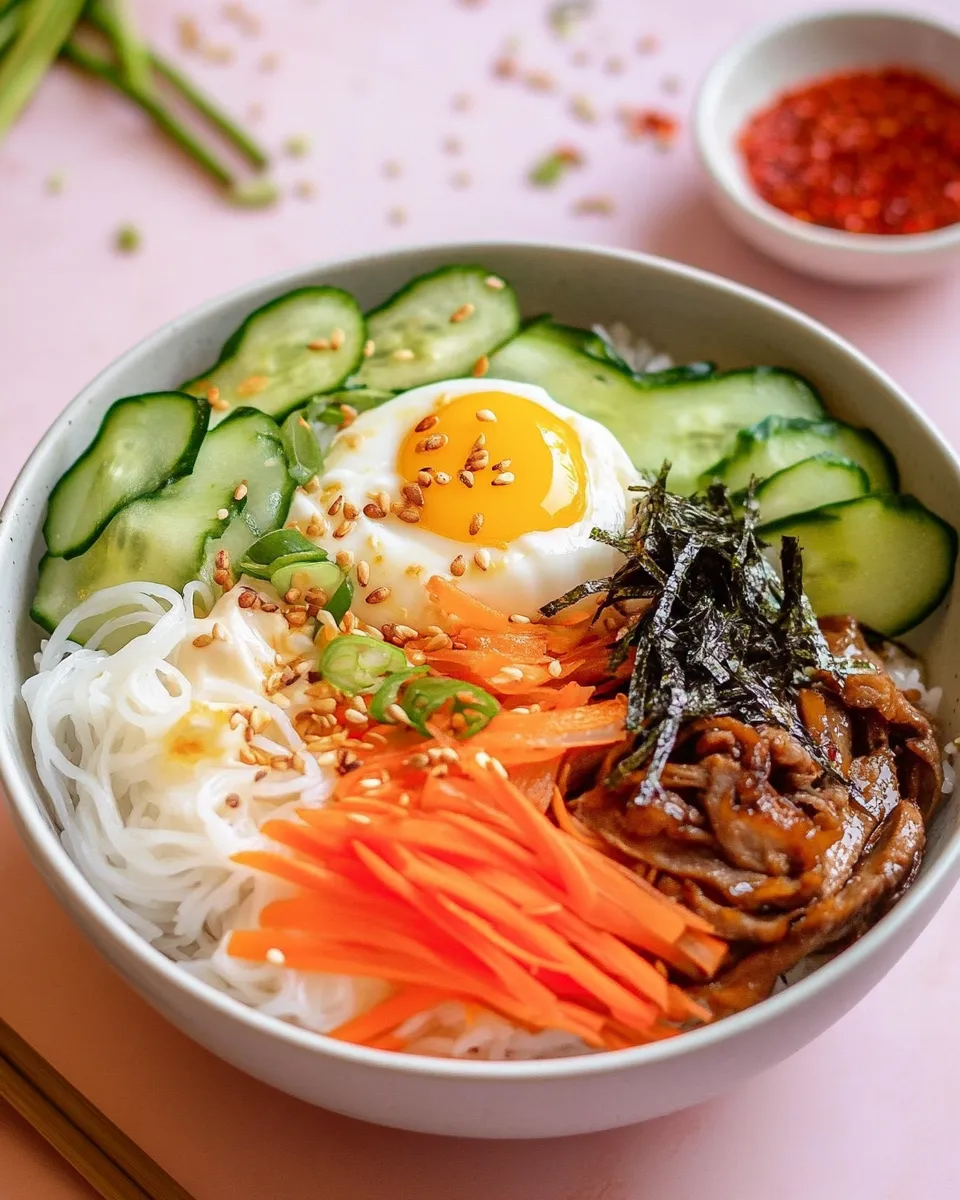
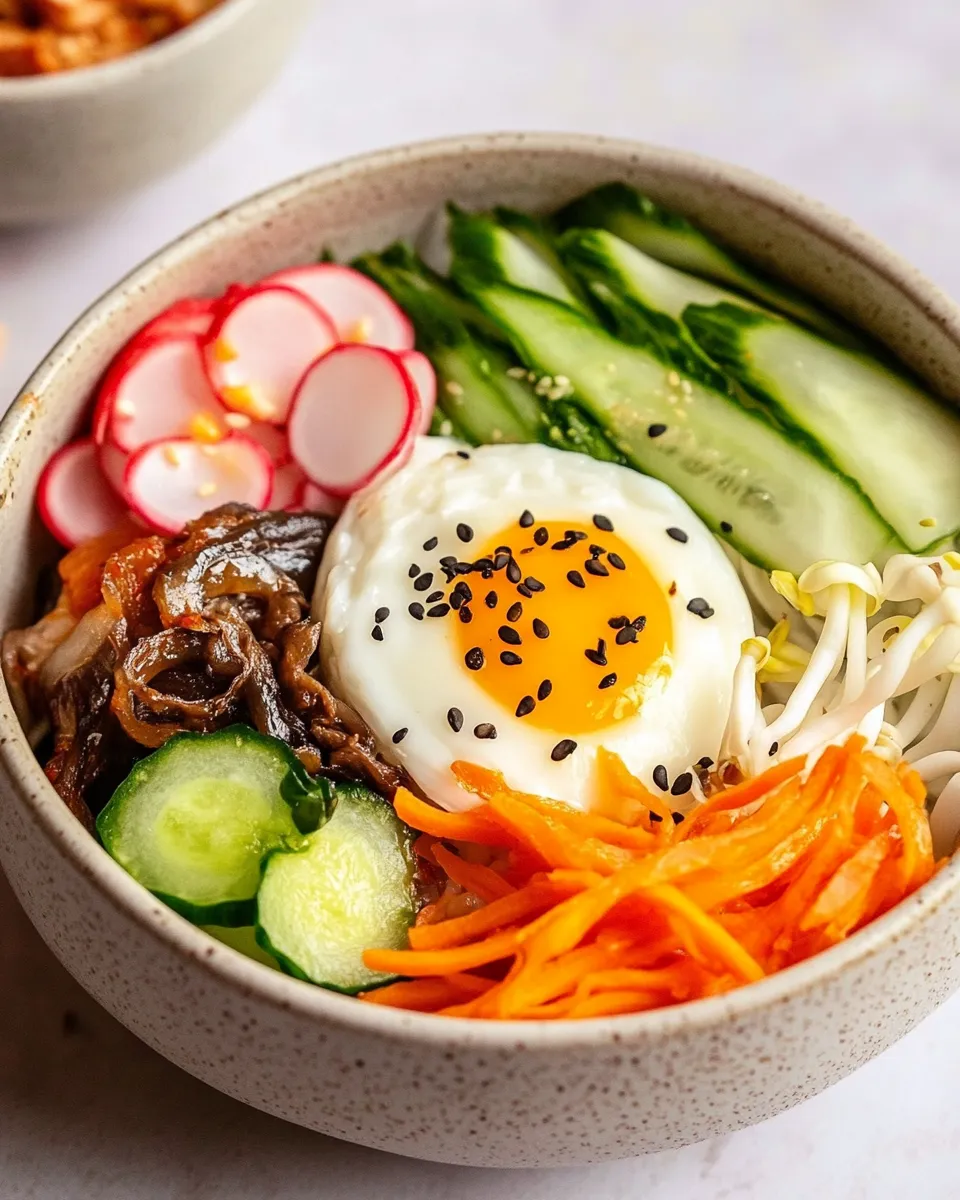
In a large bowl, place a generous serving of cooked white rice at the bottom. Arrange the sautéed mushrooms, mung bean sprouts, shredded carrot, and pickled cucumber on top of the rice in sections for that beautiful, colorful presentation.
6. Add the Finishing Touches
Top the assembled Bibimbap with the fried egg. Sprinkle with chopped scallions and black and white sesame seeds for a final touch. Drizzle with gochujang sauce according to your spice preference.
Healthier Substitutions
If you’re looking to make some healthier modifications to this Bibimbap recipe, consider these options:
- Swap white rice for brown rice or quinoa for added fiber and nutrients.
- Use egg whites instead of whole eggs for a lower-calorie option.
- Substitute shiitake mushrooms with other veggies like zucchini or bell peppers for variety.
- Opt for low-sodium soy sauce to reduce sodium intake.
Behind the Recipe
Bibimbap translates to “mixed rice,” and it’s a traditional Korean dish that embodies the spirit of harmony and balance. Each ingredient represents different flavors and colors, making it not only a feast for the stomach but also for the eyes. The beauty of Bibimbap lies in its versatility; you can use virtually any vegetable or protein you have on hand. This means it’s perfect for a quick weeknight dinner or a leisurely weekend meal prep.
Make Ahead Like a Pro
If you’re planning to serve Bibimbap for a gathering or meal prep for the week, here are some tips to make ahead:
- Cook the rice in advance and store it in the fridge. Reheat it quickly in the microwave before serving.
- Prepare the vegetables and store them in airtight containers for easy assembly.
- Fry the eggs just before serving to ensure they are fresh and warm.
- Mix the gochujang with a little sesame oil and honey for a quick sauce that can be made ahead.
Bibimbap Recipe Q&A
Can I use other types of rice for Bibimbap?
Absolutely! While white rice is traditional, you can use brown rice, cauliflower rice, or even quinoa as a base for your Bibimbap to suit your preferences.
What if I can’t find gochujang?
If gochujang is hard to find, you can substitute it with a mix of red chili paste and a little honey or sugar to achieve a similar sweet and spicy flavor.
Can I make Bibimbap vegetarian?
Yes! Simply omit the eggs or use tofu as a protein alternative. You can also load up on more vegetables for a filling meal.
How do I store leftovers?
Store leftover Bibimbap in an airtight container in the fridge for up to 3 days. Keep the components separate if possible to maintain texture and freshness.
If you enjoyed this Bibimbap recipe, you might love these other delicious dishes:
In Closing
There you have it—an irresistible Bibimbap recipe that is as delightful to look at as it is to eat! This dish is perfect for any occasion, whether it’s a cozy family dinner or a fun meal prep for the week ahead. With its endless customization options, you can make this dish your own by adding different vegetables, proteins, or sauces. So gather your ingredients, follow the steps, and enjoy a bowl of homemade happiness. Bon appétit!
Bibimbap Recipe
Ingredients
- 1 cucumber thinly sliced
- 2 teaspoons rice vinegar divided
- 1.5 tablespoons sesame oil divided
- a pinch sea salt
- 3 ounces shiitake mushrooms sliced
- 1 teaspoon soy sauce
- 2 eggs
- 2 cups white rice cooked
- 1 cup mung bean sprouts
- 1 carrot shredded
- 1 tablespoon scallions chopped, for garnish
- black and white sesame seeds for garnish
- Gochujang sauce to taste, for garnish
Instructions
- In a mixing bowl, combine the thinly sliced cucumber with 1 teaspoon of rice vinegar and a pinch of sea salt. Toss to coat and set aside to let it pickle slightly while you prepare the other ingredients.
- In a frying pan over medium heat, add 1/2 tablespoon of sesame oil. Once hot, add the sliced shiitake mushrooms and cook for about 3-4 minutes until they are tender. Stir in the soy sauce and cook for an additional minute. Remove from heat and set aside.
- In the same frying pan, add the mung bean sprouts and a splash of water. Cover and steam for about 2-3 minutes until they are tender but still crisp. Remove from heat and set aside.
- Using the same frying pan, add the remaining 1 tablespoon of sesame oil. Crack the eggs into the pan and fry to your desired doneness. Sunny-side up is traditional for Bibimbap, but feel free to cook them over-easy or hard if preferred.
- In a large bowl, place a generous serving of cooked white rice at the bottom. Arrange the sautéed mushrooms, mung bean sprouts, shredded carrot, and pickled cucumber on top of the rice in sections for that beautiful, colorful presentation.
- Top the assembled Bibimbap with the fried egg. Sprinkle with chopped scallions and black and white sesame seeds for a final touch. Drizzle with gochujang sauce according to your spice preference.
Equipment
- Frying Pan
- Rice cooker or pot
- Cutting board and knife
- Mixing Bowl
Notes
- Cook rice in advance for quick assembly.
- Store prepared vegetables in airtight containers.
- Fry eggs just before serving for freshness.