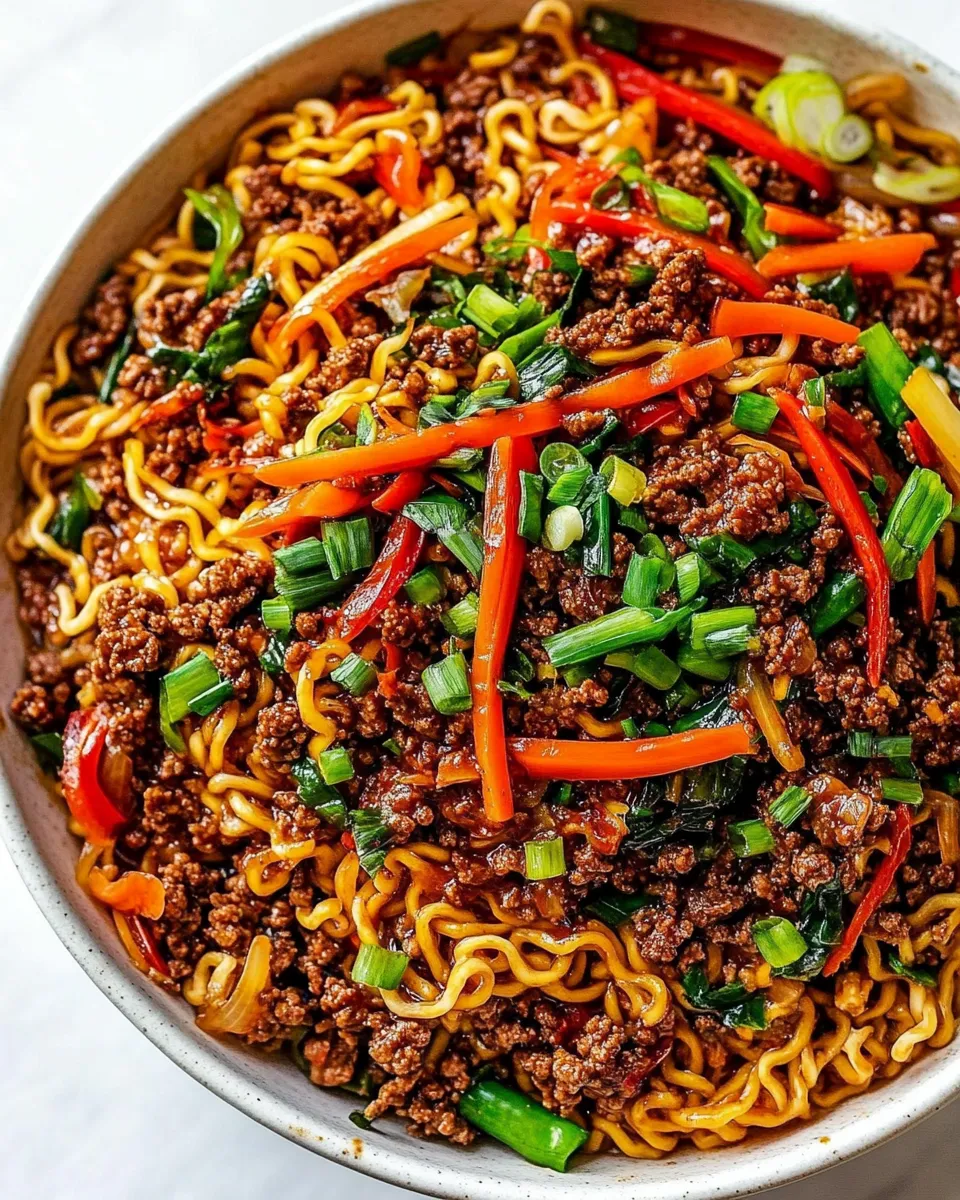
I keep a handful of weeknight recipes that make dinner feel like an actual meal instead of a last-minute scramble. Ground Beef Ramen is one of those: fast, bold, and forgiving. It starts with pantry-friendly sauces and instant noodles, then gets an honest upgrade with fresh vegetables and a savory beef base. The result is comfort food that doesn’t skimp on flavor.
This version leans on layers of savory sauces—hoisin, oyster, soy—and a touch of toasted sesame oil to tie everything together. The method is straightforward: quick sauce, barely-cooked noodles, a hot wok, and a short stir-fry. Timing matters more than technique, so I’ll point out where to watch the clock and what to do when you need to make it in bulk.
What Goes In
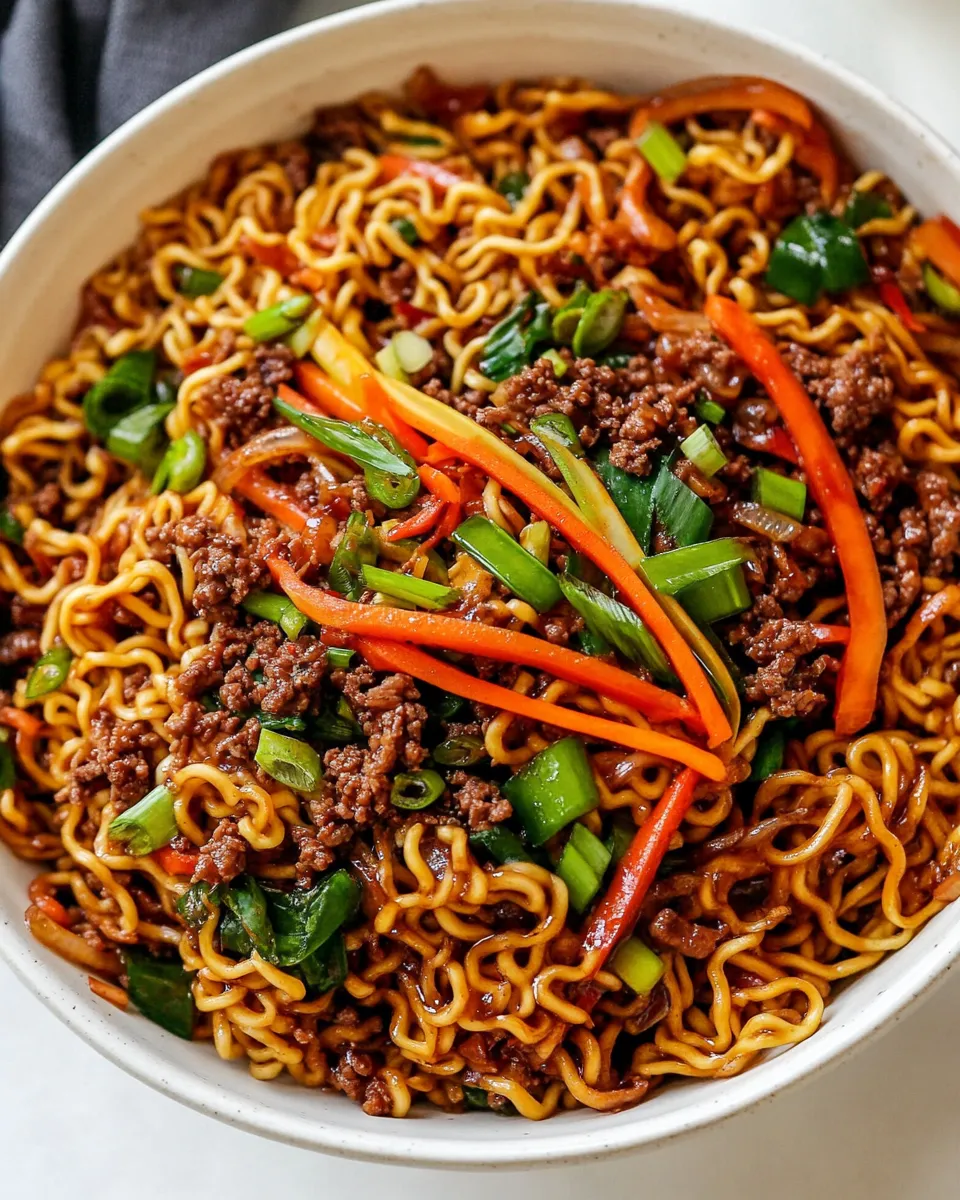
Ingredients
- 4 tablespoons toasted sesame oil, divided — provides nutty flavor; divided for cooking and preventing noodle stickiness.
- 1/2 large red onion, very thinly sliced — softens and sweetens as it sautés; slice thin for quick cook time.
- 1 tablespoon garlic paste — concentrated garlic flavor; adds depth without fuss.
- 2 teaspoons ginger paste — warm, pungent brightness; balances the sauces.
- 1 pound lean ground beef (93/7) — main protein; lean keeps fat from making the dish greasy.
- 1 large red bell pepper, cut into thin strips — crisp texture and color; cut thin so it softens quickly.
- 2 cups finely diced broccoli — bite-sized florets cook fast and pick up sauce well.
- 3/4 cup matchstick carrots — quick-cooking sweetness and crunch.
- 3 (3-ounce) packages instant ramen noodles, seasoning packets discarded — the noodles; discard packets because we use a custom sauce.
- 2 teaspoons cornstarch — thickens the sauce for a glossy coat on noodles and vegetables.
- 3 tablespoons reduced-sodium soy sauce — base salty umami; reduced-sodium prevents oversalting.
- 1/3 cup reduced-sodium chicken broth — liquid for the sauce; reduced-sodium keeps control of overall salt.
- 1 tablespoon light brown sugar — balances acidity and salt with gentle sweetness.
- 1 tablespoon rice vinegar — brightens and cuts richness.
- 1 tablespoon hoisin sauce — adds depth and a touch of sweetness.
- 2 tablespoons oyster sauce — savory, slightly sweet umami; helps build a complex sauce.
- 1 teaspoon Sriracha, optional — heat option; add to taste.
- 1/4 teaspoon ground white pepper (or 1/8 tsp pepper) — subtle heat and aromatic finish.
- Optional garnish — see note 1 for ideas like sliced scallions, toasted sesame seeds, or lime wedges.
Ground Beef Ramen, Made Easy
- Whisk the sauce: in a small bowl or wide-mouth jar combine 2 teaspoons cornstarch and 3 tablespoons reduced-sodium soy sauce; whisk until smooth. Add 1/3 cup reduced-sodium chicken broth, 1 tablespoon light brown sugar, 1 tablespoon rice vinegar, 1 tablespoon hoisin sauce, 2 tablespoons oyster sauce, Sriracha (optional), 1/4 teaspoon ground white pepper, and 1 tablespoon toasted sesame oil. Whisk until fully combined and set the sauce aside.
- Prep the produce: thinly slice 1/2 large red onion and 1 large red bell pepper into thin strips; finely dice 2 cups broccoli; measure 3/4 cup matchstick carrots. Have 1 tablespoon garlic paste and 2 teaspoons ginger paste ready.
- Cook the noodles: bring a large pot of water to a boil (do not add salt). Discard the seasoning packets from the 3 (3-ounce) ramen packages. Add the noodles and cook about 1 minute 30 seconds (or roughly 1:30 less than the package’s recommended time), so they are just under al dente. Drain the noodles, toss immediately with 1 tablespoon toasted sesame oil to prevent sticking, and set aside.
- Cook the onion: heat 1 tablespoon toasted sesame oil in a large wok or deep skillet over medium-high heat. Add the sliced onion and sauté about 4 minutes, until softened.
- Brown the beef: push the onions to the edges of the pan, increase the heat to high, add another 1 tablespoon toasted sesame oil, then add 1 pound lean ground beef (93/7) to the center. Let the beef sit 30 seconds, then break it up with a spoon and continue to cook until no pink remains, about 5–7 minutes.
- Stir-fry the vegetables and aromatics: reduce the heat to medium-high. Add the bell pepper strips, diced broccoli, carrots, 1 tablespoon garlic paste, and 2 teaspoons ginger paste. Stir-fry 3–4 minutes, until the vegetables are crisp-tender.
- Combine noodles and sauce: give the sauce a quick stir, pour it into the pan with the beef and vegetables, then add the cooked noodles. Use tongs or a large spatula to toss everything together for 2–4 minutes, until the sauce has thickened slightly and evenly coats the noodles and vegetables.
- Finish and serve: taste and adjust with additional soy sauce, Sriracha, or white pepper if desired. Serve hot.
Why Cooks Rave About It
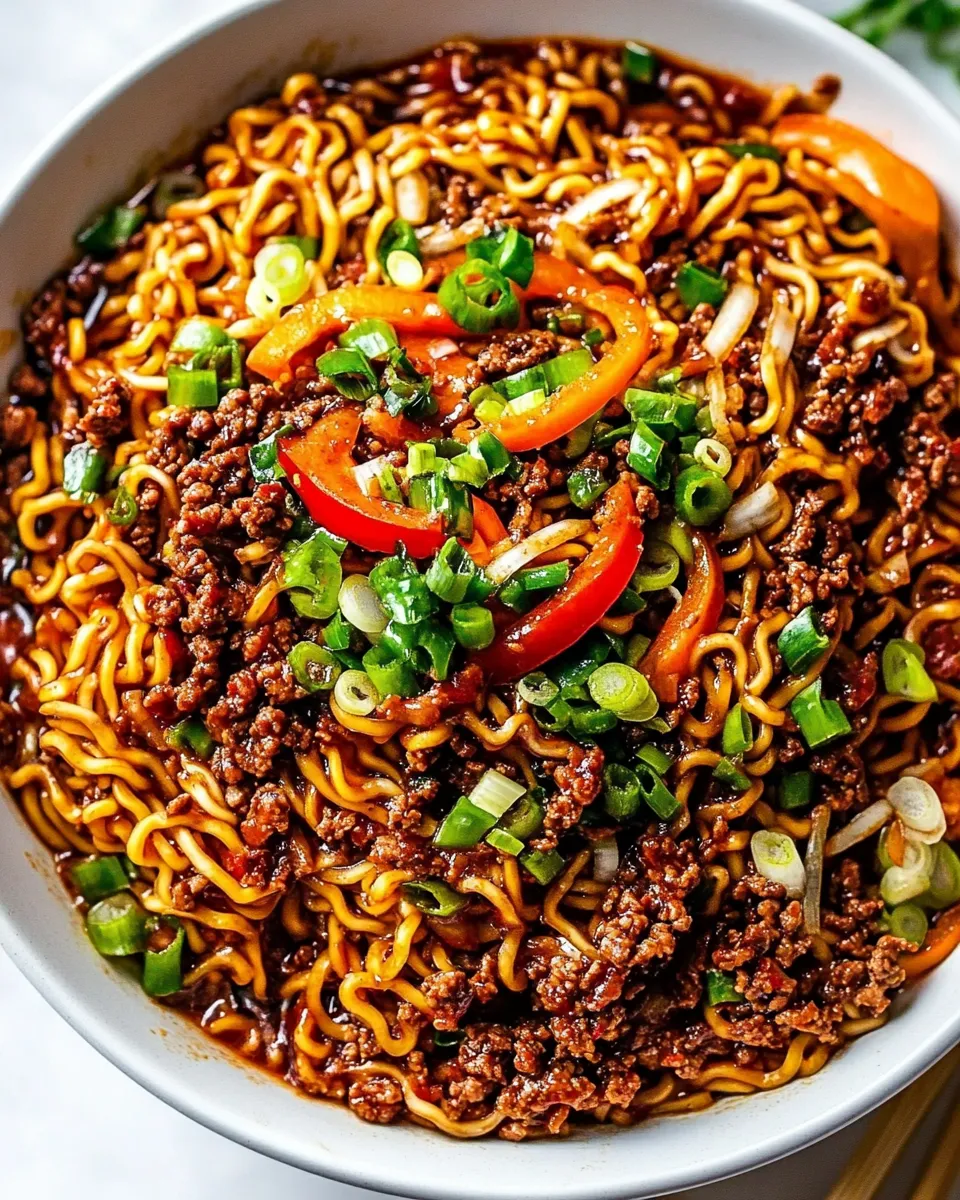
This dish hits a lot of satisfying notes fast: savory, slightly sweet, umami-rich, and texturally balanced. The instant ramen keeps things speedy, while tossing the seasoning packets lets you control salt and flavor with a custom sauce. Ground beef browns quickly and builds a meaty backbone that soaks up the soy-hoisin-oyster sauce combination.
Another reason cooks appreciate it is adaptability. The recipe moves from pan to plate in under 30 minutes, and the technique teaches efficient mise en place: sauce first, produce prepped, noodles barely cooked, and a hot pan to finish everything quickly. The cornstarch and brief tossing step deliver a glossy coating that makes every bite feel intentional.
Ingredient Swaps & Substitutions
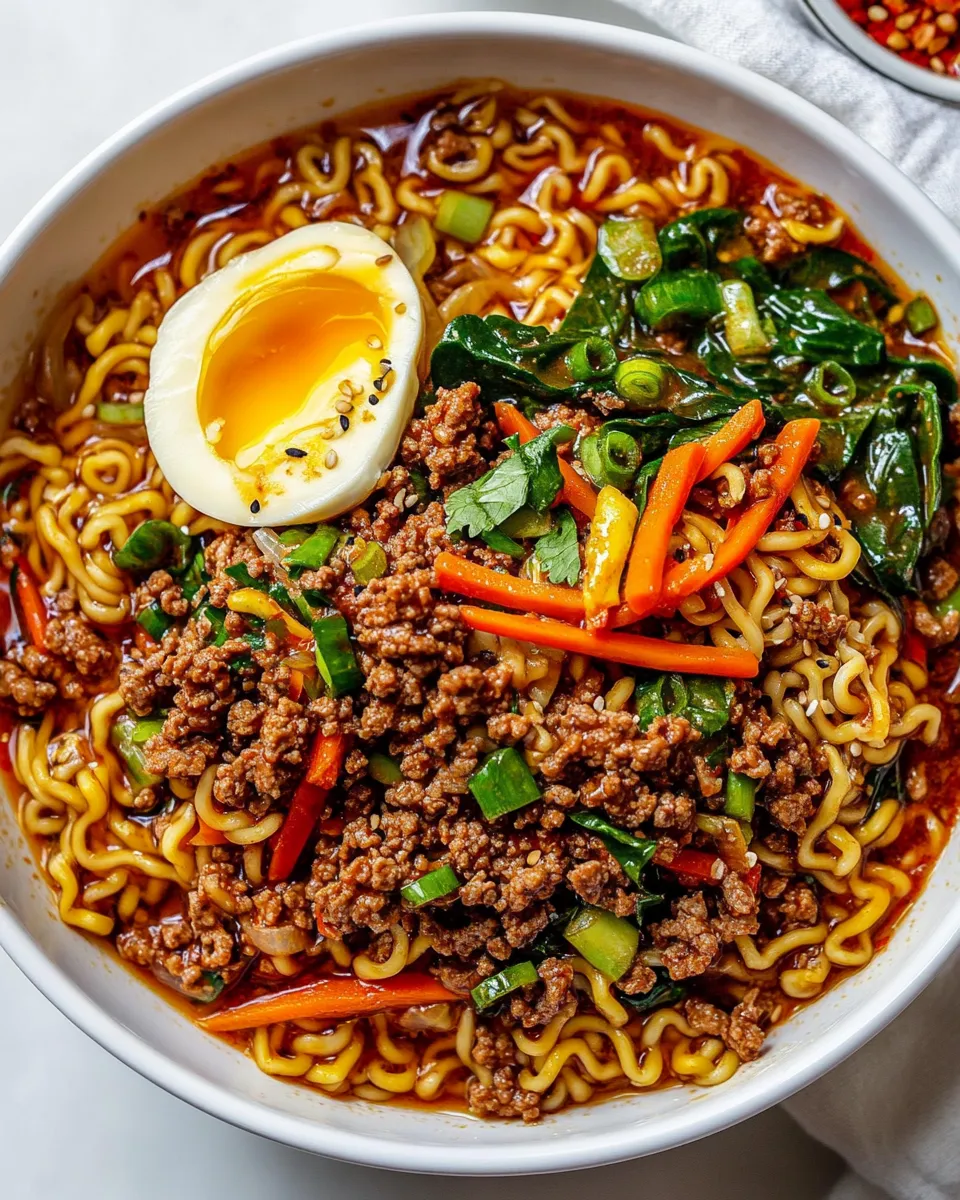
- Ground beef (93/7) — swap with ground turkey or chicken for a leaner option; remember they brown differently and can dry out, so watch cook time.
- Reduced-sodium soy sauce — regular soy sauce works if you lower added salt elsewhere; tamari can be used for a gluten-free option.
- Reduced-sodium chicken broth — vegetable broth is a fine alternative if you prefer a lighter base.
- Hoison/oyster sauces — if you need less sweetness, reduce hoisin by half; omit oyster sauce and add a splash more soy for a similar savory boost.
- Instant ramen noodles — fresh or dried ramen, udon, or even thin spaghetti can substitute; adjust cook time and treat fresh noodles gently when tossing.
- Sriracha — any hot sauce or chili paste can stand in; adjust by heat level.
What’s in the Gear List
- Large pot — for boiling the noodles quickly.
- Large wok or deep skillet — high heat and room to toss ingredients.
- Small bowl or wide-mouth jar — for whisking the sauce so it’s lump-free.
- Colander — to drain noodles promptly.
- Tongs or large spatula — for tossing noodles with sauce and vegetables.
- Measuring spoons and cups — accuracy matters for the sauce balance.
Steer Clear of These
Don’t overcook the noodles. The recipe asks you to undercook them slightly because they finish in the pan. If you follow the package time, they’ll go mushy after tossing with the sauce.
Avoid dumping the sauce in a cold pan. Give it a quick stir, then add to a hot mixture so the cornstarch activates and thickens the sauce. If the pan is too cool you’ll end up with a thin, watery sauce.
Resist using very fatty beef. Higher-fat ground beef will release excess grease and dilute the sauce’s flavor; if you prefer fattier meat, drain the rendered fat before adding the sauce.
Seasonal Ingredient Swaps
Spring: swap some broccoli for blanched asparagus tips or sugar snap peas for a bright, crisp bite.
Summer: add halved cherry tomatoes at the end for freshness (toss only briefly so they keep shape).
Fall: swap matchstick carrots for thinly sliced sweet potato ribbons (par-cook briefly) or add thinly sliced shiitake mushrooms to deepen umami.
Winter: wilt in some thinly sliced kale or baby bok choy during the vegetable stir-fry step for added greens and bulk.
Recipe Notes & Chef’s Commentary
Trust the timing: the recipe is tuned so components combine smoothly. Prepping everything before turning on the heat keeps the pan moving and avoids overcooking. The cornstarch-to-liquid ratio is small but important—2 teaspoons cornstarch with the listed liquids gives a slight glaze rather than a heavy gravy.
Texture contrast is the secret here. Quick-cooking bell pepper and carrots should remain crisp-tender; broccoli is diced small to match that rhythm. Tossing the noodles with a tablespoon of toasted sesame oil right after draining prevents clumping and helps them accept the sauce evenly.
When you brown the beef, let it sit 30 seconds before breaking it up. That quick sear builds flavor and texture; you’ll get small caramelized bits that translate into richer overall taste.
Save for Later: Storage Tips
Store leftovers in an airtight container in the refrigerator for up to 3–4 days. The sauce soaks into noodles over time, so the texture will soften. To refresh, reheat gently in a skillet over medium heat with a splash of broth or water to loosen the sauce, or microwave in short bursts, stirring between intervals.
Freezing is possible but not ideal because noodles change texture when frozen and thawed. If you plan to freeze, store cooked ground beef and vegetables separately from noodles, then combine when reheating. Thaw overnight in the fridge before reheating.
Common Qs About Ground Beef Ramen
Q: Can I use a different protein?
A: Yes. Ground turkey, chicken, or even crumbled tofu work, but cooking times and moisture content differ. With lean poultry, watch closely so it doesn’t dry out; add a splash of broth if it seems dry.
Q: How do I keep the noodles from clumping?
A: Drain them immediately and toss with 1 tablespoon toasted sesame oil as the recipe instructs. That coating keeps strands separate while you finish the stir-fry.
Q: Can I make this gluten-free?
A: Use gluten-free noodles and swap reduced-sodium soy sauce for tamari. Check hoisin and oyster sauce labels—many contain wheat—so choose gluten-free alternatives if needed.
Q: Is this spicy?
A: Not inherently. The recipe lists Sriracha as optional; add to taste. You can also finish with chili flakes or a drizzle of hot oil for more heat.
Q: Can I meal-prep this?
A: For meal prep, store the protein/vegetables and noodles separately and combine before reheating to maintain better noodle texture. Add any fresh garnishes right before serving.
Q: How do I scale the recipe?
A: It scales predictably: double the ingredients for more servings, but don’t overfill the pan when stir-frying—work in batches if necessary so everything cooks quickly and evenly.
Hungry for More?
If you like this one-pan, noodle-forward approach, try swapping to a sesame-ginger peanut sauce next time or turning the base into a spicy beef lo mein with extra green onions and a splash of sesame-chili oil. Ground Beef Ramen is a great template: once you get comfortable with the rhythm—sauce, noodles, high-heat toss—you can riff confidently and make it fit your weeknight rhythm.
Serve with simple garnishes like sliced scallions, toasted sesame seeds, or a lime wedge to brighten the whole dish. Enjoy—it’s fast, reliable, and exactly the kind of home-cooking that hits the spot on busy nights.
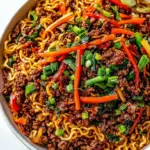
Ground Beef Ramen
Ingredients
Ingredients
- 4 tablespoonstoasted sesame oildivided
- 1/2 largered onionvery thinly sliced
- 1 tablespoongarlic paste
- 2 teaspoonsginger paste
- 1 poundlean ground beef93/7
- 1 largered bell peppercut into thin strips
- 2 cupsfinely diced broccoli
- 3/4 cupmatchstick carrots
- 3 3-ounce packagesinstant ramen noodlesseasoning packets discarded
- 2 teaspoonscornstarch
- 3 tablespoonsreduced-sodium soy sauce
- 1/3 cupreduced-sodium chicken broth
- 1 tablespoonlight brown sugar
- 1 tablespoonrice vinegar
- 1 tablespoonhoisin sauce
- 2 tablespoonsoyster sauce
- 1 teaspoonSrirachaoptional
- 1/4 teaspoonground white pepperor 1/8 tsp pepper
- Optional garnishsee note 1
Instructions
Instructions
- Whisk the sauce: in a small bowl or wide-mouth jar combine 2 teaspoons cornstarch and 3 tablespoons reduced-sodium soy sauce; whisk until smooth. Add 1/3 cup reduced-sodium chicken broth, 1 tablespoon light brown sugar, 1 tablespoon rice vinegar, 1 tablespoon hoisin sauce, 2 tablespoons oyster sauce, Sriracha (optional), 1/4 teaspoon ground white pepper, and 1 tablespoon toasted sesame oil. Whisk until fully combined and set the sauce aside.
- Prep the produce: thinly slice 1/2 large red onion and 1 large red bell pepper into thin strips; finely dice 2 cups broccoli; measure 3/4 cup matchstick carrots. Have 1 tablespoon garlic paste and 2 teaspoons ginger paste ready.
- Cook the noodles: bring a large pot of water to a boil (do not add salt). Discard the seasoning packets from the 3 (3-ounce) ramen packages. Add the noodles and cook about 1 minute 30 seconds (or roughly 1:30 less than the package’s recommended time), so they are just under al dente. Drain the noodles, toss immediately with 1 tablespoon toasted sesame oil to prevent sticking, and set aside.
- Cook the onion: heat 1 tablespoon toasted sesame oil in a large wok or deep skillet over medium-high heat. Add the sliced onion and sauté about 4 minutes, until softened.
- Brown the beef: push the onions to the edges of the pan, increase the heat to high, add another 1 tablespoon toasted sesame oil, then add 1 pound lean ground beef (93/7) to the center. Let the beef sit 30 seconds, then break it up with a spoon and continue to cook until no pink remains, about 5–7 minutes.
- Stir-fry the vegetables and aromatics: reduce the heat to medium-high. Add the bell pepper strips, diced broccoli, carrots, 1 tablespoon garlic paste, and 2 teaspoons ginger paste. Stir-fry 3–4 minutes, until the vegetables are crisp-tender.
- Combine noodles and sauce: give the sauce a quick stir, pour it into the pan with the beef and vegetables, then add the cooked noodles. Use tongs or a large spatula to toss everything together for 2–4 minutes, until the sauce has thickened slightly and evenly coats the noodles and vegetables.
- Finish and serve: taste and adjust with additional soy sauce, Sriracha, or white pepper if desired. Serve hot.
Equipment
- Wokor large and deep pan, at least 12 inches
Notes
Note 1:
Garnish ideas — sliced green onions, a drizzle of sesame oil, and/or toasted sesame seeds.
Storage:
Store leftovers in an airtight container in the fridge for up to 2 days. Reheat in a skillet or microwave with a splash of water to loosen the sauce.