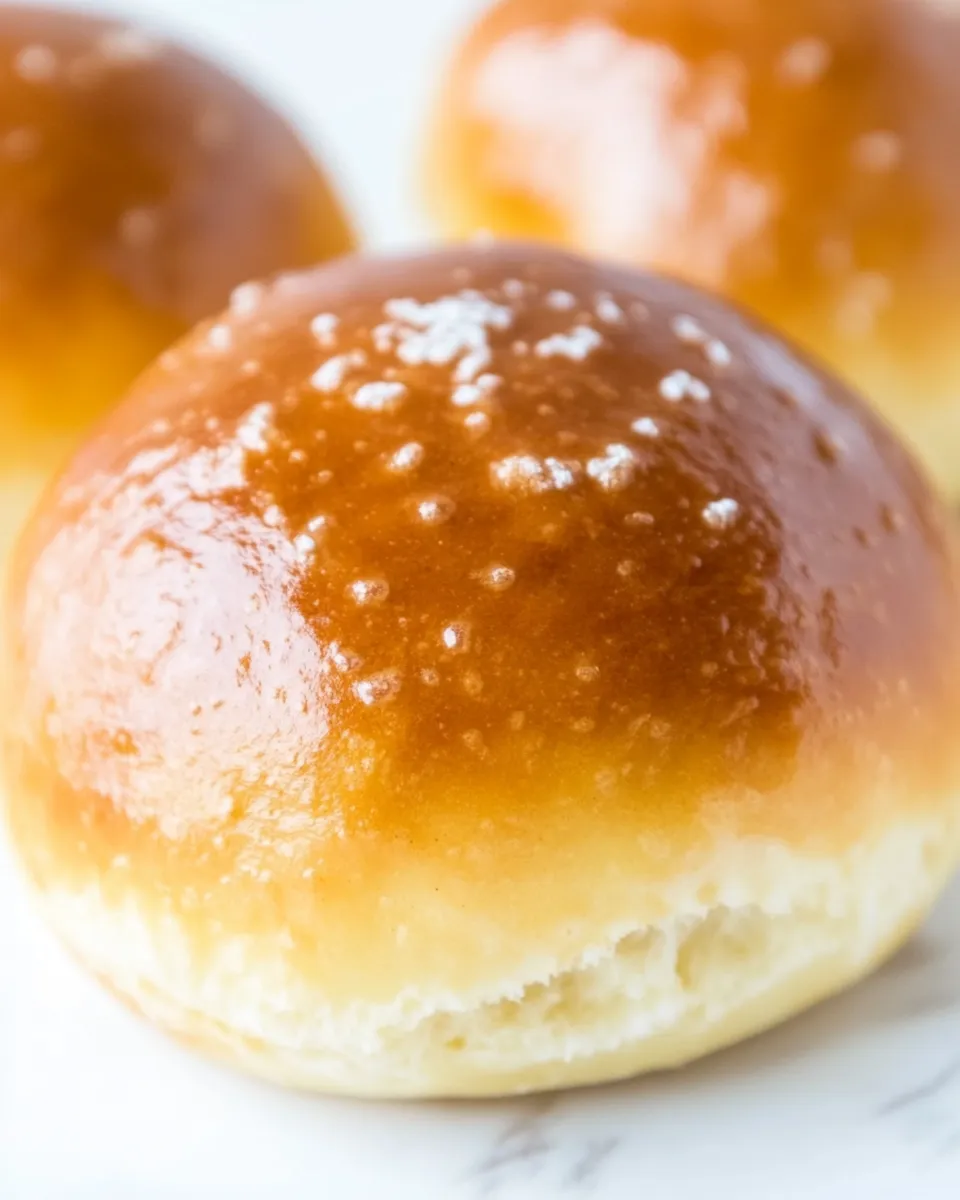
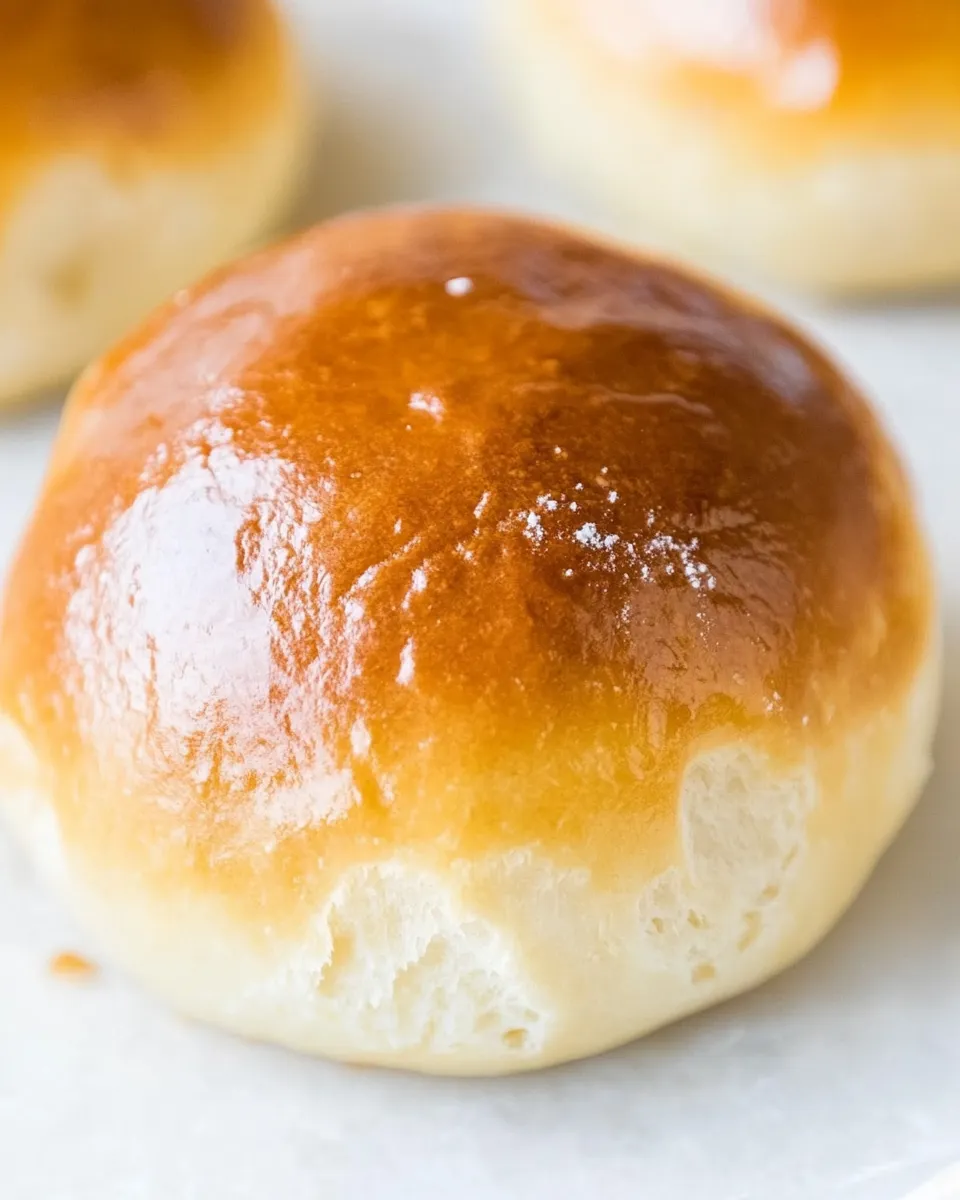
I make these potato buns every few weeks for sandwiches, burgers, and sometimes just to eat warm with butter. They are soft, slightly sweet, and hold up well to juicy fillings without falling apart. The potato keeps the crumb tender and gives the buns a gentle, comforting flavor.
This recipe uses a tangzhong (a cooked flour-and-liquid paste) and one baked russet potato for real potato flavor and moistness. The method takes a bit of time because of the baking, the tangzhong, and two rises, but the steps are straightforward. Read through once, gather your ingredients, and you’ll find the process surprisingly calm.
Below I walk you through every stage, list gear that makes the work easier, point out common mistakes, and offer storage and serving ideas. If you like soft, pillowy buns that toast beautifully, this recipe will become a favorite.
Ingredients at a Glance
- 8-to-10-ounce russet potato — baked and riced for tender crumb and moisture.
- 4cupsall-purpose flour — the bulk of the dough; provides structure (2 tablespoons of this are used for the tangzhong).
- ½cupwater — split between tangzhong and dough hydration.
- ¾cupwhole milk — split between tangzhong, dough, and a small final wash; adds richness.
- 1/3cupsugar — adds gentle sweetness and feeds the yeast (a portion goes into the yeast starter).
- 1packet active yeast — the leavening; ensure it’s fresh and that the starter foams.
- 1 ½teaspoonscoarse salt — balances flavor and strengthens gluten.
- 1large egg — enriches the dough and helps with color and structure.
- 1/3cupsoftened unsalted butter — added in thirds for richness, tenderness, and a soft crumb.
Cook Potato Bun Like This
Follow these steps in order
- Preheat the oven to 400°F. Rinse and dry the russet potato, pierce several times with a fork, place on a parchment-lined baking sheet, and bake 60–70 minutes, until tender when pierced.
- While the potato bakes, prepare the tangzhong: measure 2 tablespoons of the all-purpose flour (from the 4 cups), 1/4 cup of the whole milk, and 1/4 cup of the water. Whisk these three together in a small saucepan until smooth.
- Cook the tangzhong over low heat, whisking constantly, until it becomes a thick paste (about 7–10 minutes). Transfer to a small bowl and let it cool to room temperature.
- From the 3/4 cup whole milk, measure and set aside 2 tablespoons for the final wash. Warm the remaining milk (the rest of the 3/4 cup after removing the 1/4 cup used in the tangzhong and the 2 tablespoons reserved for the wash) to 112–115°F. Warm the remaining water (the 1/2 cup total minus the 1/4 cup used in the tangzhong = 1/4 cup) to 112–115°F as well.
- In a small bowl, combine the warm milk and warm water, add 2 tablespoons of the sugar (from the 1/3 cup), and sprinkle in the active yeast. Whisk and let sit 5–7 minutes until foamy (a raft forms).
- In a separate large bowl, whisk together the remaining all-purpose flour (the 4 cups minus the 2 tablespoons reserved for tangzhong), the remaining sugar (the rest of the 1/3 cup after the 2 tablespoons used for the yeast), and the 1 1/2 teaspoons coarse salt until evenly mixed.
- Once the yeast mixture is foamy, transfer it to the bowl of a stand mixer fitted with the dough hook. Add the riced/bashed potato (see next step), then slowly add the flour mixture while mixing on low. Immediately add the whole egg and the cooled tangzhong, and continue mixing on low to medium until the dough comes together.
- Prepare the baked potato: remove it from the oven, let it rest 5–7 minutes until cool enough to handle, peel it, and pass it through a ricer or food mill (or mash very well) so it is smooth. Add the mashed potato to the mixer as directed in step 7.
- When the dough begins to pull away from the bowl and cling to the hook, add the 1/3 cup softened unsalted butter in three additions, waiting until each addition is fully incorporated before adding the next. Mix until the dough mostly clears the sides of the bowl and is smooth and elastic.
- Transfer the dough to a lightly oiled airtight container or a lightly oiled large bowl covered with plastic wrap or a lid. Let rise in a warm place about 1 hour, or until doubled in size.
- Punch down the dough and divide it into 10 equal pieces (about a heaping 1/2 cup packed or ~125 g each). Shape each piece into a tight ball by folding edges into the center and rolling on the counter to create a smooth, taut top.
- Place 5 dough balls on a parchment-lined baking sheet (space them evenly). Cover with a clean kitchen towel and let rise 1 hour, or until noticeably puffy and nearly doubled. Repeat with the remaining 5 balls on a second sheet.
- Place a small oven-safe pan on the bottom rack of the oven (you will add hot water to this pan to create steam). Preheat the oven to 375°F (use convection if available). When the oven is preheated, carefully pour hot tap water into the pan on the bottom rack to generate steam.
- Make the wash: whisk the 2 tablespoons of milk you set aside earlier and brush it lightly over the tops of the risen buns.
- Bake the buns at 375°F for 17–20 minutes, until golden brown and the internal temperature reaches about 208°F.
- Remove the buns from the oven and transfer to a cooling rack. Let cool to room temperature before serving or storing.
Why It’s Crowd-Pleasing
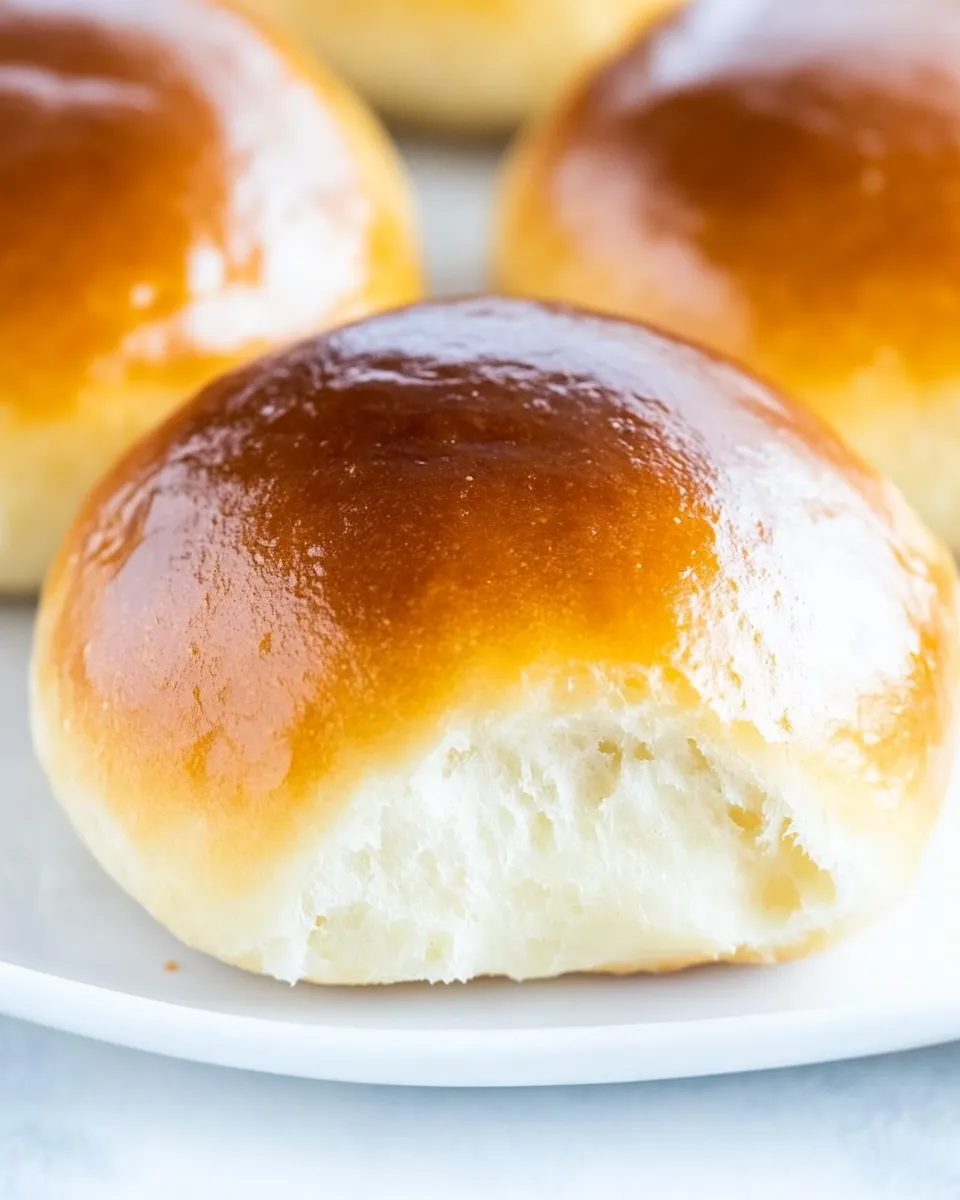
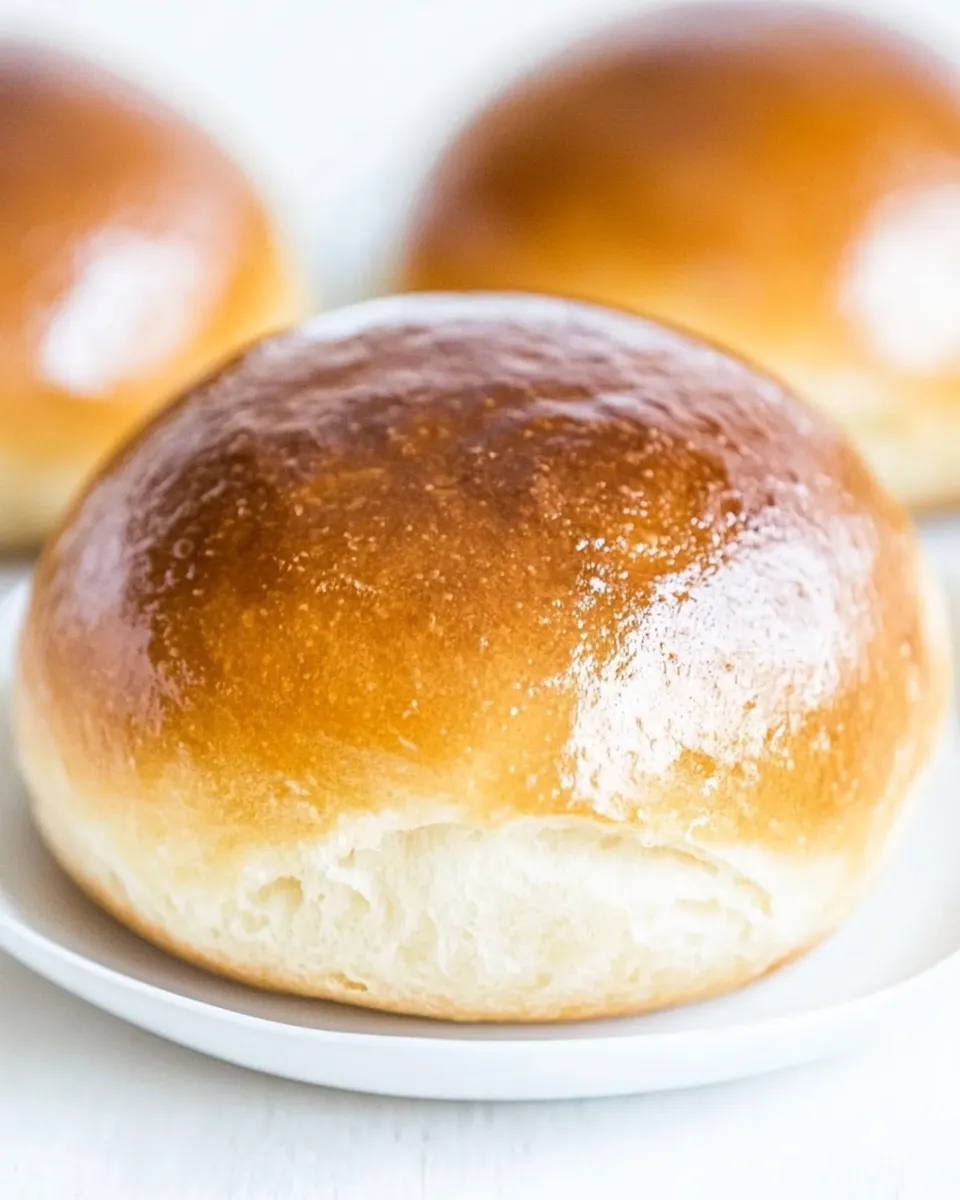
These buns are soft, slightly sweet, and pillowy without being overly rich. The potato adds moisture so the crumb stays tender for longer than a standard white bun. That texture makes the bun forgiving with juicy fillings—pulled pork, a saucy chicken sandwich, or standard burger patties all work well.
They also have a mild, neutral flavor that complements rather than competes. Guests notice the subtle richness from the milk, egg, and butter, but the bun still lets the sandwich filling shine. And because the method gives a consistent shape and crumb, they look as good as they taste.
What to Use Instead
- Russet potato — if you don’t have a russet, use a similar starchy potato like Yukon Gold; it will be slightly creamier but still work.
- All-purpose flour — if you prefer a slightly chewier bun, swap part of the flour for bread flour (start with 25% swap and adjust by feel).
- Whole milk — use 2% in a pinch; the buns will be slightly less rich but still fine.
- Unsalted butter — you can use lightly salted butter; omit any additional salt if your butter is very salty.
- Active yeast — instant yeast can be used without proofing; mix directly into the dry ingredients and skip the foam step, but reduce warm liquid temperature slightly.
What You’ll Need (Gear)
- Stand mixer with dough hook — makes kneading and incorporating butter easy. You can knead by hand if needed, but expect more time.
- Ricer or food mill — for the smoothest potato texture; a fine mash works if that’s what you have.
- Digital thermometer — handy to check water and milk temperatures and the buns’ internal temp if you want precision.
- Baking sheets and parchment — two sheets for the two rises; parchment keeps bottoms clean and helps transfer.
- Small oven-safe pan — to hold hot water and create oven steam for a nicer crust.
Avoid These Mistakes
- Skipping the tangzhong: it keeps the crumb softer longer and improves structure; don’t skip it.
- Using a wet, lumped potato: any unmilled lumps will create inconsistent dough texture; rice or very well mash the potato.
- Adding butter too cold: it won’t incorporate properly—soften the butter to room temperature and add in portions as directed.
- Rushing the proof: buns that aren’t puffy before baking will be dense; give them the full rise time in a warm spot.
- Overbaking: pull the buns at the color and check one for doneness; they should be golden and tender, not dark brown and dry.
Spring–Summer–Fall–Winter Ideas
- Spring: slice and fill with grilled asparagus, herbed ricotta, and lemon zest for a bright sandwich.
- Summer: use as burger buns for a backyard cookout—slightly toast and add a cool slaw to contrast the warmth of the patty.
- Fall: pair with roasted turkey, cranberry relish, and a smear of savory mayo for a seasonal handheld.
- Winter: make a cozy pulled pork melt with sharp cheddar and pickles; the bun’s softness holds the warm filling without falling apart.
Insider Tips
- Make the tangzhong first and let it cool fully; warm tangzhong will affect the proofing temperatures.
- When measuring flour, spoon it into the cup and level rather than scooping directly from the bag—this prevents over-flouring the dough.
- For even buns, weigh the portions. The directions give a guideline (~125 g each), but you can eyeball by packing into a heaping 1/2-cup measure.
- Create a warm proofing spot by using the oven with the light on (do not turn the oven on), or place the bowl near a warm stove; steady warmth speeds the rise without overproofing.
- Brush with the milk wash just before baking for the best sheen and gentle browning; if you brush too early, the wash can dry and dull the finish.
Storing Tips & Timelines
- Room temperature: store cooled buns in a resealable bag or airtight container for up to 2 days. Keep them uncut to retain moisture.
- Fridge: refrigerating will extend life to about 4–5 days but can dry the crumb; reheat gently to refresh.
- Freezer: wrap buns individually in plastic and place in a resealable freezer bag for up to 3 months. Thaw at room temperature or warm in a low oven.
- Reheating: refresh buns in a 325°F oven for 5–10 minutes (wrapped in foil if needed) or toast slices straight from a thaw for a crisp surface.
Handy Q&A
- Can I skip baking the potato and use instant mashed potato? You can substitute a small amount of instant potato flakes to mimic potato hydration, but freshness and flavor are best with a real baked potato.
- Why did my dough stay sticky? Sticky dough can mean under-kneaded gluten or excess moisture. Knead until elastic and the dough clears the bowl. If very sticky after full knead, add a tablespoon of flour at a time, but avoid over-drying.
- How do I know the buns are done? They should be golden brown and sound hollow when tapped on the bottom. The recipe lists an internal target of about 208°F if you use a thermometer.
- Can I make smaller or larger buns? Yes. Adjust shaping and baking time: smaller buns bake faster, and larger ones will take longer. Keep an eye on color and check internal temperature if unsure.
- Can I double the recipe? Yes. Use a larger mixer or knead in batches. Proof doubled dough in a suitably large, oiled container so it can double in size without overflowing.
Final Thoughts
These potato buns are worth the few extra steps. The tangzhong and baked potato team up to create an exceptionally soft, resilient roll that lifts simple meals—sandwiches, burgers, or toast favorites. Once you make a batch, you’ll appreciate the dependable texture and how well they handle saucy, substantial fillings.
Make a double batch and freeze half if you want a quick solution for future sandwiches. The process is deliberate but not difficult, and the payoff is a bun you’ll reach for again and again.

Homemade Potato Bun Recipe
Ingredients
Ingredients
- 8- to-10-ounce russet potato
- 4 cupsall-purpose flour
- 1/2 cupwater
- 3/4 cupwhole milk
- 1/3 cupsugar
- 1 packet active yeast
- 1 1/2 teaspoonscoarse salt
- 1 large egg
- 1/3 cupsoftened unsalted butter
Instructions
Instructions
- Preheat the oven to 400°F. Rinse and dry the russet potato, pierce several times with a fork, place on a parchment-lined baking sheet, and bake 60–70 minutes, until tender when pierced.
- While the potato bakes, prepare the tangzhong: measure 2 tablespoons of the all-purpose flour (from the 4 cups), 1/4 cup of the whole milk, and 1/4 cup of the water. Whisk these three together in a small saucepan until smooth.
- Cook the tangzhong over low heat, whisking constantly, until it becomes a thick paste (about 7–10 minutes). Transfer to a small bowl and let it cool to room temperature.
- From the 3/4 cup whole milk, measure and set aside 2 tablespoons for the final wash. Warm the remaining milk (the rest of the 3/4 cup after removing the 1/4 cup used in the tangzhong and the 2 tablespoons reserved for the wash) to 112–115°F. Warm the remaining water (the 1/2 cup total minus the 1/4 cup used in the tangzhong = 1/4 cup) to 112–115°F as well.
- In a small bowl, combine the warm milk and warm water, add 2 tablespoons of the sugar (from the 1/3 cup), and sprinkle in the active yeast. Whisk and let sit 5–7 minutes until foamy (a raft forms).
- In a separate large bowl, whisk together the remaining all-purpose flour (the 4 cups minus the 2 tablespoons reserved for tangzhong), the remaining sugar (the rest of the 1/3 cup after the 2 tablespoons used for the yeast), and the 1 1/2 teaspoons coarse salt until evenly mixed.
- Once the yeast mixture is foamy, transfer it to the bowl of a stand mixer fitted with the dough hook. Add the riced/bashed potato (see next step), then slowly add the flour mixture while mixing on low. Immediately add the whole egg and the cooled tangzhong, and continue mixing on low to medium until the dough comes together.
- Prepare the baked potato: remove it from the oven, let it rest 5–7 minutes until cool enough to handle, peel it, and pass it through a ricer or food mill (or mash very well) so it is smooth. Add the mashed potato to the mixer as directed in step 7.
- When the dough begins to pull away from the bowl and cling to the hook, add the 1/3 cup softened unsalted butter in three additions, waiting until each addition is fully incorporated before adding the next. Mix until the dough mostly clears the sides of the bowl and is smooth and elastic.
- Transfer the dough to a lightly oiled airtight container or a lightly oiled large bowl covered with plastic wrap or a lid. Let rise in a warm place about 1 hour, or until doubled in size.
- Punch down the dough and divide it into 10 equal pieces (about a heaping 1/2 cup packed or ~125 g each). Shape each piece into a tight ball by folding edges into the center and rolling on the counter to create a smooth, taut top.
- Place 5 dough balls on a parchment-lined baking sheet (space them evenly). Cover with a clean kitchen towel and let rise 1 hour, or until noticeably puffy and nearly doubled. Repeat with the remaining 5 balls on a second sheet.
- Place a small oven-safe pan on the bottom rack of the oven (you will add hot water to this pan to create steam). Preheat the oven to 375°F (use convection if available). When the oven is preheated, carefully pour hot tap water into the pan on the bottom rack to generate steam.
- Make the wash: whisk the 2 tablespoons of milk you set aside earlier and brush it lightly over the tops of the risen buns.
- Bake the buns at 375°F for 17–20 minutes, until golden brown and the internal temperature reaches about 208°F.
- Remove the buns from the oven and transfer to a cooling rack. Let cool to room temperature before serving or storing.
Equipment
- Oven
- parchment-lined baking sheet
- Fork
- Stand mixer
- dough hook
- Small Saucepan
- Small Bowl
- potato ricer or food mill or masher
- oven-safe pan (for steam)
- Basting brush
- Cooling rack
Notes
Make-Ahead:
You can make these hamburger buns up to 2 days ahead.
How to Store:
Cover and keep at room temperature for three days or in the refrigerator for up to 5 days. You can freeze these hamburger buns for up to 6 months. Thaw them at room temperature until thawed before serving.
If you
only have all-purpose flour, remove 1 tablespoon from the milk and 1 tablespoon from the water before mixing it with the sugar and yeast in procedure six.
You can
brush melted unsalted butter on the buns once they’re finished.
If you
do not have a ricer or food mill, thoroughly mash the peeled baked potato with a fork.
When using
instant yeast, you do not need to wait for a raft to form.