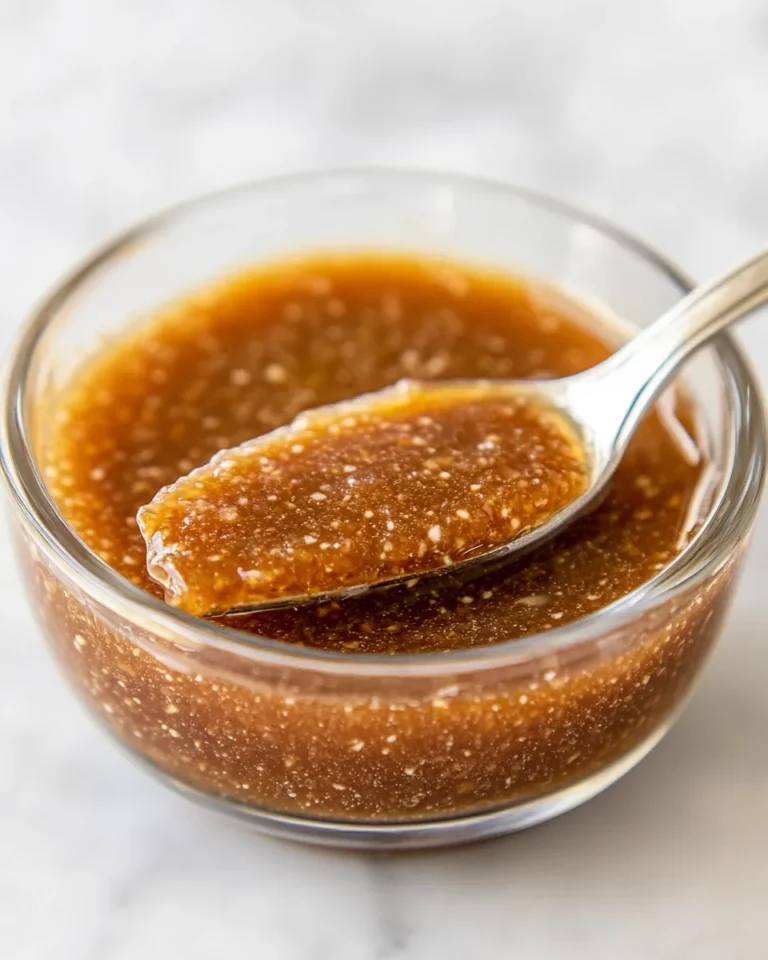
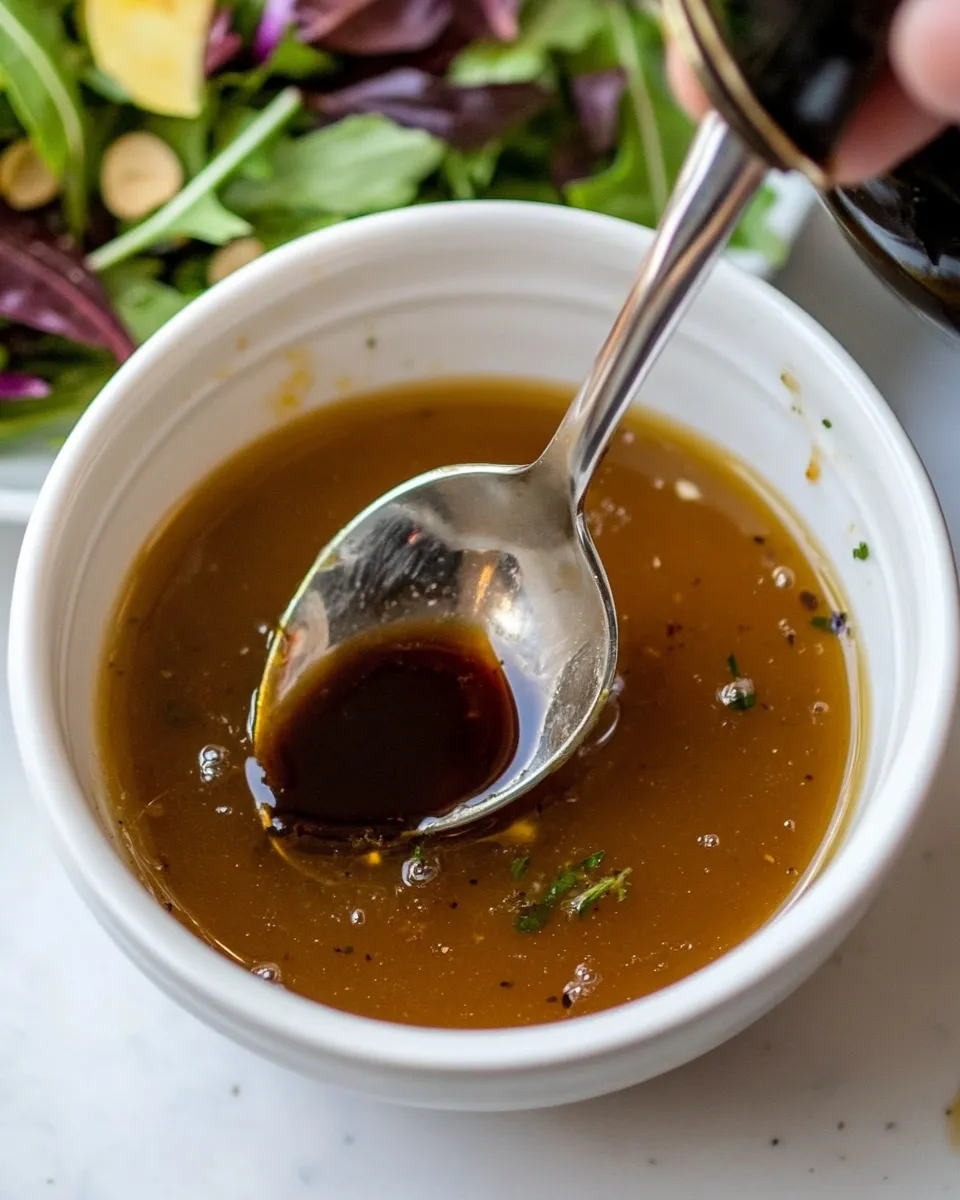
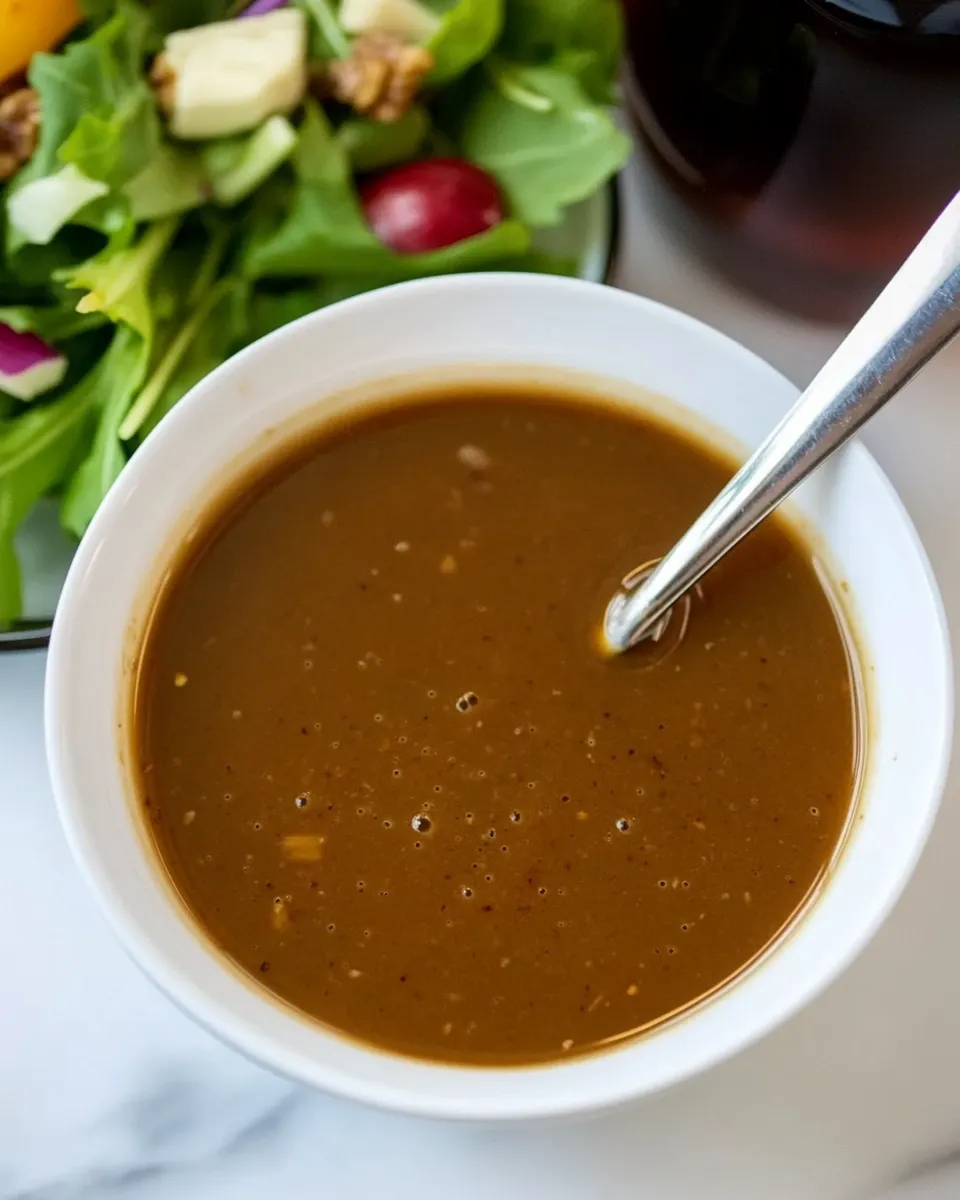
I reach for this honey-balsamic vinaigrette all the time. It’s a compact formula that brightens simple salads, lifts roasted vegetables, and acts as an easy finishing drizzle for grain bowls and grilled proteins. The balance is straightforward: sweet honey, tangy balsamic, a touch of mustard for stability, and olive oil to carry everything.
No fuss. The ingredients are pantry-stable, and the technique is intentionally minimal. A single crushed garlic clove gives a quick savory note without overpowering. Shake, taste, and you’re done. It’s the kind of dressing I make when I want something reliable that still tastes thoughtful.
Ingredients
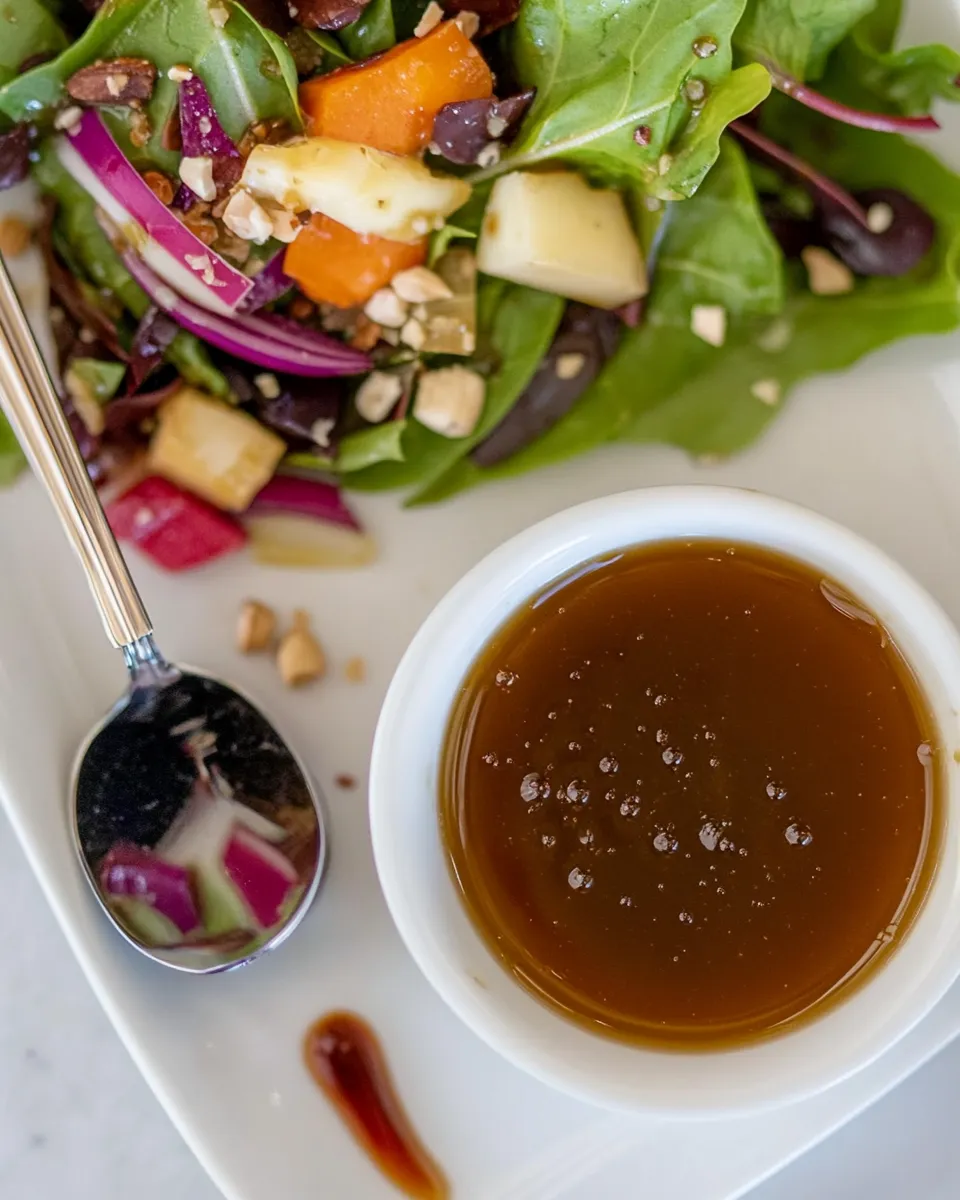
- 1 clove garlic, crushed — provides a gentle savory backbone; crush to release oils quickly.
- ¼ cup (63.75 ml) balsamic vinegar — the acidic, slightly sweet core of the dressing.
- 3 tablespoons honey — sweetener and texture agent that helps balance the vinegar.
- 1 tablespoon Dijon mustard — flavor and an emulsifier to help the oil and vinegar bind.
- ½ teaspoon (0.5 teaspoon) salt — seasons and amplifies flavors; start here and adjust to taste.
- ½ teaspoon (0.5 teaspoon) ground black pepper — a mild heat and peppery aroma.
- ¾ cup (162 ml) extra virgin olive oil — the fat that carries flavor and creates a smooth mouthfeel.
Build Honey-Balsamic Vinaigrette Step by Step
- Place the crushed garlic clove in the bottom of a mason jar or other airtight container.
- Add 1/4 cup (63.75 ml) balsamic vinegar, 3 tablespoons honey, 1 tablespoon Dijon mustard, 1/2 teaspoon salt, and 1/2 teaspoon ground black pepper to the jar.
- Secure the lid and shake vigorously until the honey is dissolved and the mixture is well combined (about 20–30 seconds).
- Remove the lid and pour in 3/4 cup (162 ml) extra-virgin olive oil.
- Replace the lid and shake vigorously until the dressing is emulsified and uniform in appearance (about 30–60 seconds).
- Use immediately or store in the refrigerator for up to 3 months. Shake well before each use.
Why This Recipe Is Reliable
Reliability comes from a small, intentional ingredient list and a simple method. Each component has a clear function: vinegar for acidity, honey for sweetness, mustard for stability, and oil for texture. There’s no blending or specialized equipment required — a jar and a firm wrist are all you need. That consistency removes variables and makes the outcome predictable.
The proportions are also forgiving. The vinegar-to-oil ratio here keeps the dressing bright without being overly acidic. Honey, at three tablespoons, tames the bite of the balsamic while still allowing its characteristic tang to come through. Dijon provides both flavor and emulsification, so you get a unified dressing rather than a quick separation. Even if you shake it again before serving, the emulsion holds long enough for plating and serving.
Salt and pepper levels are set to season the dressing without overpowering the garlic or vinegar. Because the recipe specifies measured amounts, you can reproduce the same dressing repeatedly. That’s the sort of dependability I value on weeknights and when I’m planning a simple dinner for friends.
Flavor-Forward Alternatives
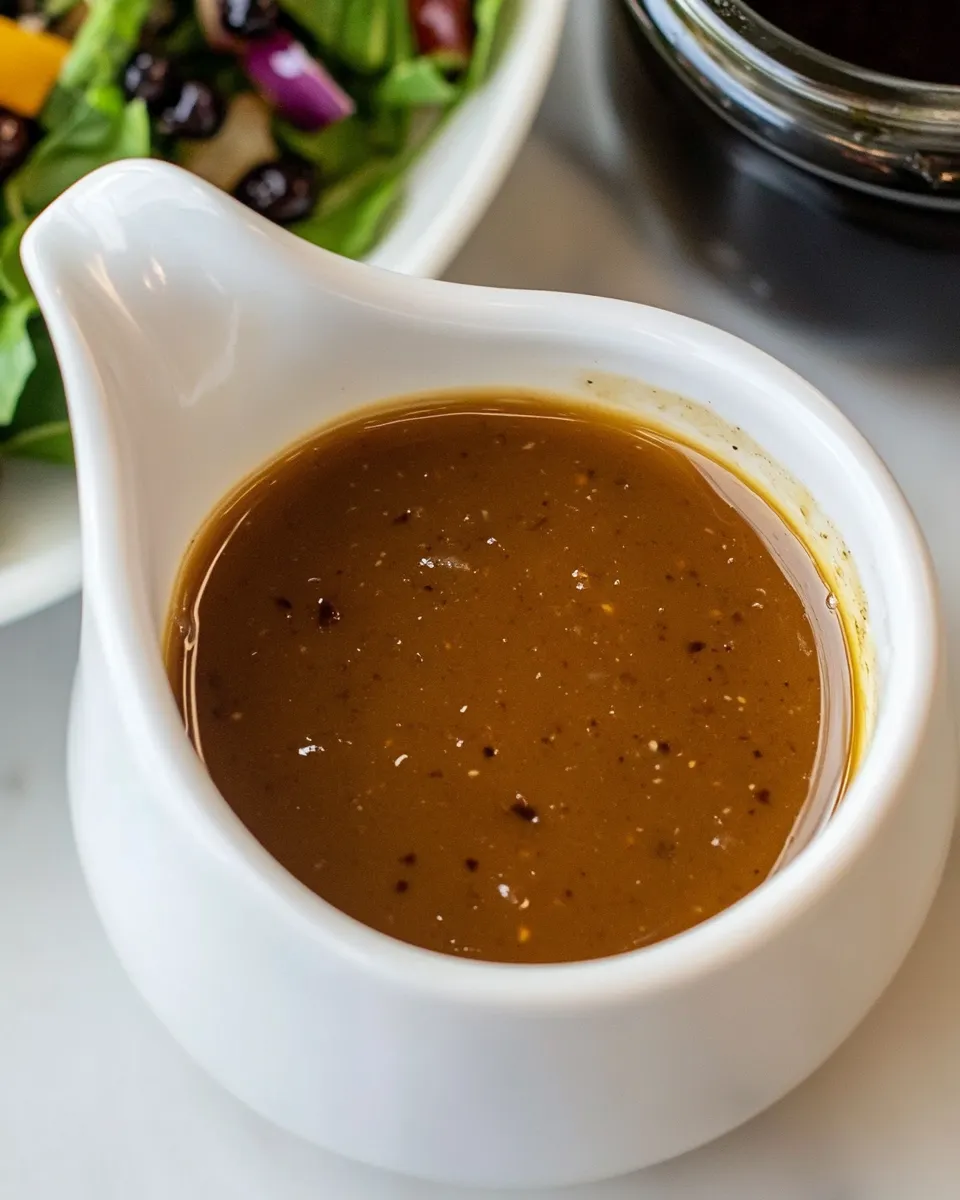
- More savory — increase the crushed garlic to two cloves if you want a stronger allium presence; crush and let sit in the vinegar for a few minutes before adding oil to mellow the raw edge.
- Less sweet — reduce the honey to 2 tablespoons if you prefer the balsamic to dominate; taste and add incrementally so it doesn’t become too tart.
- Smokier — finish with a tiny pinch of smoked paprika or a drop of high-quality smoked oil after emulsifying, but add sparingly so it doesn’t mask the balsamic.
- Tangier — swap half the balsamic for red wine vinegar for a sharper profile; keep quantities the same to maintain balance.
- Herby — fold in a tablespoon of minced fresh herbs (like parsley or chives) just before serving; this keeps herbs bright and prevents them from losing color in storage.
Kitchen Gear Checklist
- Mason jar or airtight container — the easiest vessel for shaking and storing the vinaigrette.
- Measuring spoons and cups — accurate measures keep this recipe consistent.
- Garlic press or small knife — to crush the garlic clove; crushing releases more flavor than slicing.
- Small whisk (optional) — if you prefer to whisk in a bowl instead of shaking.
- Strainer (optional) — if you want to remove the garlic before serving for a smoother finish.
Easy-to-Miss Gotchas
Two things I see trip people up: temperature and emulsification. If your oil is very cold, the dressing can seize or appear cloudy. Let the oil sit at room temperature if it’s been refrigerated. Conversely, if ingredients are too warm the vinaigrette can separate faster; refrigeration slows separation when storing.
Another common oversight is not dissolving the honey into the vinegar and mustard first. If the honey isn’t broken down before you add the oil, you can end up with sticky pockets and uneven sweetness. That’s why the step to shake the vinegar-honey-mustard mixture first is important — it creates a uniform base before the oil is introduced.
Finally, pungent garlic can dominate if left whole in the dressing during storage. Crushing releases flavor immediately; if you plan to keep the dressing for a while, consider removing the garlic after a day or two, or reduce to a half clove for milder garlic presence.
Seasonal Flavor Boosts
Seasonality can be subtle but effective. In spring and summer, add fresh, tender herbs to brighten the vinaigrette: basil, chives, or tarragon complement the sweetness of honey and the depth of balsamic. Chop them finely and stir them in right before serving to preserve their freshness.
In fall and winter, consider small additions that lean into heartier flavors: a teaspoon of maple syrup in place of one tablespoon of honey for a woody note, or a pinch of ground cinnamon to echo baking spices. Roasted root vegetables love this dressing because the sweet-savory contrast plays well with caramelized edges.
Author’s Commentary
I keep a jar of this vinaigrette in my fridge most weeks. It’s the dressing I choose when I want a balance that won’t compete with a composed salad — it supports ingredients without stealing the show. I also like that it travels well: jar it up and toss it into a picnic basket without worried babysitting.
When I test dressings, I always pair them with a plain base: mixed baby greens, a little flaked sea salt, and a simple protein or cheese. This helps me evaluate whether the vinaigrette needs more acid, more sweetness, or a touch more salt. Over time I learned to trust that first 20–30 second shake step where the honey dissolves. It’s the small action that makes the whole dressing come together reliably.
Freezer-Friendly Notes
This vinaigrette is not suitable for freezing. The olive oil can change texture and separate when frozen and thawed, and emulsions generally do not survive freezing well. Instead, store it in the refrigerator in an airtight container for up to 3 months as the recipe states. When refrigerated, the dressing may thicken or partially solidify; bring it to room temperature briefly and shake to restore consistency.
Reader Questions
- Can I use a different oil? — Yes. Lighter olive oil or a neutral oil will reduce the fruity character; keep the amount the same. Stronger-flavored oils will change the balance.
- Is there a substitute for Dijon? — Mustard acts as an emulsifier; yellow mustard or whole-grain mustard can work, but flavor will shift. Use the same tablespoon measure and adjust to taste.
- How long will it keep? — Up to 3 months in the refrigerator. Shake before each use. Remove the garlic if you’re storing long-term for a milder profile.
- Can I make it in a blender? — Yes, but it’s unnecessary for this texture; a jar and a good shake are sufficient. If using a blender, pulse the oil in slowly to form an emulsion without overheating.
Before You Go
When you make this, taste after emulsifying and adjust only if you need to. A quarter teaspoon more salt or a squeeze of extra vinegar can nudge the dressing where you want it without changing the structure. Keep a jar in your fridge and use it to rescue tired greens, brighten roasted veg, or finish a bowl. It’s simple, dependable, and one of those go-to recipes I expect will become part of your regular rotation, too.
Honey-Balsamic Vinaigrette
Ingredients
Ingredients
- 1 clovegarlic crushed
- 1/4 cup 63.75 mlbalsamic vinegar
- 3 tablespoonshoney
- 1 tablespoonsdijon mustard
- 1/2 teaspoon 0.5 teaspoonsalt
- 1/2 teaspoon 0.5 teaspoonground black pepper
- 3/4 cup 162 mlextra virgin olive oil
Instructions
Instructions
- Place the crushed garlic clove in the bottom of a mason jar or other airtight container.
- Add 1/4 cup (63.75 ml) balsamic vinegar, 3 tablespoons honey, 1 tablespoon Dijon mustard, 1/2 teaspoon salt, and 1/2 teaspoon ground black pepper to the jar.
- Secure the lid and shake vigorously until the honey is dissolved and the mixture is well combined (about 20–30 seconds).
- Remove the lid and pour in 3/4 cup (162 ml) extra-virgin olive oil.
- Replace the lid and shake vigorously until the dressing is emulsified and uniform in appearance (about 30–60 seconds).
- Use immediately or store in the refrigerator for up to 3 months. Shake well before each use.
Equipment
- Mason jar or airtight container
- Measuring Spoons
- Measuring Cup
Notes
Nutritional values are based on the whole recipe