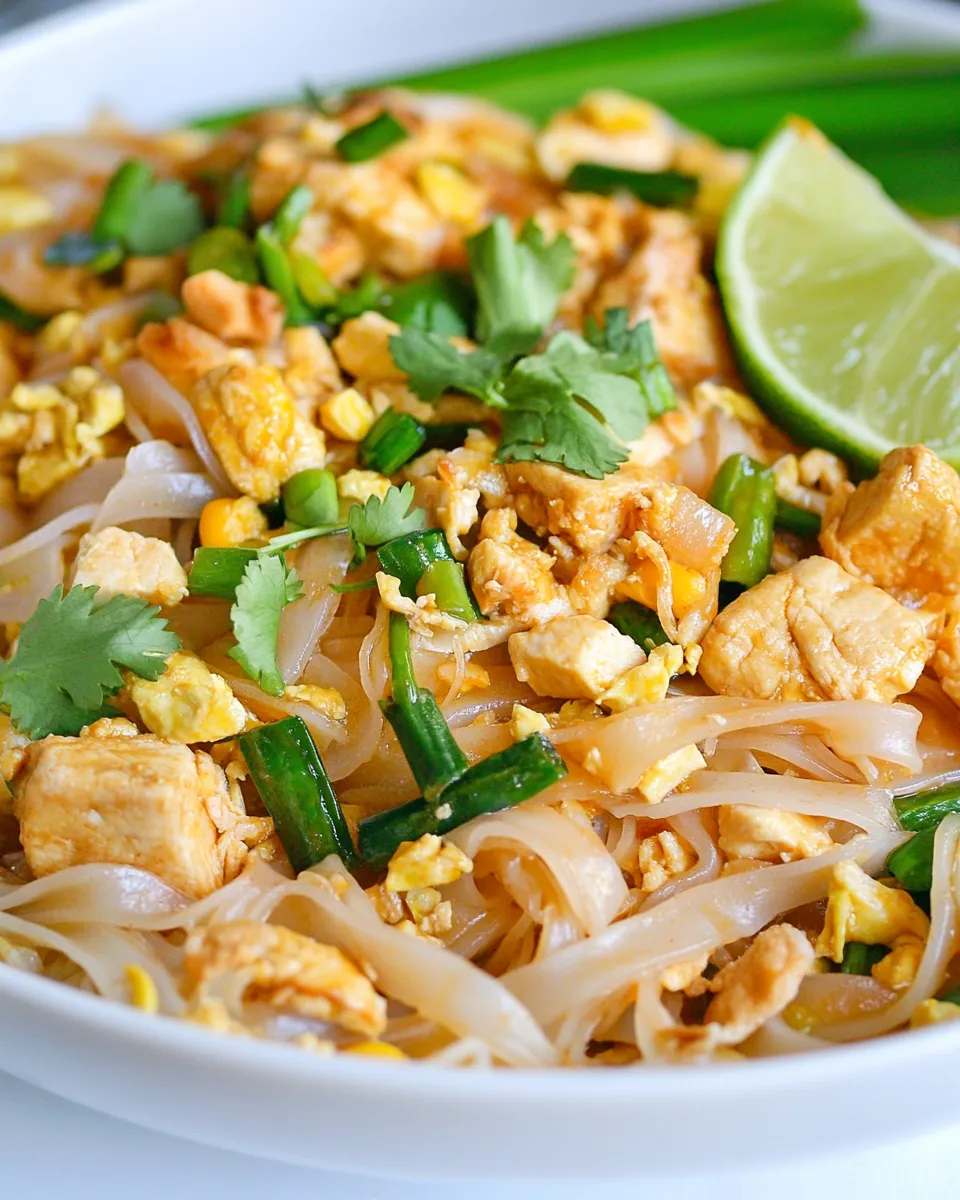
I make Pad Thai at home more often than I’d like to admit. It’s bright, balanced, and fast once you get the rhythm: protein, eggs, aromatics, sauce, noodles, and crunch. This version uses chicken and pantry-friendly Asian staples, so weeknight dinners feel a little more special without a lot of fuss.
Below you’ll find the ingredient rundown, the exact step-by-step we used in the test kitchen, sensible swaps, and practical notes that keep the dish tasting fresh every time. Read through once, set up your mise en place, and the stir-fry comes together in minutes.
Ingredients at a Glance
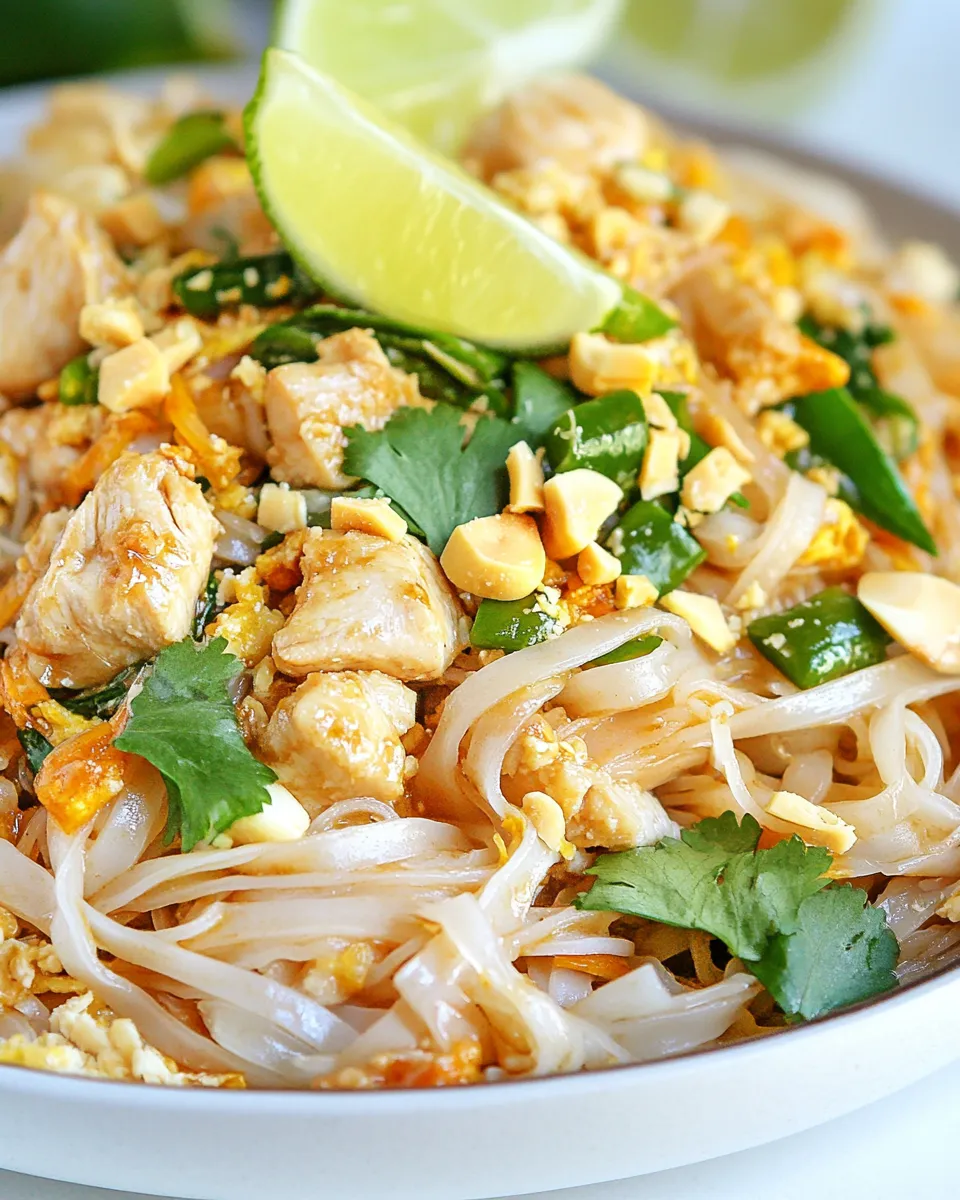
- 1 lb. Chicken Breast — cut into 1/2″ cubes; cooks quickly and is the main protein, so keep pieces uniform for even cooking.
- 6 tbsp. Vegetable Oil — can also use Sesame Oil over Veggie Oil; oil gives the pan heat and helps the noodles and aromatics fry without sticking.
- 3 Eggs — scrambled and folded in for texture and richness.
- 3 tbsp. Diced Onions — build sweetness and body for the sauce to cling to.
- 1 tbsp. Minced Garlic — aromatic backbone; add when the oil is hot but not smoking.
- 3 Green Onions — cut into 1″ pieces; they add a fresh, oniony bite and color.
- 14 oz. Bean Sprouts — can, drained; provide crunch and a clean, fresh finish.
- cup Dry Roasted Peanuts — for garnish and crunch; chop if you prefer smaller bites.
- 8 oz. Thai Rice Noodles — cooked, rinsed and drained; they soak up the sauce and must be separated before tossing.
- 3 tbsp. Brown Sugar — balances salt and acidity in the sauce.
- 3 tbsp. Thai Fish Sauce — provides umami and salt; it’s the signature savory note.
- 2 tbsp. Tamarind Puree — gives that classic tang and slight fruity acidity.
- 1 tbsp. Lime Juice — brightens and lifts the sauce at the end.
- ¼ tsp. Ground Cayenne Pepper — adds heat; adjust to taste.
- 1 tbsp. Water — helps loosen the sauce for even coating.
Make Pad Thai at Home: A Simple Method
- Heat a large skillet over medium-high heat. Add 1 tbsp of the vegetable oil. Add the 1 lb chicken breast (cubed into 1/2″ pieces) in a single layer and cook, stirring occasionally, until no longer pink and cooked through, about 5–7 minutes. Transfer the cooked chicken to a plate and set aside.
- Wipe the skillet if there is excessive browned residue, then return it to medium-high heat and add 1 tbsp vegetable oil. Crack and lightly whisk the 3 eggs in a small bowl, pour into the skillet, and scramble until just set. Transfer the cooked eggs to the plate with the chicken.
- Add 2 tbsp vegetable oil to the skillet and heat over medium. Add the 3 tbsp diced onions and 1 tbsp minced garlic; sauté, stirring often, until fragrant and beginning to brown, about 2–3 minutes.
- Add the 3 green onions (cut into 1″ pieces) to the skillet and cook 1–2 minutes more, until the green onions are slightly softened but still bright.
- In a small bowl, whisk together 3 tbsp brown sugar, 3 tbsp Thai fish sauce, 2 tbsp tamarind puree, 1 tbsp lime juice, 1/4 tsp ground cayenne pepper, 1 tbsp water, and the remaining 2 tbsp vegetable oil until combined.
- Pour the sauce into the skillet with the onions and garlic, reduce heat to medium-low, and simmer 1 minute to warm and slightly thicken the sauce.
- Return the cooked chicken and eggs to the skillet. Add the 8 oz cooked, rinsed, and drained Thai rice noodles (break apart any clumps) and the 14 oz drained bean sprouts. Toss gently with tongs or a spatula until the sauce evenly coats the noodles, chicken, eggs, and bean sprouts and everything is heated through, about 2–3 minutes.
- Remove from heat and serve hot, garnished with the dry roasted peanuts.
Why This Recipe is a Keeper
This Pad Thai balances sweet, salty, tangy, and spicy in a straightforward sauce you whisk in one bowl. The method separates the protein and eggs early so everything finishes at the same time without overcooking. Using cooked, rinsed rice noodles avoids the gummy texture you get when they’re added straight from a pot of boiling water.
It’s fast, forgiving, and adaptable. If you keep tamarind, fish sauce, rice noodles, and peanuts on hand, you can build a satisfying takeout-quality meal in under 30 minutes. The structure—protein, eggs, aromatics, sauce, noodles, crunch—scales and swaps easily without losing the classic Pad Thai character.
Ingredient Swaps & Substitutions
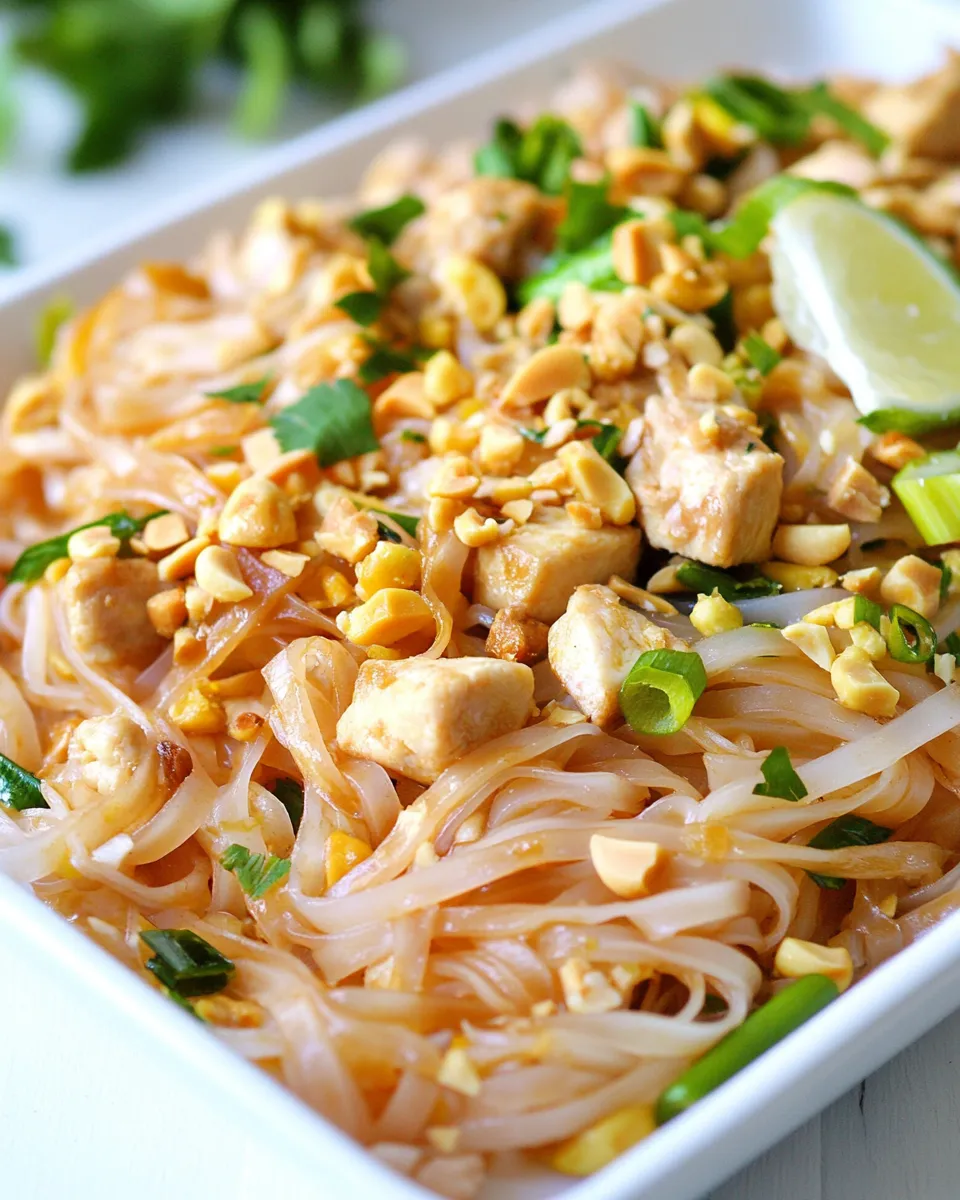
- Protein: Swap chicken for shrimp or thinly sliced pork if you prefer seafood or pork. Adjust cooking times—shrimp cooks very quickly.
- Oil: Use a neutral oil if you don’t have vegetable oil; a touch of toasted sesame oil at the end adds fragrance.
- Peanuts: If someone is allergic, omit peanuts and serve with toasted sunflower seeds or crispy shallots instead.
- Fish Sauce: For a milder savory note, reduce fish sauce slightly and increase a splash of soy sauce.
- Sugar: Brown sugar can be swapped for palm sugar or regular granulated sugar if needed, keeping sweetness balanced against the tamarind.
Setup & Equipment
Essentials
- Large skillet or wok — a roomy surface lets you toss noodles without spilling and promotes even searing.
- Tongs or a sturdy spatula — for gentle tossing so the noodles don’t break up too much.
- Small bowl and whisk — for mixing the sauce so it’s ready when the aromatics are cooked.
Nice to Have
- A heatproof silicone spatula — helpful for scraping and folding without sticking.
- Fine-mesh colander — for rinsing and draining the cooked rice noodles cleanly.
Slip-Ups to Skip
- Overcrowding the pan — it causes steaming, not searing. Cook chicken in a single layer and give it room.
- Adding noodles straight from boiling water — they’ll continue to cook and turn mushy; use cooked, rinsed, and drained noodles.
- Skipping the sauce whisk — if the sauce isn’t well combined it won’t coat everything evenly.
- Under-seasoning at the end — taste before plating and adjust lime or fish sauce to lift or deepen flavor.
Substitutions by Diet
If you need to adapt this Pad Thai for specific diets, here are practical substitutions and what they change in the final dish.
- Vegetarian/Vegan: Replace chicken with firm tofu (pressed and cubed) and swap fish sauce for tamari plus a touch of seaweed or mushroom-based seasoning for umami. Omit eggs or use scrambled tofu.
- Gluten-Free: Ensure your fish sauce is certified gluten-free (many are) and use rice noodles (already gluten-free). Avoid any additives that contain wheat.
- Lower-Sugar: Cut the brown sugar by half and compensate with a splash more tamarind or lime juice to maintain tang.
- Nut-Free: Omit peanuts and add extra crunch with toasted seeds or crispy fried garlic.
Notes from the Test Kitchen
Timing
We prep everything before turning on the heat. Once the pan gets hot the recipe moves fast: cook the chicken, wipe the pan, scramble the eggs, then finish the aromatics and sauce. If you’re cooking for more than two people, keep the cooked chicken warm and fold it back in at the end so it doesn’t dry out.
Flavor Adjustments
Taste as you go. If the sauce seems flat, a squeeze more lime juice brightens it. If it’s too sharp, a touch more brown sugar balances the acidity. The fish sauce is the backbone—start with what the recipe calls for, then adjust by small increments.
Texture Tips
Bean sprouts should remain crisp; add them at the last moment. Break apart the rice noodles gently with your fingers or tongs before tossing to prevent long clumps.
Make-Ahead & Storage
Store leftover Pad Thai in an airtight container in the fridge for up to 3 days. The noodles will absorb sauce and soften over time; to refresh, reheat gently in a skillet over medium-low with a splash of water or oil and a squeeze of lime to revive brightness.
For meal prep: keep the sauce and cooked protein separate from the noodles and bean sprouts. Reheat the protein with aromatics quickly, add warmed noodles and sauce, then finish with bean sprouts and peanuts just before serving for the best texture.
Handy Q&A
Q: Can I use pre-cooked rotisserie chicken?
A: Yes. Add it near the end to warm through, since it’s already cooked. This saves time but may change the texture slightly.
Q: My noodles fell apart while tossing. What happened?
A: They were likely overcooked in the pot or handled too aggressively. Use firm-but-cooked rice noodles and separate them gently before tossing.
Q: I don’t have tamarind—can I skip it?
A: Tamarind gives that tart backbone. If you must skip it, try a mix of lime juice and a tiny splash of vinegar—but the flavor won’t be quite the same.
Q: Is fish sauce essential?
A: It’s the primary source of savory, umami saltiness. For a vegetarian swap, use tamari and consider adding a little mushroom powder or miso for depth.
In Closing
This Pad Thai at home is a dependable, weeknight-friendly rhythm: brown the chicken, quick-scramble the eggs, sweat the aromatics, whisk a balanced sauce, and finish with noodles, sprouts, and peanuts. Keep your mise en place tidy, taste as you go, and don’t be afraid to tweak lime, sugar, or fish sauce to fit your palate.
Make the recipe once, and you’ll see where small adjustments matter. After that, Pad Thai becomes one of those dishes you can pull off confidently any night of the week.
Pad Thai at Home
Ingredients
Ingredients
- 1 lb.Chicken Breastcut into 1/2″ cubes
- 6 tbsp.Vegetable Oilcan also use Sesame Oil over Veggie Oil
- 3 Eggs
- 3 tbsp.Diced Onions
- 1 tbsp.Minced Garlic:
- 3 Green Onionscut into 1″ pieces
- 14 oz.Bean Sproutscan drained
- cupDry Roasted Peanuts
- 8 oz.Thai Rice Noodlescooked rinsed and drained
- 3 tbsp.Brown Sugar
- 3 tbsp.Thai Fish Sauce
- 2 tbsp.Tamarind Puree
- 1 tbsp.Lime Juice
- 1/4 tsp.Ground Cayenne Pepper
- 1 tbsp.Water
Instructions
Instructions
- Heat a large skillet over medium-high heat. Add 1 tbsp of the vegetable oil. Add the 1 lb chicken breast (cubed into 1/2″ pieces) in a single layer and cook, stirring occasionally, until no longer pink and cooked through, about 5–7 minutes. Transfer the cooked chicken to a plate and set aside.
- Wipe the skillet if there is excessive browned residue, then return it to medium-high heat and add 1 tbsp vegetable oil. Crack and lightly whisk the 3 eggs in a small bowl, pour into the skillet, and scramble until just set. Transfer the cooked eggs to the plate with the chicken.
- Add 2 tbsp vegetable oil to the skillet and heat over medium. Add the 3 tbsp diced onions and 1 tbsp minced garlic; sauté, stirring often, until fragrant and beginning to brown, about 2–3 minutes.
- Add the 3 green onions (cut into 1″ pieces) to the skillet and cook 1–2 minutes more, until the green onions are slightly softened but still bright.
- In a small bowl, whisk together 3 tbsp brown sugar, 3 tbsp Thai fish sauce, 2 tbsp tamarind puree, 1 tbsp lime juice, 1/4 tsp ground cayenne pepper, 1 tbsp water, and the remaining 2 tbsp vegetable oil until combined.
- Pour the sauce into the skillet with the onions and garlic, reduce heat to medium-low, and simmer 1 minute to warm and slightly thicken the sauce.
- Return the cooked chicken and eggs to the skillet. Add the 8 oz cooked, rinsed, and drained Thai rice noodles (break apart any clumps) and the 14 oz drained bean sprouts. Toss gently with tongs or a spatula until the sauce evenly coats the noodles, chicken, eggs, and bean sprouts and everything is heated through, about 2–3 minutes.
- Remove from heat and serve hot, garnished with the dry roasted peanuts.
Equipment
- Large Skillet
- Small Bowl
- Tongs
- Spatula
Notes
Tamarind Puree: 4 tablespoons
Lime Juice: 2 tablespoons
Ground Cayenne Pepper: 1/2 teaspoon
Vegetable Oil: 4 tablespoons (included in the sauce mixture)
Water: 2 tablespoons