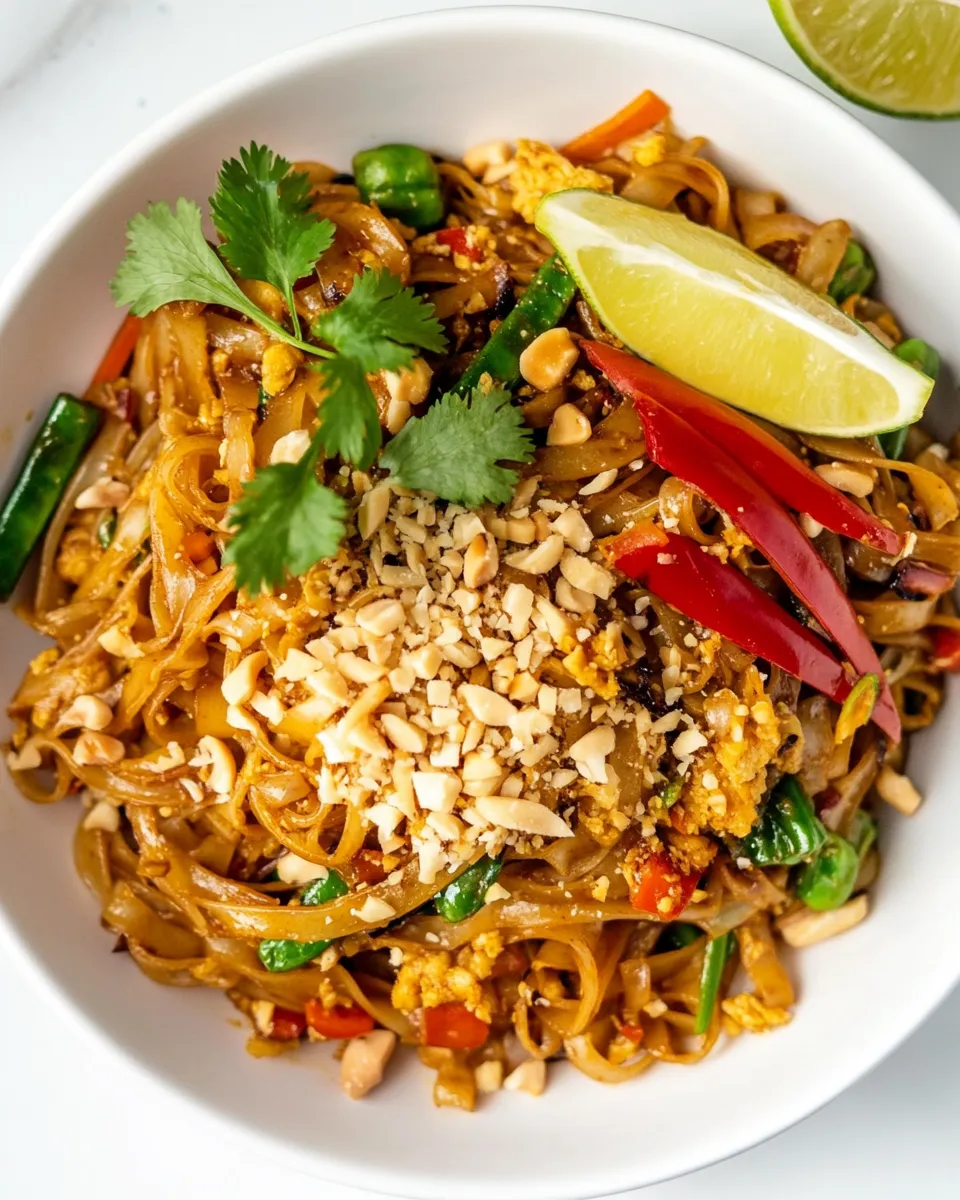
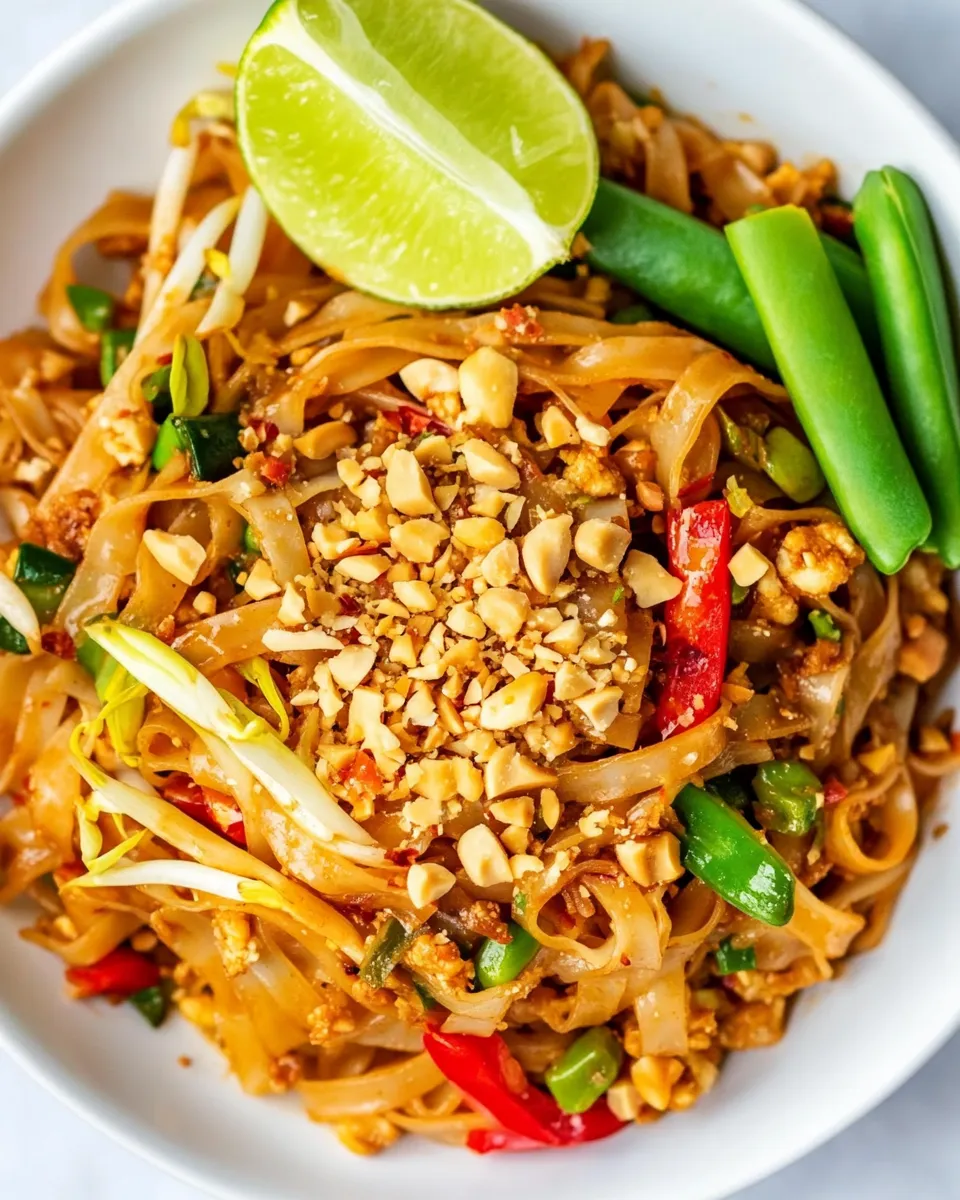
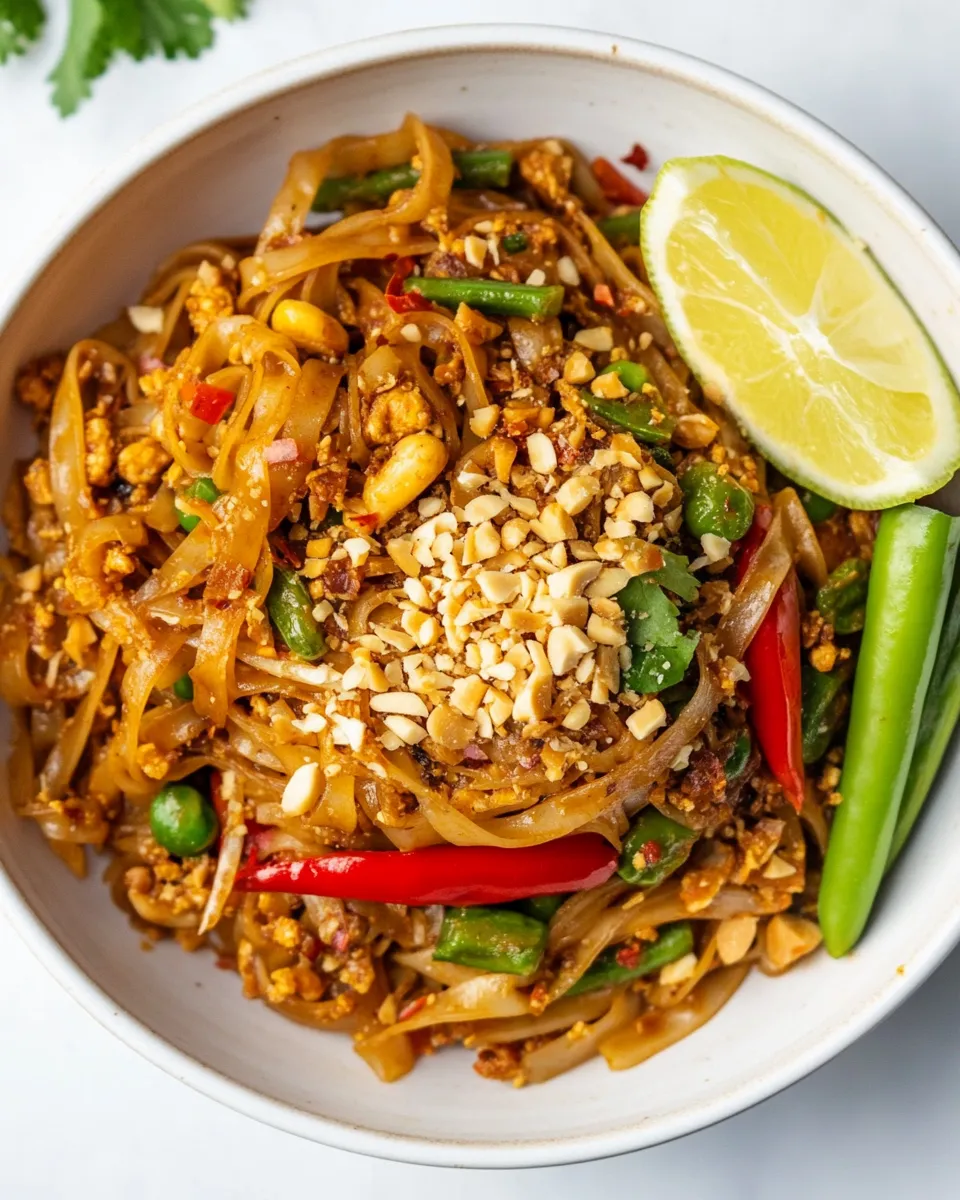
This is my go-to version of a classic Thai street-food favorite, rebuilt completely plant-based without losing any of the tangy, sweet, crunchy charm. It’s balanced, bright, and quick once your mise en place is done. I like it because it hits sauce, texture, and aromatics all at once—rice noodles, crisp tofu, soft shallot, and those bright garlic chives at the finish.
You’ll find the technique here is straightforward: soak the noodles, crisp the tofu, build the sauce, and toss everything together. I keep the ingredient list compact so the flavors can sing. Follow the steps in order and the results are reliably restaurant-level.
Below I walk you through the ingredients and the exact steps, explain why each element matters, offer simple swaps, and flag the common missteps I see even seasoned cooks make. If you want a quick reference, skim the stepwise instructions; if you want to go deeper, read on for tips and seasonal serving ideas.
Ingredient Rundown
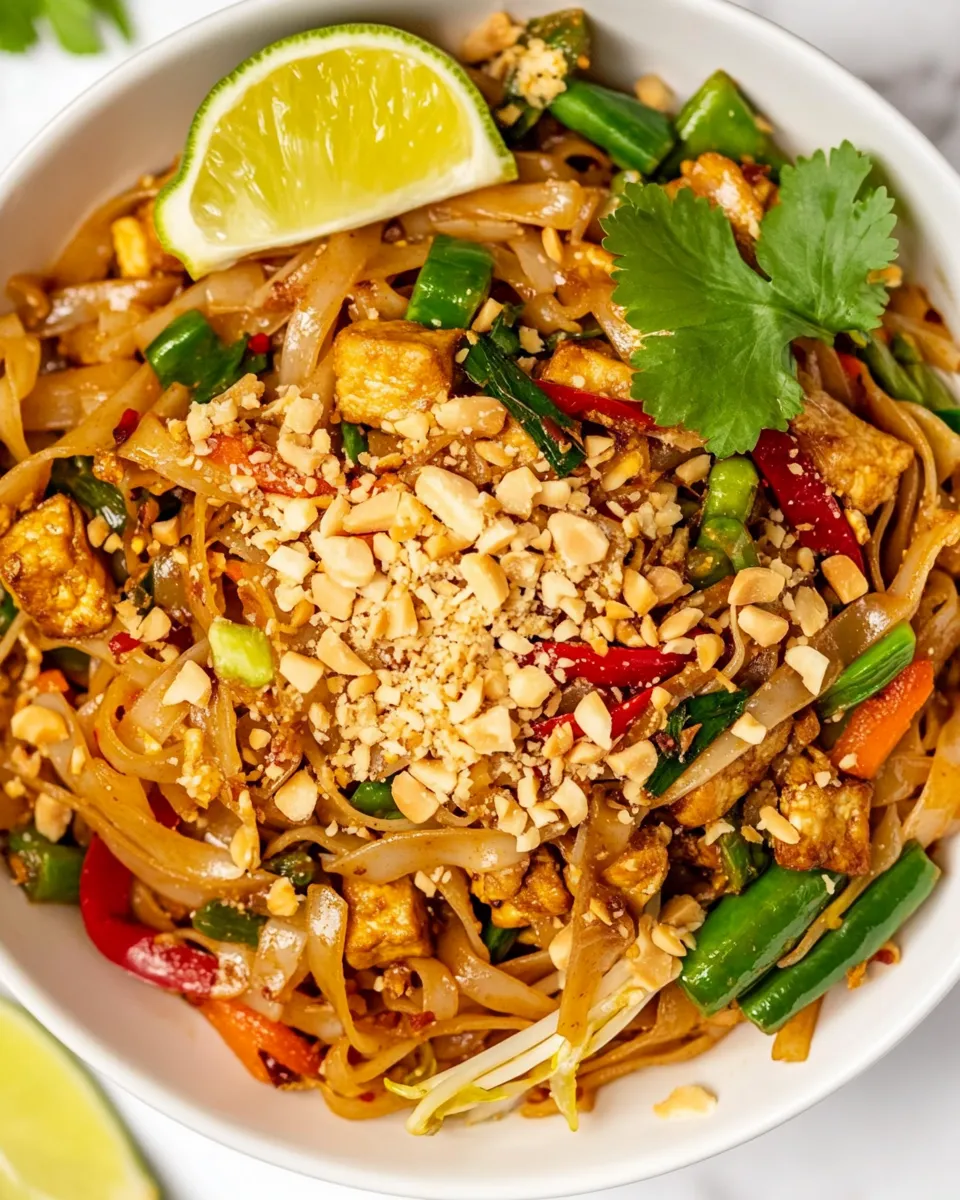
- 4 ounces dry pad Thai rice noodles — The backbone of the dish; soak until tender but not mushy.
- 2 tbsp soy sauce — Provides salty umami and a base for the sauce.
- 1 tbsp vegan fish sauce or sub more soy — Optional, adds depth and savory complexity; sub extra soy sauce if you prefer.
- 1 tbsp tamarind concentrate or 3-4 tbsp paste — The tangy heart of Pad Thai; balances the sugar and soy.
- 3 tablespoons water — Used to thin the sauce so it coats the noodles evenly.
- 2-3 tbsp high-heat oil avocado, vegetable, or peanut — For frying and stir-frying; choose one with a high smoke point.
- 8 oz super firm tofu* cut into 1/2” cubes — Protein and texture; super-firm holds up best when pan-fried.
- 1 shallot cut into thin slices — Adds sweetness and a gentle onion flavor when sautéed.
- 3 cloves of garlic finely minced — Brings aromatic punch; cook briefly so it doesn’t burn.
- 1-2 teaspoons chili flakes optional — Heat option; add to taste while sautéing aromatics.
- 1 carrot peeled and cut into matchsticks; optional — For color and crunch; keeps the dish bright.
- 1 bell pepper thinly sliced; optional — Adds sweetness and body; slice thin so it cooks quickly.
- 3 packed tbsp palm sugar or brown sugar — Sweetness to balance tamarind and soy; packed measure brings the right intensity.
- 2 ½ cups bean sprouts loosely packed — Adds a fresh, crunchy finish; fold in at the end to keep them crisp-tender.
- 7-10 stalks garlic chives OR 5 green onions cut into 2” pieces — Fresh, oniony herbaceousness; chives are classic, green onions work fine.
- ¼ cup peanuts crushed — Toasted crunch and savory finish; scatter on top just before serving.
Vegan Pad Thai Made Stepwise
- Prepare the noodles: Place the dry rice noodles in a heatproof bowl or pot and cover with boiling water. Soak according to the package instructions until tender (about 10 minutes for some noodles). Drain well and set aside.
- Prep ingredients while the noodles soak: Cut the tofu into 1/2″ cubes. Thinly slice the shallot. Finely mince the garlic. If using, peel and cut the carrot into matchsticks and thinly slice the bell pepper. Crush the peanuts. Cut the garlic chives (7–10 stalks) or green onions (5) into 2″ pieces. Measure out the other ingredients.
- Make the sauce: In a small bowl whisk together 2 tbsp soy sauce, 1 tbsp tamarind concentrate (or 3–4 tbsp tamarind paste), 3 tbsp water, and 1 tbsp vegan fish sauce (optional — or substitute extra soy sauce). Set the sauce aside.
- Heat the pan: Warm a wok or large sauté pan over medium-high heat. Add 2–3 tbsp high-heat oil and swirl to coat the bottom and sides.
- Pan-fry the tofu: Add the tofu cubes in a single layer and cook 5–7 minutes, turning only occasionally, until the tofu is golden and crisp on most sides. Remove the tofu to a plate and set aside. (If doubling the recipe, fry the tofu in batches.)
- Cook the aromatics: If the pan looks dry, add a little more oil. Add the sliced shallot, minced garlic, and 1–2 tsp chili flakes (optional). Sauté 2–3 minutes, until the shallot softens and the garlic is fragrant and lightly golden.
- Add vegetables (optional): If using, add the carrot matchsticks and sliced bell pepper. Stir-fry 3–5 minutes until the vegetables are tender-crisp.
- Make the sauce in the pan: Push the shallot/vegetable mixture to one side of the pan. Add 3 packed tbsp palm sugar (or brown sugar) to the empty side, then pour the soy-tamarind mixture over the sugar. Stir everything together until the sugar dissolves and the sauce simmers and thickens slightly, about 2–3 minutes.
- Combine noodles and tofu: Add the drained noodles and the cooked tofu to the pan. Use tongs to toss everything with the sauce until evenly coated and most of the extra liquid has evaporated and the noodles are heated through. If the noodles are still too firm, add water in 2-tbsp increments and cook a few more minutes.
- Finish and serve: Turn off the heat and add 2 1/2 cups loosely packed bean sprouts and the garlic chives or green onions. Toss to combine and let sit until the bean sprouts wilt slightly (about 30–60 seconds). Transfer to plates, top with the crushed 1/4 cup peanuts, and serve warm.
Reasons to Love Vegan Pad Thai
This version keeps the soul of Pad Thai intact: sweet, sour, salty, and textural contrast. The tamarind gives a bright, citrusy sour that feels lighter than vinegar. Palm sugar or brown sugar rounds that acid with caramel notes. Crispy tofu stands in for shrimp or eggs without taking over the dish.
It’s fast. With the noodles soaking while you prep, active cook time is short. It’s flexible. You can add more vegetables or keep it minimal and let the sauce carry the plate. And it scales well—double the sauce and tofu if you’re feeding a crowd.
Quick Replacement Ideas
- Vegan fish sauce — If you don’t have it, using more soy sauce keeps the saltiness; consider a splash of mushroom soy for extra umami.
- Tamarind concentrate/paste — Tamarind is distinctive; if you’re out, a squeeze of lime plus a little brown sugar can mimic the tang-sweet balance in a pinch.
- Palm sugar — Brown sugar is an acceptable sub and is called out in the recipe; adjust slightly to taste if your brown sugar is moist.
- Garlic chives — Green onions are listed and work well; use the white and green parts for layered flavor.
- High-heat oil — Avocado, vegetable, or peanut oil are listed; olive oil isn’t recommended because of its lower smoke point and stronger flavor.
Cook’s Kit
Keep these tools close for a smooth cook:
- Wok or large sauté pan — A wide surface lets you toss noodles and keep heat even.
- Tongs — Essential for tossing noodles without breaking them up.
- Heatproof bowl — For soaking the rice noodles.
- Small bowl and whisk — For mixing the sauce so it emulsifies cleanly when added to the pan.
- Spatula or wooden spoon — For scraping up caramelized sugar and incorporating the sauce.
Mistakes Even Pros Make
Here are the common slip-ups and how to avoid them:
- Over-soaking noodles — Rice noodles go from tender to mush quickly. Follow package times and drain thoroughly.
- Not drying tofu — Wet tofu won’t crisp. Press it briefly, pat dry, then fry in a single layer without crowding.
- Burning the garlic — Garlic should be golden, not brown; add it after the shallot softens and lower the heat if it browns too fast.
- Skipping the sugar step — Adding sugar directly in the pan and letting it melt gives the sauce a slightly caramelized note that blends with tamarind. Don’t try to skip it.
- Adding bean sprouts too early — Toss them in at the end so they remain crisp-tender; they should only wilt briefly.
Spring–Summer–Fall–Winter Ideas
Spring
Add a handful of pea shoots or thin asparagus tips in step 7 for fresh, green notes. Finish with a few lime wedges if you have them on hand.
Summer
Brighten things up with extra raw bean sprouts and a crisp cucumber salad on the side. Thinly sliced red bell pepper brings color and sweetness.
Fall
Use more substantial vegetables like thinly sliced bok choy or shredded carrots to make it heartier as the weather cools.
Winter
Add roasted sweet potato cubes or toss in sautéed mushrooms for an earthier, comforting plate that still benefits from the tamarind brightness.
If You’re Curious
Why tamarind? It’s the traditional souring agent in Pad Thai and gives a fruity, almost citrusy tang that’s different from vinegar or lime. Palm sugar is traditional but brown sugar is a practical stand-in. The interplay of those two with soy sauce is what makes the sauce addictive.
If you love spice, add chili flakes earlier so the oil picks up that heat. Prefer milder dishes? Hold the chili and serve red pepper on the side. If you want more nuttiness, toast the peanuts lightly before crushing them.
Meal Prep & Storage Notes
Pad Thai stores well for 1–2 days in the refrigerator if packed tightly in an airtight container. The noodles will absorb some sauce and soften; to refresh, gently reheat in a skillet with 1–2 tsp water or oil to loosen the sauce and crisp up the tofu again.
To meal-prep: keep the sauce mixed separately and store bean sprouts and chives/raw garnishes in a separate container. Reheat noodles and tofu, then finish with fresh sprouts and chives to preserve crunch and brightness.
Quick Questions
- Can I make this gluten-free? — Use gluten-free soy sauce (tamari) and check your vegan fish sauce substitute for gluten.
- Can I skip tofu? — Yes. Increase vegetables or add tempeh for a firmer bite.
- How do I stop noodles from clumping? — Drain thoroughly, toss with a touch of oil if needed, and combine in the hot pan so the sauce distributes evenly.
Time to Try It
Make a batch the first time exactly as written so you learn the balance of tamarind, sugar, and soy. Taste at step 8: the sauce should be sweet, tangy, and salty in harmony. Adjust very slightly if needed—more sugar, a splash more tamarind, or another teaspoon of soy.
Set a timer for the first few steps to keep the pan moving: 5–7 minutes for tofu, 2–3 minutes for aromatics, and a couple of minutes for the sauce to come together. That small discipline yields big rewards: noodles that are glossy, tofu that’s golden, and a finished plate worthy of repeating.
When you make it, take note of the balance and tweak only one element at a time. Then invite friends, top with crushed peanuts, and enjoy the crunch and brightness. Happy cooking—and do tell me how yours turned out.
Vegan Pad Thai
Ingredients
Ingredients
- 4 ouncesdry pad Thai rice noodles
- 2 tbspsoy sauce
- 1 tbspvegan fish sauceor sub more soy
- 1 tbsptamarind concentrateor 3-4 tbsp paste
- 3 tablespoonswater
- 2-3 tbsphigh-heat oilavocado vegetable, or peanut
- 8 ozsuper firm tofu*cut into 1/2” cubes
- 1 shallotcut into thin slices
- 3 clovesof garlicfinely minced
- 1-2 teaspoonschili flakesoptional
- 1 carrotpeeled and cut into matchsticks; optional
- 1 bell pepperthinly sliced; optional
- 3 packed tablespoonspalm sugaror brown sugar
- 2 1/2 cupsbean sproutsloosely packed
- 7-10 stalks garlic chives OR 5 green onionscut into 2” pieces
- 1/4 cuppeanutscrushed
Instructions
Instructions
- Prepare the noodles: Place the dry rice noodles in a heatproof bowl or pot and cover with boiling water. Soak according to the package instructions until tender (about 10 minutes for some noodles). Drain well and set aside.
- Prep ingredients while the noodles soak: Cut the tofu into 1/2" cubes. Thinly slice the shallot. Finely mince the garlic. If using, peel and cut the carrot into matchsticks and thinly slice the bell pepper. Crush the peanuts. Cut the garlic chives (7–10 stalks) or green onions (5) into 2" pieces. Measure out the other ingredients.
- Make the sauce: In a small bowl whisk together 2 tbsp soy sauce, 1 tbsp tamarind concentrate (or 3–4 tbsp tamarind paste), 3 tbsp water, and 1 tbsp vegan fish sauce (optional — or substitute extra soy sauce). Set the sauce aside.
- Heat the pan: Warm a wok or large sauté pan over medium-high heat. Add 2–3 tbsp high-heat oil and swirl to coat the bottom and sides.
- Pan-fry the tofu: Add the tofu cubes in a single layer and cook 5–7 minutes, turning only occasionally, until the tofu is golden and crisp on most sides. Remove the tofu to a plate and set aside. (If doubling the recipe, fry the tofu in batches.)
- Cook the aromatics: If the pan looks dry, add a little more oil. Add the sliced shallot, minced garlic, and 1–2 tsp chili flakes (optional). Sauté 2–3 minutes, until the shallot softens and the garlic is fragrant and lightly golden.
- Add vegetables (optional): If using, add the carrot matchsticks and sliced bell pepper. Stir-fry 3–5 minutes until the vegetables are tender-crisp.
- Make the sauce in the pan: Push the shallot/vegetable mixture to one side of the pan. Add 3 packed tbsp palm sugar (or brown sugar) to the empty side, then pour the soy-tamarind mixture over the sugar. Stir everything together until the sugar dissolves and the sauce simmers and thickens slightly, about 2–3 minutes.
- Combine noodles and tofu: Add the drained noodles and the cooked tofu to the pan. Use tongs to toss everything with the sauce until evenly coated and most of the extra liquid has evaporated and the noodles are heated through. If the noodles are still too firm, add water in 2-tbsp increments and cook a few more minutes.
- Finish and serve: Turn off the heat and add 2 1/2 cups loosely packed bean sprouts and the garlic chives or green onions. Toss to combine and let sit until the bean sprouts wilt slightly (about 30–60 seconds). Transfer to plates, top with the crushed 1/4 cup peanuts, and serve warm.
Equipment
- Heatproof bowl
- Small Bowl
- wok or large sauté pan
- Tongs
- Plate
Notes
Sugar:Pad Thai is traditionally made with palm sugar, but this can be hard to find in grocery stores. The next best alternative would be to use coconut sugar, followed by brown sugar. Brown sugar is slightly more sweet, so you can reduce it to 1-2 tbsp if desired.
Tamarind:Tamarind is an essential component to Pad Thai and adds a delightfully tangy flavor! I like to buy tamarind concentrate as a little goes a long way and it keeps for a long time in the fridge. If you cannot find tamarind near you, replace it with the juice of 1 lime and 1 teaspoon of rice vinegar.
Make It Eggy:Add ¼-½ tsp black salt at end
To add seafood flavor:Add 1 tbsp nori flakes at end, or to taste