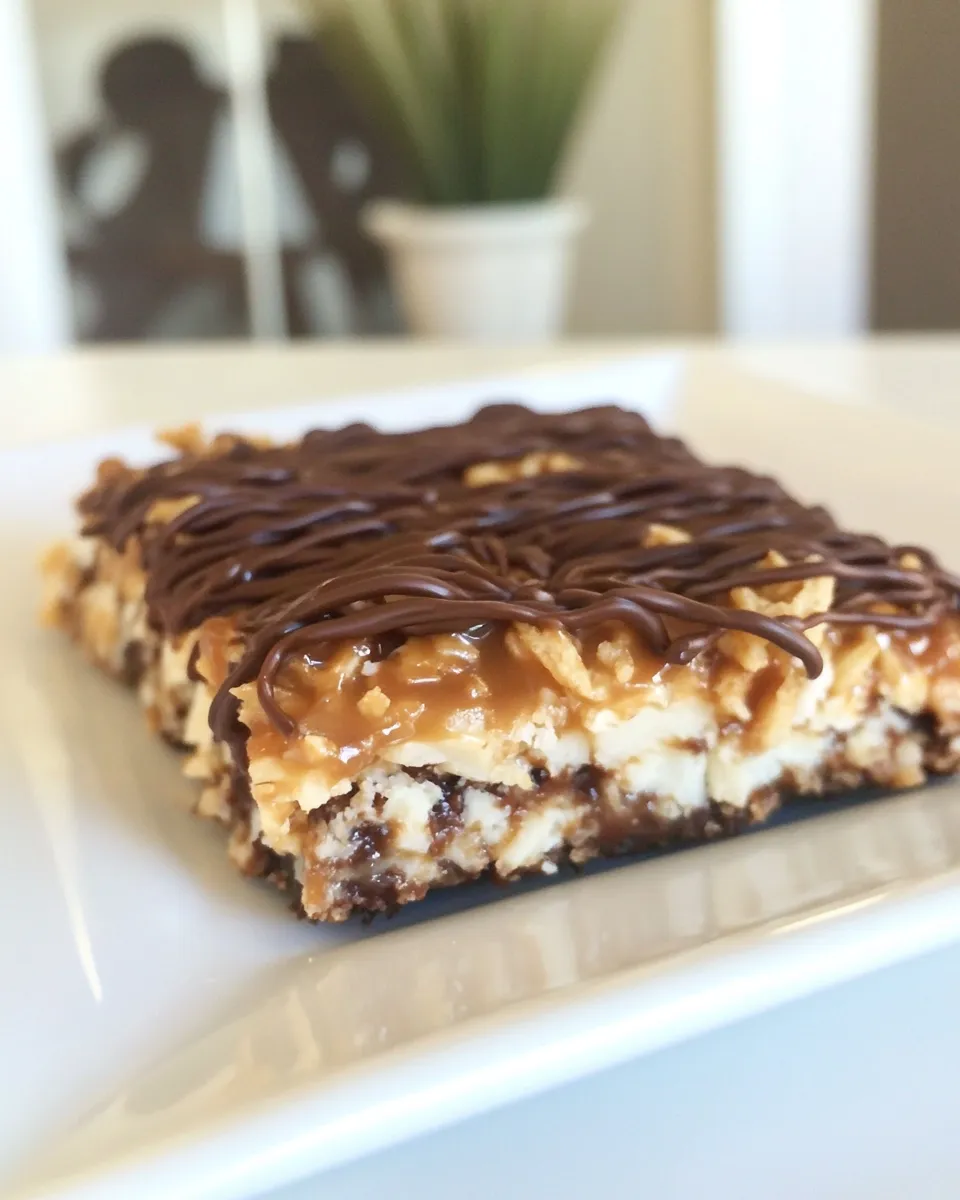
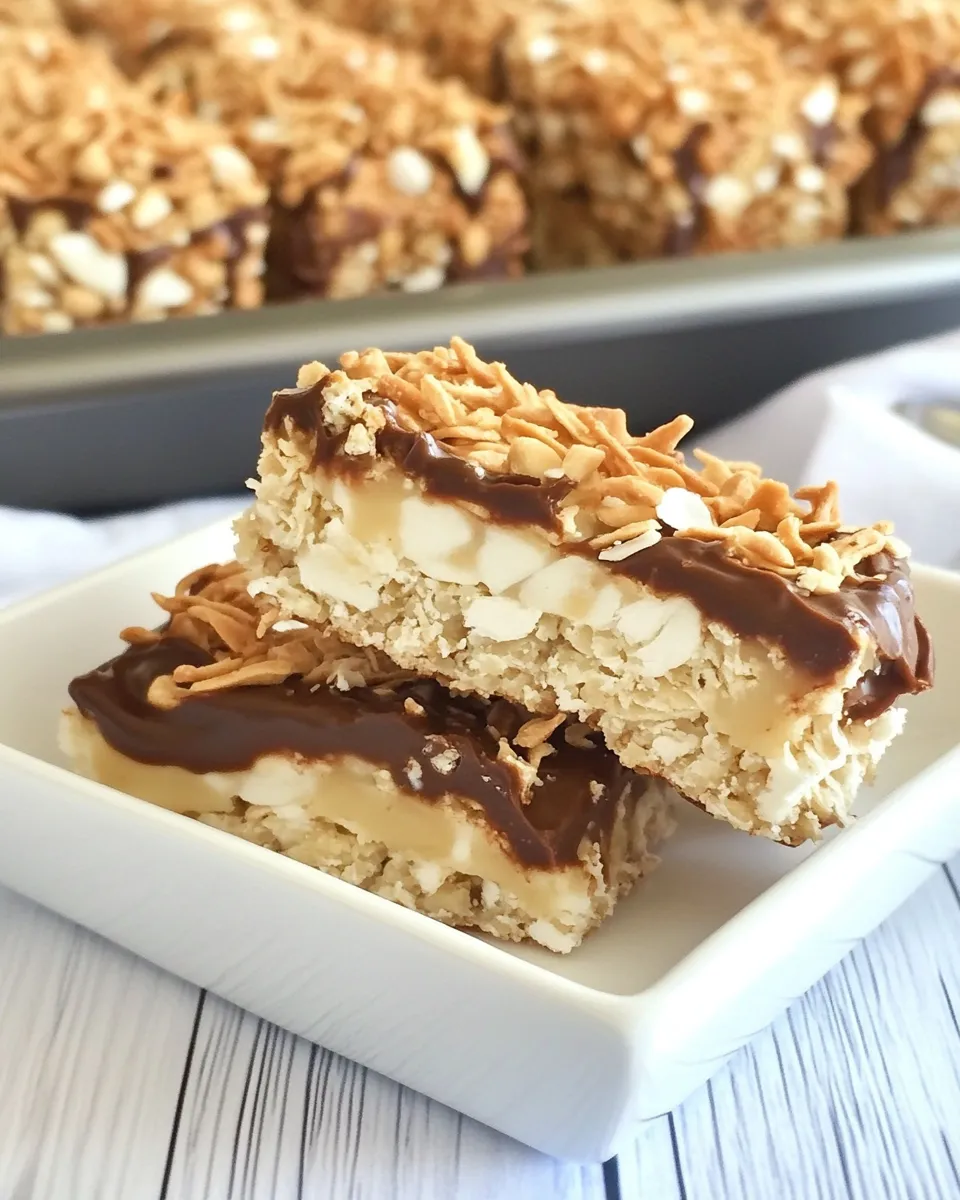
There are a few desserts that feel like a warm, familiar hug—Samoas Bars are one of them. They pack that perfect trio of buttery shortbread, chewy toasted coconut swirled in caramel, and a crisp chocolate finish. If you love coconut-caramel-chocolate, these bars give you everything in a neat, shareable square.
This recipe is straightforward and forgiving. It moves in clear stages: make the shortbread base, toast the coconut, melt caramel and combine, then top with chocolate. I’ll walk you through what to expect at each step and how to fix common issues along the way.
What Goes In
- ½ cup granulated sugar — sweetens the shortbread base and helps it brown lightly.
- ¾ cup unsalted butter, softened — provides the rich, tender texture in the cookie base; softened makes creaming easier.
- 1 large egg — binds the base and gives structure.
- ½ teaspoon vanilla extract — brightens the flavor of the base.
- 2 cups all-purpose flour — the structure for the cookie crust; measure by spooning into the cup and leveling for accuracy.
- ¼ teaspoon salt — seasons the base; balances the sweetness.
- 3 cups shredded coconut — toasted and mixed with caramel for the chewy topping; choose sweetened or unsweetened based on preference.
- 12 ounces chewy caramels — the caramel component; chewy caramels melt into a glossy, stretchy layer.
- ¼ teaspoon salt — added to the caramel mix to sharpen flavor (this is the “remaining” salt called for in the method).
- 3 tablespoons whole milk — loosens the caramel so it melts smoothly and spreads easily.
- 20 ounces chocolate chips — for dipping and drizzling; semi-sweet or dark work best to balance the sweetness of the caramel and coconut.
Samoas Bars — Do This Next
- Preheat the oven to 350°F. Line a 9×13-inch baking dish with parchment paper, leaving an overhang for easy removal.
- In a large bowl, use a hand mixer to cream ¾ cup softened unsalted butter and ½ cup granulated sugar until creamy and light.
- Add 1 large egg and ½ teaspoon vanilla extract to the butter mixture and mix until incorporated.
- Add 2 cups all-purpose flour and ¼ teaspoon salt to the bowl and mix just until combined; the mixture will be crumbly.
- Press the crumbly dough evenly into the bottom of the prepared pan to form the cookie base. Bake for 20–25 minutes, until the edges are lightly golden. Remove from oven and let the crust cool in the pan while you toast the coconut.
- Spread 3 cups shredded coconut in a single layer on a baking sheet. Toast in the 350°F oven, tossing occasionally, for 10–15 minutes until slightly golden. Remove and set aside to cool.
- Unwrap 12 ounces chewy caramels into a microwave-safe bowl. Add 3 tablespoons whole milk and the remaining ¼ teaspoon salt. Microwave in 30-second intervals, stirring between each, until the caramels are fully melted and the mixture is smooth.
- Stir the toasted coconut into the melted caramel until evenly combined. Immediately spread the caramel-coconut mixture evenly over the cooled cookie base. Allow the layered bars to cool completely (room temperature or refrigerated) so the caramel sets.
- Use the parchment overhang to lift the set bars from the pan and place on a cutting surface. Cut into squares or your desired shapes.
- Put 20 ounces chocolate chips in a microwave-safe bowl and melt in 30-second intervals, stirring well between each interval, until smooth. Dip the bottom of each bar into the melted chocolate, letting excess drip off, and place the chocolate-dipped bars onto a parchment-lined baking sheet.
- Put the remaining melted chocolate into a zip-top bag, snip a corner, and pipe lines of chocolate over each square. Refrigerate the bars until the chocolate hardens, then serve.
Why I Love This Recipe
It hits the same flavor profile every time: buttery shortbread, chewy caramel, nutty toasted coconut, and chocolate. Those contrasts—crisp base, chewy topping, and snap of chocolate—make each bite interesting. The steps are tidy and logical, so it’s a good recipe to make with kids or to tidy into an afternoon baking session.
Beyond flavor, the technique is satisfying. You press a simple dough into a pan, toast coconut, melt caramels, and assemble. Each stage is forgiving: if the base is a touch crumbly the caramel tames it; if the caramel isn’t perfectly smooth, the coconut helps mask texture. It’s a recipe that rewards patience at the cool-down stage when the bars set up and the flavors meld.
Texture-Safe Substitutions
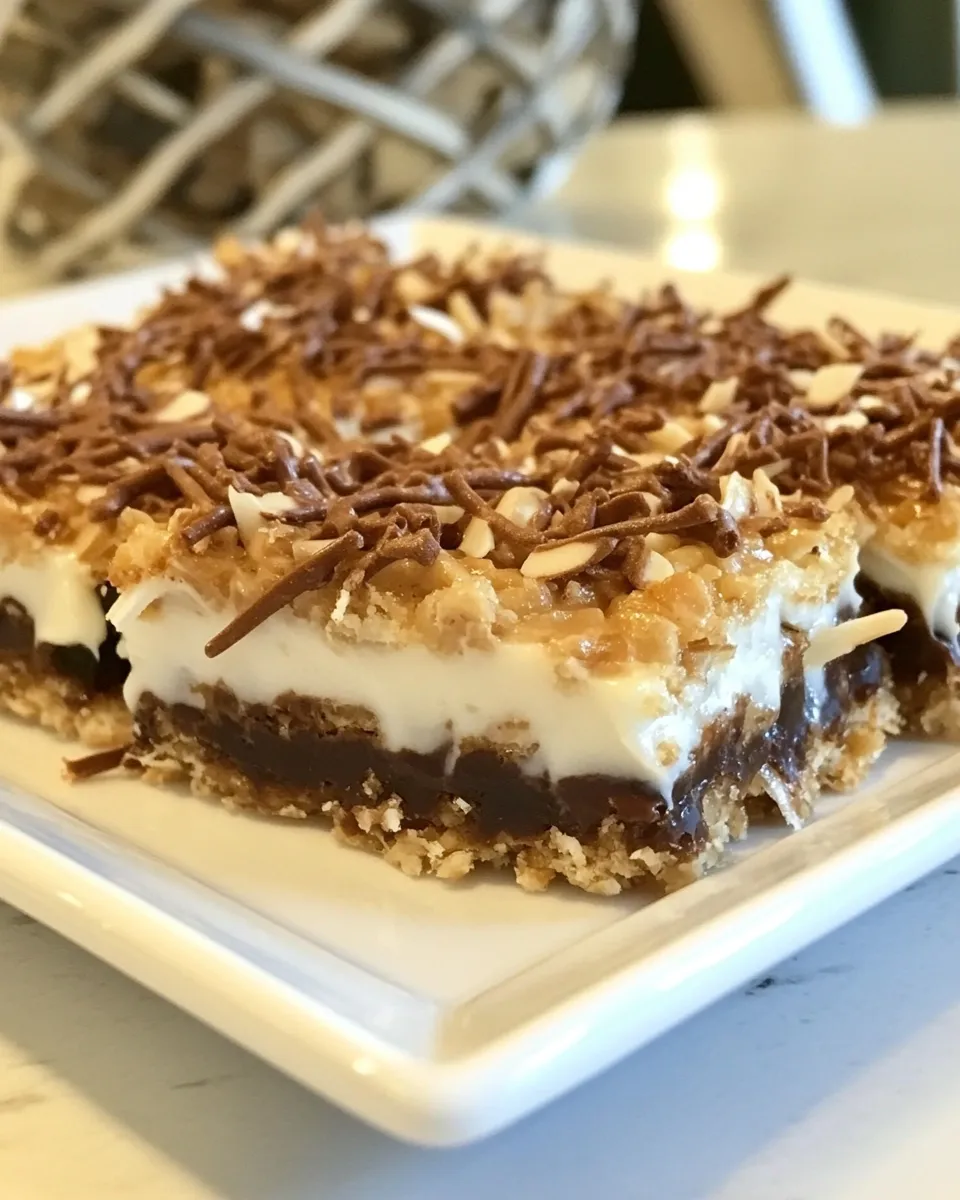
If you need to change one element but want to keep textures consistent, here are safe swaps:
- Butter — stick to unsalted butter for the base; if you must swap, use the same weight of stick margarine, but expect a slightly different flavor.
- Coconut — if shredded coconut is too intense, use lightly toasted flaked coconut for a chewier, more pronounced coconut bite.
- Caramels — avoid thin caramel sauce substitutions; use individually wrapped chewy caramels as called for so the set is firm enough to cut cleanly.
- Chocolate — chips melt differently than couverture, but they work. If you want a smoother finish, use chocolate bars chopped finely and tempered or melted carefully.
Equipment & Tools
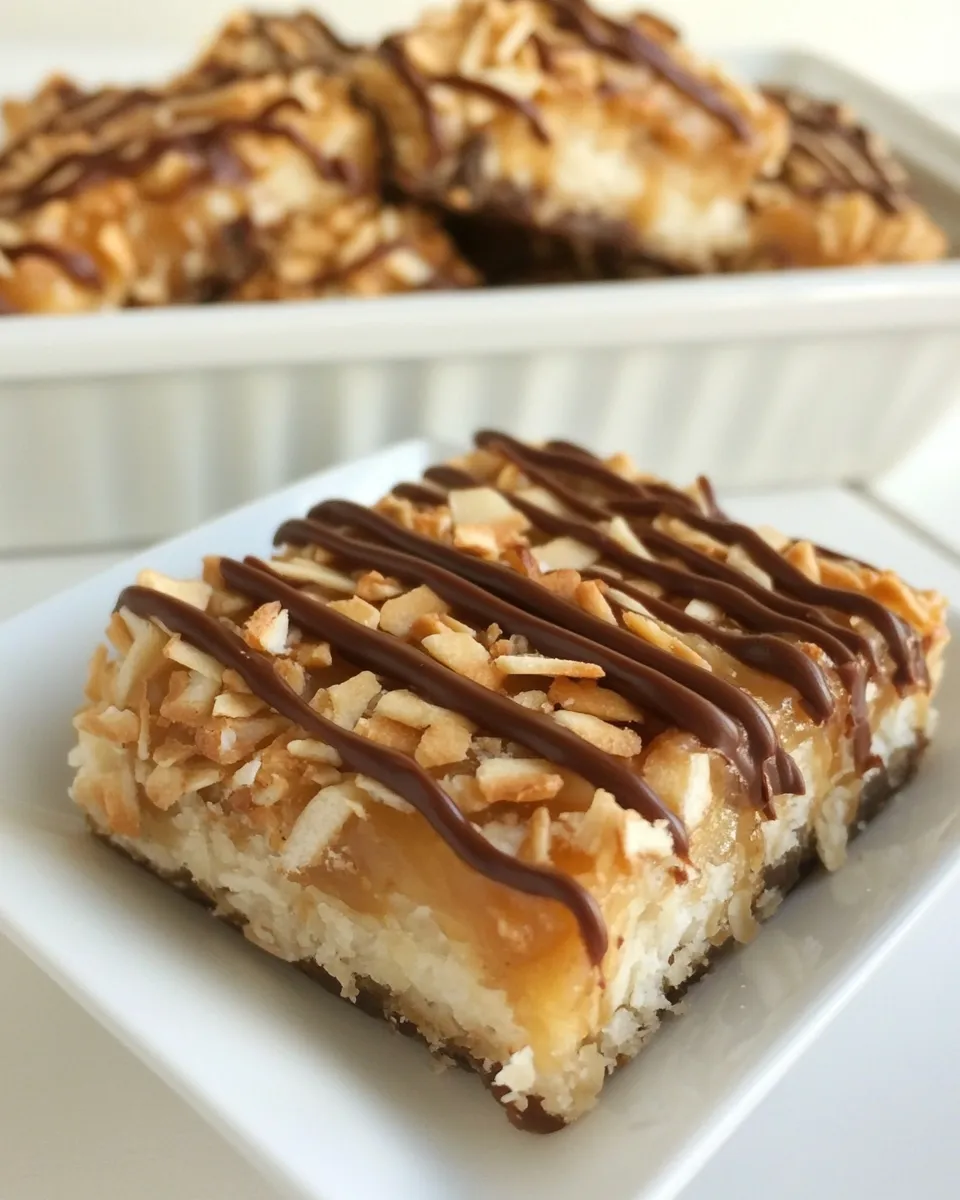
Minimal tools make this approachable:
- 9×13-inch baking dish lined with parchment (overhang makes removal easy)
- Hand mixer (for creaming the butter and sugar; a stand mixer also works)
- Baking sheet for toasting coconut
- Microwave-safe bowls for melting caramels and chocolate (or a double boiler)
- Parchment-lined baking sheet for the final chocolate-dipped bars
- Bench scraper or sharp knife for clean cutting
Things That Go Wrong
Here are the usual pitfalls and how to fix or avoid them:
- Crust too crumbly after baking: The dough will be crumbly before baking. If it still falls apart, press it firmly and evenly before baking next time. After baking, pressing a little during assembly helps the caramel bind it.
- Coconut burns while toasting: Coconut goes from golden to burned quickly. Stir or toss every 3–4 minutes and remove it as soon as it’s faintly golden. It will continue to darken off the sheet.
- Caramel seizes or looks grainy: Stir between microwave intervals and use whole milk as called for. If it thickens too much, stir in an extra teaspoon of milk at a time until it loosens.
- Chocolate bloom or streaky finish: Don’t overheat the chocolate. Melt in short bursts and stir until smooth. For a glossy finish, let the chocolate cool slightly before dipping so it sets with a snap.
- Bars don’t set and fall apart when cut: Be patient—chill or cool thoroughly so the caramel firms. If you’re in a hurry, a short refrigerate (30–45 minutes) will help.
Tailor It to Your Diet
These bars are rich, but you can adapt with a few practical changes:
- Lower-sugar option: The structure relies on table sugar in the base and caramels for sweetness. You can try reduced-sugar caramels and reduce the granulated sugar slightly in the base, but texture will shift.
- Dairy-free: Use dairy-free buttery spread measured stick-for-stick and swap whole milk for a full-fat plant milk (like canned coconut milk) when melting caramels. Check caramel ingredients—many contain dairy—so use dairy-free caramel candies or a commercial vegan caramel.
- Gluten-free: Replace the 2 cups all-purpose flour with a 1:1 gluten-free baking flour blend. Let the base rest slightly before baking so the blend hydrates.
Chef’s Notes
Small details matter. Press the shortbread base firmly and evenly for a uniform bite. Toast the coconut until it’s only slightly golden—carryover color will finish it off. When melting caramels and chocolate, patience wins: short microwave bursts and good stirring create smooth, glossy layers.
When cutting, run your knife under hot water, dry it, and make clean strokes. Wiping the blade between cuts keeps the bars tidy. If you like the classic round Samoa cookie look, you can cut rounds with a cookie cutter instead of squares, though more hands-on.
Freezer-Friendly Notes
These bars freeze well and thaw cleanly. Flash-freeze the cut bars on a lined sheet until the chocolate is firm, then layer them between parchment in an airtight container. They keep up to 2 months. Thaw in the fridge to avoid condensation on the chocolate, then bring to room temperature briefly before serving for best texture.
Your Questions, Answered
Q: Can I assemble the bars without a microwave? A: Yes. Melt caramels and chocolate in a double boiler over simmering water. Stir constantly and remove from heat once smooth to prevent overheating.
Q: What if I only have sweetened coconut? A: Sweetened shredded coconut will make the topping sweeter. It’s fine—just balance with slightly darker chocolate (semi-sweet or dark) to offset sweetness.
Q: Why is there salt twice in the ingredient list? A: One ¼ teaspoon seasons the dough; the second ¼ teaspoon is added to the caramel mixture to deepen and balance the caramel flavor. Both are subtle but important.
Q: Can I use salted butter? A: If you must, reduce added salt in the dough to 1/8 teaspoon and skip the extra salt in the caramel unless you prefer a salted-caramel note.
See You at the Table
These Samoas Bars are straightforward, satisfying, and built to share. Make them for company, for gifts, or simply to satisfy that coconut-caramel craving. The method rewards a little patience at the cooling stage, and the result is worth every step.
If you try them, let me know how you change them—different cocoons of toast, chocolate type, or shapes. Baking is a little laboratory and a lot of comfort, and these bars sit right in that sweet spot.
Samoas Bars
Ingredients
Ingredients
- 1/2 cupgranulated sugar
- 3/4 cupunsalted butter softened
- 1 large egg
- 1/2 teaspoonvanilla extract
- 2 cupsall-purpose flour
- 1/4 teaspoonsalt
- 3 cupsshredded coconut
- 12 ounceschewy caramels
- 1/4 teaspoonsalt
- 3 tablespoonswhole milk
- 20 ounceschocolate chips
Instructions
Instructions
- Preheat the oven to 350°F. Line a 9x13-inch baking dish with parchment paper, leaving an overhang for easy removal.
- In a large bowl, use a hand mixer to cream ¾ cup softened unsalted butter and ½ cup granulated sugar until creamy and light.
- Add 1 large egg and ½ teaspoon vanilla extract to the butter mixture and mix until incorporated.
- Add 2 cups all-purpose flour and ¼ teaspoon salt to the bowl and mix just until combined; the mixture will be crumbly.
- Press the crumbly dough evenly into the bottom of the prepared pan to form the cookie base. Bake for 20–25 minutes, until the edges are lightly golden. Remove from oven and let the crust cool in the pan while you toast the coconut.
- Spread 3 cups shredded coconut in a single layer on a baking sheet. Toast in the 350°F oven, tossing occasionally, for 10–15 minutes until slightly golden. Remove and set aside to cool.
- Unwrap 12 ounces chewy caramels into a microwave-safe bowl. Add 3 tablespoons whole milk and the remaining ¼ teaspoon salt. Microwave in 30-second intervals, stirring between each, until the caramels are fully melted and the mixture is smooth.
- Stir the toasted coconut into the melted caramel until evenly combined. Immediately spread the caramel-coconut mixture evenly over the cooled cookie base. Allow the layered bars to cool completely (room temperature or refrigerated) so the caramel sets.
- Use the parchment overhang to lift the set bars from the pan and place on a cutting surface. Cut into squares or your desired shapes.
- Put 20 ounces chocolate chips in a microwave-safe bowl and melt in 30-second intervals, stirring well between each interval, until smooth. Dip the bottom of each bar into the melted chocolate, letting excess drip off, and place the chocolate-dipped bars onto a parchment-lined baking sheet.
- Put the remaining melted chocolate into a zip-top bag, snip a corner, and pipe lines of chocolate over each square. Refrigerate the bars until the chocolate hardens, then serve.
Equipment
- 9x13 inch Baking Dish
- Parchment Paper
- Mixing Bowl
- Hand Mixer
- Baking Sheet
- Microwave-safe Bowl
- Zip-top Bag
- Knife